
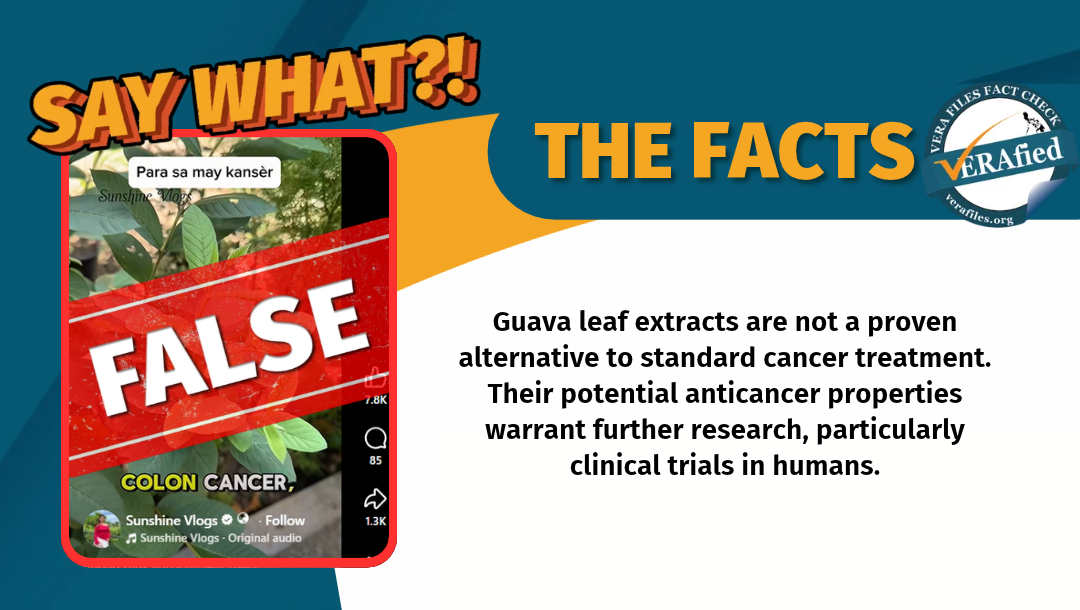
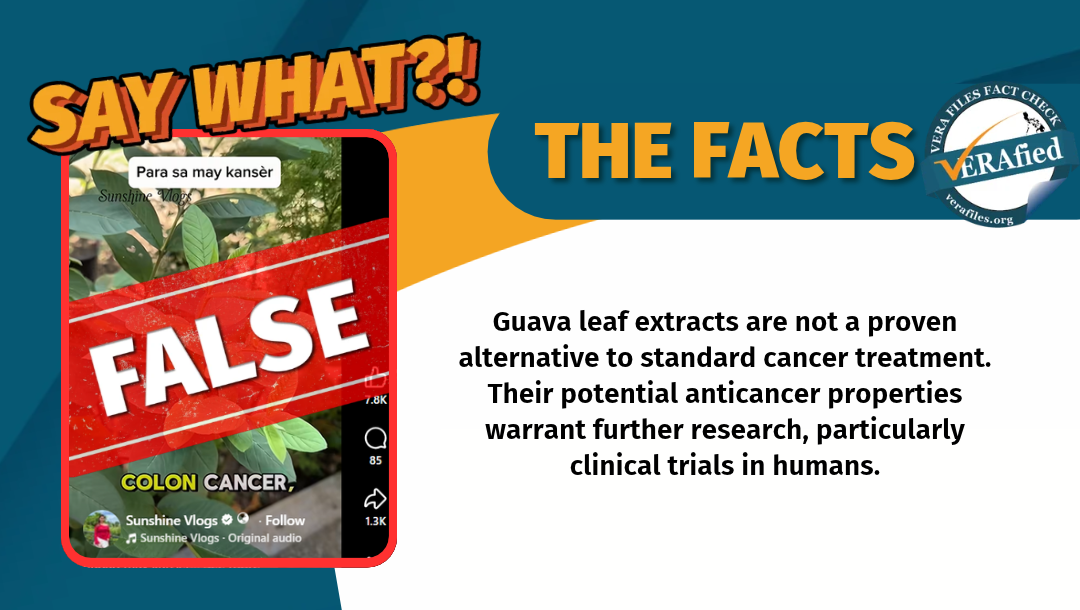
Several Facebook reels claim that guava leaves are a low-cost alternative cure for cancer. This claim is false, and the video is AI-generated.
On Nov. 17, a Facebook user posted a video featuring guava leaves with an overlay text:
“Para sa may kansèr (For those with cancer).”
Several Facebook posts have also previously spread this false claim, attributing the supposed remedy to a certain “Dr. Anderson.” One video featured a man’s voice, which appears to be AI-generated, saying in a voiceover with subtitles:
“Kapag ikaw ay may kanser, hindi mo na kailangan gumastos nang malaki para magpagamot sa sakit na kanser, tulad ng breast cancer, prostate cancer at colon cancer. Ayon kay Dr. Anderson, dahil ang dahon ng bayabas ay may lycopene at may anti-cancer properties, ang gagawin mo ay kumuha ng tatlompung pirasong dahon ng bayabas at ibilad ito sa init. Kapag natuyo na, i-blender ito para maging powder, at magtimpla ng isang baso sa isang mainit na tubig, at uminom nito tatlong beses sa isang araw sa loob ng tatlo hanggang limang buwan
(If you have cancer — such as breast, prostate, or colon cancer — you do not need to spend a large amount of money on treatment. According to Dr. Anderson, because guava leaves contain lycopene and have anti-cancer properties, what you need to do is get thirty guava leaves and dry them in the sun. Once dried, use a blender to turn the leaves into powder, mix it with a glass of hot water, and drink this three times a day for a period of three to five months).”
No scientific or clinical evidence shows that drinking guava leaf extracts can cure cancer or replace standard medical treatment.
While studies show that guava leaves do contain anticancer properties that can inhibit various cancer cell lines in laboratory experiments, no clinical trials confirm the safety and effectiveness of guava extracts in human cancer patients. The research recommended that more studies should be conducted investigating the potential anticancer effects.
VERA Files also ran the video’s audio through the Hiya Deepfake Voice Detector tool, which returned an authenticity score of 3/100.
The post has reached over 7,800 reactions, 85 comments, and 1,300 shares, as of writing. The FB personal account that published it identifies itself as a personal blog but regularly posts health- and medical-related content. It has changed its name eight times since its creation on March 30, 2023.