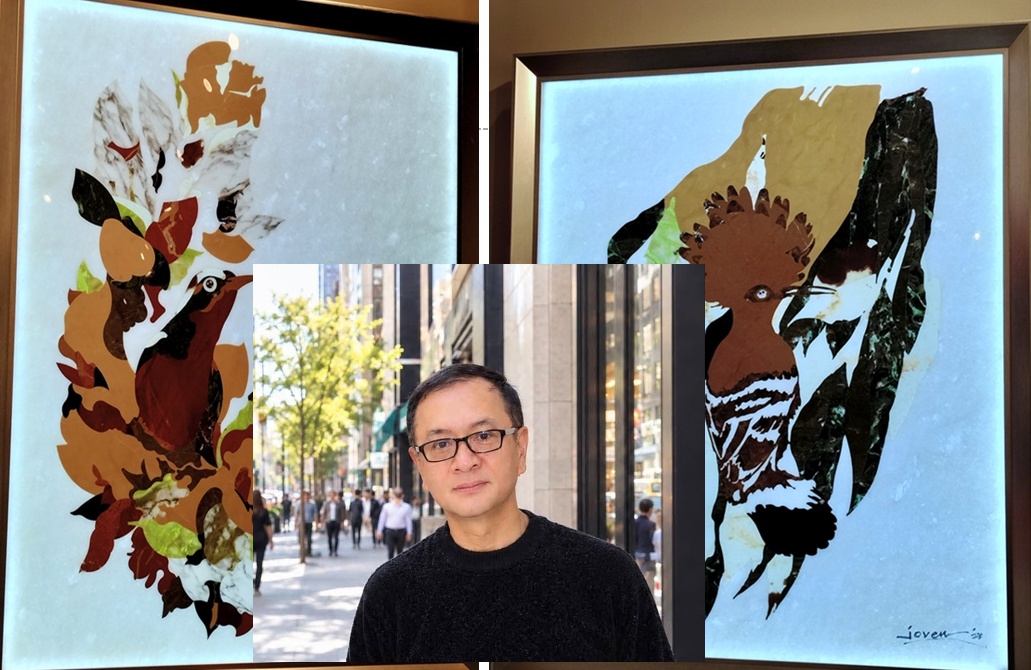
The paintings of birds mounted on a wall would make viewers — first-timers to his works, especially — conclude that the artist Jose Ramon “Joven” Ignacio is following the style of traditional Chinese painters. The signs are there: birds and plants as subjects, as well as the use of watercolor as medium and “white space” (aka negative or blank space).
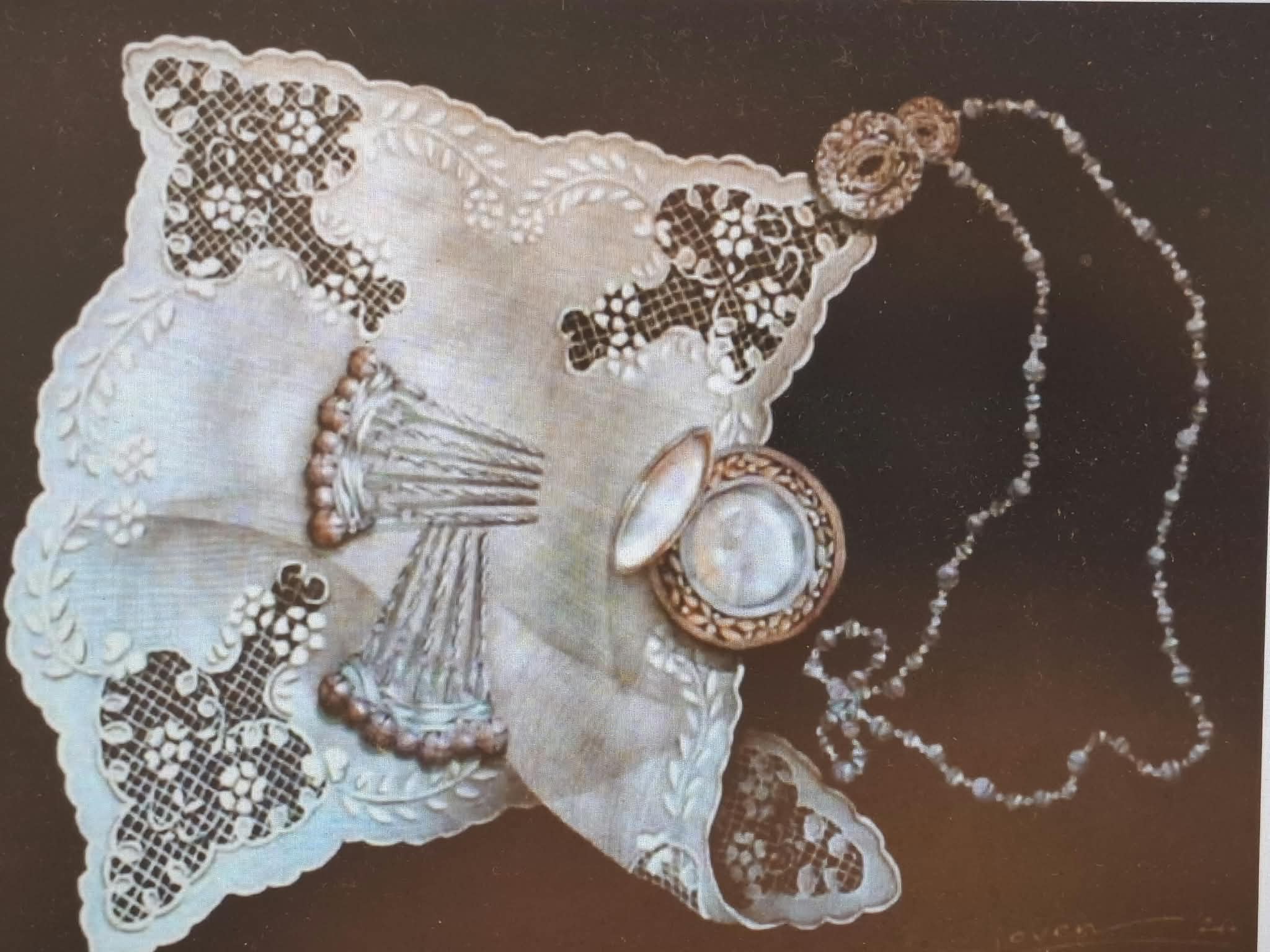
Yet on the wall parallel to that display are hung other works that have distinctly Filipino subjects: piña and jusi embroideries with traditional jewelry. Then on the end wall near the entrance are mounted works that go back to birds, but in a medium that’s sharply different: the 48” x 40” paintings titled “Lain-lain” and “Nagtanaw,” which are backlit — the light switch dangling by the side — and held by metal L-brackets at the bottom and by double cables from the top.
Ignacio’s nature subjects — birds, flowers, and leaves — remain, but for “Salinlahi,” his new exhibit that opened at ArtSpace on Nov. 7, “Lain-lain” and “Nagtanaw” are painted with watercolor, not on paper but on stone, for the first time.
Jigstone art
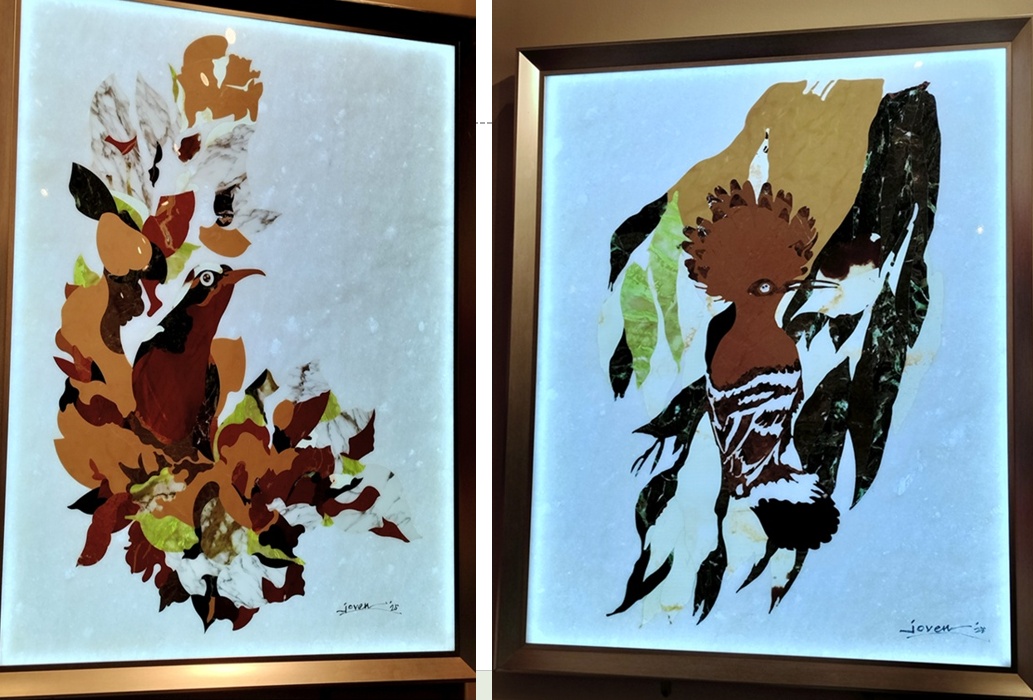
In an email interview, Ignacio said working with stone and watercolor was prompted by his “appreciation of nature and materials usually [taken] for granted.” His process meant working first with watercolor studies, painting birds and flowers to capture the light and color. This is followed by exploring how the compositions would work on stone. However, the process isn’t merely painting nature subjects on stone. It’s an homage to traditional stone marquetry (pietra dura in Italian or parchin kari in Mughal architecture), in which he reinterprets the techniques by using ultra-thin translucent veneers and backlighting, hence “the result is not just stone copied from paint, but stone used as a new language.”
(Traditional stone marquetry is the process of cutting and fitting highly polished color marbles and semi-precious stones together to form detailed pictures or geometric designs.)
“JigStone Art comes to life through watercolor inspiration, stone craft, and light,” explained Ignacio, an architecture graduate of the University of the Philippines Diliman. “My training as an architect helps me understand the material’s structure and light [while] my work as an artist allows me to turn those qualities into expression.”
Using a new medium has brought challenges, and one of the greatest challenges Ignacio faced was the unpredictable behavior of natural stone particularly when it’s backlit. In selecting and assembling stone pieces, he said, he’d look into the “natural colors, veins, patterns and textures under ordinary lighting.” But the situation would change, he pointed out, especially when the finished artwork was illuminated from behind and the same pieces appeared quite differently.
There’s also the issue with colors changing dramatically. “A stone that appears brown in its natural state may turn almost black when backlit, while a yellow stone may reveal unexpected reddish tones,” said the artist, a founding member of the multidisciplinary Green Architecture Advocacy Philippines, which, as its name suggests, is aimed at protecting the environment.
He added: “The veins, patterns and textures could become more pronounced or take on a different character.”
What Ignacio found particularly challenging was being unable to predict the artwork’s final appearance when looking at the stone before illumination. He explained that the actual visual effect became fully apparent only when the assembled artwork was backlit, so the result would be close to what he envisioned. But other times, the stone revealed something entirely unexpected.
His experiment with a new medium had him learning that working with the natural stone’s unpredictability required patience and understanding of how each material responded to light. “I learned to work with its inherent characteristics rather than expect it to behave exactly as I [intended],” said the practicing architect and consultant for civic organizations and local government units.
Connecting through art
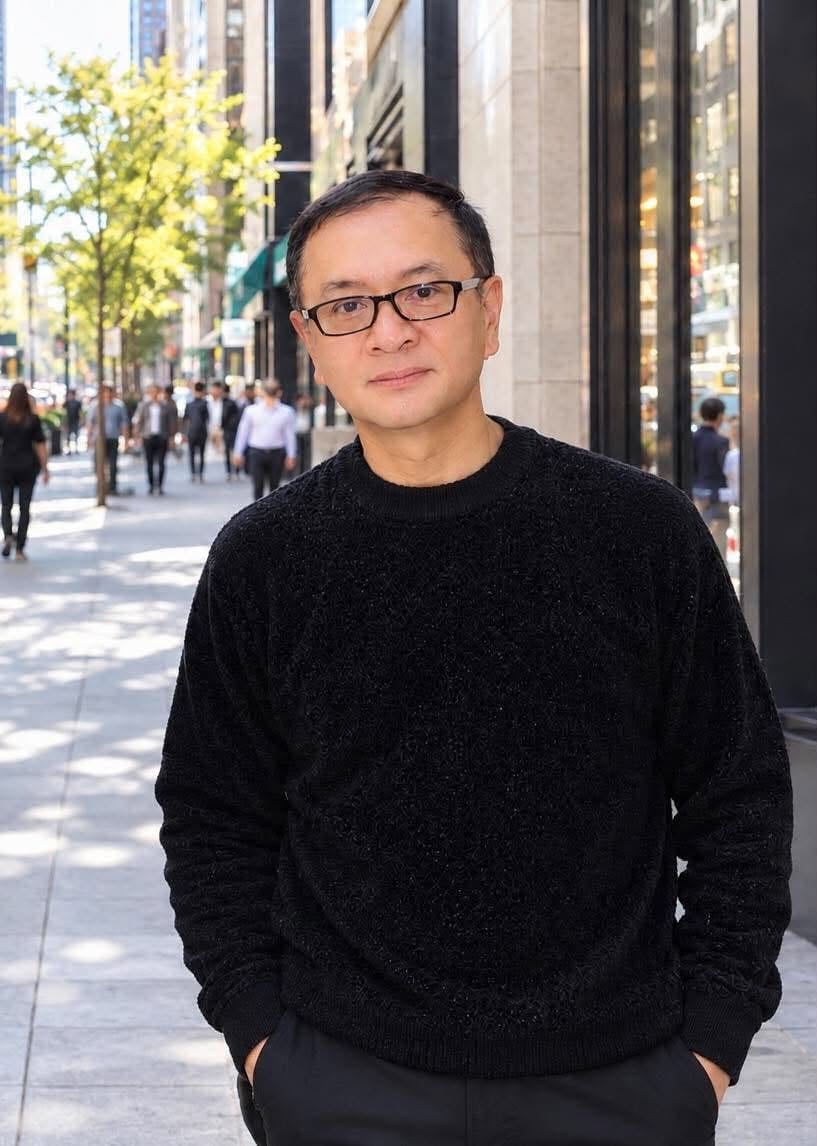
Aside from appreciating his experimentation with a new medium, Ignacio wants his audience to understand that his paintings are his way of reaching out when ordinary conversation feels too small. Also, he wants everyone to walk away with something else. In his welcome remarks at the opening of his exhibition, he said that for him, painting is not solely about making art pieces but a way to process life and make sense of people and experiences that stay with him.
He said the subjects (birds, flowers, and leaves) and objects (heirloom cloth and jewelry) that he usually paints are not mere subjects but are also connected to people, moments, and the relationships that make people who they are.
“Memories aren’t formed simply by the places visited or experiences. [They] become beautiful parts of our lives because of the people with whom we share those moments,” he declared, adding that people return to these places, not to find the same experience, but to revisit the memories created with other people.
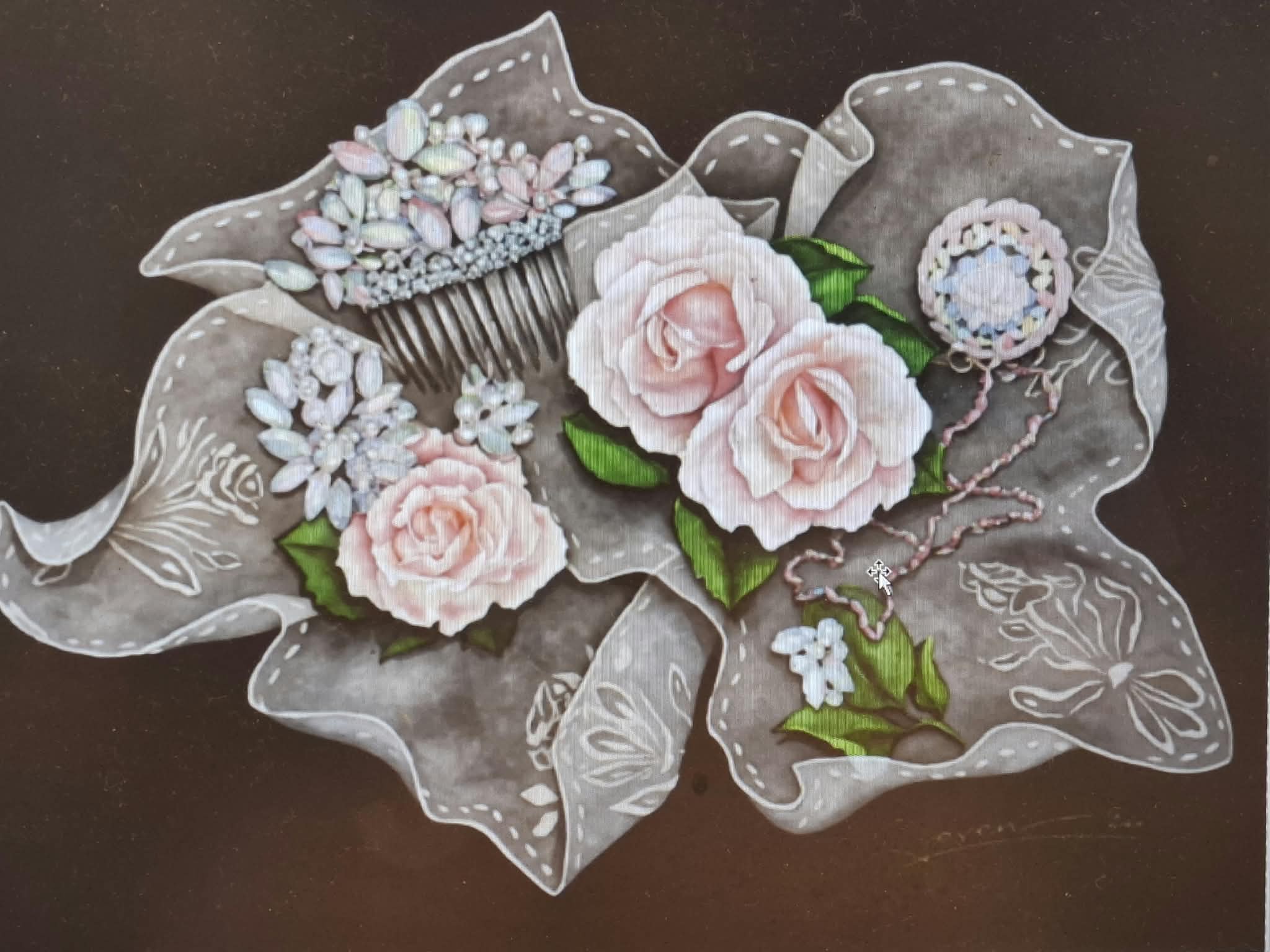
Ignacio expressed hope that, after walking around the gallery, viewers would find something that stirred their memories and “the moments that shaped them.”
“If so, then the work has done what I hoped,” he said.
“Salinlahi” is on view until Nov. 18 at ArtSpace, located on the ground floor of the Ayala Museum annex in Makati City. Joven Ignacio will deliver an artist’s talk, “Heritage , Memory, and Place: An Architect’s Journey from Batanes to Contemporary Art,” at the same venue on Nov. 14 at 3 p.m. Admission is free.