
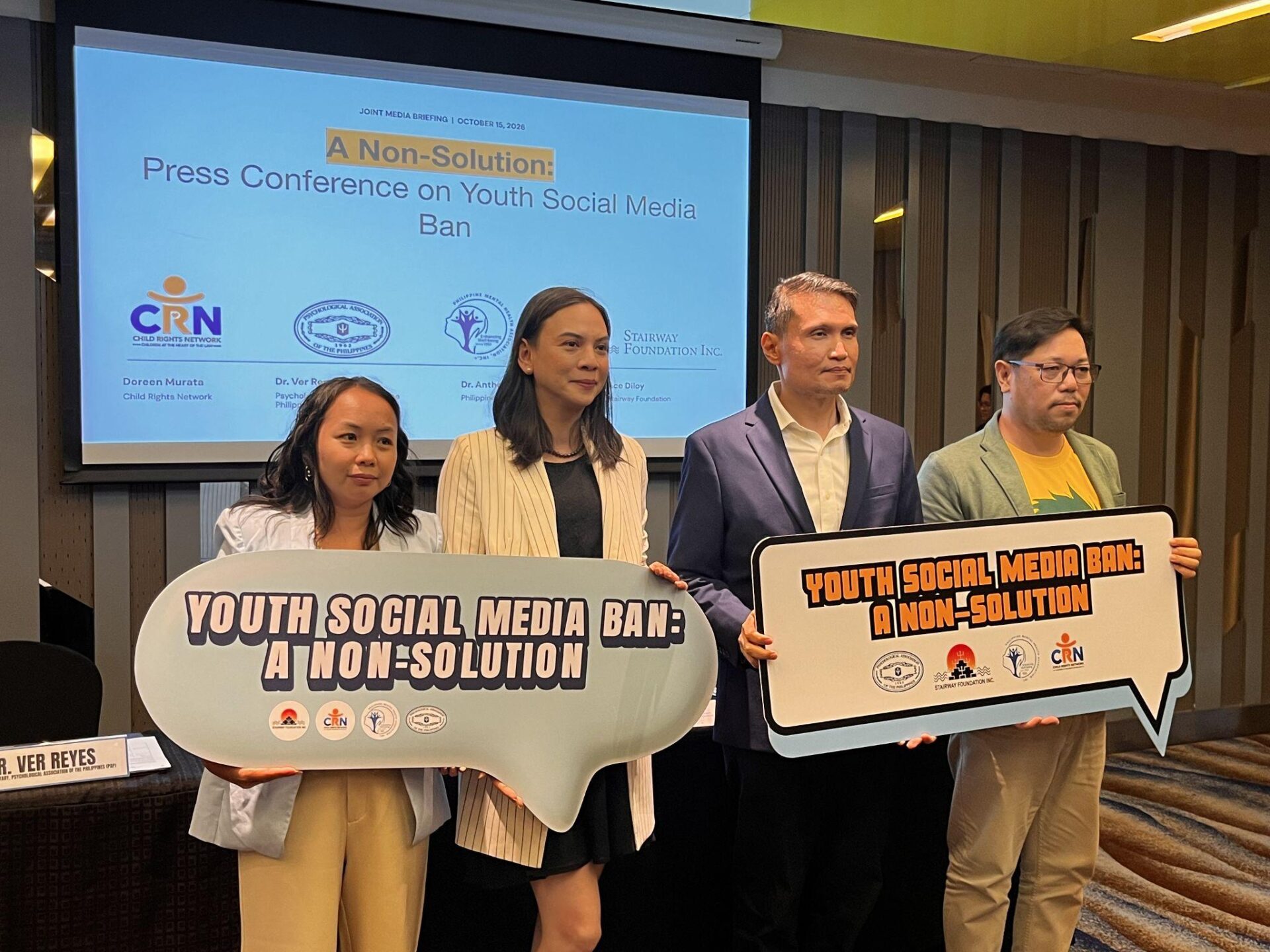

With Filipino children soon to be barred from social media, youth development specialists warned that a total ban may simply push kids to migrate to other platforms with no safeguards, potentially exposing minors to more harm.
The warning followed the approval of the Senate’s and House of Representatives’ respective versions of bills restricting social media use among minors on Oct. 8 and 12, respectively.
Doreen Murata, Digital Advocacy Co-Lead of the Child Rights Network, said a blanket social media ban is “not the most appropriate way” to protect children online, pointing to “early evidence” from Australia’s world-first ban implemented in December 2025.
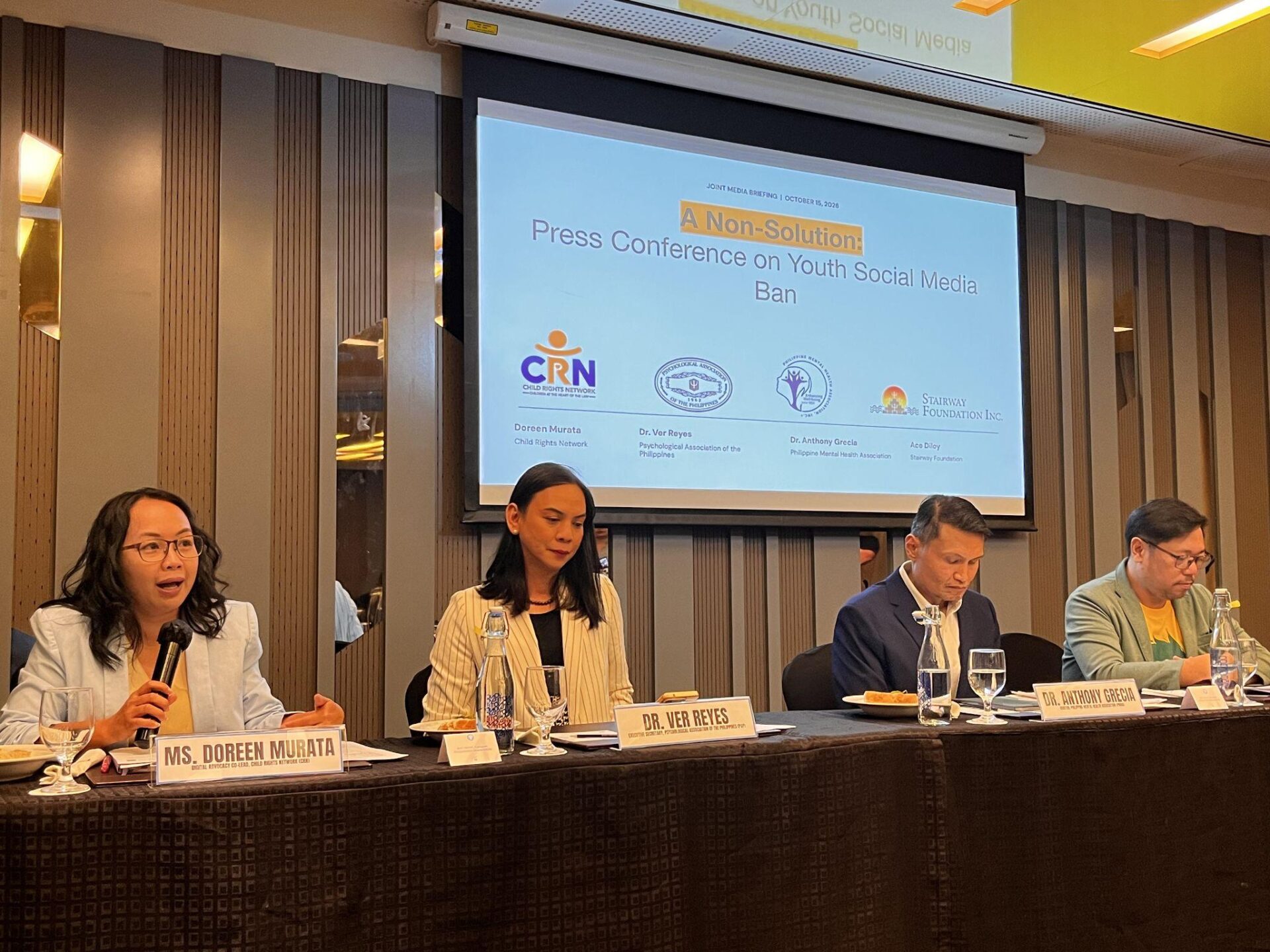
“Rather, it forces our young people into smaller platforms that [expose] them to platforms that have no appropriate safeguarding,” Murata said during an Oct. 15 press briefing in Quezon City.
As a result, minors can be “further exploited, abused, and be more vulnerable to identity theft” and other harms on such unregulated platforms, she emphasized in a separate chance interview with the media.
Based on a report published by Australia’s eSafety Commissioner, some parents expressed concern about the potential for increased risk of the government’s landmark ban on social media for under 16-year-olds, such as through “displacement to unregulated online spaces.”
Echoing that sentiment, Ace Diloy, a child protection specialist at the Stairway Foundation, warned that children’s potential migration to other fringe apps would pose an “even bigger problem,” since they would be harder to monitor and guide in these digital environments.
“Just because we can no longer see them on social media does not mean they are safe,” Diloy said in Filipino, while expressing concern about the proposed blanket social media ban for Filipino youngsters.
Bypassing restrictions
Another concern Murata floated is that children could bypass age verification by modifying their faces, using virtual private networks, or even using accounts of older family members.
Sen. Risa Hontiveros, the lone legislator who opposed Senate Bill No. 2424 or the Safe Media Access and Responsible Technology for Kids in Digital Spaces (SMART KIDS) Act, also warned that an outright ban could only encourage the youth to “find ways to circumvent the law.”
She cited Australia’s experience, as revealed by the eSafety report, that eight in 10 teenagers were still using social media three months after the government banned the platforms for those under 16 years old.
“Most under-16s who had social media accounts before commencement were able to either retain them or create new ones at the three-month mark, with social media platforms’ failure to implement effective age assurance measures cited as the main reason,” eSafety said in a March 7 statement.
House Bill No. 11566 or the Safe and Friendly Environment for Kids in Digital Spaces (SAFE Kids) Act prohibits children below 13 years old from creating, maintaining, or using social media accounts.
The Senate’s SMART KIDS, on the other hand, is more stringent as it intends to ban anyone under 18 from creating social media accounts and accessing any “high-risk digital services,” such as but not limited to, Meta Platforms, and Roblox and Gorebox— online gaming services that have reportedly been associated with recent school shootings in the Philippines.
On the part of Stairway Foundation, Diloy recommended retaining the 13-year-old baseline for creating independent social media accounts for general purposes. However, he noted that stronger safeguards that are appropriate to the age and developmental needs of children aged 13 to 17 must be put in place.
This is similar to what Hontiveros earlier proposed on implementing “tiered restrictions” for adolescents.
“For younger adolescents, we should require stronger default privacy and data settings, tighter restrictions on adult contact, limits on targeted advertising and profiling, and stronger parental and educational safeguards,” the lady senator said in an Oct. 8 statement, even suggesting a 15-year-old baseline.
As teens mature, Hontiveros added that they can gain more autonomy while still maintaining the necessary protection from abuse, exploitation, and harmful content.
Concrete safeguards
Rather than a blanket social media ban as an approach for child online protection, which child development and mental health experts labeled as a “non-solution,” they have repeatedly suggested strengthening digital literacy programs for parents.
Recognizing the lived realities and personal contexts of Filipino children, Murata also stressed expanding child protection policies in schools through age-appropriate mental health and psychosocial support services.
“Strengthen first and foremost our school’s child protection policies and procedures, making sure it addresses real concerns of young people [like] bullying, harassment, because this happens first in these [offline] spaces before it transcends into online discussions and platforms,” she said.
Meanwhile, Diloy advocated for a “comprehensive and rights-based safety by design” approach, stressing that big tech companies should make this mandatory and not a mere afterthought mechanism.
“Platforms should prioritize children’s safety when designing their features.” – Ace Diloy
“Platforms should prioritize children’s safety when designing their features,” he said in Filipino, highlighting the “bigger responsibility” of tech platforms to ensure their platforms are “designed for teens to maximize the advantage of being online.”
Diloy also flagged what he called “harmful features” of social media, such as “infinite scrolling,” and the algorithms that push various content to the children’s feed.
“We should examine which features are harmful to children, determine which age groups [are most affected], and regulate those features while exploring alternatives,” he said, reiterating the importance of safety by design of social media platforms instead of a total ban.