

For four straight budget cycles, billions of pesos meant for airports, railways, mass transport, flood control, and climate protection were quietly pulled out of the national budget. The projects were approved. The loans were negotiated. The need was undeniable. And yet, year after year, the funding was stripped away at the last moment.
What followed was not fiscal discipline.
It was paralysis.
Idle loans. Delayed infrastructure. Rising costs. Missed jobs. And communities left exposed to floods, congestion, and high prices—while public money flowed elsewhere.
This has been the fate of the Philippines’ foreign-assisted projects since 2023.
This is not a debate about foreign borrowing.
It is about who derailed development—and who is paying for it.
What happened
From 2023 to 2026, the Executive branch proposed between ₱200 and ₱280 billion a year in foreign-assisted projects (FAPs) under the National Expenditure Program (NEP). These were not wish lists. They were real projects—already vetted technically and financially, already reviewed for environmental and climate risks, already negotiated with institutions like the Asian Development Bank, the World Bank, and the Japan International Cooperation Agency.
Then came the budget process.
Between the NEP and the final General Appropriations Act (GAA), legislators removed the bulk of these projects from the programmed budget and dumped them into Unprogrammed Appropriations, where funding becomes uncertain, contingent—or simply unusable.
The numbers tell the story:
- 2023: ₱210 billion proposed; ₱158 billion removed
- 2024: ₱246 billion proposed; ₱242 billion removed
- 2025: ₱216 billion proposed; at least ₱118 billion removed (some reports put it as high as ₱210 billion)
- 2026: ₱283 billion proposed; ₱190 billion removed, ₱93 billion of which was vetoed
In just four years, nearly ₱800 billion worth of foreign-assisted development projects were deprogrammed.
This was not an accident.
It became a habit.
What this means in practice
Foreign-assisted projects do not run on promises. They require two things: A peso counterpart from the government, and annual authorization to use the loan.
When legislators strip a project from the programmed budget, one or both of these disappear.
The loan itself is not cancelled. It sits there—signed, valid, and unused. Without authorization, it cannot be drawn. Construction does not start. Workers are not hired. Communities wait.
And while the project is frozen, the money does not vanish.
The peso counterpart is reallocated—often to fragmented, low-priority, locally controlled spending: flood-control and drainage patches, multi-purpose buildings, assorted assistance programs. These may look useful on paper, but they are no substitute for nationally planned, rigorously vetted infrastructure.
In plain terms: Development capital is broken apart and recycled into spending that is faster to announce, easier to control, politically more rewarding and vulnerable to abuse.
The hidden costs
Idle loans cost money.
Most foreign-assisted loans charge commitment fees—paid simply for not using the funds. From 2023 to 2026, these unused loans likely cost the government hundreds of millions of pesos in fees alone.
Then come the delays: Price escalation, rebidding, remobilization, redesign. Projects eventually cost more—if they resume at all.
But the damage goes further.
Foreign-assisted projects are closely watched by investors, credit-rating agencies, and development partners. When a government repeatedly approves projects, negotiates loans, and then blocks their use through its own budget, it sends a message: plans here are fragile.
At a time when foreign direct investment inflows have already plunged, this matters. Defunding FAPs does not explain the entire FDI decline—but it deepens doubts about infrastructure readiness, growth prospects, and the state’s ability to execute long-term commitments.
Confidence, once shaken, is slow to return.
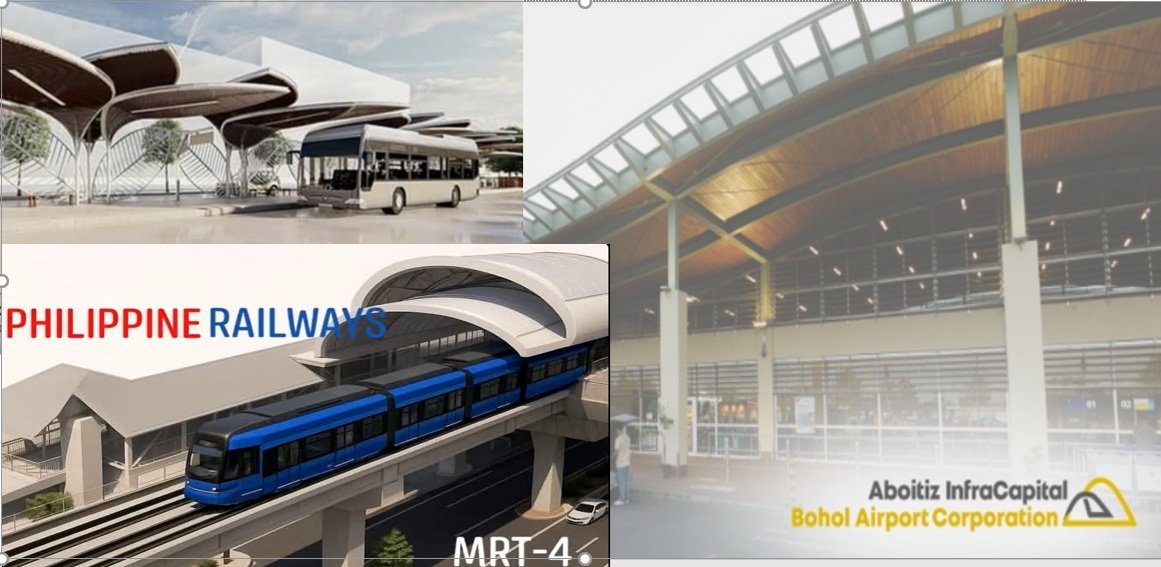
High-Impact Foreign-Assisted Projects Hit by Deprogramming (2023–2026)
(Illustrative, not exhaustive)
-
North–South Commuter Railway — ADB/JICA
-
Metro Manila Subway (Phase I) — JICA
-
PNR South Long Haul (Bicol Express) — JICA
-
LRT Line 1 Cavite Extension — JICA
-
MRT Line 4 — ADB/AIIB
-
Cebu Bus Rapid Transit — World Bank/ADB
-
New Bohol Airport — JICA
-
Major Flood Control and River Basin Projects — ADB/World Bank
-
Dumaguete International Airport — Export–Import Bank of Korea
Note: Most appeared repeatedly in the NEP from 2023–2026, only to be cut, reduced, or transferred to Unprogrammed Appropriations.
Sources: NEDA ODA Portfolio Reviews and public reporting
Who bears the burden
The costs are not shared equally.
When rail and bus projects stall, commuters lose hours—and income. When ports and logistics projects are delayed, food prices rise. When flood-control projects are postponed, poor communities lose homes, livelihoods, and lives.
For the wealthy, delay is inconvenience.
For the poor, delay is devastation.
Why this keeps happening
Politics explains part of it.
Breaking up large national projects into smaller local ones delivers immediate visibility—and electoral advantage. The benefits are quick. The costs are distant.
But politics is not the whole story.
Ongoing investigations by the Senate Blue Ribbon Committee and the Independent Commission for Infrastructure (ICI) have exposed serious cases of ghost and substandard flood-control, drainage, and shore-protection projects, as well as diversions to low-priority, far-from-shovel-ready works.
Unlike foreign-assisted projects—subject to international procurement rules, lender oversight, multilayered appraisal, and independent audits—these smaller projects often escape scrutiny. Fragmentation makes abuse easier. Oversight becomes harder. Kickbacks become simpler.
Arrests have already been made, and further indictments will follow.
At that point, defunding development is no longer just bad policy.
It becomes a systemic enabler of plunder.
Who is accountable
Congress removed the projects. That much is clear.
But the Executive cannot escape responsibility. These projects were proposed, defended in hearings, and then sacrificed in the final stretch—without a fight strong enough to stop it.
In public finance, priorities are not measured by speeches.
They are measured by what leaders refuse to give up.
Conclusion
Defunding foreign-assisted projects did not save money. It wasted it.
It froze infrastructure, raised costs, slowed growth, weakened investor confidence, and shifted the burden onto those with the least protection.
As ongoing investigations already confirm that this same process also enabled massive leakages of public funds, the issue is no longer technical.
It is moral.
The facts are no longer in dispute.
The damage is visible.
The only question left is: who will be held to account for the costs we now bear?
*Formerly Vice-Chair/Chair of the House Committee on Appropriations (1995–2004) and Secretary of the Department of Budget and Management (2010–2016). He is currently Professor of Praxis at the Ateneo School of Government.