Part 2
While Sumilon continues to combat foreseen and familiar threats, some threats cannot be stopped by a patrol boat.
Typhoon Odette in 2021 severely damaged Sumilon’s corals.
Oslob Municipal Fishers’ Coordinator Jefferson Booc said the storm caused significant damage to the reef, while Ana Luna of the Bangcogon Oslob Fishermen Association said the community saw corals that had taken years to grow suffer extensive destruction.
In the management plan, the 2021-2024 typhoon cycles are identified as a major source of ecological stress.
It says the sanctuary’s deep reef wall suffered scarring from extreme wave energy, while shallow coral gardens were among the areas most affected by Odette and subsequent storms, including Kristine and Pepito.
Coral rubble left by the storms can also become abrasive during heavy swells, further complicating reef recovery.
Booc said climate change presents another threat. “Once mamatay ang corals, mogamay ang isda, kay wala naman silay puy-anan.”
The fisheries office also identifies crown-of-thorns starfish as a major threat because they feed on corals.
In September, personnel removed around 10 kilograms of crown-of-thorns during an operation in the Gawi MPA.
The municipality has proposed coastal cleanup and “scubasurero” activities as part of the response.
A reef trying to recover
There are signs of recovery.
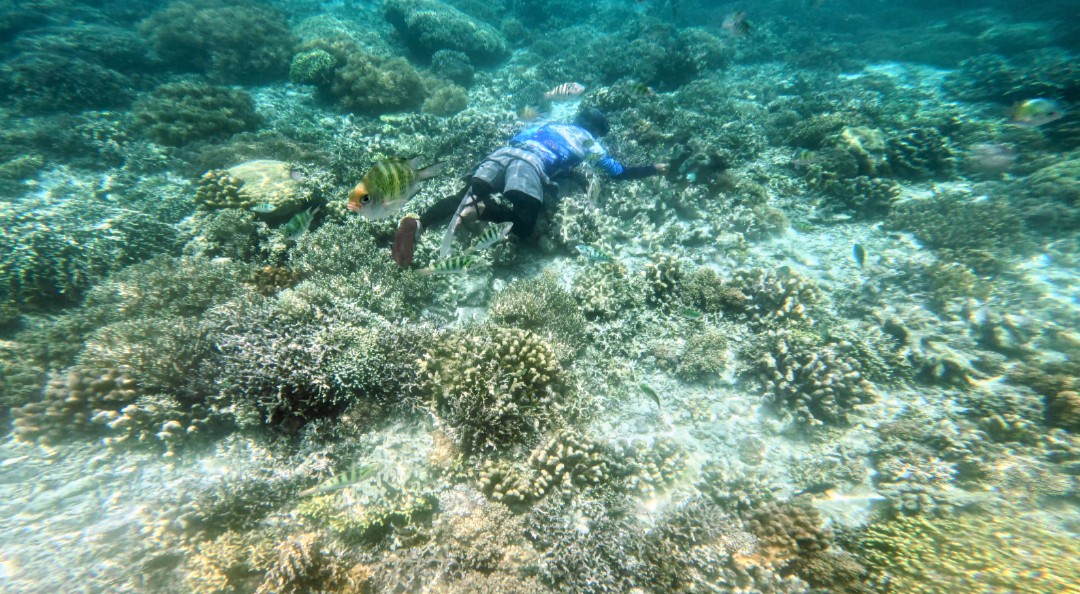
Booc said a 2025 biophysical assessment conducted with the help of the University of the Philippines found new coral growth in areas affected by Odette.
But Sumilon’s management plan makes clear that recovery must be measured, not simply observed.
Its biggest concern for the 2026-2030 management period is what it calls a “Scientific Blind Spot.”
The plan says there has been no comprehensive scientific assessment of coral cover or fish biomass following the impacts of Odette, Kristine, and Pepito.
Without formal data, it says, managers cannot clearly distinguish natural seasonal changes from permanent habitat loss.
That is why the plan identifies a comprehensive post-2024 reef assessment as an immediate priority.
The 2026 Saving Philippine Reefs expedition by CCEF focused on Southern Cebu’s marine sanctuaries and used standardized surveys to measure coral cover, fish diversity, indicator species, and overall reef condition.
The results are intended to be compared with previous monitoring to assess management effectiveness and the condition of the reefs.
What lives inside the sanctuary
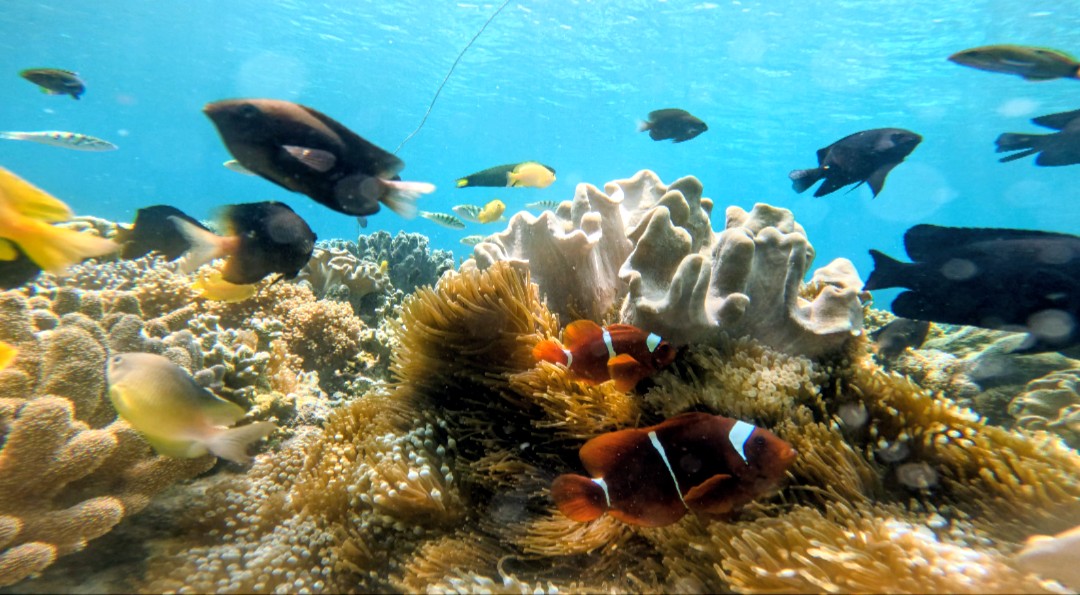
The management plan describes Sumilon as a mature ecosystem shaped by more than 50 years of protection.
It identifies massive Porites and branching Acropora corals, as well as high densities of long-spined black sea urchins that help control algae on the reef.
The sanctuary is also home to reef fish including damselfish, sergeant majors, wrasses, parrotfish, and surgeonfish.
Blacktip reef sharks are identified as regular inhabitants of the shallow waters around the sanctuary and sandbar.
But the plan also flags fish feeding by tourists as a data gap because its long-term effects on fish behavior and nutrient levels have not been established.
The price of being a tourist destination
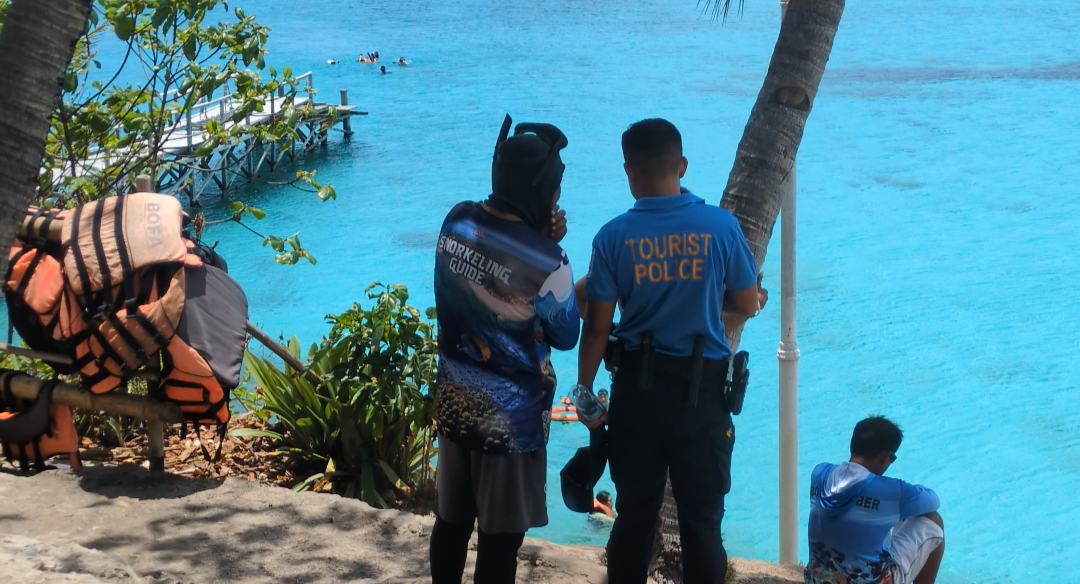
Sumilon’s conservation story has also become a tourism story.
Oslob Mayor Ronald Guaren said the municipality uses the sanctuary as an income-generating tourism attraction while maintaining its protection.
“We do not only protect the Marine Sanctuary, we also use that as a tourist income-generating project,” he said.
The management plan, however, recognizes that tourism itself has to be managed.
It describes a reduction of the visitor limit from 1,000 to 500 guests as part of the sanctuary’s recovery strategy.
The lower cap is intended to reduce overcrowding and physical pressure on recovering reef areas.
The plan also calls for stricter enforcement of no-anchor zones because anchor contact can damage corals.
Water quality is another concern, with the plan linking visitor management and existing sanitation facilities to the need to prevent nutrient increases that could encourage algae growth over recovering corals.
The economics of protection
The sanctuary’s management plan seeks to make conservation financially sustainable. It provides for revenue from entrance, snorkeling, diving, and docking fees, with a sharing scheme among the municipality, Barangay Bangcogon, and BOFA.
The plan also sets aside P1.5 million annually for the first three years for the development of the municipal-claimed portion of Sumilon, sourced from the 20% development fund.
Separately, the municipal fisheries office said Oslob allocates around P250,000 annually for MPA maintenance, including ropes, buoys, and markers.
The management system therefore rests on more than volunteerism. It combines government funding, tourism revenue, community labor, enforcement, and local regulations.
For BOFA, that system has also meant accountability.
Luna said the association maintains payroll, conducts monthly meetings, and practices transparency in managing its income.
She said this community-based system was among the practices that helped BOFA gain recognition in the 2021 Para El Mar Awards.
From local sanctuary to national lesson
Sumilon was recognized in 2021 as the Outstanding Locally-Managed Marine Protected Area in the Para El Mar Awards.
The management plan cites the recognition as evidence of the sanctuary’s governance, ecological and socioeconomic performance, and stakeholder participation.
In March 2026, Bangcogon councilor Matias Soriano said the community presented its Sumilon management system at an international gathering in Indonesia.
He said representatives from the Philippines presented three conservation models, including Sumilon, and that other participants were encouraged to adopt aspects of their system.
As THE FREEMAN dives deep into the Sumilon story, it provides a long record of community participation, local enforcement, tourism income, and continued legal protection.
It has also influenced the creation of other marine sanctuaries in Oslob.
But its current management plan acknowledges that some of the most important questions cannot yet be answered with sufficient scientific certainty.
How much coral cover remains?
How much fish biomass remains after successive typhoons?
How much has naturally recovered?
And to what extent are fish from the sanctuary actually contributing to catches in surrounding waters?
The next five years
The management plan’s vision is clear: by 2030, Sumilon should remain a vibrant and well-protected marine ecosystem with thriving coral reefs, abundant marine life, and clean waters.
Its goal is to “protect and restore coral reefs and marine wildlife while promoting responsible ecotourism and sustainable fishing practices.”
The plan calls for adaptive management, responding to climate impacts, tourism pressure, illegal fishing, and changing socioeconomic conditions rather than relying solely on the rules established decades ago.
For the community, the work remains much more immediate.
There are boats to patrol. Corals to protect. Trash to collect. Tourists to guide. Illegal fishers to report.
And a reef whose recovery still needs to be measured.
Luna’s message to her fellow residents is simple: protect what remains.
“Bahalag ginagmay, basta kanunay.”
Little by little, but consistently.
For 52 years, Sumilon has been protected.
For the people of Bangcogon, the hope remains that the fish will continue to reproduce inside the sanctuary and reach the waters where their community fishes.
For the scientists and managers, the next task is to determine what the reef can actually show.
And for the next generation, the question is whether the sanctuary their elders spent decades guarding will still have enough life left to justify the sacrifice of leaving it untouched.
That is the promise Sumilon has carried since 1974.
(This story, first published in thefreemancebu.com, was produced under the Global 30X30 Conservation Initiative grant from Internews’ Earth Journalism Network).