

(Editor’s Note: The sentence on Commonwealth President Manuel L. Quezon’s evacuation from Corregidor was corrected after our attention was called by Manolo Quezon.)
Every April 9, the Philippine Republic commemorates the heroic but doomed Allied defense of the Bataan Peninsula during the Second World War. From January to April 1942, the combined Filipino and American armies held out against the Japanese invaders until disease and starvation forced them to surrender.
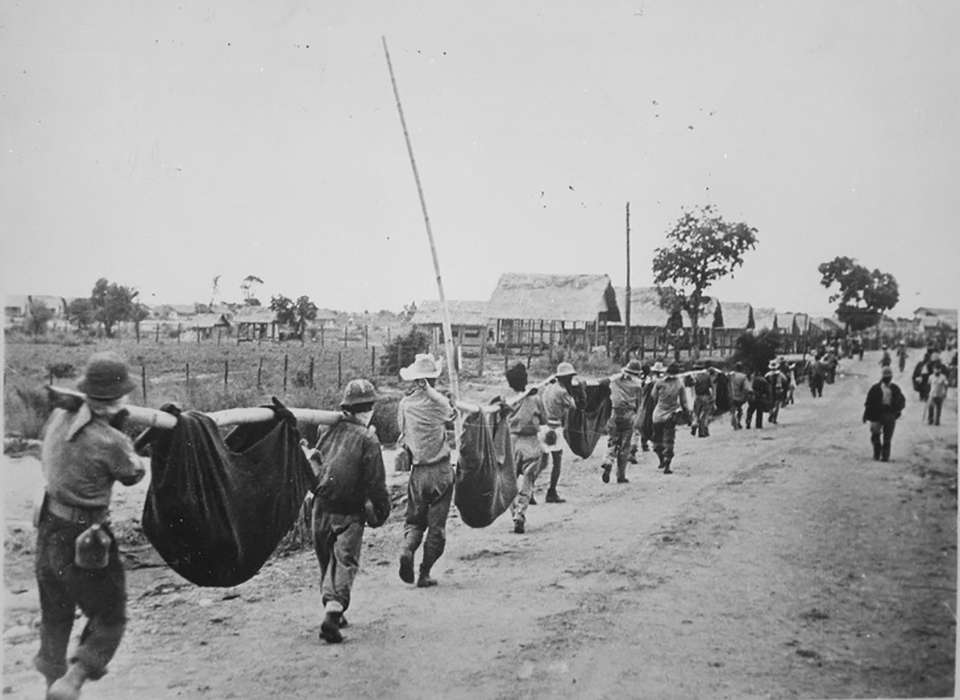
Following the battle, the victorious Japanese committed atrocities against the prisoners ranging from massacres such as the one at Pantingan River where an estimated 400 Filipino and American soldiers were slaughtered, to the infamous Death March where tens of thousands of survivors were forced to march from Bataan to San Fernando, Pampanga and then to Capas, Tarlac, which is a distance of approximately 112 kilometers. Of an estimated 78,000 prisoners of war, around 18,000 would die or be slaughtered by the Japanese during the march. More prisoners would die daily in the hundreds in the concentration camp set up to contain them.
The valiant defense and tragic outcome of the Battle of Bataan made it a rallying cry for the Allied war effort to resist and defeat the Japanese. It became a constant theme in propaganda reels and cinema to mobilize the U.S. Home Front. All these created an epic image of battle that was larger than life and approaching that of mythological status which then affected postwar appreciation of that historical event. It is then the purpose of this article to assess the significance of the battle and claims about it during the Second World War itself and in the postwar era, as well as explaining as to what makes it very relevant today despite the changing face of modern warfare.
The claim that Japanese invasion force was superior to the USAFFE.
This is very debatable. The United States Army Forces of the Far East and the Philippine Commonwealth Army which was absorbed into it had a combined strength that was equal in many instances, and even superior in some cases to the 14th Army which was the Japanese expeditionary force assigned to conquer the Philippines. The USAFFE numerical strength of 150,000 wherein the bulk was composed of Filipino soldiers in either the Philippine Scouts of the U.S. Army and the Philippine Commonwealth Army (PCA) was a little more than that of the Japanese. Although the PCA training varied from unit to unit with some well trained and others barely receiving any instruction, they were stiffened by the core of regular U.S. Army units. The USAFFE possessed qualitative superiority in equipment over the Imperial Japanese Army. In infantry weapon such as rifles, the USAFFE units packed a heavier punch than the Japanese. Three types of 30 caliber rifles were used by the USAFFE and these were the bolt action M 1903 Springfield, the bolt action M 1917 Enfield which was the main rifle of the PCA, and the semi-automatic M1 Garand which equipped some US Army units and was the best rifle among all sides in the battle. The Japanese on the other hand used two types of rifles with two different calibers. The Type 99 bolt action rifle used 7.7mm ammunition which approximated that of the 30 caliber USAFFE rifles.
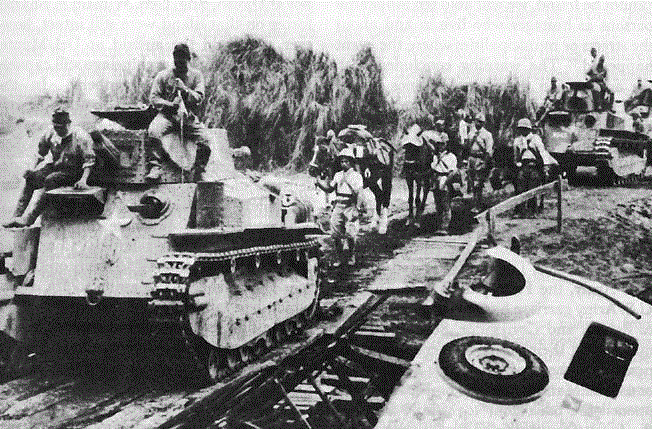
The Type 38 bolt action rifle though was of a smaller 6.5mm caliber and was also used by the Japanese which basically meant two supply chains for ammunition. Armor was another area where the USAFFE was superior to the Japanese. During the 1941 invasion, the Japanese were equipped with four types of tanks which were the following:
The Type 89 and early Type 97 medium tanks which were useless in tank against tank combat as their gun was only for infantry support. Nearing the end of the campaign in mid-1942, an upgraded Type 97 was used which was armed with a gun that was better suited to fighting other tanks.
The Type 95 light tank which armed with a high velocity 37mm gun was of use in combat against other tanks but it was a badly designed armored vehicle with armor that could be penetrated by the 50 caliber heavy machine guns of the USAFFE.
The last category was the tankette which were armed with light machine guns and were totally vulnerable to enemy tanks.
The USAFFE though had only one type of tank and that was the M3 Stuart which outclassed anything that the Japanese had up until the arrival near the end of the campaign of the upgraded Type 97. There were approximately 100 of these tanks in the Philippines. Compared to the Japanese tanks, the M3 was better armored, and better armed than any of the Japanese tanks and in fact it could hold its own against early war German panzers in North Africa. The USAFFE also had an additional 50 self-propelled 75 mm guns mounted on armored half-tracks that could demolish any Japanese tank. Although the Americans lost a few tanks to the advancing Japanese in some earlier skirmishes, during the Battle of Baliuag on December 31, 1941, M3 Stuarts shot apart or damaged a dozen medium and light tanks of the Japanese with no loss to themselves.
In the air, much has been made about the Mitsubishi A6M2 Zero as the supreme carrier fighter in the early part of the Pacific War which is true. However, that was a naval fighter that only saw action during the initial attacks of the Japanese. For much of the invasion campaign, the Japanese Army relied on the lightly armed Nakajima Ki-27 which was an older fixed undercarriage fighter wherein the wheels did not retract into the aircraft but stayed out. The Ki-27 was slightly more advanced than the primary fighter used by the Philippine Army Air Corps which was the Boeing P-26 and totally outclassed by the P-40s of the Far East Air Force. When it came to bombers, there was nothing that the Japanese had which matched the early model Boeing B-17 Flying Fortresses of the USAFFE.
In 1941, on the eve of the Pacific War, the USAFFE at that point in time was the most powerful defensive and offensive force of the Americans outside of the United States and Hawaii. The 35 B-17s in Luzon made it the most powerful heavy bomber force in the whole of Asia for the simple fact that there was no equivalent to these aircraft in the entire Asia Pacific region. It could count on almost a hundred P-40s to protect it in addition to fifty slower P-35s and the already mentioned 12 P-26s of the PAAC that was absorbed into the FEAF. The only area that the Americans and Filipinos were inferior at in the defense of the Philippines was in naval capabilities wherein the Asiatic Fleet could only count on fifteen light surface warships and 29 submarines which at that time were armed with defective torpedoes that neutralized what should have been a formidable deterrent to the invading Japanese.
So why did the USAFFE fail to fulfill its mission to prevent the Japanese from landing or in defeating them at the landing sites despite having more than enough resources and manpower to do so? It was basically a failure of command of General Douglas MacArthur and officers within the USAFFE HQ who were all slow to react to the news and telegrams from devastated Pearl Harbor warning of an imminent attack on the Philippines. Instead of mounting raids against Japanese bases in Formosa (now Taiwan) to disrupt the expected assault coming from there, nothing substantial was done except to conduct fighter patrols. The initiative instead was passed on by an indecisive USAFFE command to the Japanese who immediately set upon destroying FEAF aircraft at military bases in Luzon. As for the significant force of American submarines, ineffective commanders, faulty torpedoes that continued to be used by submarines because the US Bureau of Ordnance refused to believe negative reports coming from commanders at sea, and haphazard deployments, all combined to squander the opportunity to have severely disrupted the landing. Decades after the war, a retired US submarine captain, Edward L. Beach argued that what contributed to the loss of the Philippines was the dismal performance of the American submarines which still could have sunk the Japanese transports despite the losses inflicted on the FEAF.
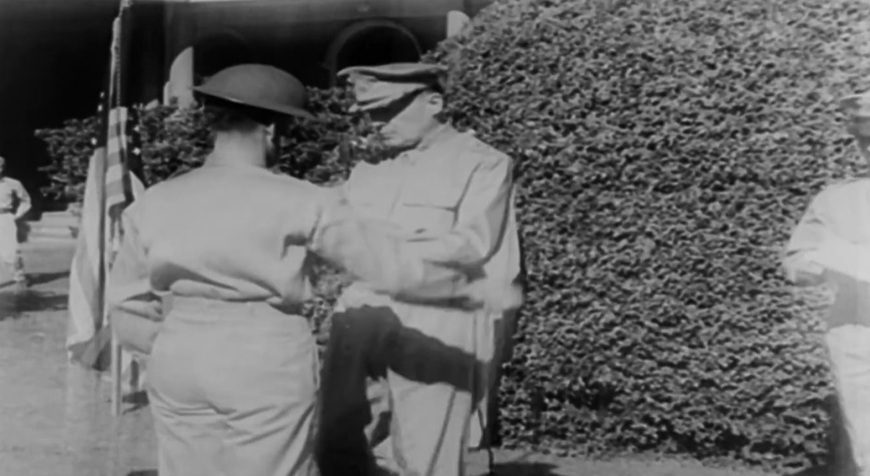
With the defeat of the USAFFE at the beachheads, the order was given to fall back towards Bataan where a stand was to be made and to wait for the promised reinforcement that was called for by War Plan Orange 3. The Japanese had seriously underestimated the strength of the USAFFE and as a result withdrew most of the best units of their invasion force and sent them elsewhere to participate in operations in Borneo and the Dutch East Indies (now Indonesia). This self-inflicted weakening by the Japanese of their own forces resulted in a tactical victory for the USAFFE which defeated several disjointed attempts by the enemy to infiltrate and outflank the Filipino and American defensive lines from late January 1942 to mid-February 1942. One can very well imagine what would the outcome have been had the FEAF not been destroyed on the ground but managed to repel the Japanese aerial attacks and eventually the amphibious landings. With the situation getting worse, Washington DC had written off the Philippines and there were no relief convoys coming. MacArthur was evacuated from the Philippines on March 12 together with his family. Commonwealth President Manuel Quezon was evacuated from Corregidor on Feb. 20 to unoccupied parts of the Philippines. From there he was eventually evacuated to Australia.
Less than a month after MacArthur’s departure, Bataan surrendered on April 9.
The claim on delaying the Japanese timetable
The fall of Bataan then brings us to the next issue, what exactly was the battle’s contribution and effect to the Japanese timetable in its operations throughout Southeast Asia and Australia? Did Bataan delay the overall Japanese timetable for the conquest of Australia allowing for time to prepare the defenses? Unfortunately the evidence to support this is not sufficient to definitely prove that it did. This is because the Japanese launched simultaneous offensives that were mostly independent of each other throughout Southeast Asia and had cut off the Philippines from any significant outside support, while the resistance in Bataan did not interfere with Japanese operations in Malaya, and the Dutch East Indies.
This was because the elimination of FEAF airpower and the scattering of the Asiatic Fleet removed any possible threat that the Philippines could have on the logistics and supply lines of Japan’s Southeast Asian operations. This then allowed the Japanese carriers and other heavy units the ability to range freely all the way to the Indian Ocean. From January to February 1942, the Japanese were scoring victory after victory in land, sea and air against the combined forces of the Americans, Dutch and British. As early as February 19, 1942, four of the Japanese aircraft carriers that had struck Pearl Harbor three months earlier launched two raids against civilian and military installations and naval vessels in Darwin, Australia. Later in the day, land based Japanese bombers flying from newly captured bases launched additional attacks against Darwin. Hence, even though this was a week after the Japanese had suffered a temporary defeat at the hands of the USAFFE in Bataan, this had no effect on the Japanese attack on Australia itself. The reason for the Japanese attack against Darwin was to prevent an Australia based response to Japanese operations in Java and Timor.
By March 9 1942, even before MacArthur left Bataan and a full month before the surrender of the USAFFE garrison there, the Dutch formally surrendered to the Japanese. It was the Dutch East Indies campaign that had a direct influence on operations in Australia because that Dutch colony together with other islands in the South Pacific would provide the bases upon which Japanese power would be projected against the Americans and Australians. To eventually isolate Australia, the Japanese commenced operations in Papua New Guinea on March 8, 1942 to secure bases there with the eventual objective of capturing Port Moresby. Port Moresby had the potential of being used a springboard for an invasion of Australia itself. The problem though facing the Japanese was that an advance from the northern coast of Papua to the southern coast was extremely difficult to do because of the mountainous terrain so they chose instead to make an amphibious operation to seize Port Moresby. It was to be covered by a naval force consisting of three aircraft carriers and the operation began on May 4, 1942, a few days before Corregidor surrendered on May 6, 1942. This again shows that Japanese operations in the South Pacific were not being influenced by what was going on in the Philippines. What then happened was what truly upset whatever plan that Imperial Japan had with Australia, and that was the Battle of the Coral Sea from May 4 to 8, 1942 wherein U.S. Navy aircraft carriers managed to cause the Japanese to abandon the operation to capture Port Moresby.
The Significance of the Battle of Bataan
As had been mentioned, from the wider perspective of the War in the Pacific during that period, the battle and the overall 1941-1942 campaign in the Philippines had little to negligible effect on other operations by the Japanese. The fact that Roosevelt agreed to write off the Philippines reveals the loss of importance it had on even American and Allied military planning since Europe was prioritized. The battle and its outcome however became a symbol of heroism and sacrifice during and even after the war, not just in the Philippines but also in the U.S. For example, MacArthur’s personal transports were named Bataan while two U.S. Navy ships have been assigned that name.
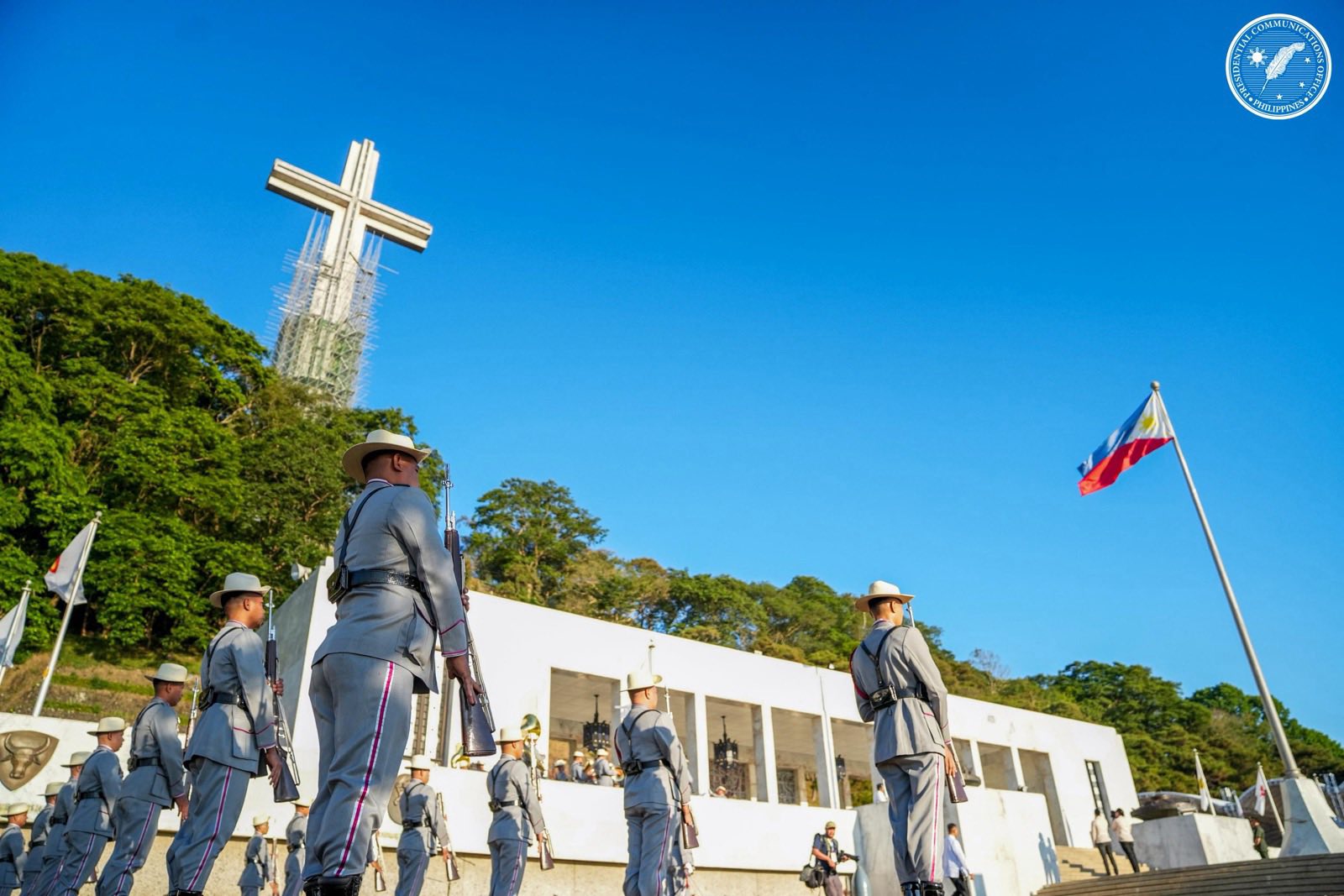
Every April 9, which is a national holiday in the Philippines, official commemorations are held at the Dambana ng Kagitingan at Mt. Samat which was opened in 1970 during the presidency of Ferdinand E. Marcos Sr. Although being a WW2 veteran, the record of Marcos Sr. in Bataan has been questioned by historians and journalists for embellishment and inaccuracies. The shrine is topped off by one of the largest crosses in the world measuring 92 meters in height. The immense white cross can be seen for kilometers around and sometimes even across the bay in Manila on a clear sunny day especially if one uses a good pair of binoculars. This battle, more than any other, is the most important in the Philippines when it comes to ceremonies to commemorate its memory. While others tend to be local commemorations, or smaller national government commemorations, that of Bataan involves elaborate ceremonies not just in the Dambana but also in various municipalities nationwide. At the Dambana itself, high ranking local, national and international delegates of whom many are diplomatic and military officials are in attendance.
Regardless of the argument of the Battle of Bataan’s actual significance during the war, the lessons it imparts to the Philippines today remains relevant given the numerous national security issues confronting the country. The battle shows that no one else will resolutely defend the Philippines except Filipinos themselves. True the Americans were allies at that time but the Philippines was written off in 1942, and in 1944, if not for MacArthur forcefully explaining to the commanders of the U.S. Navy and to Roosevelt that it was the moral obligation of the Americans to liberate the Philippines, the archipelago would have been bypassed and 18 million Filipinos would be left to deal with half a million heavily armed troops of Imperial Japan. The Japanese would be committing atrocities with impunity like massacring civilians during anti-guerrilla operations and confiscating all food supplies just to feed the occupation force. Millions of Filipinos would have been starving to death while hundreds of thousands may have been dead by the time Japan surrendered on August 1945. Today, as we see the Trump administration alienate its long standing allies, the Philippines must take steps to seriously improve its capabilities to defend itself alone if necessary, from external threats especially coming from China. Excuses like there are limited funds for defense ring hollow as scandal after scandal are exposed involving billions of pesos that are lost through corruption. If the country’s ASEAN neighbors are able to substantially improve their capabilities, why cannot the Philippines do the same and not be niggardly about it?
In today’s climate of defeatism brought about by pro-China Filipinos, some of whom are even national politicians, the battle’s message of courage and hope can serve to push back against defeatist propaganda. It must be connected to all commemorations and teachings on the battle that even before the USAFFE surrendered at Bataan, resistance by Filipinos against Japanese occupation was already beginning. Cadets of the Philippine Military Academy who were considered too young to see action, soldiers whose units were isolated, and even ordinary civilians, all of them organized guerrilla groups in Japanese controlled areas that eventually grew in strength as the years went by. By late 1944, after two and a half years since the fall of Bataan, it was estimated by Allied intelligence that a million Filipinos were in one way or another part of the guerrilla resistance. These Filipinos held on to hope in a time of hopelessness, maintained courage despite being abandoned, and this is why we remember and commemorate their sacrifice on what is one of the most solemn days in the Philippines, the Day of Valor, or in Filipino, “ang Araw ng Kagitingan”.