
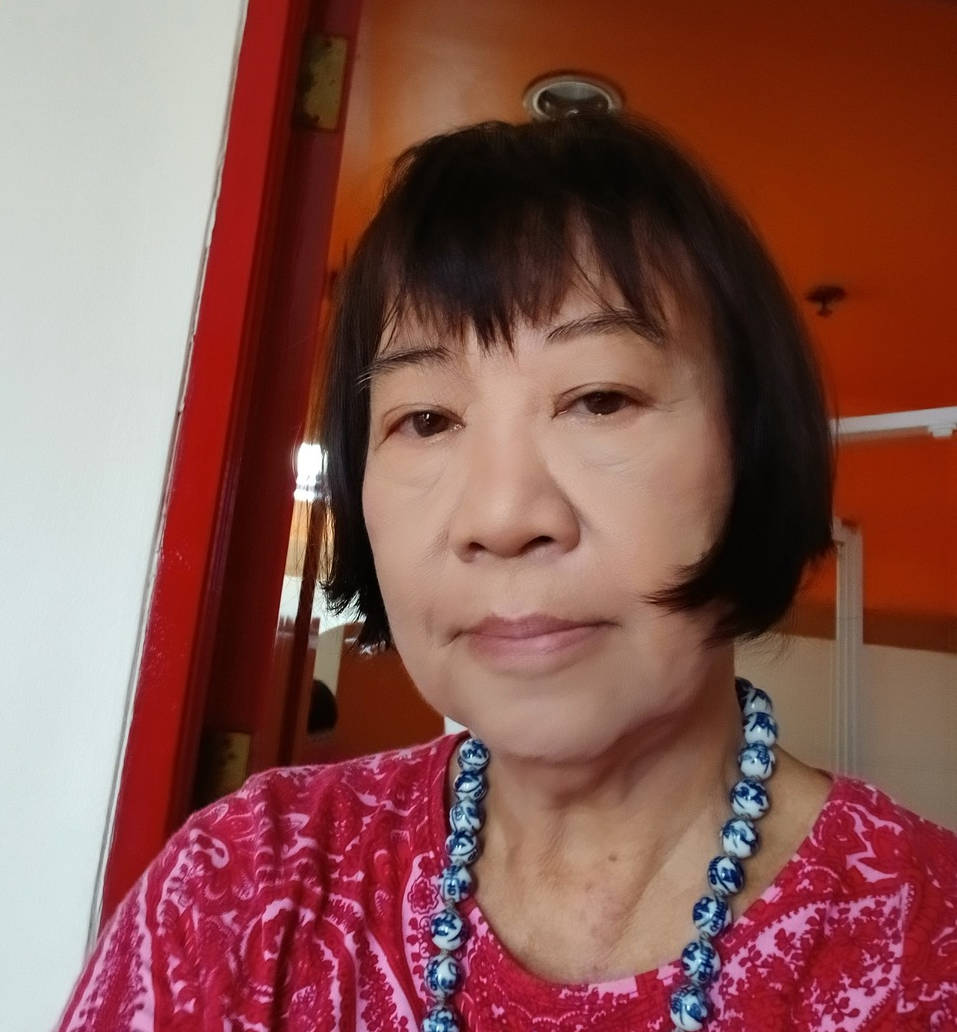
Nunelucio M. Alvarado, 76, has been conferred the Order of National Artists of the Philippines for Visual Arts 2025, the highest national honor for the arts.
His place in Purok Bougainvillea, Old Sagay has been the center of community arts participation: fences, walls, houses, and traysikad painted in tropical colors through Pinta Balay and Pinta Sikad projects initiated by Alvarado. Regarded as their treasure, he is called Maestro Nune by the locals. It also boasts of a successful “cinema by the sea,” the Margaha Film Festival since 2020, with kite flying or burador and fluvial parades, all thriving.
Return to roots: By choosing to live and work in Sagay, Negros Occidental early in his life as a full-time artist, Alvarado remains rooted deeply in his community; his brightly painted bamboo-and-nipa house and studio named Atalyer Alvarado along Margaha Beach with a coffee place, Kape Albarako. Open to everyone, it holds art and craft workshops for children and adults in the community.
Active in local art groups such as Pintor Kulapol that he founded in 1988 and Syano Artlinks, Alvarado has become a role model for young artists to engage in social advocacy.
In 2025, a travelling exhibit titled Bitter Sugar:The HeArt of Nune Alvarado made the rounds in Metro Manila, celebrating Alvarado’s five decades of artmaking.
It included 18 works made between 2003-2014 such as Pig Baboy, 2008; Tres Marias, 2008; Tunaw-Tunaw, 2008; Hala Sige Gabuta, 2008; Kuting-Kuting Dala Gitara, 2011; Pangabuhi, 2010, and Dagway sa Tapangko, 2016.
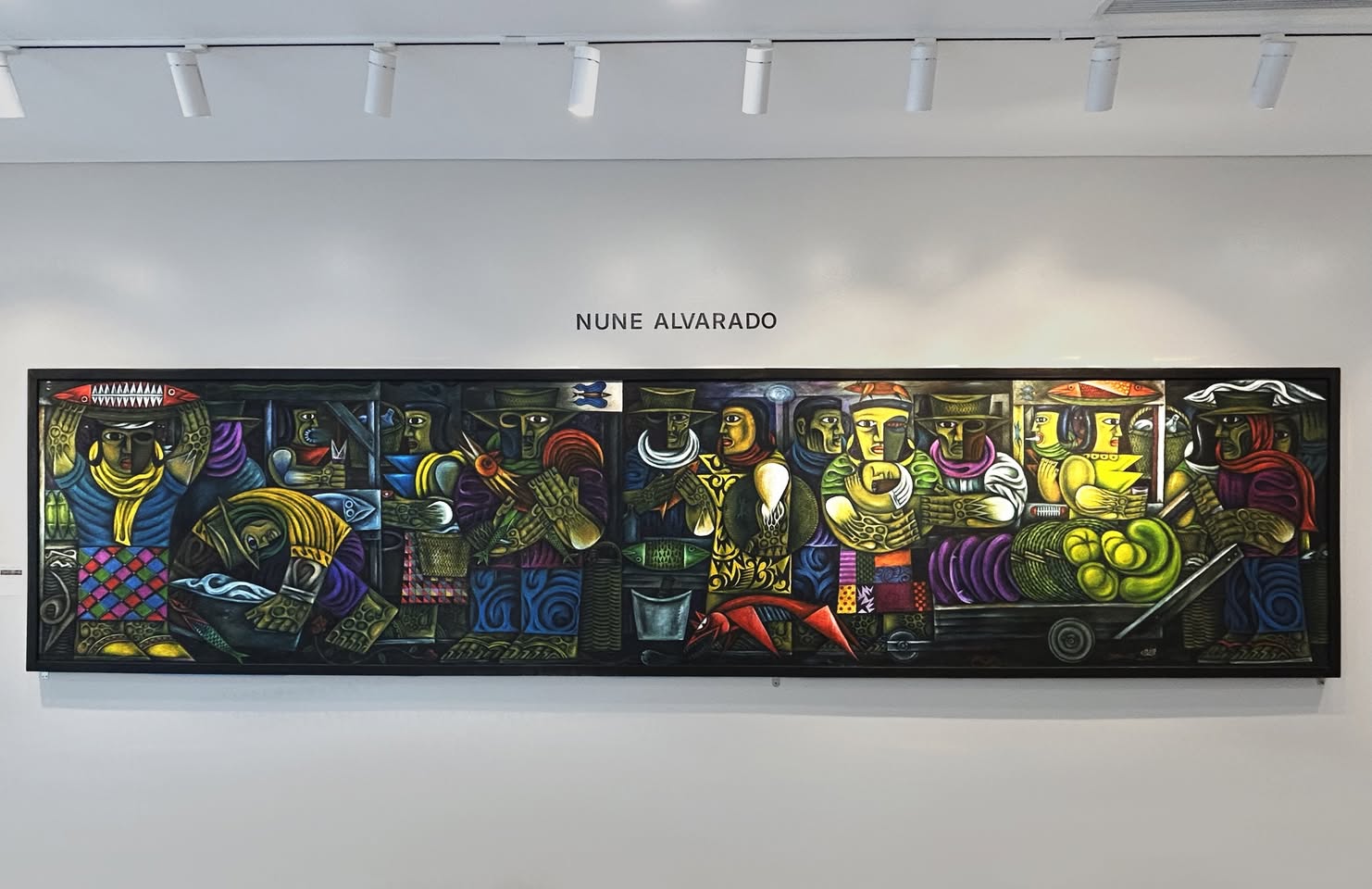
Alvarado’s first solo show was in 1979 at Sining Kamalig, Manila; in 2004, Metropolitan Museum of Manila held a retrospective of his works.
Visually articulating issues of social justice, Alvarado’s provocative body of work is rooted in the haciendas and sugar centrals of Negros with its feudal and oppressive conditions. Sacadas are migrant and seasonal workers, mostly from Antique, Iloilo, who do the backbreaking work of planting, harvesting, loading sugarcanes into trucks, and clearing and burning the fields for very low wages. Severe poverty abounds and debt bondage or karga tapas persists.
The term sacada comes from the Spanish word sacar, “to pull out, to extract” extended to mean “the taken or the imported ones.” Sacadas live inside haciendas known as kampo, spending their meager wage on food and cigarette from the hacienda-run store.
Early in his life as an artist, Alvarado worked in a hacienda owned by a friend and immersed himself into the lives of sacadas inside a kampo.
Visual language: With dignity and resilience, Alvarado depicts sugar workers and the people of Negros in bold and defined lines and frontal views. Stocky, heavy bodies signal their endurance to hunger and oppression, standing firm and solid; square or angular faces, large eyes wide open and a direct gaze, at times defiant but never with downcast or beggarly looks.
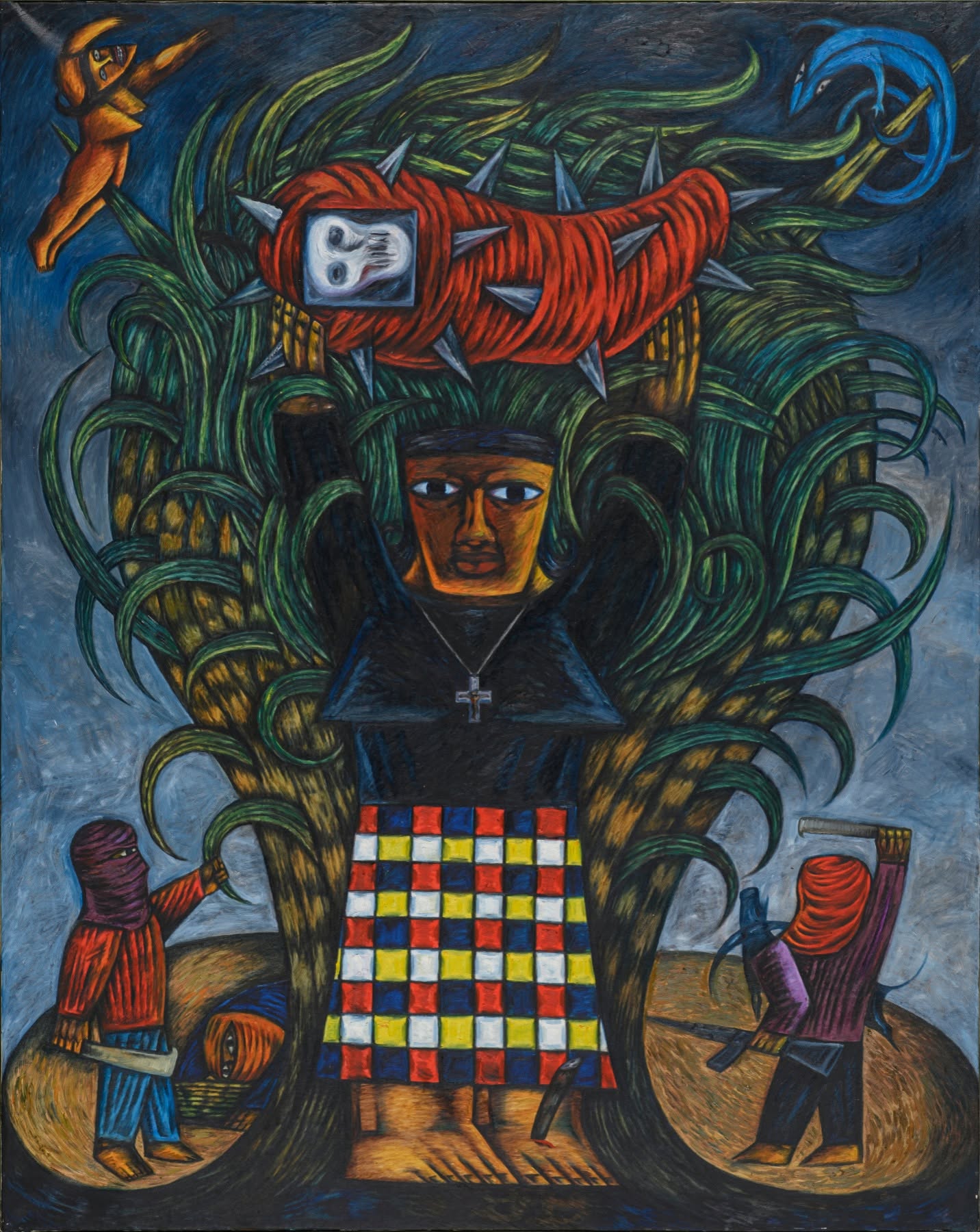
The sugarcane becomes a cross or a spear with giant claws or metal spikes, metal rods, a sharp sword striking through a sacada’s body, or a pole sprouting with bizarre creatures. Skulls signify the artist’s pain and anger.
Snakes, dragons, lizards, and underground creatures in Alvarado’s works intensify the “sense of anger and angst, though this menagerie is rendered in a colorful palette of riotous colors that defuse the tension of its gravitas,” notes the late art critic Ruben Cañete.
Selected Works: Emmanuel Torres, founding curator of Ateneo Art Gallery, describes Alvarado’s Tagimata exhibit in 2000 at the Metropolitan Museum “…as the most visually and mentally gripping display of creative intelligence I’ve seen in decades — and a giant step that takes Alvarado closer to greatness.”
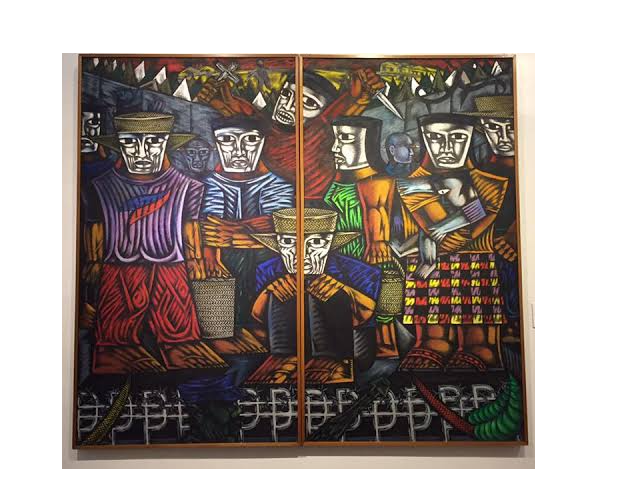
Hulat Sweldo, 1994: Refers to late or delayed wages, a two-panel oil on canvas depicting sacadas, waiting to get their meager wages; families wait for rice on the table and cheap milk for the youngest.
Dahon nga Dalitan, 1996: Dangerous and poisonous leaves of sugarcane harvested in Negros: the sugarcane looming large behind a man; its large stalks and nodes are like giant thorns or metal talons, deadly. Skull wrapped in red with protruding spikes.
Hala Sige Gabuta, 2008: A male figure with sugarcane turned into steel rods piercing through his shoulders and head. He bears the pain and defies death. Sugarcane has become a weapon of death and destruction for many workers.
Siga Mata, 2018: Four big-boned women, one carrying a child, another, some fish in colorful attires in purple, blue, green, with their squared faces and large eyes piercing through you; one woman has a pair of eyes turning fiery red, all unflinching in their lived realities.
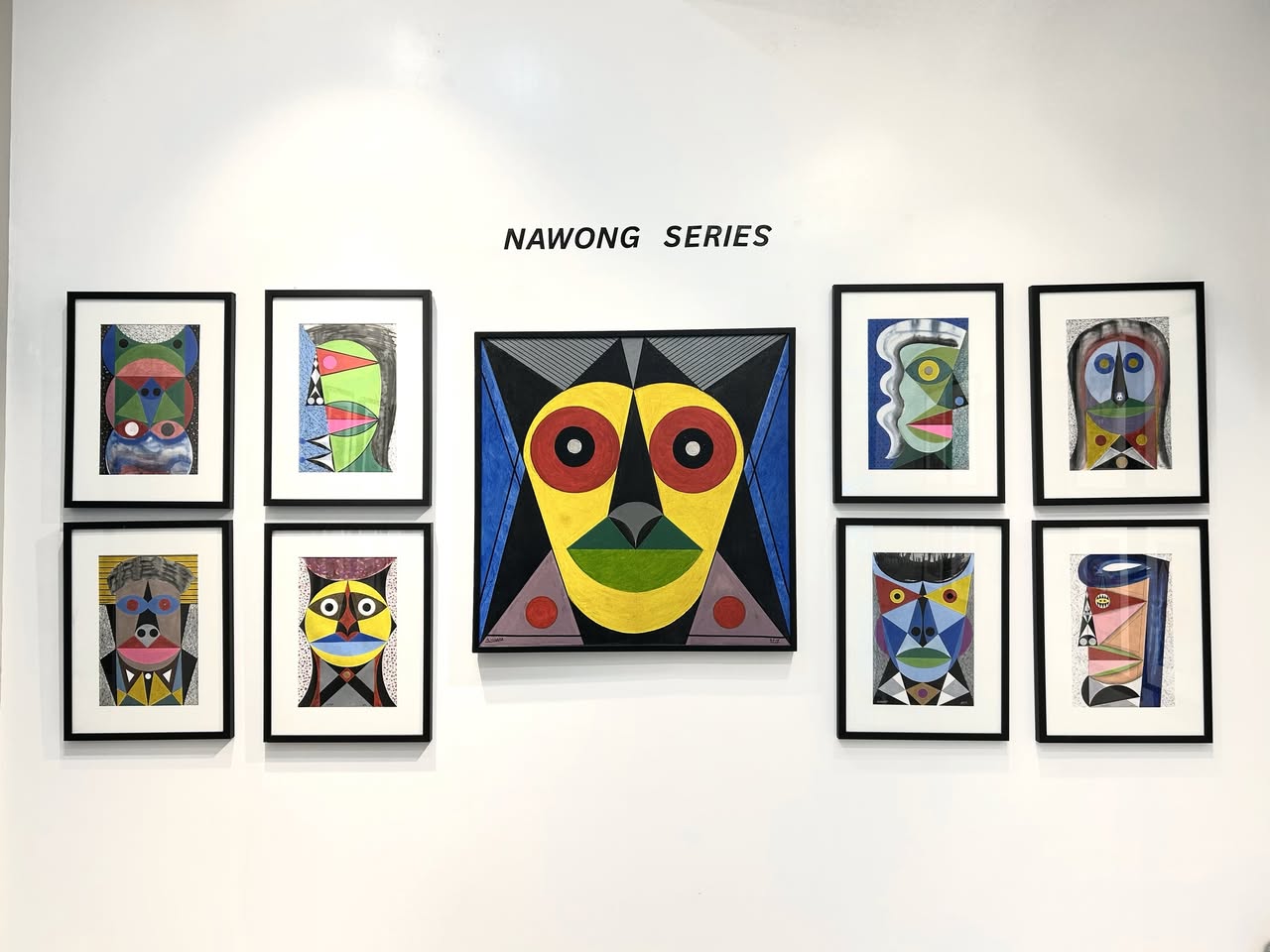
Nawong Series: Ang Mga Nawong ni Alvarado, a solo show at the Negros Museum for its silver anniversary in 2022. Since 2016, Alvarado has created more than 4,000 paintings of the human face or nawong in Visayan.
In Songs from the Sea exhibit in 2018 in Iloilo City, Alvarado concentrates on the coastal area of Sagay, “I am serenaded by the sea,” he says, finding peace in this seaside community.
Living with dementia, Alvarado remains in the family cocoon of Atalyer Alvarado, lulled by the waves and winds of Margaha Beach.
Nunelucio M. Alvarado (b. 1950): Born in Fabrica, Sagay, he learned painting from his father who was a sign painter. With a fine arts degree, majoring in advertising in La Consolacion College, Bacolod City in 1968, he spent a semester in UP Diliman fine arts in 1969.
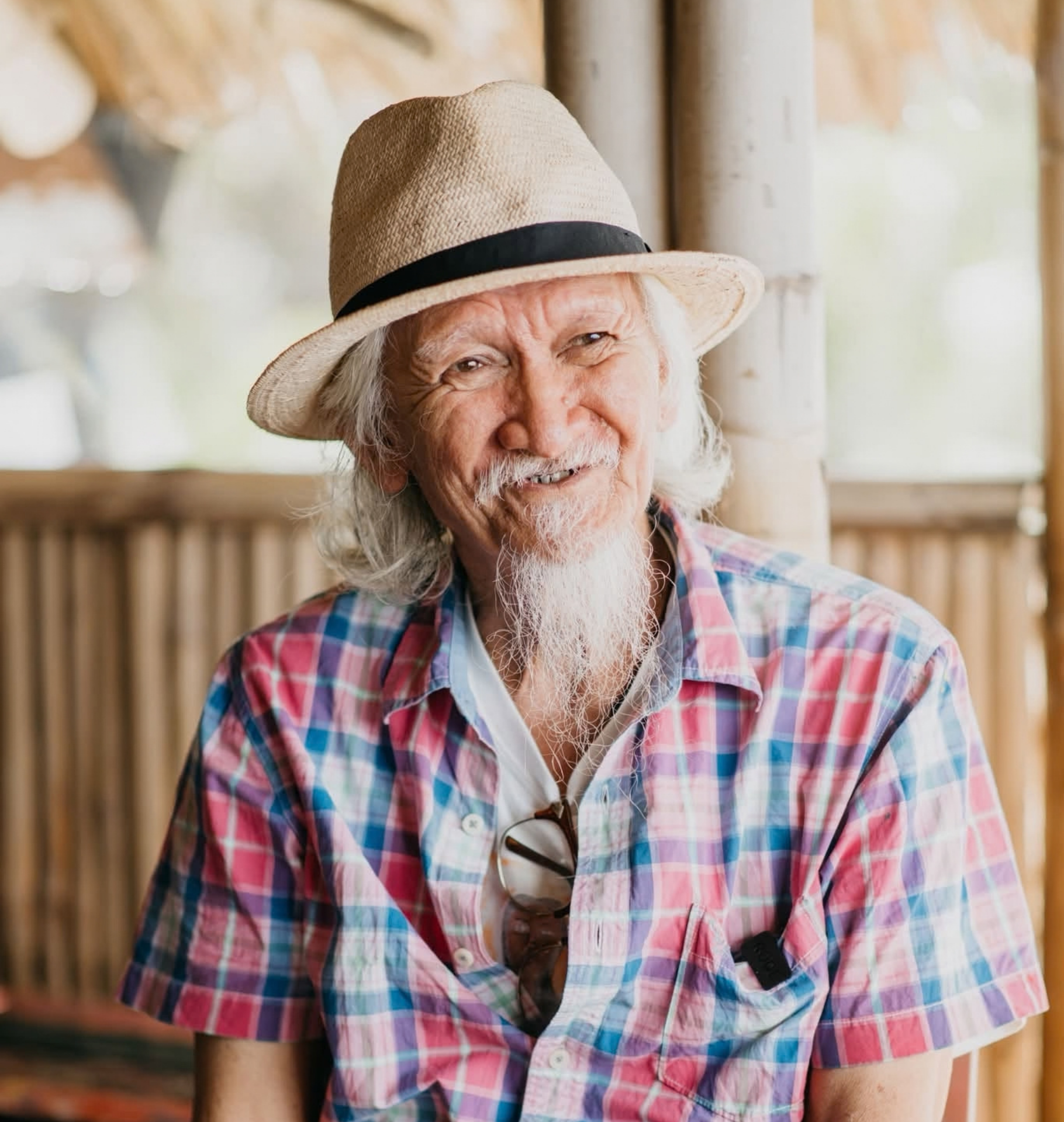
Alvarado’s awards include the Thirteen Artists Award, Cultural Center of the Philippines, 1992; two Grand Prize for Ang Lagare ni Kumpare, 1997 and Urban Poor, 1999, Philip Morris Philippine Art Awards. With other Filipino artists, he participated in the first Asia Pacific Triennial, Australia in 1993.
Sugar is toxic: Today, Negros produces 61% of the country’s sugar production; the sacadas are still very much around amidst Negros’ highly militarized environment marked by deep inequalities.