
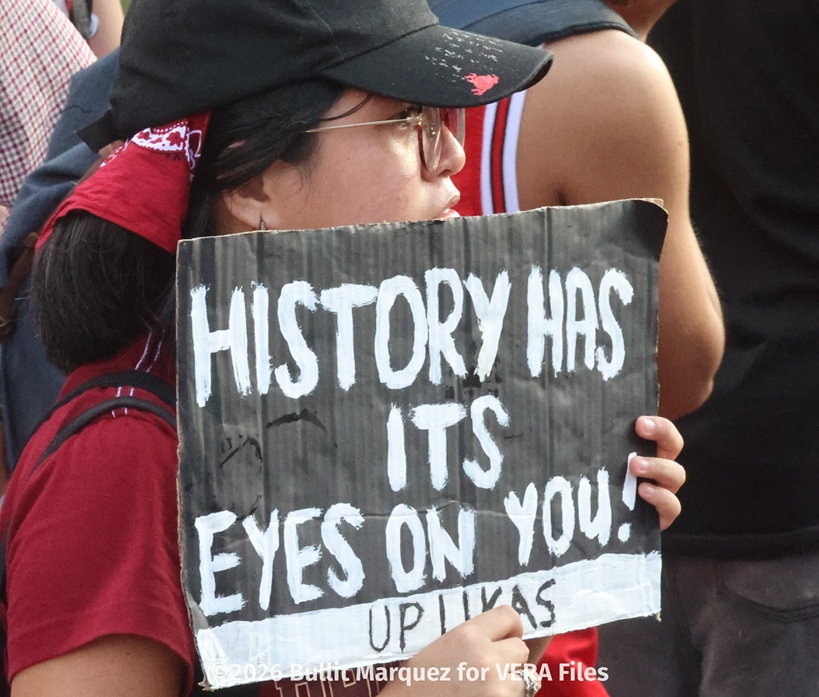
Last September 21, was the 54th anniversary of the declaration of Martial Law and it was commemorated in varying ways depending on one’s political affiliation. Being an operation carried out by the administration of Ferdinand Marcos Sr., it is in the public’s consciousness identified with him. To talk about the Martial Law era is to delve into uncomfortable and sensitive issues ranging from human rights violations all the way to internal fratricidal war.
The country emerged from the Marcos dictatorship way worse from when it entered it. Foreign debt had risen to the point wherein it could not be expected to be fully paid anymore, while much of the financial resources amassed by the regime disappeared in wholesale acts of corruption.
The rise of a dictator
Marcos Sr. did not start out as an authoritarian leader, but he used his first two presidential terms in office to slowly chip away at the institutional protections of democracy and nearing the end of those terms, he used martial law to perpetuate himself into power for the next 14 years following 1972. Even though he claimed to have lifted Martial Law in 1981, no one really believed that he was sincere about it, except probably for U.S. Vice President George Bush Sr. who enthusiastically declared his love for the supposed adherence of Marcos Sr. to democracy.
Marcos Sr. just timed his symbolic lifting of Martial Law on January 1981 in anticipation of the visit of Pope John Paul II to the country on February of the same year. It was a public relations ploy and nothing more. The real end of Martial Law only took place on February 25, 1986 when Marcos Sr. and his family fled Malacañang Palace during the EDSA Revolution. He had stayed in power for 20 years or for a full generation which is the amount of time for a person to be born, grow up and have children of his or her own.
Authoritarianism and economic progress
That then was the greatest tragedy of the Martial Law years in that it set back the country so badly that it is still trying to recover from it which is a daunting task given the fact that corruption and bad governance constantly causes the Philippines to backslide as it tries to scramble uphill to progress. Yet a number of countries in the region that underwent authoritarian rule at roughly the same time as the Philippines managed to emerge from their experience with powerful economies and strong social cohesion that allowed them to enter into the ranks of developed states, with Singapore and South Korea being the best examples of such countries. Under the strong grip of Lee Kuan Yew, Singapore forged ahead from being a vulnerable city state needing desperately the protection of the British Commonwealth of Nations, it became an economic powerhouse by leveraging its strategic location across important sea lanes of commerce to become a maritime hub.
South Korea under Park Chun Hee who had come to power through a coup, mobilized the public and private sector amidst an atmosphere of severe repression to still lay the foundations for industrialization. He managed to drag South Korea out from its agrarian based economy into one that was industrial in nature. It mirrored in a way what the Japanese had done during the period of the Meiji Restoration almost a century earlier. The Philippines apparently aspired to do the same thing during the Martial Law period but instead it spectacularly failed with many projects never fulfilling their goals.
Consider that even Indonesia which had a leadership in the person of President Suharto which was similar to the Marcos regime in corruption, managed to somewhat create an aviation and maritime industry that churns out aircraft and ships that left the Philippines in the dust. Today, the Philippines purchases both aircraft and naval vessels from Indonesian factories and shipyards as it does not and cannot utilize local capabilities for Manila’s needs. Yet the manufacture of aircraft and ships was a frequently highlighted program that was used for propaganda by the Marcos regime for much of the 1970s, then everything just went silent as the 1980s began.
This was because the private companies and government entities that handled these projects most of the time never managed to go beyond the prototype stage and there was little support for sustainability if problems arose.
By the early 1980s, the sorry state of the Philippine economy killed any chance for any further development of these local programs as the Marcos regime was in full on survival mode both for the president and his continued rule. Marcos Sr. had fallen dreadfully sick with lupus and political destabilization and public unrest caused by the assassination of former Senator Benigno Aquino Jr., combined with economic malaise was too much for him or his subordinates to handle. That is granted that those people under him were working together to provide solutions and not scheming against each other and planning to seize power in a post Marcos scenario.
Ironic in the sense that the Marcos regime in its effort to develop the country created some of the best plans that up to today influence the infrastructure development of the nation almost half a century after their conceptualization. Marcos Sr. and his technocratic team had the brains and skill, but unfortunately they were derailed and distracted by the twin evils of corruption and the lack of will.
Lee Kuan Yew on Marcos Sr
The late Lee Kuan Yew’s assessment of Marcos Sr. clearly illustrates why despite all the resources, the talent, the length of time and freedom of movement available to him provided by his authoritarian rule, the dictator still managed to fail. Lee Kuan Yew states in his memoirs,
“As gently as I could, I described to Reagan how Marcos had changed from the young anti-communist crusader of the 1960s to become a self-indulgent aging ruler who allowed his wife and cronies to clean out the country through ingenious monopolies and put the government heavily in debt,”
Lee described Marcos Sr. as a person, who was defeated by his disease and lack of credibility,
“As soon as all our aides left, I went straight to the point, that no bank was going to lend him any money. They wanted to know who was going to succeed him if anything were to happen to him; all the bankers could see that he no longer looked health…The hard fact was they were not likely to get repayment for some 20 years. He countered that it would be only eight years. I said the bankers wanted to see a strong leader in the Philippines who could restore stability.”
Equally damning is Lee’s assessment of Philippine society to illustrate why recovery has been so difficult for the Philippines despite 40 years since the overthrow of Marcos Sr. and why Filipino leaders are prone to excessive acts of corruption,
“Something was missing, a gel to hold society together. The people at the top, the elite mestizos, had the same detached attitude to the native peasants as the mestizos in their haciendas in Latin America had towards their peons. They were two different societies: those at the top lived a life of extreme luxury and comfort while the peasants scraped a living, and in the Philippines, it was a hard living.”
The predatory elite
Hence the Philippines failed to develop at the same pace as its neighbors not only because of the misrule of Marcos Sr. It failed because it has a predisposition for failure that is rooted especially on the governing elite. It is an elite that has a predatory approach to governance at the expense of the Filipino people. This elite disease predates Marcos Sr., it was there during the Marcos dictatorship, and it continued even after. If that was not the case and had it only been Marcos Sr. as the sole cause, then in two decades following his fall, the country should have managed to substantially recover. However, fifteen years after the overthrow of Marcos Sr., another President was removed from office in a power grab in 2001. This ushered in a decade of questionable governance that led to a president being arrested for corruption by her successor. Currently there is a former president who has the notorious distinction of being the first Filipino head of state to be tried for crimes against humanity. Marcos Sr.’s corruption as a dictator was not an aberration in Philippine politics. It is actually the norm and attempts to break its grip on governance, only makes it lash out and hold on tighter.
Will PBBM be the national leader who will ultimately break this selfish and corrupt elite curse on Philippine governance? Probably not within his time since after all he is a beneficiary of the largesse his parents siphoned out from the country’s coffers. However in his campaign to neutralize and dismantle the Duterte camp, he has provided the opportunity to build up capabilities to combat corruption which if his successor continues his policies, may just result in the creation of an environment that will be more difficult for politicians to engage in those corrupt acts.
The views in this column are those of the author and do not necessarily reflect the views of VERA Files.