
The House prosecution panel this week began presenting witnesses and records to build its case of alleged unexplained wealth against Vice President Sara Duterte, putting her financial declarations and accountability as a public official under scrutiny for the first time in the impeachment trial.
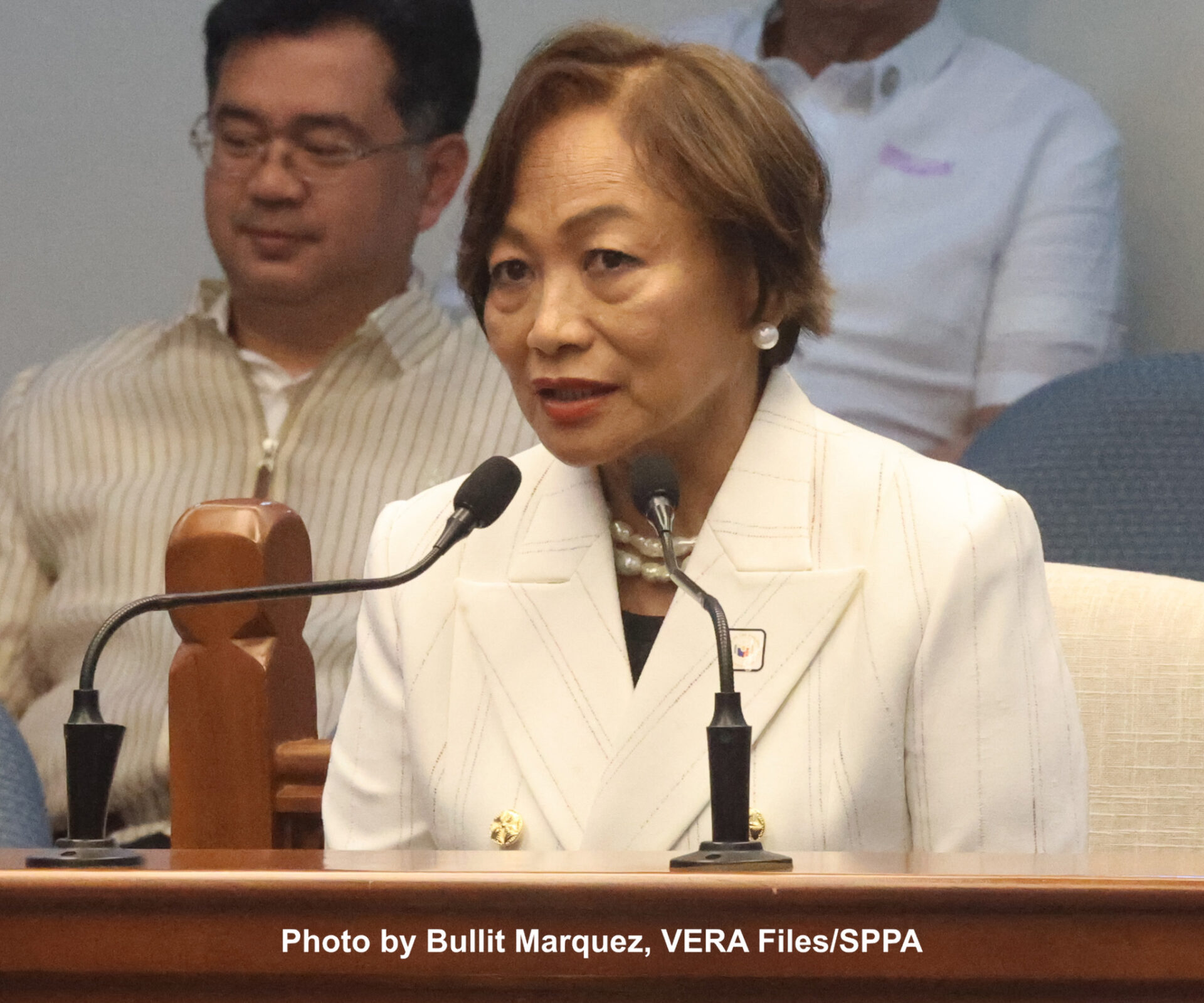
The prosecution’s presentation of Article II, which covers allegations of unexplained wealth, SALN discrepancies and business interests, began with retired Sandiganbayan Presiding Justice Amparo Cabotaje-Tang on Day 24, and continued with Ombudsman records officer Karen Batu on Day 25.
Cabotaje-Tang laid out the legal standards for determining unexplained wealth and the obligations of public officials, while Batu authenticated Duterte’s Statements of Assets, Liabilities and Net Worth from 2007 to 2025, giving the Senate impeachment court a nearly two-decade record of her declared wealth.
The prosecution’s evidence did not by itself establish wrongdoing. But it marked a shift in the trial from the presentation of evidence on other impeachment allegations to a closer examination of Duterte’s wealth, SALNs and financial interests.
The week then took an unexpected turn on Day 26, when the Senate heard four retired Supreme Court justices on a separate but potentially crucial question: whether the two-thirds vote required to convict Duterte should always mean 16 votes in the 24-member Senate.
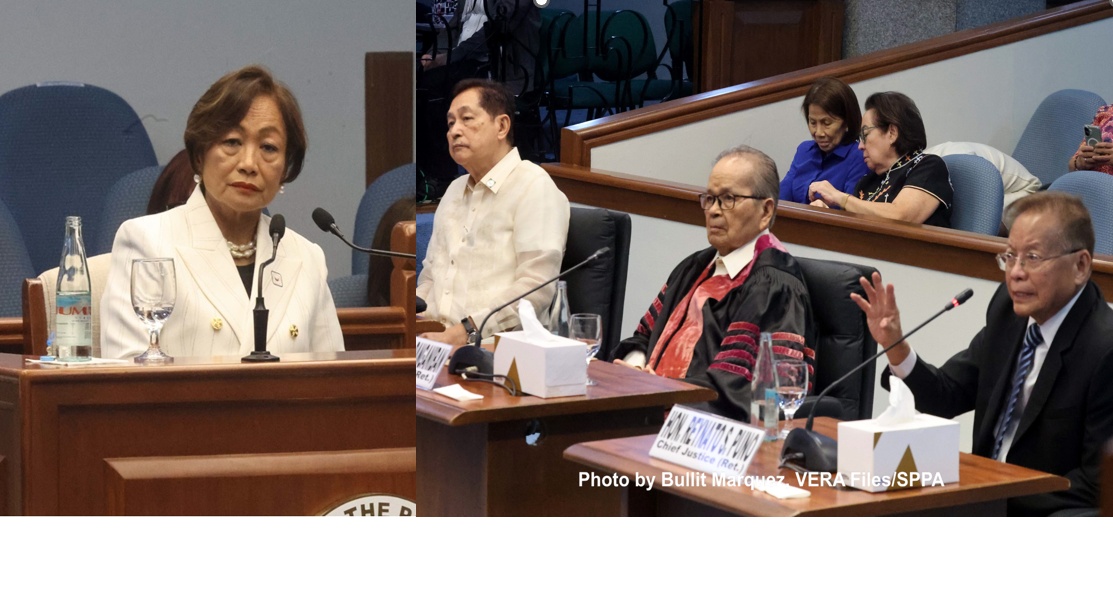
The four amici curiae – retired chief justices Hilario Davie Jr., Artemio Panganiban and Reynato Pun0, and associate justice Adolfo Azuna – offered differing views on how “two-thirds of all the members of the Senate” should be interpreted when some senators are unable to participate in the trial, setting up another major constitutional dispute.
Legal framework first
Cabotaje-Tang, the prosecution’s first witness for Article II, did not testify that Duterte had unexplained wealth. She said she had no personal knowledge of Duterte’s properties, stocks or bonds, or of the accuracy of her SALNs.
Instead, the retired justice explained the legal framework that the prosecution said would guide the court in assessing the financial records it planned to present.
She testified that wealth acquired during a public official’s incumbency could be considered questionable when it was grossly disproportionate to the official’s salary, lawful income and earnings from legitimately acquired property.
She also discussed the requirement for public officials to disclose their assets through their SALNs, including cash on hand and cash in bank. She said these should be separately declared and should not simply be lumped under other personal property.
But Cabotaje-Tang cautioned that a single failure to declare an asset does not automatically establish intentional concealment. Repeated omissions, however, could carry greater weight and, when an asset was omitted over several years, could be a “badge” of attempted concealment.
She also explained the constitutional restrictions on the president and vice president engaging directly or indirectly in business while in office.
The Constitution bars the president and vice president from practicing a profession, participating in business or having financial interests in government contracts, franchises or special privileges during their tenure.
The former Sandiganbayan chief also testified that assets could be concealed through dummies, nominees or proxies, including property placed in another person’s name.
The defense sought to cast doubt on her testimony during cross-examination, asking whether she was “anti-Duterte” or “Kakampink,” whether she had been disappointed after failing to get an appointment to the Supreme Court and whether she was seeking an ambassadorship.
Cabotaje-Tang denied having any political agenda.
“I’ve never been political in my life. I’ve always been apolitical,” she said.
Asked if she had been promised anything in exchange for her testimony, she replied: “I will never testify if I ever was offered anything material or otherwise… My testimony is not for sale, sir.”
She said she was retired and wanted to enjoy her retirement.
SALNs put Duterte’s wealth on record
On Day 25, the prosecution moved from legal principles to Duterte’s actual SALNs.
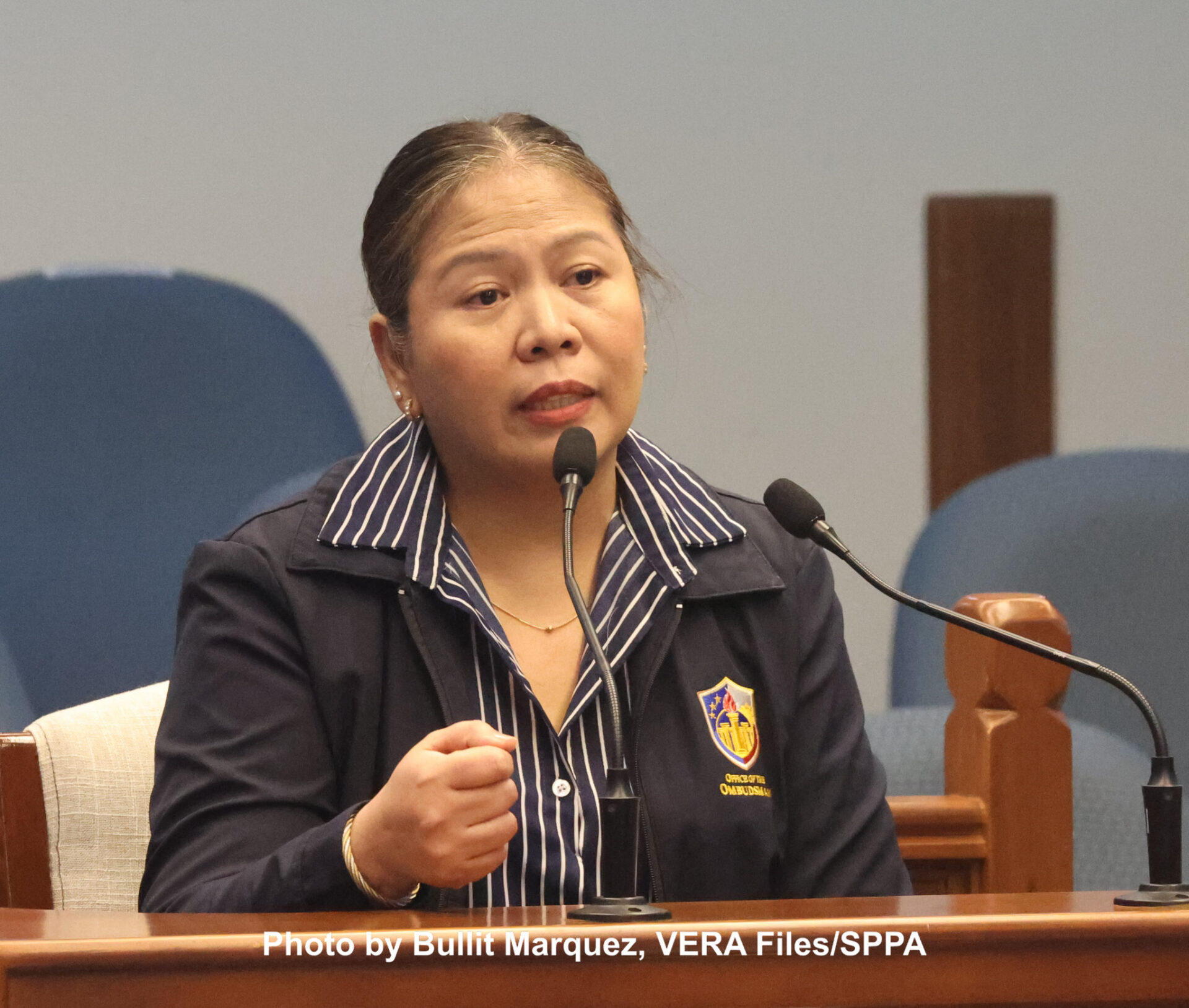
Lawyer Karen Batu, officer in charge of the Ombudsman’s Central Records Division, authenticated Duterte’s SALNs covering 2007 to 2025.
The records showed that Duterte declared a net worth of P7.25 million in 2007, when she began her political career as Davao City vice mayor. Her declared net worth rose to P18.49 million in 2008 and reached P98.66 million in 2025.
“After one year lang sa public office, doble na ang itinaas ng net worth, based on records only,” private prosecutor James Bryan Ibrahim Alih noted.
The 2008 figure was actually 2.55 times her 2007 net worth, while the 2025 figure was about 13.6 times her 2007 net worth.
The figures, however, are declarations on SALNs and do not by themselves establish that any wealth was unlawfully acquired.
The prosecution also focused on Duterte’s declarations of business and financial interests.
Batu testified that Duterte declared no shares in 2007, then listed “stocks equity paid” in 2008. In subsequent years, she listed various business or financial interests, but the SALNs did not consistently state the number or value of shares.
The issue prompted questions from the senator-judges on whether the absence of acquisition costs could affect the declared value of the interests.
Batu repeatedly stressed that her office was only the custodian of the SALNs. It did not verify whether the information supplied by public officials was complete or accurate.
That limitation became important as the defense challenged the prosecution’s use of SALNs filed before Duterte became vice president.
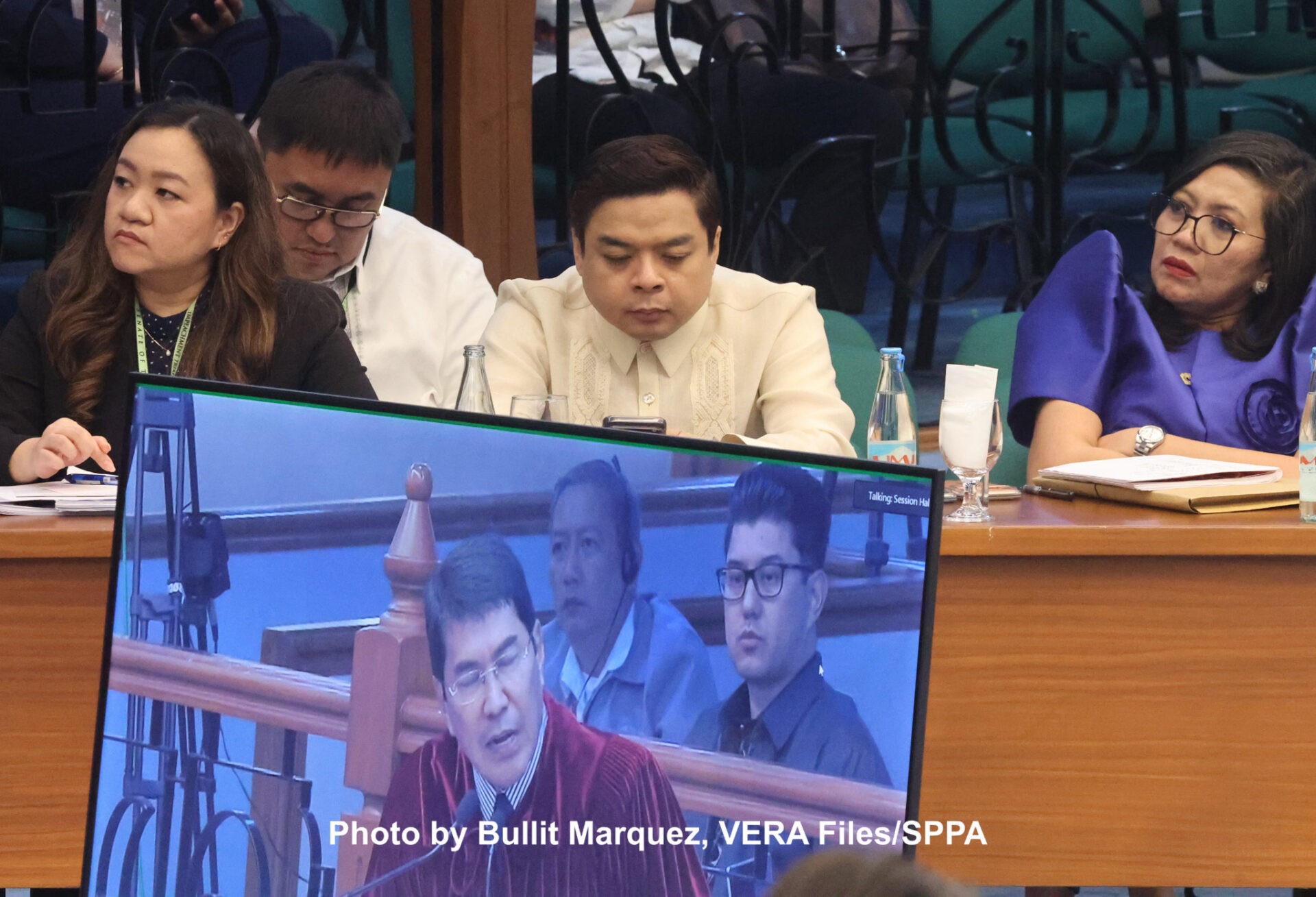
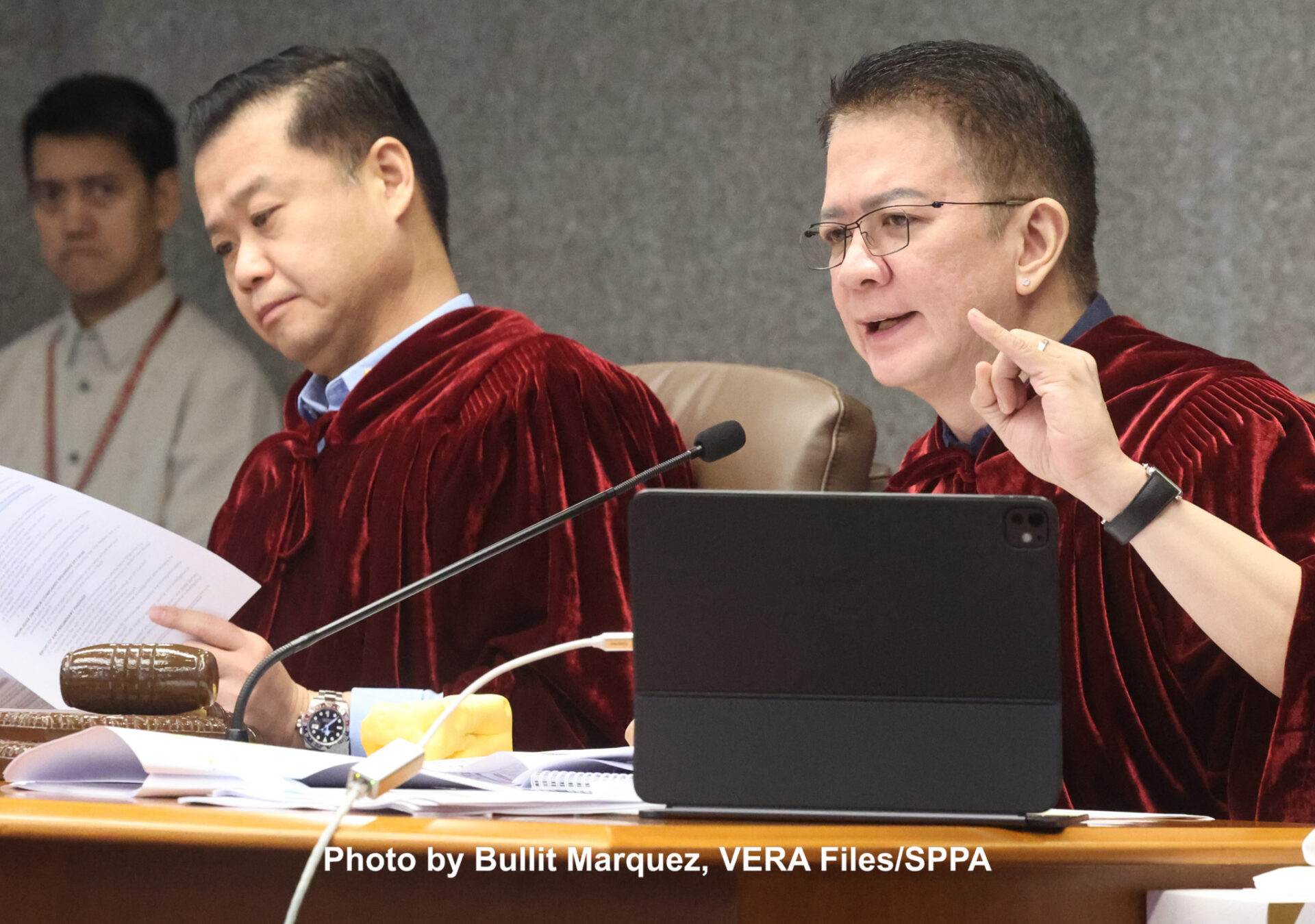
Presiding Officer Francis Escudero allowed the older SALNs to be presented, saying the records could establish a baseline for determining changes in Duterte’s wealth during her impeachable term.
Batu also testified that Duterte declared cash on hand and in bank accounts in earlier years, including P2 million in 2007 and 2008, and increasing amounts in succeeding years.
But from 2019 through 2025, Duterte’s SALNs contained no declared cash on hand or in bank.
The prosecution said the long record of SALNs would allow the court to compare Duterte’s declared wealth over time with other financial records that it plans to present.
That paper trail is expected to include bank, corporate and other financial documents obtained through subpoenas. The prosecution still has to connect those records to Duterte’s lawful income, declared assets and business interests to establish its allegations.
The vote question takes center stage
Then came Day 26, when the impeachment court temporarily shifted from Duterte’s wealth to the constitutional mechanics of the trial itself.
The four retired Supreme Court justices appeared as amici curiae, or friends of the court, to address whether 16 votes should remain the fixed requirement for conviction.
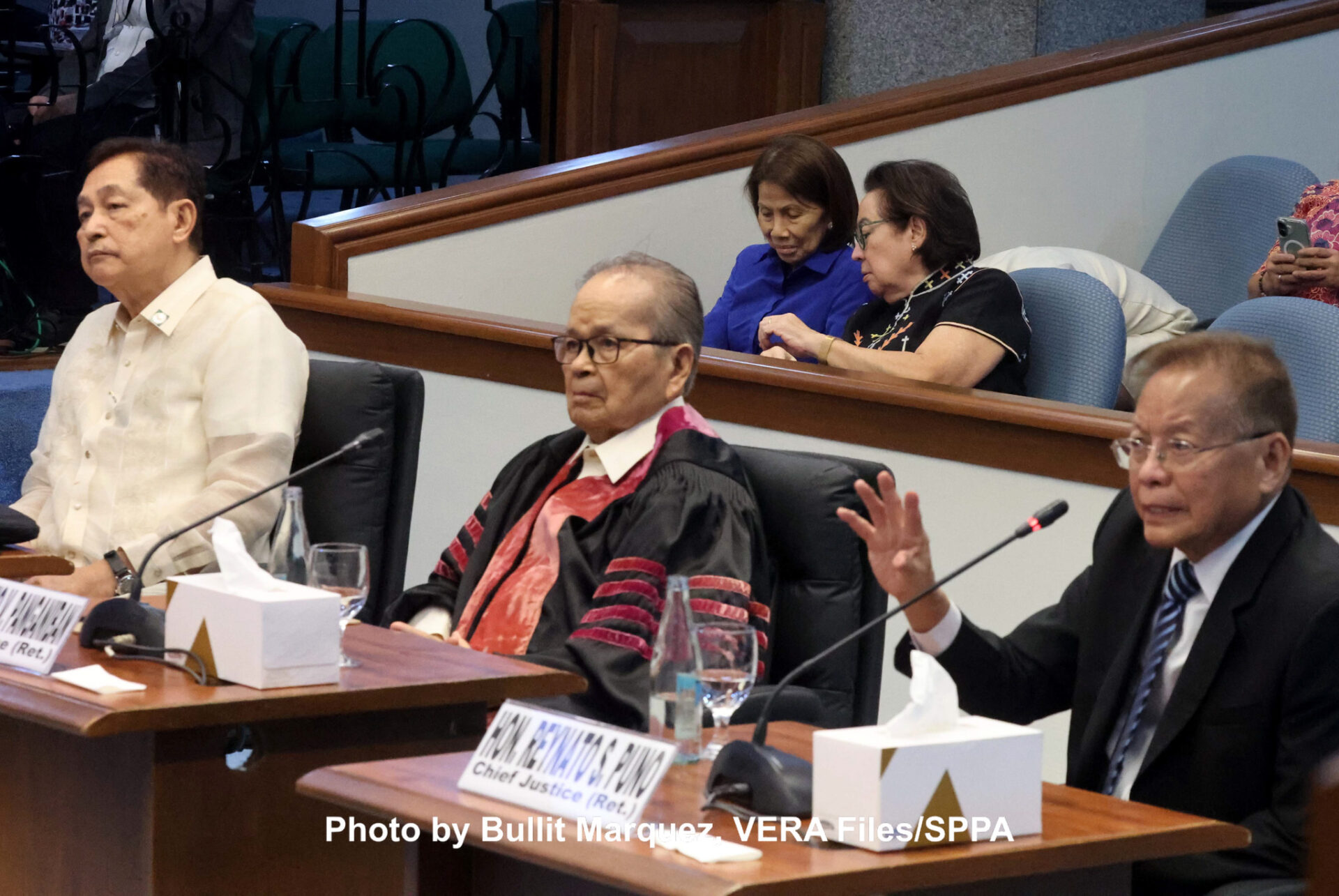
Their intervention was deemed important after Senator-judge Erwin Tulfo suggested on Sept. 8 that the court to revisit Escudero’s July 6 ruling that 16 votes would be needed to convict an impeachable official.
“When we refer to all members, who exactly are we counting?” Tulfo had asked.
Article XI, Section 3(6) of the 1987 Constitution provides that an impeached official cannot be convicted “without the concurrence of two-thirds of all the members of the Senate.”
The dispute centers on whether “all members” should mean all 24 senators regardless of their ability to participate, or only those legally able to take part in the impeachment proceedings and final vote.
Four senators are currently unable to attend the trial: Ronald “Bato” dela Rosa, who is in hiding amid an International Criminal Court arrest warrant; Jinggoy Estrada and Rodante Marcoleta, who are facing nonbailable plunder charges before the Sandiganbayan; and Loren Legarda, who is reportedly in France on an extended medical leave since Aug. 3.
Estrada, Marcoleta and Dela Rosa have not attended a single impeachment trial. Their absence prompts the question of whether the 16-vote requirement should remain despite the reduced number of participating senator-judges.
Retired chief justices Hilario Davide Jr., Artemio Panganiban and Reynato Puno said the number could change depending on which senators are legally capable of participating in the proceedings.
Retired Associate Justice Adolfo Azcuna took the opposite position.
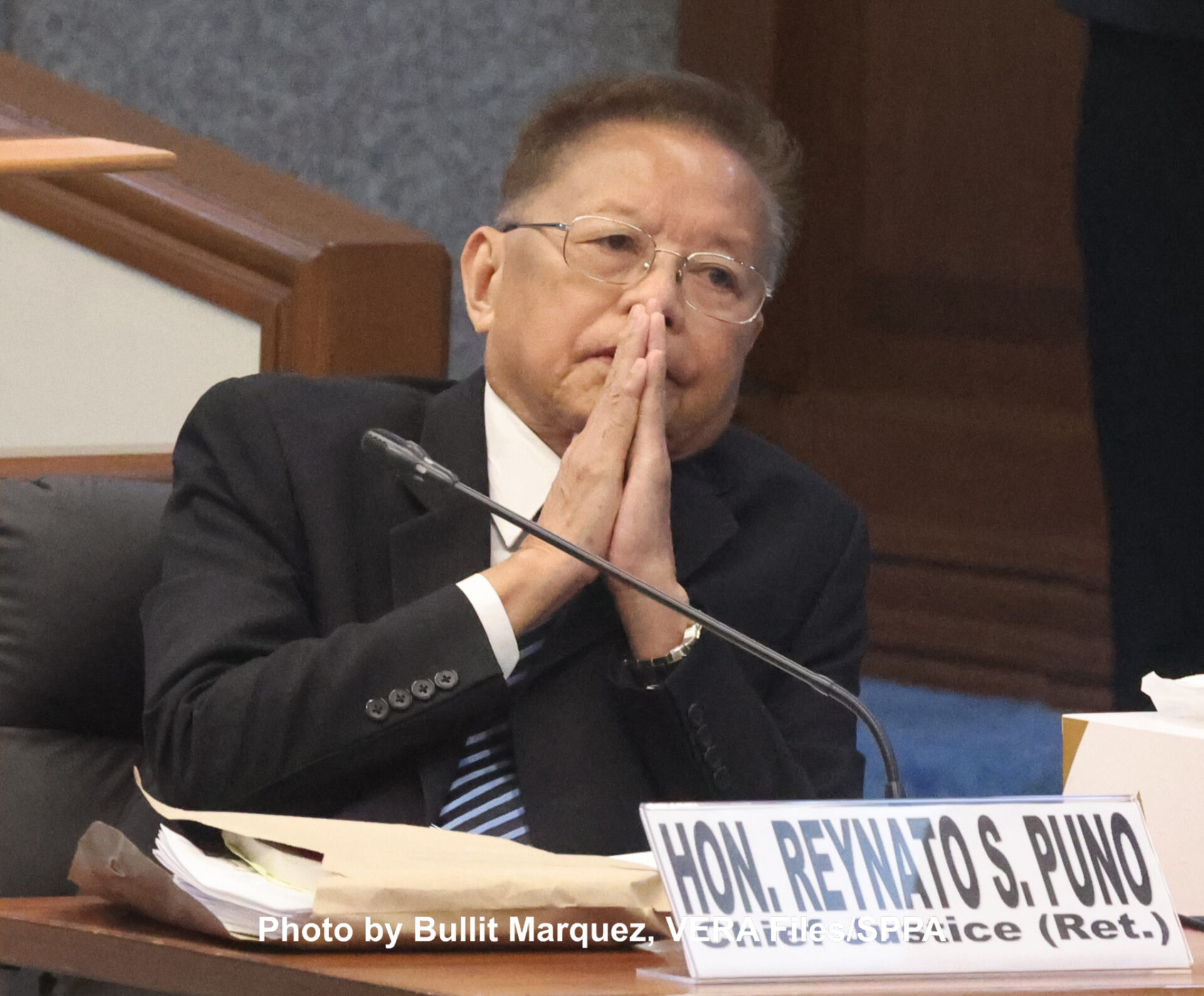
Davide, in a memorandum submitted to the court, said the phrase “all the members of the Senate” should refer to senators who are qualified to exercise their constitutional functions.
“Those who are detained, abroad, suspended or whose whereabouts are unknown cannot be included, or must be excluded, from the phrase ‘all the Members of the Senate’,” he said.
Davide added that senators who had resigned, been expelled, become incapacitated, gone into hiding, been outside Philippine jurisdiction or were legally restrained from performing their duties should also be excluded from the computation.
“Clearly then, the basis of computing the two-thirds must be the number of senators who are qualified to vote, not the 24 in the present Senate,” Davide said.
Panganiban similarly said the constitutional phrase should not be treated as a mathematical formula detached from the circumstances of the case.
“Reality, sometimes, Your Honors, changes the denominator in mathematics,” he told the court.
He questioned whether a senator who was detained, hospitalized, abroad or otherwise unable to participate meaningfully in the proceedings should nevertheless be counted in determining the votes needed for conviction.
“Is it truthful and fair to the parties, to our country, and to our people, to allow those abroad, those looking at the pyramids along the Nile, or shopping in the fashion houses of Paris, or riding the romantic gondolas of Venice, or deliberately hiding in the dark corners of the world while everyone here, everyone here in this hall is sweating it out, listening to sometimes irrelevant and loquacious lawyers, or to humble an ancient amicus curiae like me?” he asked.
“Meaningful adjudication requires active participation in the search for truth and fairness,” Panganiban said.
Puno also rejected the idea that the Constitution necessarily fixed the number at 16.
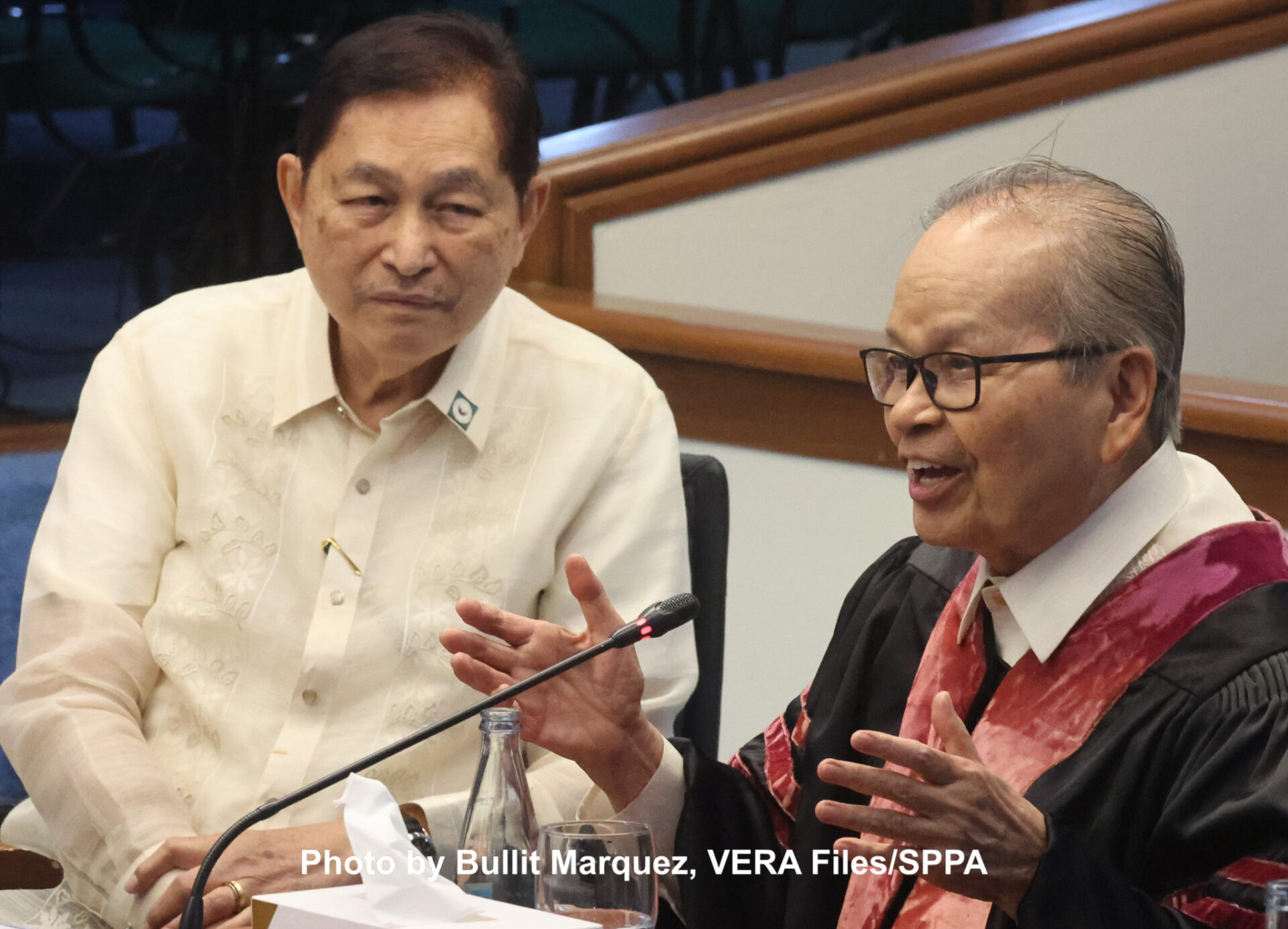
He pointed out that the Constitution says “two-thirds of all the members of the Senate,” rather than simply specifying 16 votes. For him, the phrase allows the court to consider circumstances that affect a senator’s ability to perform the functions of a senator-judge.
Azcuna: ‘All means all’
Azcuna disagreed. “All means all,” he said, arguing that all 24 sitting senators should remain part of the denominator as long as they remain members of the Senate.
He warned that allowing the threshold to change according to attendance could make the required vote variable.
“A threshold must be fixed, not variable. It must be determinable from the start,” he said.
The four justices also differed on whether senators who had missed portions of the trial could still vote.
Panganiban stressed the importance of active participation and independent assessment of the evidence. Puno and Azcuna, however, said a senator could evaluate the record even without personally hearing every witness.
Davide said a senator who never attended or performed any duties in the trial could be treated differently, although merely failing to question witnesses would not necessarily make a senator a nonparticipant.
All four agreed that the 1967 Supreme Court decision in Avelino v. Cuenco, which dealt with Senate quorum, did not directly resolve the impeachment vote question.
The justices differed only on how useful the ruling might be by analogy.
The contrast in the four positions underscored the unusual nature of the issue. The disagreement was not over whether the Constitution requires two-thirds, but over what “all the members” means when some senators cannot take part.
The court’s current ruling remains that 16 votes are needed to convict. The issue will be argued further on Sept. 23 when the defense and prosecution will have their oral arguments, before the impeachment court decides whether to retain or revisit that ruling.