
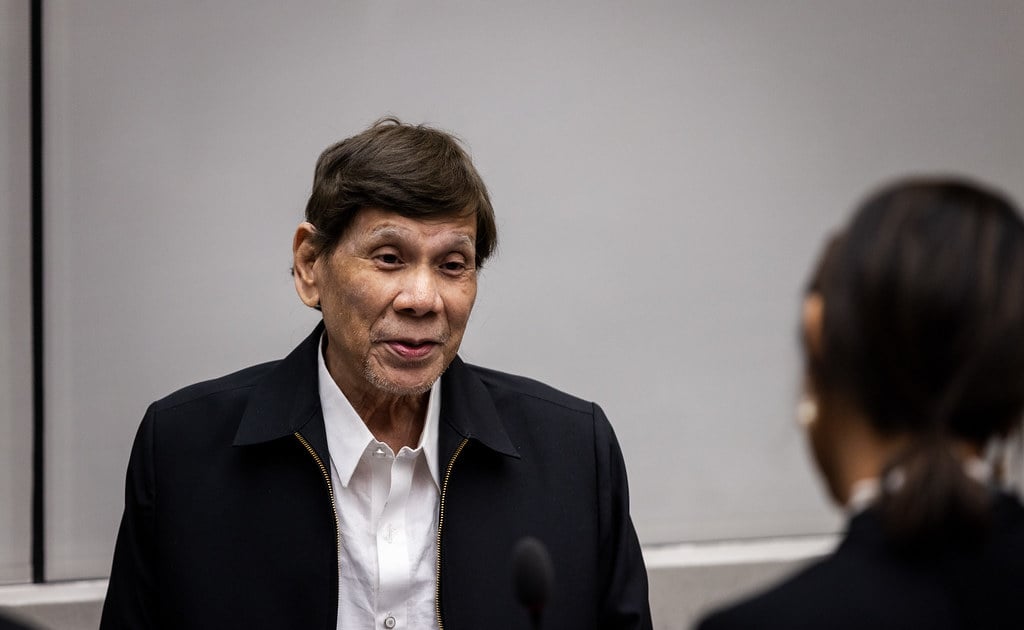
A smiling Rodrigo Duterte sat through more than an hour of proceedings at the International Criminal Court on Wednesday, marking the former president’s first in-person appearance before the tribunal since his arrest in March 2025.
Dressed in black suit and white polo shirt, Duterte appeared attentive as Trial Chamber III tackled procedural and administrative issues ahead of his Nov. 30 trial on crimes against humanity.
Photographs released after the hearing showed Duterte walking without a wheelchair and without eyeglasses. He appeared thinner and sported a grayish stubble beard, with thick, dark brown hair noticeably different from his usual style before his arrest, prompting speculations that he may have been wearing a wig.
The appearance was Duterte’s first before the ICC in person since March 14, 2025, when he joined his initial hearing before the Pre-Trial Chamber I by video link from detention. At that hearing, he looked drowsy and spoke slowly while confirming his identity before the judges, in contrast to his more attentive demeanor throughout the status conference.
At the start of the hearing, Trial Chamber III Presiding Judge Joana Korner told Duterte that he could leave the courtroom at any time without asking permission, indicating the court’s willingness to consider his medical limitations while maintaining his participation.
“This is the first time that Mr. Duterte has been in this court. As far as the trial chamber is concerned, if he wishes to leave for any reason, he may do so,” Korner said.
But Duterte did not leave and sat through the end of the third status conference.
On the same day, however, the trial chamber ordered Duterte’s continued detention while awaiting trial, citing the risk that he may abscond, obstruct, or endanger the investigations given the recent developments on his case.
Defense flags volume of evidence
During the conference, Duterte’s lead counsel Peter Haynes -who took over the case from Nicholas Kaufman after pre-trial proceedings last May – said the defense was struggling to manage what he described as “enormous” volume of evidence submitted by the prosecution.
Haynes said the material had grown to more than 25,000 items from about 5,000 during the confirmation stage.
Haynes also claimed a separate disclosure package, containing 62,500 exhibits with 324,000 pages of evidence and more than 1, 000 video and audio files, which he described as “a terrible mess.”
Korner interrupted Haynes, noting that the records had been digitized and were now more easily searchable.
“Because it’s all digitalized, it’s more searchable,” she said, adding that electronic records could be reviewed more quickly using appropriate search terms. “Provided you give it terms that meet the criteria, it is possible to go through it quicker than we’re all in the proverbial boxes in a warehouse.”
Haynes responded that the defense had considered acquiring an artificial intelligence tool to help review the evidence, but that it would cost nearly half a million euros.
Haynes also complained of missing pages, illegible documents and multiple duplicate disclosures. He proposed limiting the overall disclosure to about 10,000 documents.
ICC senior trial lawyer Julian Nicholls disputed the defense’s characterization, saying Haynes’ claims were “not all correct” and “exaggerated.”
Nicholls acknowledged that duplicate items existed but said that Haynes’ description was not an “accurate picture” of the evidence.
The chamber directed both parties to put their complaints and proposals in writing and seek to resolve the disclosure issues amicably.
“So Mr. Haynes, we’ll give you seven days, we’ll say close business by next Wednesday to file a motion about this and Mr. Nichols seven days to respond,” Korner said.
“I am well aware of the problems of disclosure even with electronic methods. But obviously we have to resolve this sooner rather than later,” she added.
Pending rulings, trial schedule
The chamber also discussed pending submissions on the defense’s request concerning additional incidents in the trial brief and Duterte’s fitness to stand trial.
Korner said the chamber would soon issue written rulings on these matters.
On the timeline of the trial, the chamber rejected the sitting schedule proposed by the ICC Registry, which included periods of breaks.
The trial is expected to begin on Nov. 30 and continue until the week before the Christmas break. Hearings are expected to resume in January and continue through March before the Easter break.
The chamber stressed the need to move the trial forward as quickly as possible.
Duterte is facing three counts of murder as crimes against humanity over killings allegedly linked to his drug war campaign during his time as Davao City mayor and Philippine president.