
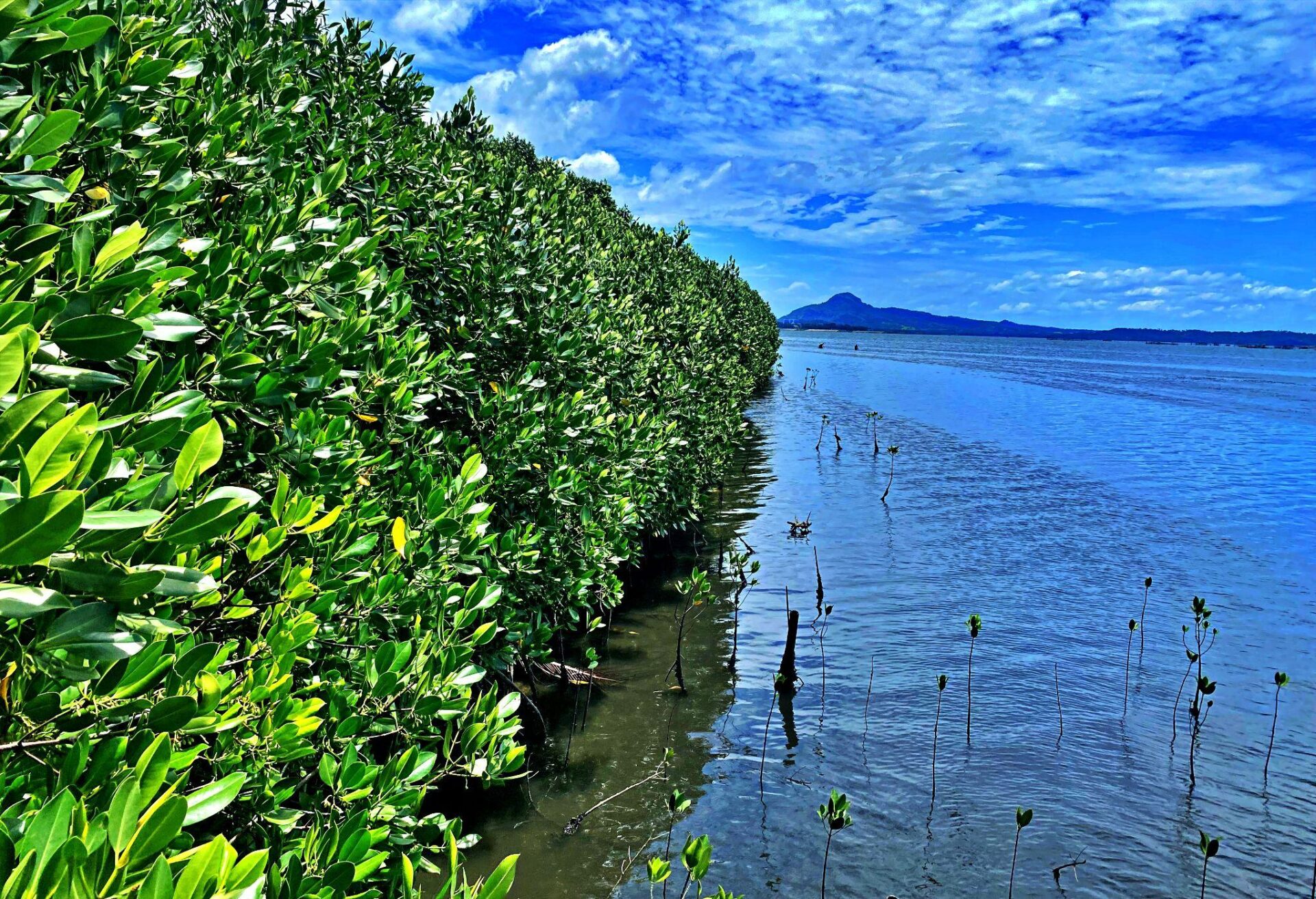
TACLOBAN CITY — After Typhoon Yolanda destroyed much of Tacloban’s coast, residents began planting again. More than a decade later, the challenge is no longer simply bringing the mangroves back, but keeping them alive.
The mangroves of Barangay 83, Paraiso, did not return all at once. Some were planted after the super typhoon tore through Tacloban in November 2013. Some did not survive. Others were damaged by succeeding storms and had to be replaced.
Residents came back to the mudflats and planted again. Years later, the young trees had become a forest.
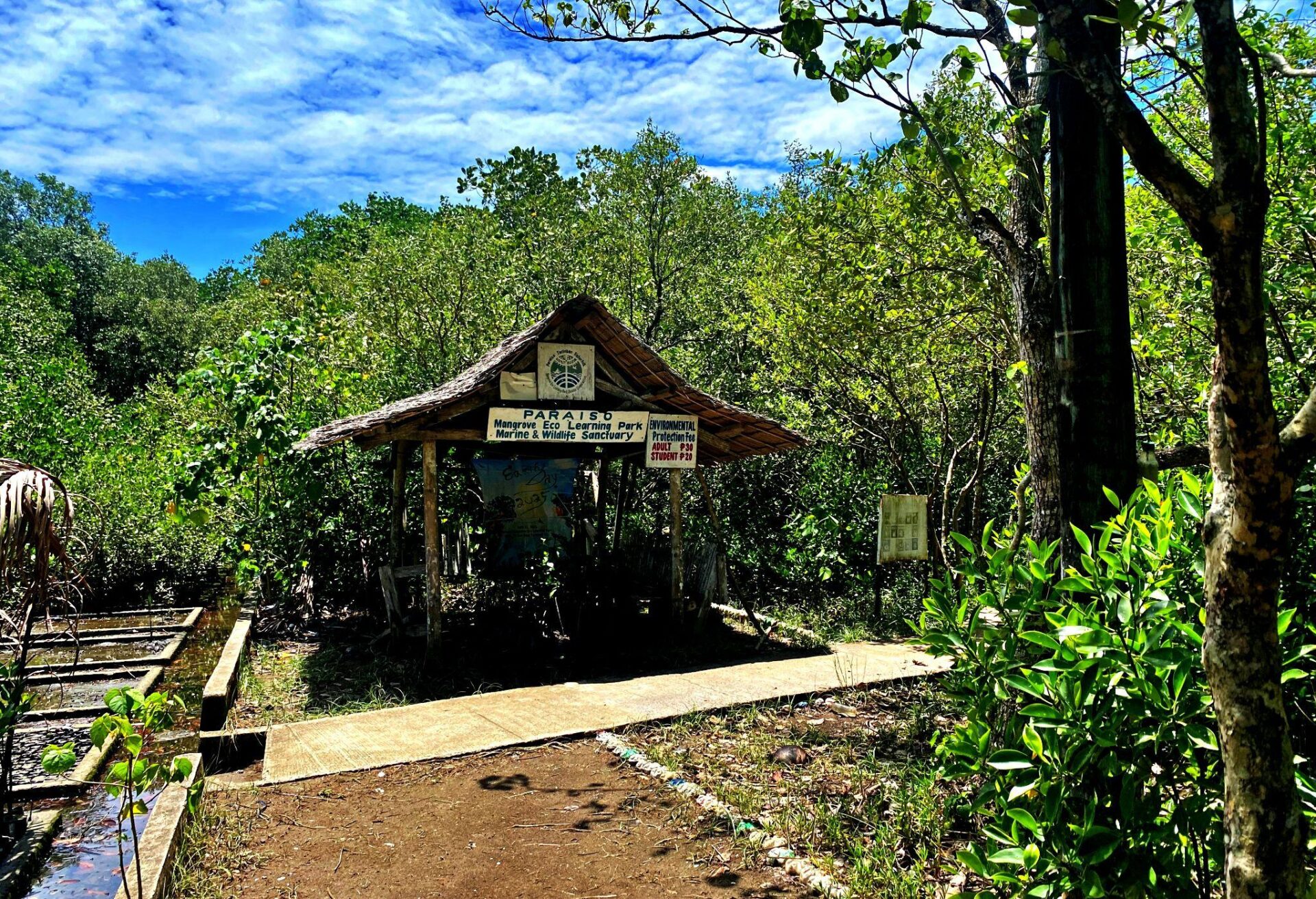
Today, the area is known as the Paraiso Mangrove Eco-Learning Park, a community space where mangroves, fisheries, environmental education and local livelihood meet.
But the story of Paraiso is not simply a story about trees. It is a story about what happens after a disaster, when the immediate emergency is over, and the cameras have moved on.
Who keeps planting? Who maintains the trees? Who protects the ecosystem? And who stays when the project, the funding, and the outside partners eventually leave?
In Paraiso, the answer begins with the people who live beside the forest.
The first tress
The organized rehabilitation of the Paraiso mangrove area began in 2014, according to a study by the University of the Philippines Open University that examined the site’s rehabilitation and management.
The initiative was led by the Barangay Local Government of Paraiso, with support from the Department of Environment and Natural Resources.
DENR helped orient residents to the ecological importance of mangroves, including their role in coastal protection, and assisted with initial reforestation activities.
Then came the planting.
For residents who had just experienced Yolanda, the work was taking place on a coastline that had already demonstrated how vulnerable it could be.
But the first generation of seedlings did not get an easy start. Later that same year, Typhoons Ruby and Seniang damaged the initial planting.
The community had to plant again.
The setback revealed something that would define the Paraiso experience for years to come: restoration would not be a one-day planting activity.
A seedling has to survive long enough to become a tree. And a tree has to become part of a functioning ecosystem.
₱8 to pot a seedling, ₱7 to plant one
The rehabilitation effort soon acquired another dimension. It became a source of livelihood.
The next phase brought in OISCA-Japan, or the Organization for Industrial, Spiritual and Cultural Advancement International.
The UPOU study documents OISCA’s support for seedling production and outplanting activities in Paraiso. Residents were paid for the work.
According to the study, workers received ₱8 for potting each seedling and ₱7 for outplanting each seedling. About 15 people participated, with some workers reportedly able to pot around 1,000 seedlings in a day.
The work was repetitive: prepare the seedlings, move them, plant them, and repeat.
But for a community recovering from Yolanda, it provided something more immediate than an environmental objective. It provided income.
The mangrove restoration effort was therefore tied to the recovery of the people doing the work. While the seedlings were being planted, residents were also trying to rebuild their own lives.
OISCA’s participation was part of a broader environmental program that included reforestation, mangrove rehabilitation, agricultural training, and environmental education.
But Paraiso’s history cannot be attributed to one organization.
The mangrove rehabilitation was not simply an OISCA project. It was not simply a DENR project either. It grew from a local initiative that became stronger through partnerships.
When a planting site became a community space
As the mangroves grew, community participation began to move beyond planting.
The Paraiso Tacloban Fisherfolk, Mangrove Eco-Learning Park Service Cooperative emerged as a community organization engaged in rehabilitation and activities related to the mangrove area and ecotourism.
Other partners also became part of the story.
Previous studies and reports identify DENR, OISCA, and An Waray among institutions that provided resources or support during the development of the rehabilitation effort.
Gradually, the landscape changed. What was once a rehabilitation site became an environmental learning space. Visitors could walk into the mangrove area and see the forest that had grown from the mudflats.
For the community, however, the trees meant more than a place to visit.
According to the Food and Agriculture Organization and the International Union for Conservation of Nature (IUCN), mangroves are vital to coastal ecosystems. Their roots trap and stabilize sediment, and the forests provide habitat and nursery grounds for fish, crustaceans, and other marine organisms. Their complex root systems also help dissipate wave energy, reduce coastal erosion, and contribute to coastal protection. In a city whose coastline bore the brunt of Yolanda’s storm surge, those functions are not abstract.
They are part of the environment in which people live.
The mangroves, however, cannot replace seawalls, drainage systems, evacuation facilities, early-warning systems or other disaster-preparedness measures.
Their role is different. They are one component of the natural systems that can contribute to coastal resilience.
The trees that didn’t make it
Walk through a restored mangrove area, and it is easy to see the trees that survived. But there were some that did not.
Paraiso’s history includes seedlings lost to storms and repeated planting to replace them. That makes the passage of time an important part of the story.
For ecological restoration, survival is a different kind of measurement. So is natural regeneration.
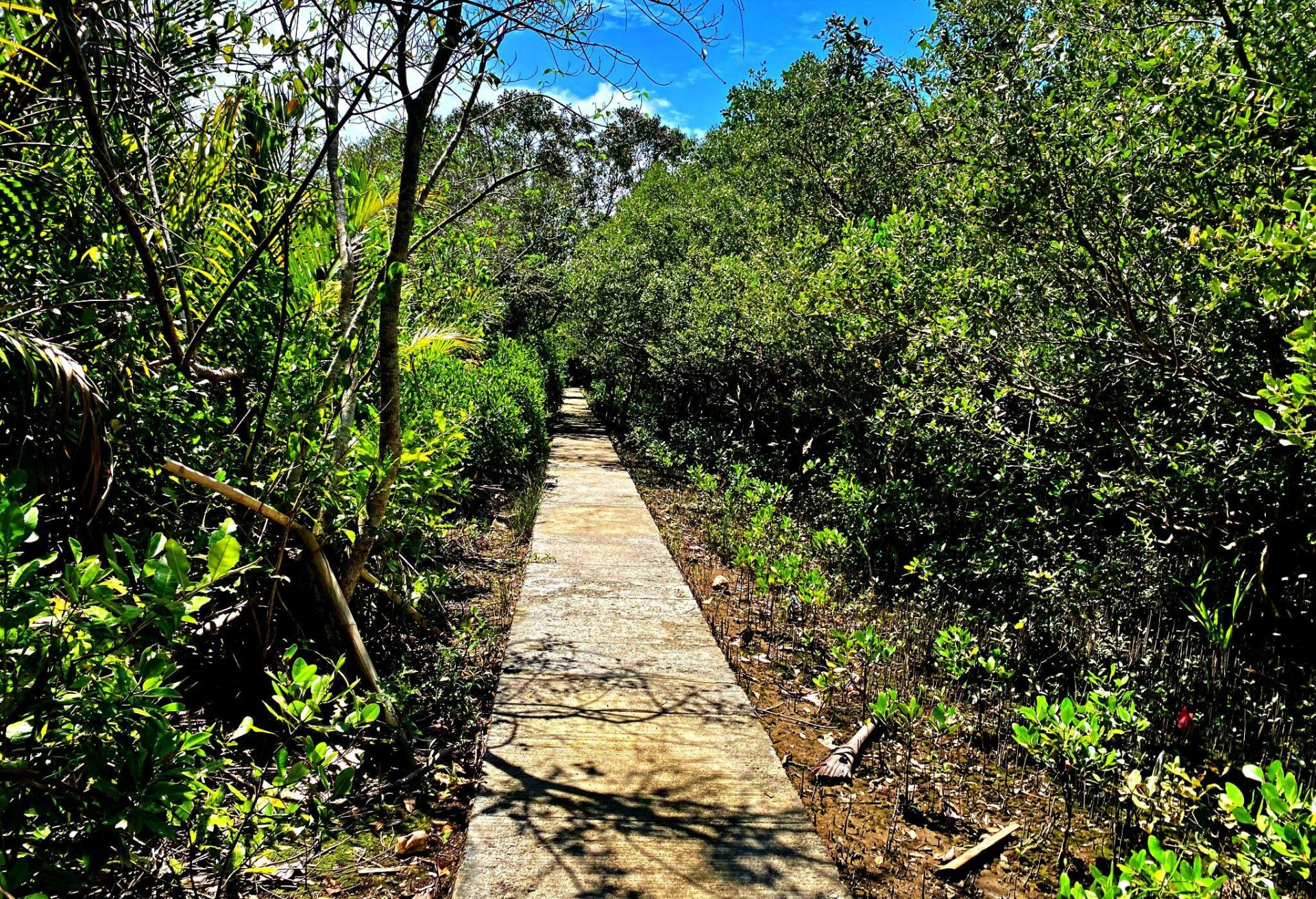
A restored mangrove does not thrive simply because seedlings have been planted. The FAO says restoration success depends on selecting species suited to site conditions, including hydrology and sediment or substrate conditions. Continued monitoring and management are also needed to support the development of a functioning mangrove ecosystem.
This is where the Paraiso experience becomes more complicated than a simple story of successful planting.
The question is no longer simply how many seedlings were planted. It is whether the ecosystem has been given enough time, protection, and support to sustain itself.
The people who stayed
There is another measure of time in Paraiso. It is the people.
Government agencies provided technical assistance and institutional support. International organizations brought resources. Civil-society organizations introduced new conservation programs and partnerships.
Local government offices continued to participate in environmental initiatives. But organizations change. Programs end. Funding cycles close. Partners move to other projects.
The residents remain. They are the people who see changes in the mangrove area. They are there when trees are damaged. They experience storms and other coastal pressures.
They are also in a position to pass what they have learned about the ecosystem to the next generation. That continuity has become one of the most important parts of the Paraiso story.
But it is also important not to romanticize community stewardship. Residents cannot be expected to carry the entire responsibility for protecting an ecosystem.
Long-term conservation requires technical knowledge, monitoring, enforcement, institutional support, and resources.
The lesson from Paraiso is therefore not that communities can replace government or conservation organizations.
It is that restoration becomes more durable when the people who live beside an ecosystem have a continuing role in its protection.
A new generation of partners
The work in Paraiso has continued to evolve.
More recent conservation efforts have brought together community groups, civil society organizations, and local government offices.
Pintakasi for Landscape Restoration Inc. has worked with the Institute for Climate and Sustainable Cities, the Tacloban City Environment and Natural Resources Office and the City Agriculture Office on efforts to conserve the Paraiso mangrove area.
The partnership reflects a change in the nature of the challenge.
In the years immediately after Yolanda, the priority was to restore what had been damaged.
Today, the challenge is increasingly about protecting what has survived. That means keeping the mangrove area within the city’s environmental priorities while ensuring that the community remains part of its management and stewardship.
It also means looking at Paraiso not only as a post-disaster rehabilitation site but as part of Tacloban’s broader environmental and climate-resilience landscape.
The forest and the community
The name Paraiso Mangrove Eco-Learning Park suggests a destination.
But the trees tell a longer story. Some survived the first difficult years after planting. Others replaced seedlings lost to storms. Many were nurtured by residents who were themselves rebuilding after Yolanda.
The forest and the community therefore share a history. Both were recovering. Both had to endure setbacks. And both required time.
That is what makes Paraiso more than an environmental attraction.
It is a record of what post-disaster recovery can look like when restoration continues beyond the first planting activity. It also raises a harder question about how restoration projects are measured.
Success cannot be captured entirely by the number of seedlings distributed or planted. Nor can it be measured only by the appearance of a green landscape several years later.
The more difficult questions concern survival, regeneration, ecological function, and long-term protection.
What happens after the project ends
Paraiso’s history has unfolded through successive layers.
First came the decision to plant. Then came the storms. Then replanting. Then livelihood. Then organization. Then environmental education. Then new conservation partnerships.
Each phase added something to the previous one. But each also depended on continuity.
A restored ecosystem does not understand project cycles. Trees continue growing after a grant ends. Mangroves continue to face storms after an organization leaves.
Coastal pressures do not stop when a rehabilitation program concludes. That is why the future of Paraiso will depend not only on what was planted after Yolanda but on what institutions and communities are willing to do now.
The challenge is no longer simply to bring the forest back. It is to keep it there.
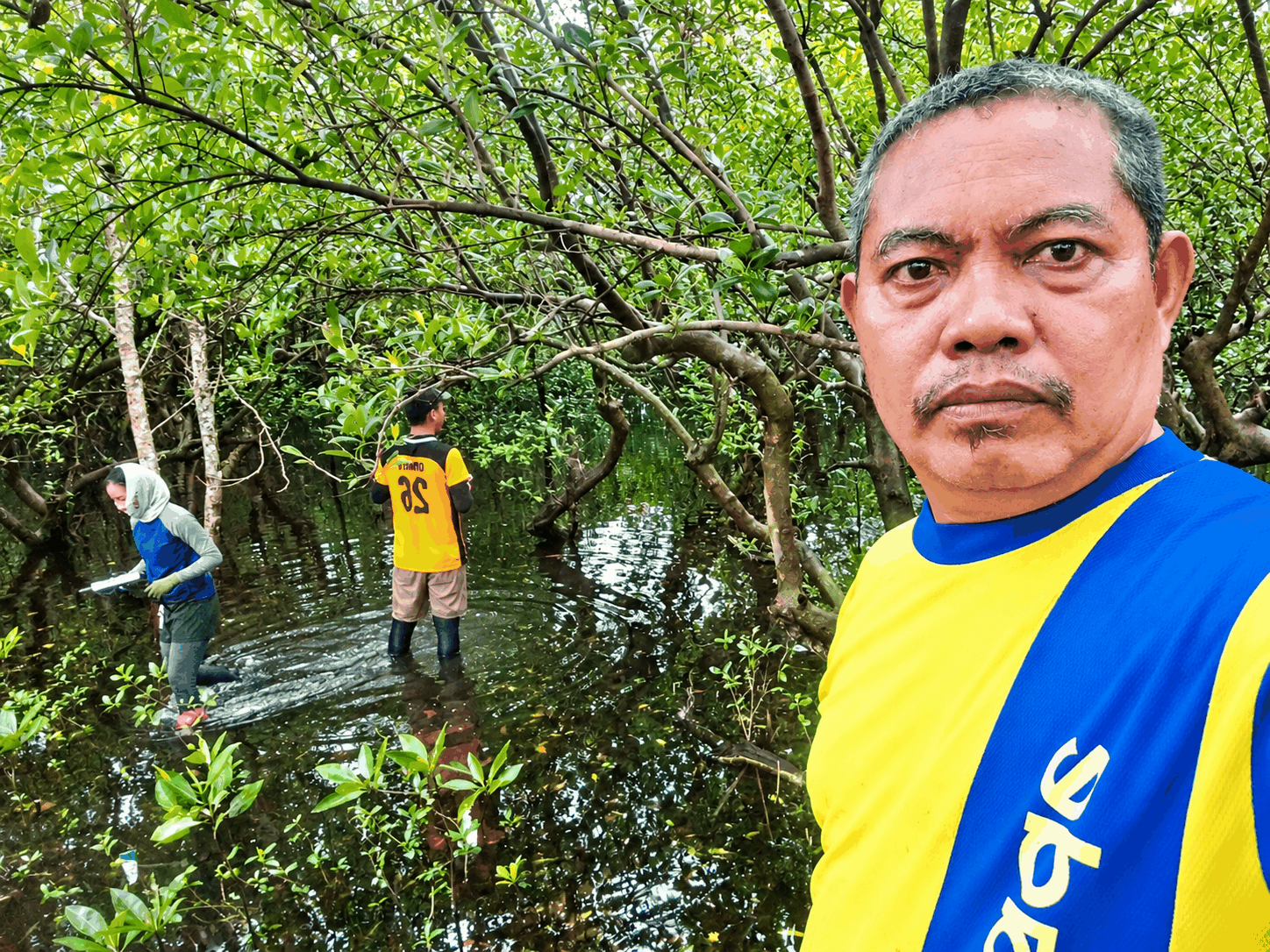
The guardians
More than a decade after Yolanda, Paraiso offers no simple formula for ecological restoration. Its history is messier than that.
Trees were planted and lost. Partners came and went. Residents earned income from restoration work while rebuilding their own lives.
A damaged landscape gradually became a community learning space. And the responsibility for protecting it moved into a new phase.
The mangrove forest now standing in Paraiso is therefore more than the result of a planting campaign. It is the accumulated result of years of work by residents, government agencies, conservation organizations and other partners.
But among all those actors, one element has remained constant: the community.
The people living beside the mangroves have witnessed the forest change. They have experienced the storms. They have seen seedlings disappear and new ones take their place. And they remain there as the next chapter unfolds.
For Paraiso, the hardest part of restoration may never have been planting the first tree. It was making sure there would still be people willing to protect the forest years later.
More than a decade after Yolanda, the mangroves are still standing. So are the people who helped bring them back.
(This story, first published on the social media platforms of Taklub Digital News, was produced under the Global 30×30 Conservation Initiative grant from Internews’ Earth Journalism Network. The editorial content and reporting of this story remain the responsibility of TDN).