
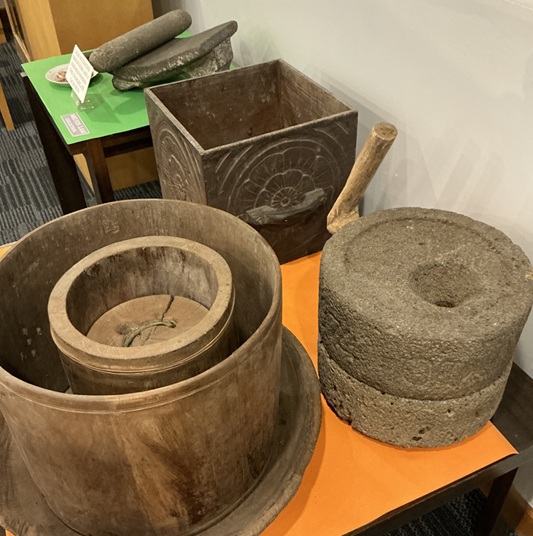

Long before air fryers and breadmakers, convenience in a Philippine kitchen comes with various manual tools and implements that enable a household to host feasts and celebrations, aside from the everyday demands of feeding a family.
The Ortigas Foundation Library presents an exhibit celebrating early kitchen tools in the country, Vintage Baking and Cooking Accoutrements, until the end of March 2026. Such tools were used in measuring and milling rice, grating coconut, preparing cacao, and making ice cream and desserts for special occasions. The Library is located at the second floor of Unimart, McKinley Parking Building, Greenhills.
It includes items such as wooden molders for bibingka, mooncakes, San Nicolas biscuits, polvoron, barquillos, and pudding and gelatin, grinding mills, weighing scales, coconut graters and scrapers made of carabao horn, metal funnels and measuring cups, banana leaves flattening tools, atchara carving tools, brass molds and pans, and many more.
Cooking with coconut
It was Antonio Pigafetta who was part of Ferdinand Magellan’s 1521 entourage who gave the first written description of coconut milk.
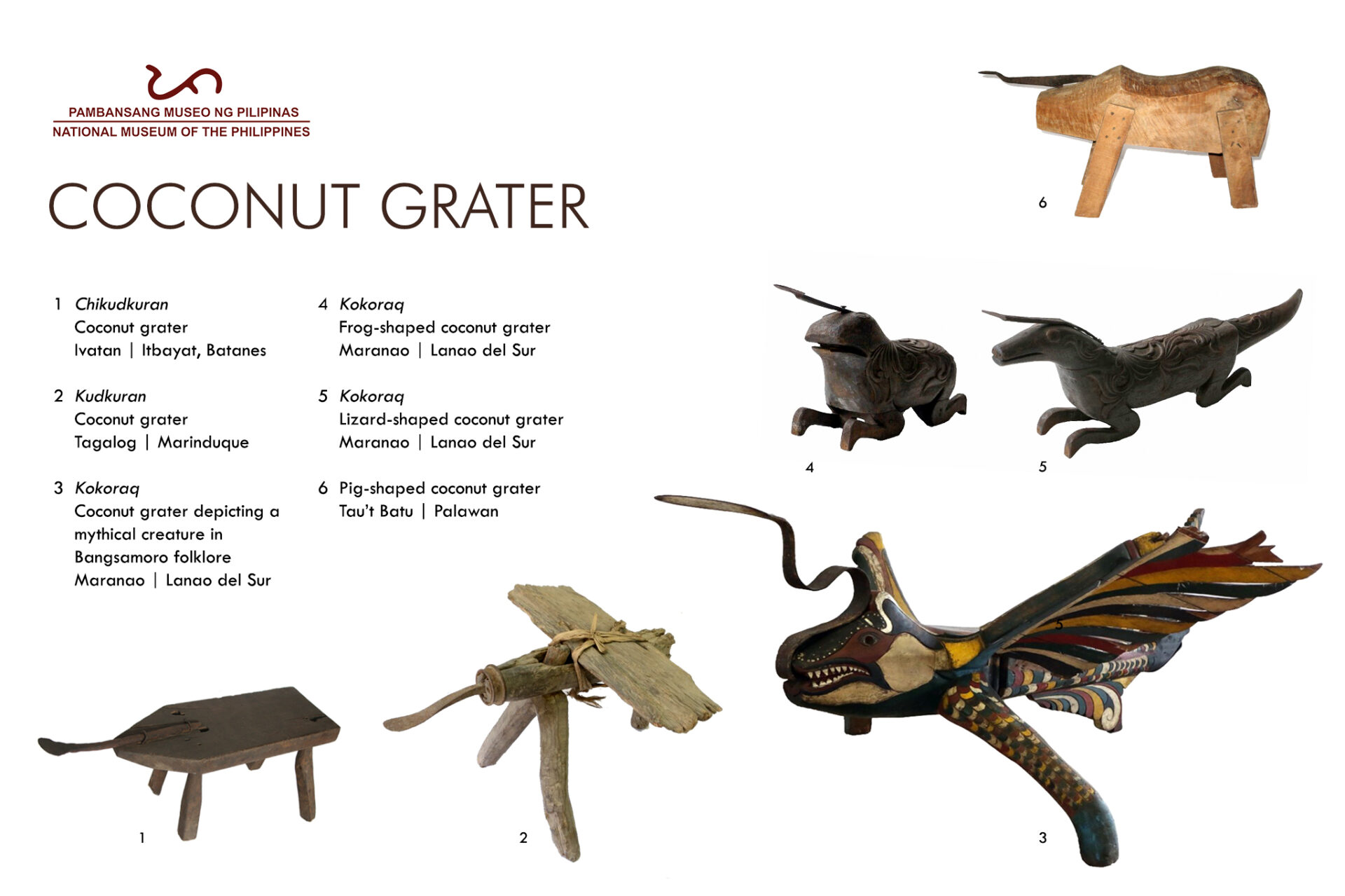
Guinataan or food cooked in coconut milk has been a hallmark of precolonial cooking that remains alive in the archipelago. A coconut grater or kudkura made of serrated metal is a prized possession in early kitchens, used for grating coconut meat to get shredded coconut meat or coconut milk.
Many Philippine ethnolinguistic groups have their own graters in the shape of animals that meld function and folk art.
A 1624 Tagalog-Spanish dictionary has an entry on cooking vegetables in coconut milk (“Maggata ca sa gulay”), the first written document that natives cooked vegetables in coconut milk.
Gantangan
Gantang refers to a wooden measure for grains. Under Spanish colonial rule, natives had to pay tribute payable in palay. Caban, meaning storage chest in Tagalog, was an ancient measure that equaled 24 gantas, notes Felice Sta, Maria in her Philippine food history research. Fr. Juan de San Antonio OFM explained that the old Tagalog gatang or gabingan was the amount of rice for “a man’s single meal.” The one-ganta measure of volume has been calculated as 2.5 kilos of rice.
Cacao
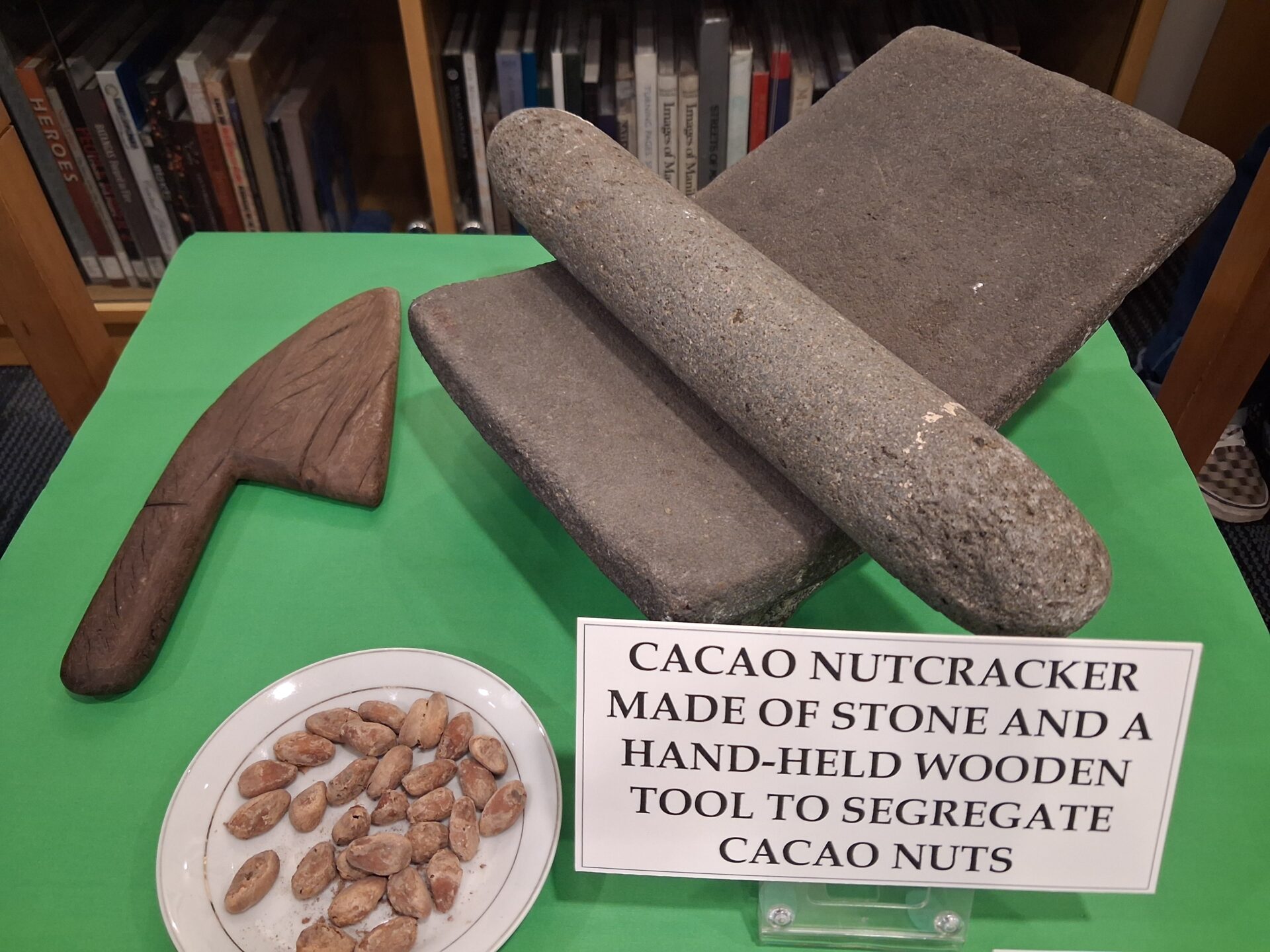
Cacao plants from Mexico arrived in the 1660s. Through cacao, caffeine was introduced to the Filipino diet; eventually, drinking thick chocolate became a popular habit. By the mid-19th century, Antique, Batangas, Leyte, Mindoro, Negros, Tayabas, and Iloilo were known for cacao trees.
It is said that Manilans consumed at least two cups of thick chocolate daily. Ground peanuts are mixed into the cacao paste like in Mexico; pili nuts, roasted cashew nut, or rice were ground and mixed into the cacao paste to make cacao tablets or tablea for the drink.
The drink was made in a metal pot (chocolatera) with a wooden beater called batidor to mix and froth the liquid before serving.
Ice cream
Ice was first introduced as a luxury item in 1847 when an American company imported 250 tons of ice into the Spanish colony from Salem, Massachusetts, the center of global ice imports. The first large-scale ice plant in the country, Insular Ice Plant in Manila, was built in 1902.
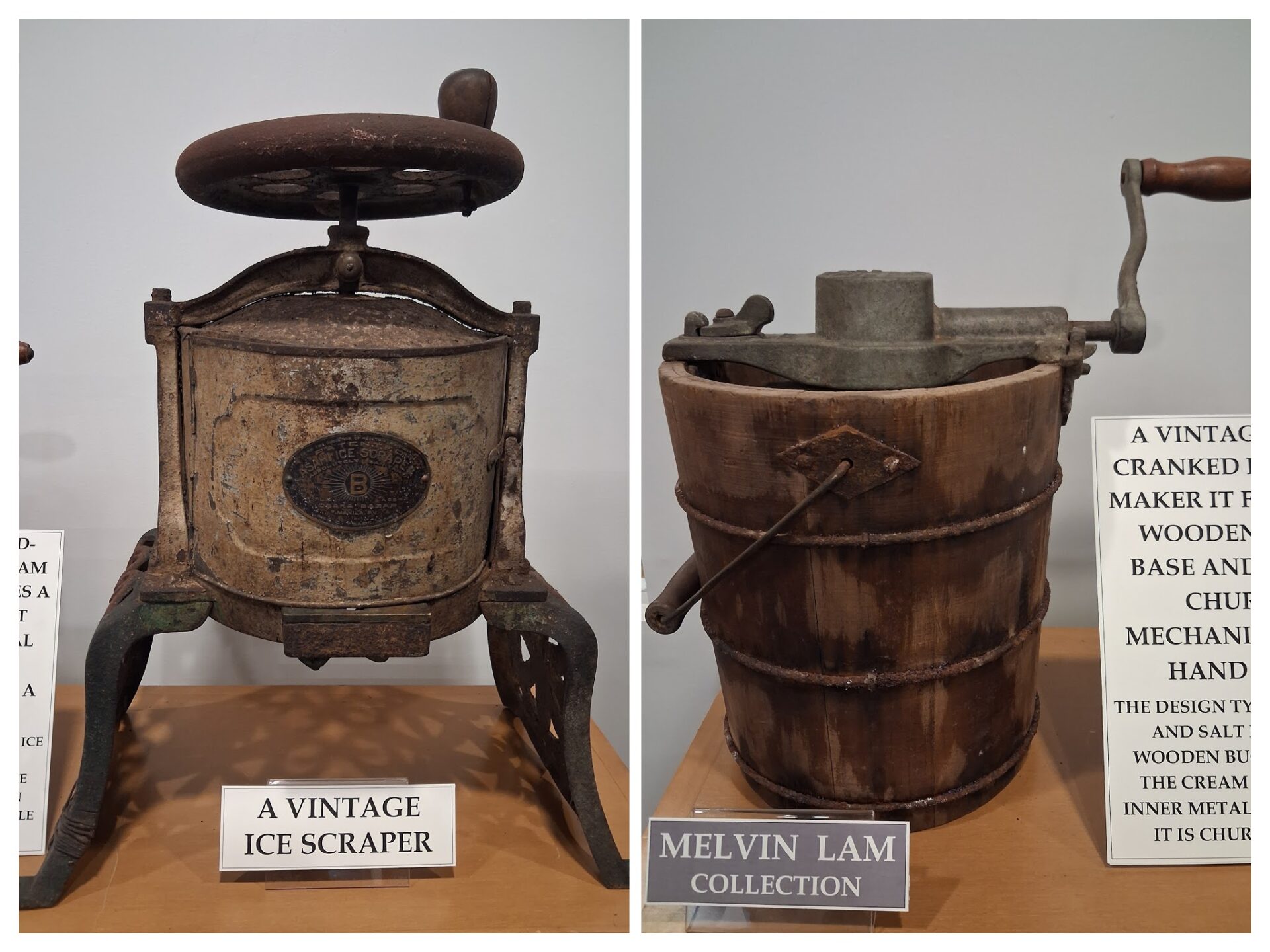
Sorbetes was made using a hand-cranked ice cream maker called garapiñera, a metal cylinder filled with ice cream ingredients enclosed by a wooden bucket with ice and rock salt. The crank must be turned continuously to freeze the liquid ingredients.
Clarke’s, the first ice cream shop in the country opened in Escolta in 1899, owned by an American entrepreneur, Metcalfe Clark.
By 1921, Rosenstock’s Manila City Directory lists one ice cream manufacturer, 12 ice cream parlors, 4 ice dealers, 2 ice factories.
San Nicolas Cookies
As part of Pampanga’s devotion to St. Nicholas of Tolentino, the San Nicolas fiesta on September 10 was celebrated with the distribution of blessed bread known as “pan de San Nicolas,” believed to have healing power.
The oval-shaped arrowroot cookies are pressed on intricate, hand-carved molds made of mahogany, yakal, or molave by craftsmen from Betis, Pampanga. Each Pampanga town or family had their own carved designs on the molds; the landowners Lazatins have leaf-like patterns; a family of musicians, the Lansangs have harp-shaped designs.
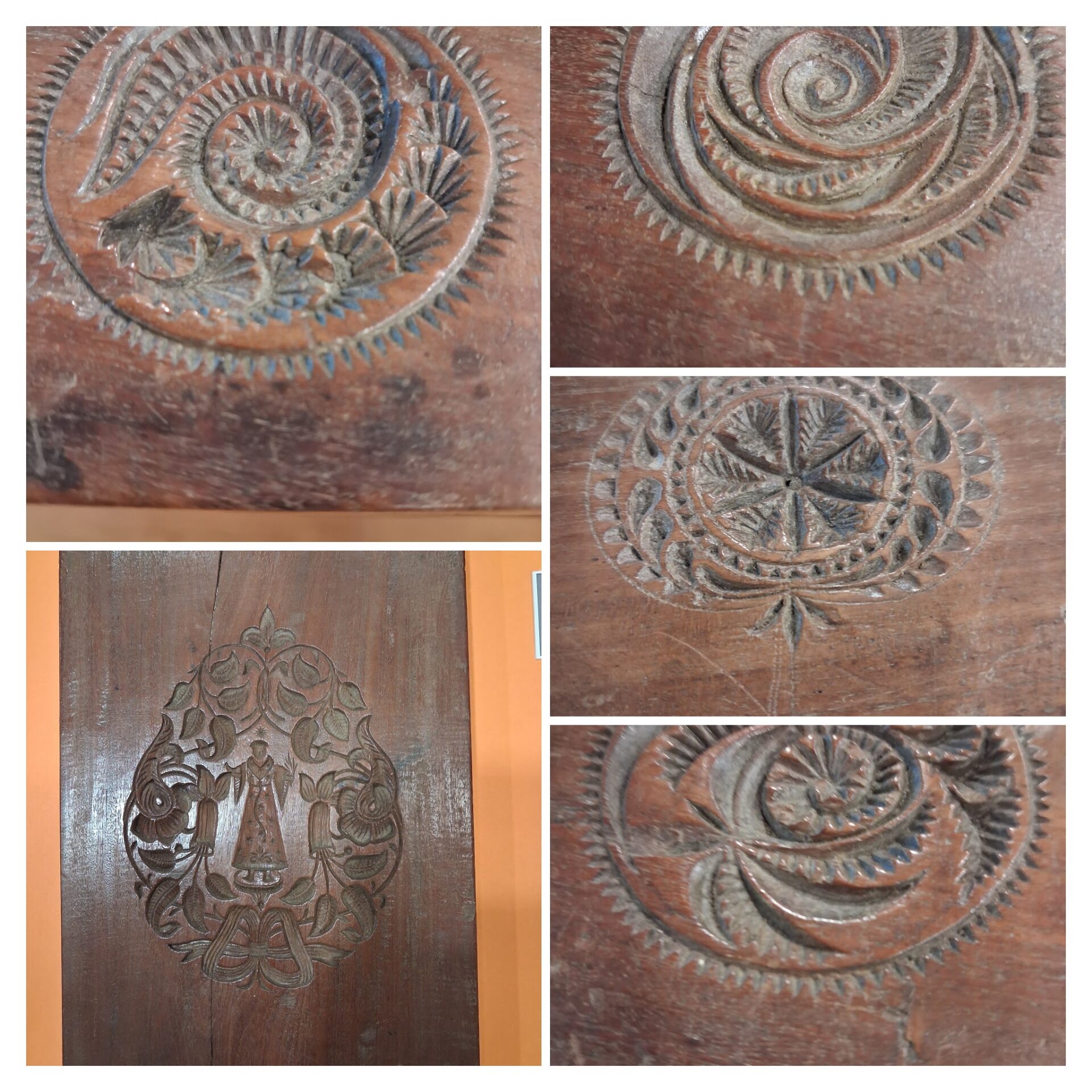
Mooncake Molds
Early Chinese settlers introduced Chinese pastries like hopia filled with mung bean paste, tikoy, and mooncakes eaten during their celebration of Mid-Autumn Harvest festival.
Mooncake fillings include sweetened red bean or lotus seed paste, candied winter melon, mixed nuts, and salted duck egg yolk.
Mooncakes are traditionally shaped with a wooden mold that looks like a paddle, slamming it hard on the table to free the dough from the mold. Traditional designs include auspicious characters and symbols such as long life or happiness and the dragon.
What’s cooking?
A wide assortment of kitchen tools, all operated manually, attests to the laborious and tedious act of meal preparation in the country.
Philippine households have continued cooking food that underscore local and seasonal availability of produce; dishes that honor religious feasts and practices, reflect the latest culinary novelty or invention of the time, or celebrate Spanish, American, and Chinese culinary influences. Most of all, they persist in cooking food rooted in our prehistoric past, maintaining its continuity, then and now.