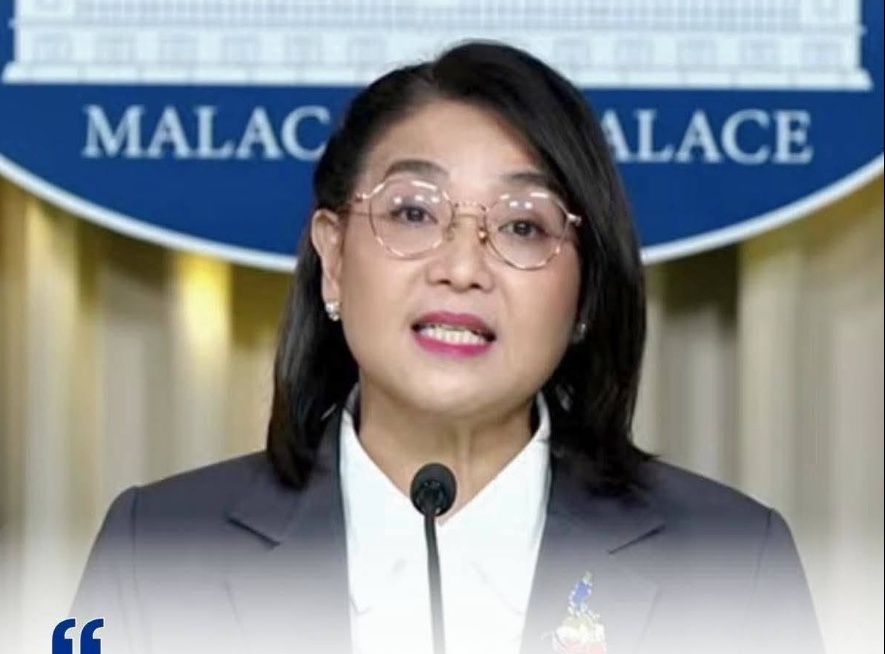
Much of the defense of Palace Press Officer Undersecretary Claire Castro over her controversial remarks about teachers has focused on two words: “some teachers.”
Castro did not say “all teachers,” her defenders correctly point out. Some have gone further, suggesting that teachers and others who criticized her remarks simply failed to comprehend what she actually said. The first point is correct. The second does not necessarily follow.
During the Malacañang press briefing on August 18 , while discussing the shooting at Ateneo de Zamboanga University, Castro said: “Minsan na po nating nakita, mismo ang ibang mga guro ay lumalabag sa ganitong klase ng moralidad. Sila minsan ay ang nagtuturo sa kanilang mga estudyante kung papaano maging walang modo, lalong-lalo na sa mga nakakatanda o sa mga ibang tao.”
Translated into English, Castro was saying that “some teachers” themselves violate this kind of morality and sometimes teach their students how to be disrespectful, particularly toward elders and other people. Castro subsequently clarified that she was not blaming teachers as a whole and described her remarks as a reminder. That clarification is relevant and should be acknowledged. Any criticism of her statement should begin with what she actually said, not with an exaggerated version of it.
She did not say “all teachers.” But acknowledging that fact does not require us to conclude that the original statement was appropriate.
The distinction between “some” and “all” answers one question: Did Castro explicitly accuse the entire teaching profession? She did not. It does not answer another question: Was it fair and relevant to introduce an undefined category of “some teachers” into the government’s discussion of the school shooting?
That is where the disagreement actually lies.
Importance of context
Consider the effect of similar statements applied to other groups. Saying that “some PBBM vloggers deliberately mislead their followers” does not accuse every pro-Marcos vlogger of dishonesty. Saying that “some UP professors have poor comprehension” does not accuse every professor at the University of the Philippines of lacking comprehension. Yet members of either group could reasonably ask who is being described and what evidence supports the characterization. The word “some” limits the accusation, but it does not identify its subjects.
The same applies to teachers. When a negative characteristic is attributed to an unspecified portion of a profession, every member is not accused, but the boundaries of the accusation remain unclear. A teacher knows that Castro did not say “all teachers,” while still having no way of knowing who falls within the category of “some teachers” invoked by a senior government official.
This is why the disagreement cannot simply be dismissed as a failure of comprehension. Understanding language involves more than determining whether “some” and “all” have different meanings. It also involves context, relevance and implication. A person may understand precisely what Castro said and still conclude that the statement unfairly brought teachers into a discussion where the more immediate facts pointed elsewhere.
That context is important.
Source of” some teachers” controversy
The controversy arose amid two school shootings, in Tacloban and Zamboanga, that raised serious questions about minors’ access to firearms. In Tacloban, authorities investigated the circumstances surrounding a licensed firearm linked to a police officer that was allegedly used in the school attack. In Zamboanga, the Bureau of Customs said that a firearm used by the student shooter was issued to his father, a Customs Police personnel. The BOC relieved the father and placed him under preventive suspension while it investigated issues involving firearm custody and safekeeping.
These circumstances do not establish that access to firearms was the sole cause of either tragedy. School violence is rarely explained by one factor. Family circumstances, bullying, mental and emotional distress, peer relationships, social media, school security and other conditions may all require investigation.
But the provenance and custody of the firearms are concrete facts directly relevant to the incidents. They raise an unavoidable question: How did weapons under adult custody become accessible to minors?
That question deserves particular attention when the adults involved are government personnel authorized to possess or carry firearms. The authority to keep a firearm carries a corresponding obligation to secure it against unauthorized access, especially by children.
This is where Castro’s reference to “some teachers” becomes difficult to understand. Teachers were not identified as the lawful custodians of the firearms involved in these incidents. They were not the government personnel facing questions about the safekeeping of those weapons. If there is evidence that the conduct of a particular teacher contributed materially to either incident, that evidence should be presented and examined.
Otherwise, introducing the alleged misconduct of unspecified teachers risks shifting attention from a concrete accountability question toward a generalized discussion of morality.
That does not mean teachers should be exempt from criticism. No profession should be. If a teacher commits misconduct, the proper response is to establish what happened, identify the person responsible, and apply the appropriate standards of accountability. The wrongdoing of an identifiable individual can be investigated without attaching an undefined negative category to the profession to which that person belongs.
Why were teachers included in the government framing of the school shooting incidents?
This distinction matters especially in public communication. A Palace press officer does more than express a personal opinion. Statements made during official briefings help frame how government understands a public issue and where it believes responsibility should be examined. Precision is therefore not merely a matter of good grammar. It is part of public accountability.
Teachers also occupy a particularly vulnerable position in debates about problems involving children. They are expected to educate, discipline, protect, counsel and sometimes compensate for deficiencies originating far beyond the classroom. When something goes wrong involving young people, it is tempting to ask what schools and teachers failed to do. Sometimes that question is justified, but it should arise from evidence, not convenience.
This is why the debate over Castro’s words should not end with the observation that she said, “some teachers” rather than “all teachers.” Her defenders are correct about the literal distinction. Her critics are entitled to ask a different question: Why were teachers brought into this particular discussion at all?
Firearm access and firearm accountability
Once that question is asked, the two school shootings point us back toward an issue far more concrete than semantics: firearm access and firearm accountability.
The public deserves to know how weapons that minors should not have been able to access came into their hands. It deserves to know whether existing rules on firearm custody and safekeeping were followed, whether those rules are sufficient, and whether government personnel entrusted with firearms met the responsibilities that accompany that privilege.
Those questions do not absolve schools, families or communities of their responsibilities toward children. They simply follow the evidence that these incidents have happened before us.
So, yes, Claire Castro said, “some teachers.” We understood her correctly. The question is not whether “some” means “all.” It plainly does not. The question is whether “some teachers” belonged in the government’s framing of these shootings in the first place.
On the facts presently before the public, there is good reason for teachers to say that the government’s attention should have been directed elsewhere.
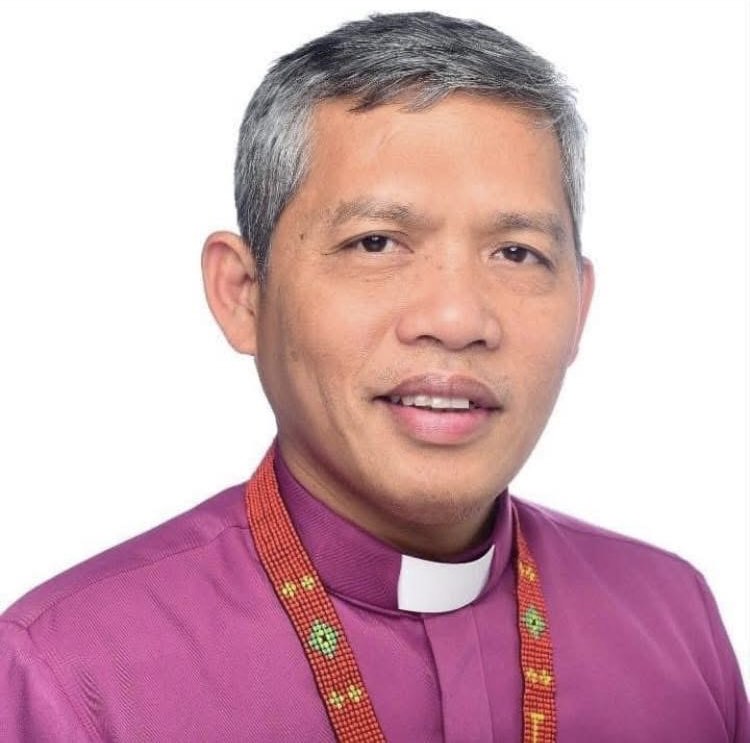
*Antonio Nercua Ablon is a bishop in the Iglesia Filipina Independiente also known as Aglipayan Church. He is currently chaplain at St. Catherine’s Anglican Chaplaincy in Stuttgart, Germany Diocese in Europe, Church of England.
The views in this column are those of the author and do not necessarily reflect the views of VERA Files.