
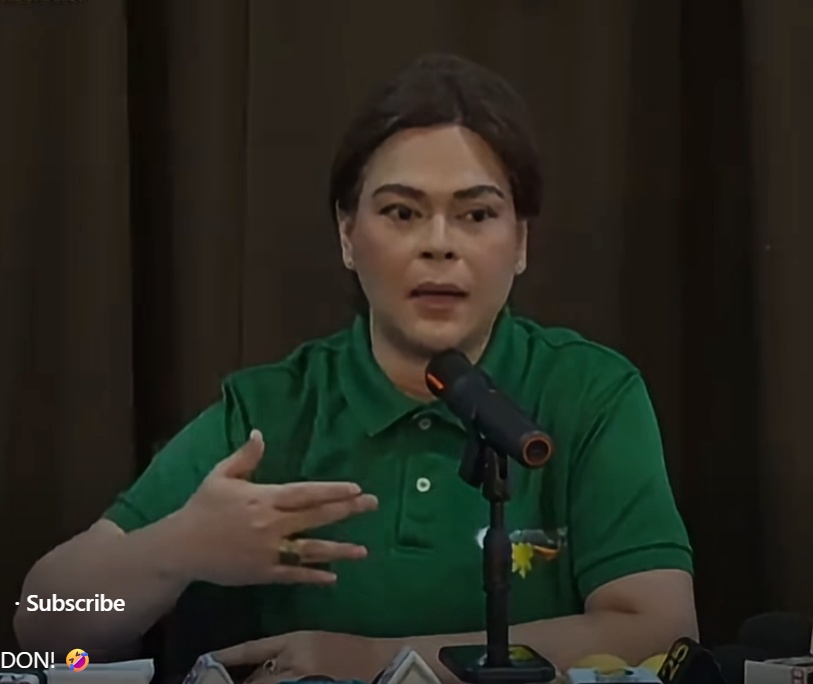
When Vice President Sara Duterte says she no longer feels safe in the Philippines, one is compelled to ask: What about the millions of Filipinos who have never enjoyed the security and protection that come with her position?
Duterte’s allegations against the Philippine National Police (PNP) and her expressed concern over the failure of law enforcement institutions to protect fundamental rights bring to the fore an issue that human rights defenders have been raising for years.
There is a striking irony here. These concerns are now being articulated by a member of the political family that presided over one of the most troubling periods in the country’s human rights history.
During the presidency of her father, Rodrigo Duterte, families in impoverished communities lived in fear amid the government’s bloody campaign against illegal drugs. Human rights defenders, church workers, journalists and community organizers raised concerns about intimidation, harassment and abuses involving state security personnel.
Many of those who questioned the conduct of law enforcement institutions were themselves portrayed as threats to national security.
Now, Sara Duterte is raising questions about the very institutions whose conduct human rights advocates have long challenged.
What deserves examination is not simply the vice president’s fear, but the political circumstances under which concerns about human rights acquire prominence in our national discourse.
Why does the vulnerability of ordinary citizens receive considerably less political attention than the vulnerability of those who occupy positions of power?
The vice president enjoys institutional protection that most Filipinos can only imagine. She has security personnel, access to government institutions and the political influence necessary to command national attention whenever she raises concerns about her safety.
A farmer threatened for defending agricultural land has no such privilege. Neither does an indigenous leader resisting displacement from ancestral territory, a worker organizing a union, or a human rights defender subjected to red-tagging.
When these people experience threats, where do they turn? What happens when the institutions mandated to protect them are themselves the subject of their complaints?
Their fears rarely command the same attention. Their families do not necessarily have access to the resources needed to secure their protection. Their political convictions may even be used to undermine the credibility of their complaints.
This inequality reveals a fundamental problem in Philippine society. Security is a universal human right, yet the ability to obtain protection and demand accountability remains profoundly influenced by one’s social and political standing.
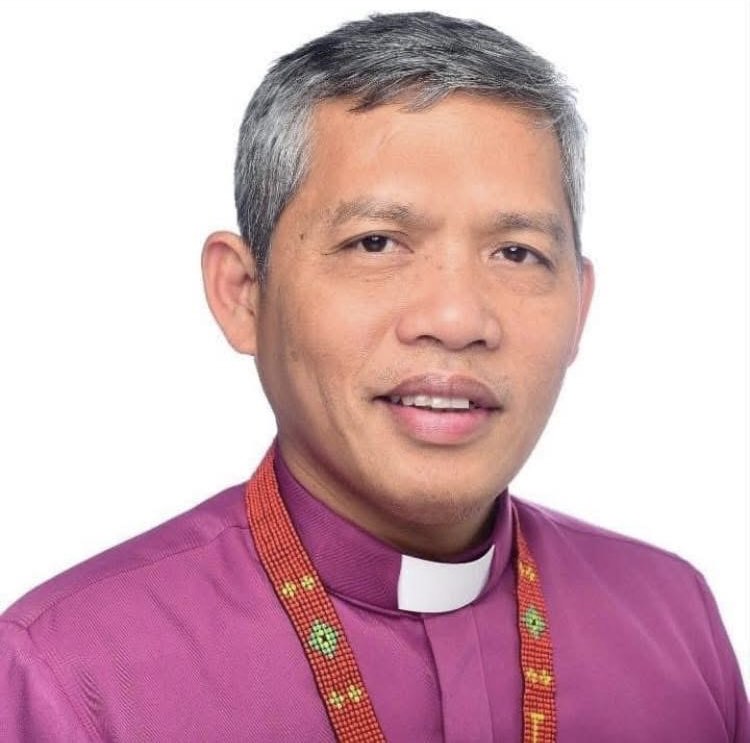
As a bishop whose human rights advocacy has led to my living outside the Philippines as a political refugee, I understand what it means when concerns over personal safety interfere with one’s freedom to exercise a vocation, serve communities and live among one’s own people.
For those compelled to leave their homeland under such circumstances, insecurity is not merely a subject of political discussion. It is a condition that separates families, disrupts lives and deprives communities of people committed to serving them.
My experience also reminds me of those who have neither the opportunity to leave nor the means to secure protection. They remain in their communities, confronting the conditions that threaten their lives and livelihoods.
It is their experience that must occupy a central place in any serious discussion about security and human rights.
If Sara Duterte now recognizes the dangers posed by the abuse of state power, that recognition must extend beyond her own circumstances.
It must include the families still seeking justice for those killed during her father’s anti-drug campaign. It must include activists who have experienced harassment, communities subjected to militarization, and citizens whose legitimate political activities have exposed them to threats.
Human rights cannot become a language that political leaders discover only when they find themselves vulnerable to the exercise of state power.
Neither should the vice president’s statements about her personal safety be allowed to overshadow the questions confronting her in the impeachment proceedings.
The prosecution presented a forensic analysis estimating Duterte’s allegedly unexplained wealth at P817 million.
For ordinary Filipinos struggling to survive on inadequate wages, facing rising living costs and enduring insufficient public services, that figure raises serious questions about wealth, privilege and public accountability.
The Filipino people have every right to demand substantive answers.
Public office is a public trust. Accountability is not a personal favor that an elected official may grant or withhold.
The vice president’s concerns about her safety must not diminish the urgency of these questions. The protection of her rights does not suspend the responsibilities that accompany her position.
The country must also resist the tendency to interpret every controversy involving Sara Duterte exclusively through the rivalry between the Duterte and Marcos political camps.
The breakdown of their alliance does not transform either political family into the natural representative of the Filipino people’s interests.
The Marcos administration must likewise answer for continuing human rights concerns and demonstrate that law enforcement institutions serve the people rather than those who wield political power.
The struggle for human rights did not begin with the collapse of the Marcos-Duterte alliance. Neither should its direction be determined by the changing political fortunes of these two families.
For the Filipino people, security means considerably more than the protection of government officials.
It means farmers being able to cultivate their land without intimidation. It means workers being able to organize without fear of retaliation. It means indigenous communities being able to defend their ancestral territories without being treated as enemies of the state.
It means families having sufficient food, decent housing and access to healthcare. It means citizens being able to criticize their government without fearing for their lives.
These are the dimensions of security that should occupy the attention of those entrusted with public office.
The Christian understanding of human dignity offers a particularly important perspective on this question. Christ’s identification with the least among us challenges societies that accord greater attention to the suffering of the powerful than to that of the poor.
It also challenges the Church to examine whose fears it amplifies, whose suffering it recognizes and whose struggles it accompanies.
Our responsibility is not merely to express sympathy when prominent individuals speak of insecurity. It is to stand with those whose insecurity has become an enduring condition of their existence.
Sara Duterte has the political influence to make her concerns heard. Countless Filipinos do not.
Her statements therefore present an opportunity to confront a much larger injustice: the unequal protection of human dignity in a society where wealth, political connections and institutional power often determine whose suffering receives attention.
If the vice president’s expressed fear is to contribute meaningfully to the national conversation on human rights, it must lead beyond concern for her own protection. It must open a serious examination of the abuses that ordinary Filipinos have endured, including those committed during her father’s administration.
Fear should awaken solidarity, not merely sympathy for oneself.
Ultimately, the measure of a just society is not how securely it protects its most powerful officials, but how faithfully it protects those who have the least power.
And the measure of responsible leadership is not how successfully an official commands public sympathy, but how willingly that official submits to the demands of truth, justice and accountability.
Antonio Nercua Ablon is a bishop of the Iglesia Filipina Independiente, also known as the Aglipayan Church. He currently serves as chaplain at St. Catherine’s Anglican Chaplaincy in Stuttgart, Germany, under the Church of England’s Diocese in Europe.