

Nadia Cruz didn’t want to be late, so she set out from her place in Angono, Rizal, at 10 a.m. for her 1 p.m. meeting at Teachers Village in Quezon City. The consideration was less about the traffic than the journey’s length.
Cruz is unfazed at riding her e-bike all the way from Angono, having developed stamina and strength through years of intermittent bike commuting since 2020. She committed to full-time bike commuting only last year, and she now cycles regularly from Angono to 350 Pilipinas (@350pilipinas), her workplace in Quezon City, and back, and anywhere she needs to be.
350 Pilipinas is a climate advocacy organization campaigning for the advancement of clean transport and sustainable mobility to help reduce the country’s dependence on fossil fuel. Cruz is its communications and multimedia manager.
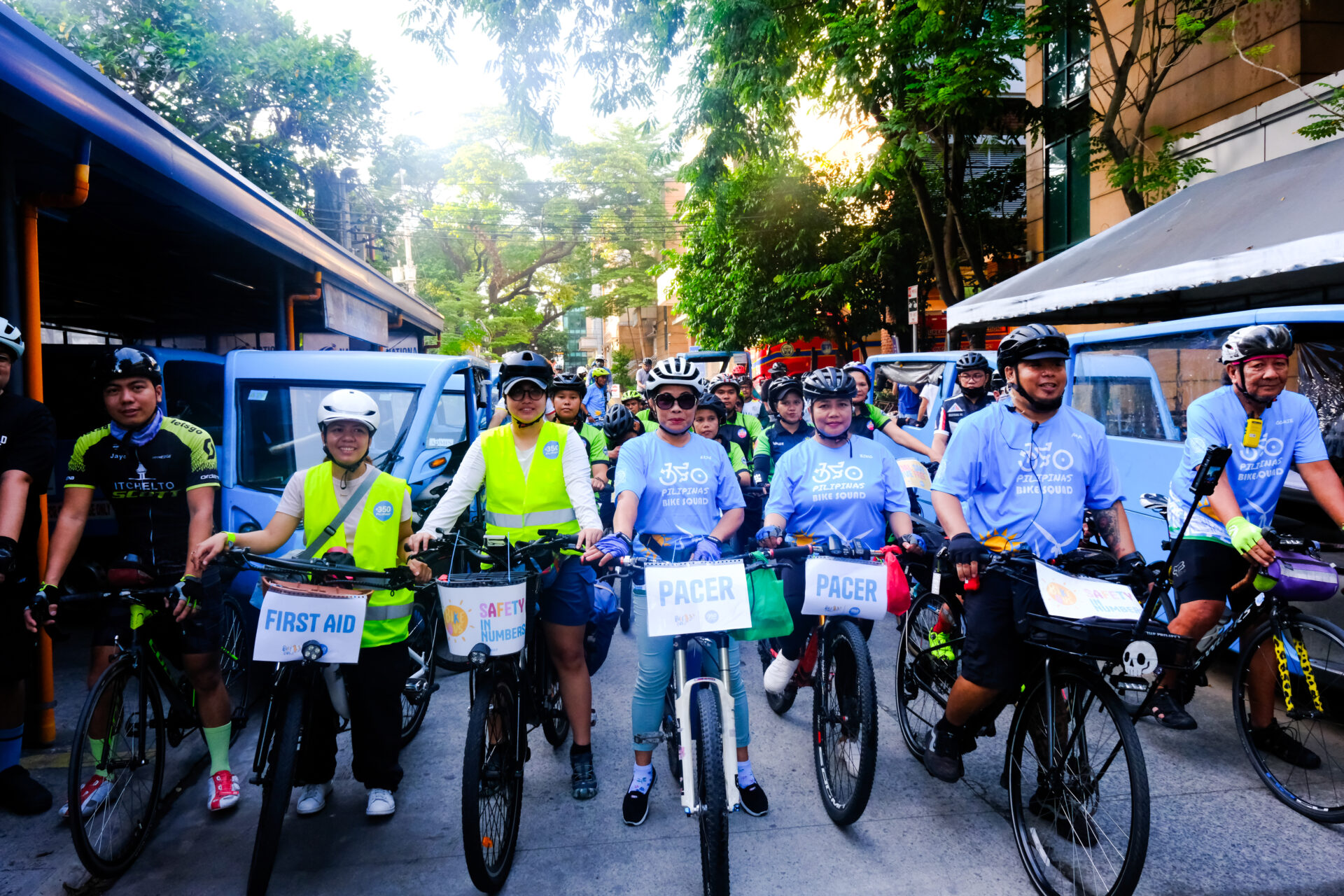
For Cruz, bike commuting was a practical choice. She says it has made her regular 50-kilometer trip predictable and cost-effective, and kept her grounded in promoting active mobility. She is not alone; she belongs to a bike squad composed of workmates who often go home together because they finish late especially when there’s field work.
Ara Alejo, Cruz’s coworker, bikes from Cainta, Rizal, to work. Alejo says their office Bike Bus was modeled after the Bike Bus in Portland, Oregon, of Bike Bus World, a nonprofit founded by former physical education teacher Sam Balto that guides children to bike to school along established routes similar to a school bus with select stops. Bike Bus, in turn, was patterned after Barcelona’s Bicibús, an initiative that has children (aged 3 to 11) and parents biking to school in the mornings.
Active mobility
Alejo, as a clean air campaigner, steers the Philippines’ crucial initiatives for climate justice, clean air, and transition off fossil fuels. Bike Bus is his newest public clean air campaign, his previous ones being “Ride for their Lives,” “Breathing Billboard,” and “Live in a Bubble.” Bike Bus’ priority, he says, is promoting bike commuting to restore the bicycle culture and correct the misconception that biking is purely a leisure activity.
Here’s Alejo in a Bike Bus video produced by 350 Pilipinas: “[A bicycle] is a mode of transportation. During a transport crisis, it helps people to shift to using bicycles. It helps reduce emissions and air pollution, and helps make our cities more livable.”
Jorr Paraiso, Bike Bus’ communications associate, is naturally of the same opinion. She engages with local grassroots communities and the media to amplify their campaign stories, and she commutes to work from San Mateo, Rizal. Surprisingly, she doesn’t have Cruz’s long experience in bike commuting. She developed her skill and courage to bike commute only last year, when she won an e-bike along with three other 350 Pilipinas staff (including Cruz). They won the e-bikes in the “Ride to Thrive” contest sponsored by Grab and the Department of Transportation (DOTr) after sending videos explaining why they deserved such a vehicle.
In the Bike Bus video, Paraiso says winning an e-bike was a huge blessing. It made her daily 13-km commute to the office easier, saving her the costs of transport. Also, charging her e-bike costs her only ₱20 to ₱30 for three to four hours.
Without her e-bike, she says, she would still be enduring the taxing two- to three-hour one-way trip to work that many Filipino commuters grapple with daily.
Safe commute
For Jawo Jayme, the campus engagement campaigner of 350 Pilipinas, being a bike commuter has strengthened his credibility in promoting climate and sustainability initiatives in schools like the Polytechnic University of the Philippines (PUP). Significantly, it has kept Jayme, who identifies as queer, safe.
In the Bike Bus video, Jayme describes biking as an accessible and exclusive form of transportation that doesn’t discriminate against age, gender, and economic background. He says that cycling gets him to his workplace in Quezon City from his home in Antipolo and anywhere without exceeding his budget (which he spends mostly on bike maintenance).
And bike commuting is safer for Jayme than taking public transport. He discloses in an email that the two-hour-plus, one-way trips on public transport used to be the most distressing part of his day because, as a queer person in a public space, he was exposed to catcalling, discrimination, and harassment. Once, he says, someone tried to hit him while he was walking to a jeepney terminal. The tension was aggravated by the people milling around who stared, laughed, and even called him names. The trains were no better, he says, with men on the opposite platform yelling insults at him.
“I can never understand why some people exert so much effort and energy just to hurt someone for simply existing,” says Jayme, a former PUP student activist and campus journalist.
Bike commuting has given Jayme a safe haven: “Through cycling, particularly with friends, I found a sense of safety and freedom. It [helped] me…avoid many of the harmful experiences that came with public commuting.”
2026 campaign
“Out na sa trabaho? Sabay na sa Bike Bus!” is 350 Pilipinas’ new program, which is part of its broader sustainable transport campaign for 2026. Aimed at workplaces and schools, it promotes bike commuting as a flexible, low-cost solution to the perennial transport crisis. It was launched on June 4 and 11, focusing on workers biking to and from work while following the US Bike Bus model for the enhanced safety, visibility, and solidarity of bike commuters.
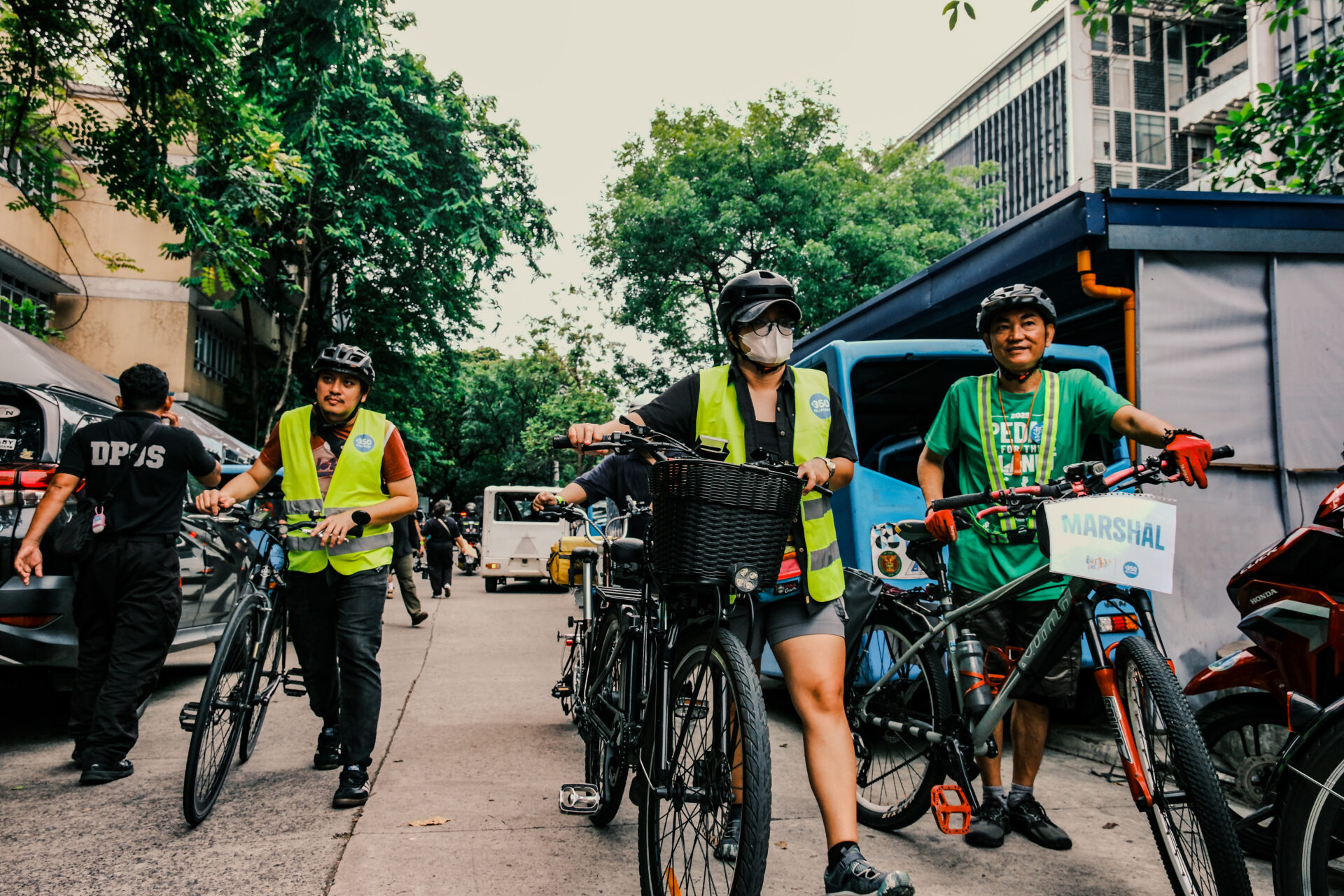
The June 4 Bike Bus was a 7-km ride from Quezon City to Marikina, and had as participants climate advocates, government employees, Happy Pedal Project riders, and the 350 Pilipinas Bike Squad led by Alejo, Chuck Baclagon, the 350 Pilipinas corporate secretariat, Cruz, and Paraiso.
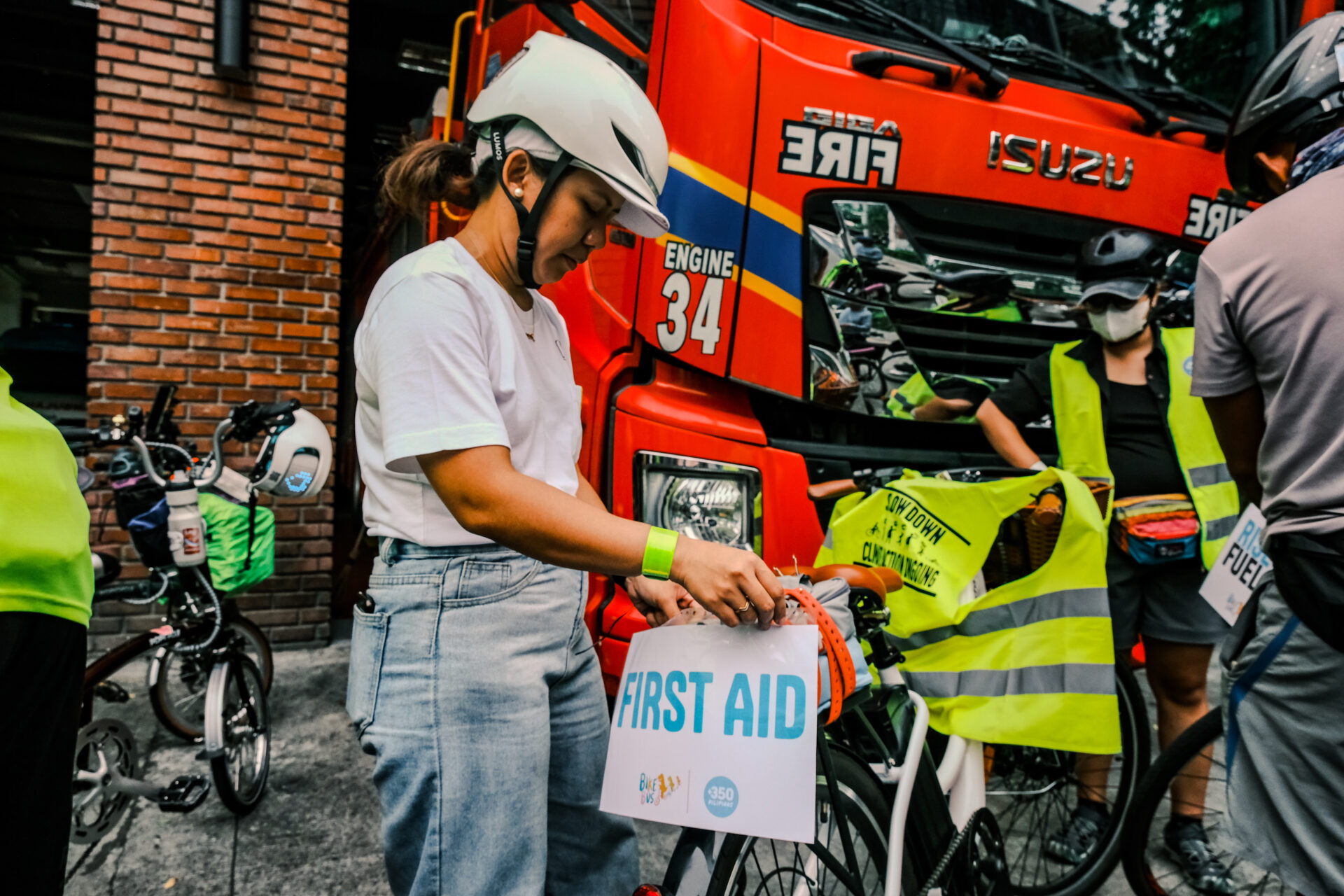
The Metropolitan Manila Development Authority (MMDA) and the Quezon City Department of Public Service (DPOS) provided support. The riders assembled at 5:30 p.m. at Gate 3 of DPOS — Green Transport Division in Quezon City Hall — and rode out at 6 p.m. through Sikatuna Village, Xavierville Avenue, etc. up to SM Marikina.
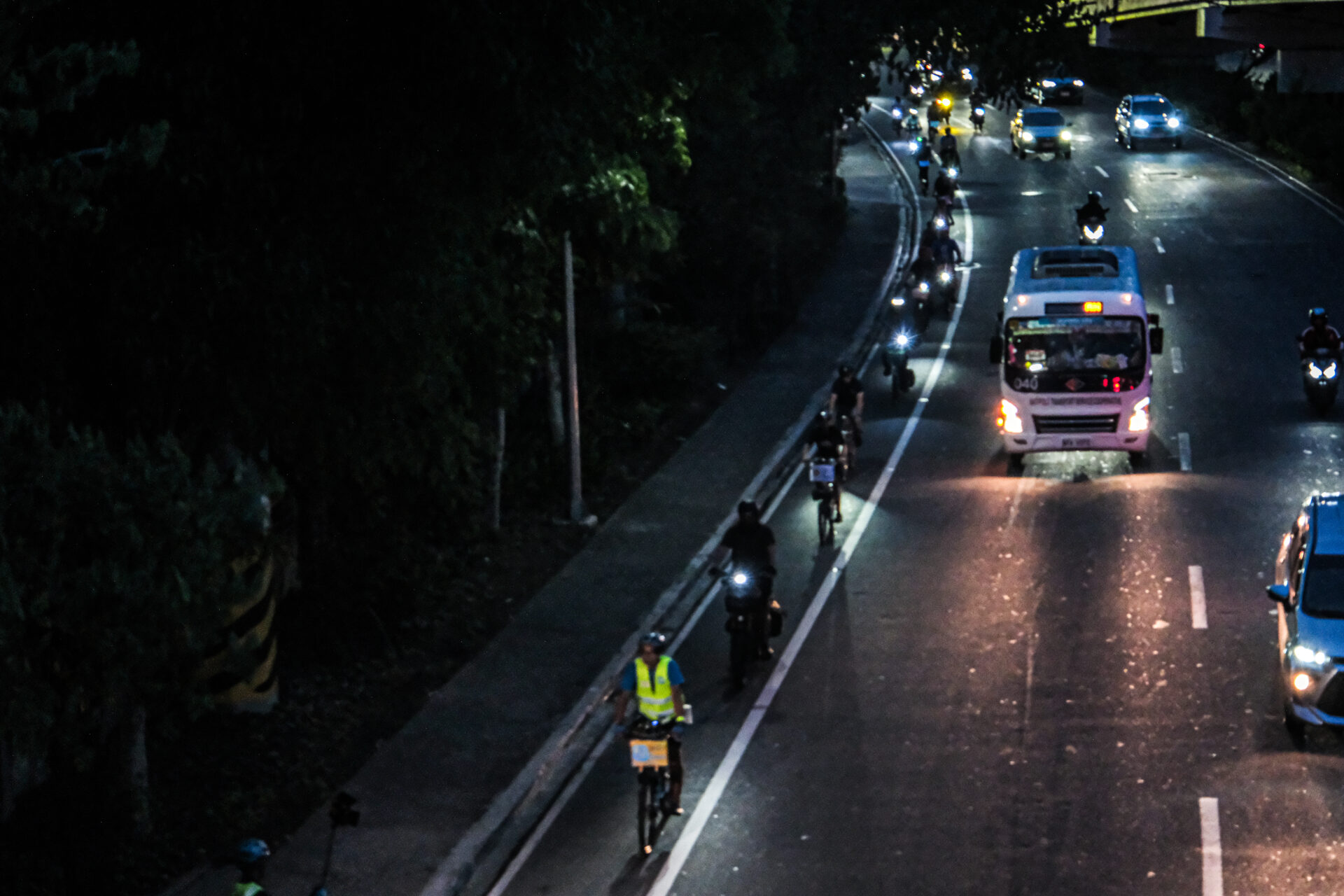
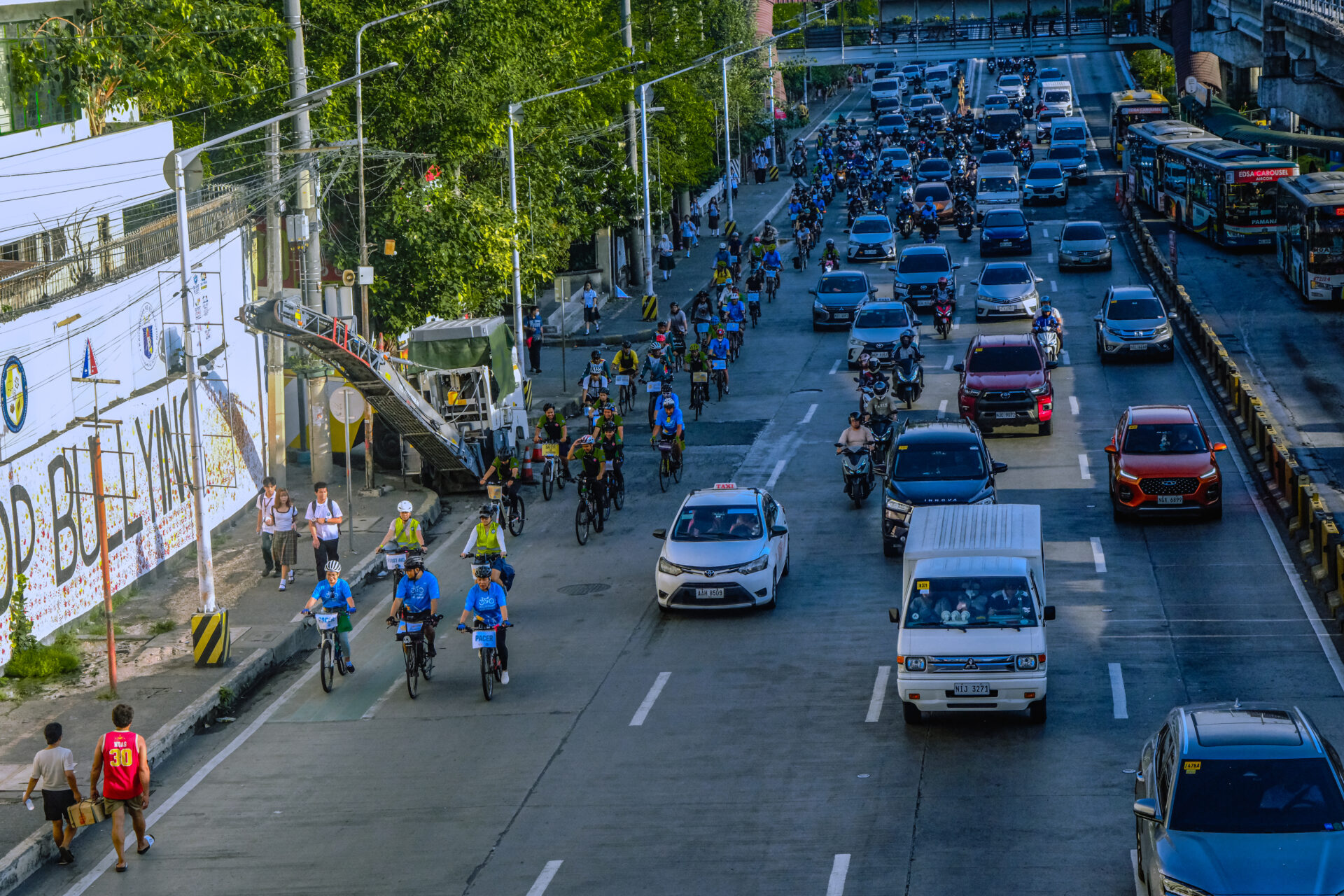
The June 11 Bike Bus had a call time of 5:30 a.m. for bike commuters, including 350 Pilipinas Bike Squad volunteers Bing Rallonza and Oghie Inocencio, who are members themselves of a senior bicycle group based in San Juan City. Convening at Quezon City Hall, they rode out at 6 a.m. on the 10-km route that traversed East Avenue to Edsa (South bound) then Ortigas, Julia Vargas, and Meralco Avenues right up to the MMDA Bike-to-Work End-of-Trip (EoT) Facility in Pasig City. The EoT Facility, which was launched in March, has secure bicycle parking, personal storage, and both gender-separate and all-gender changing rooms and showers for cyclists and pedestrians.
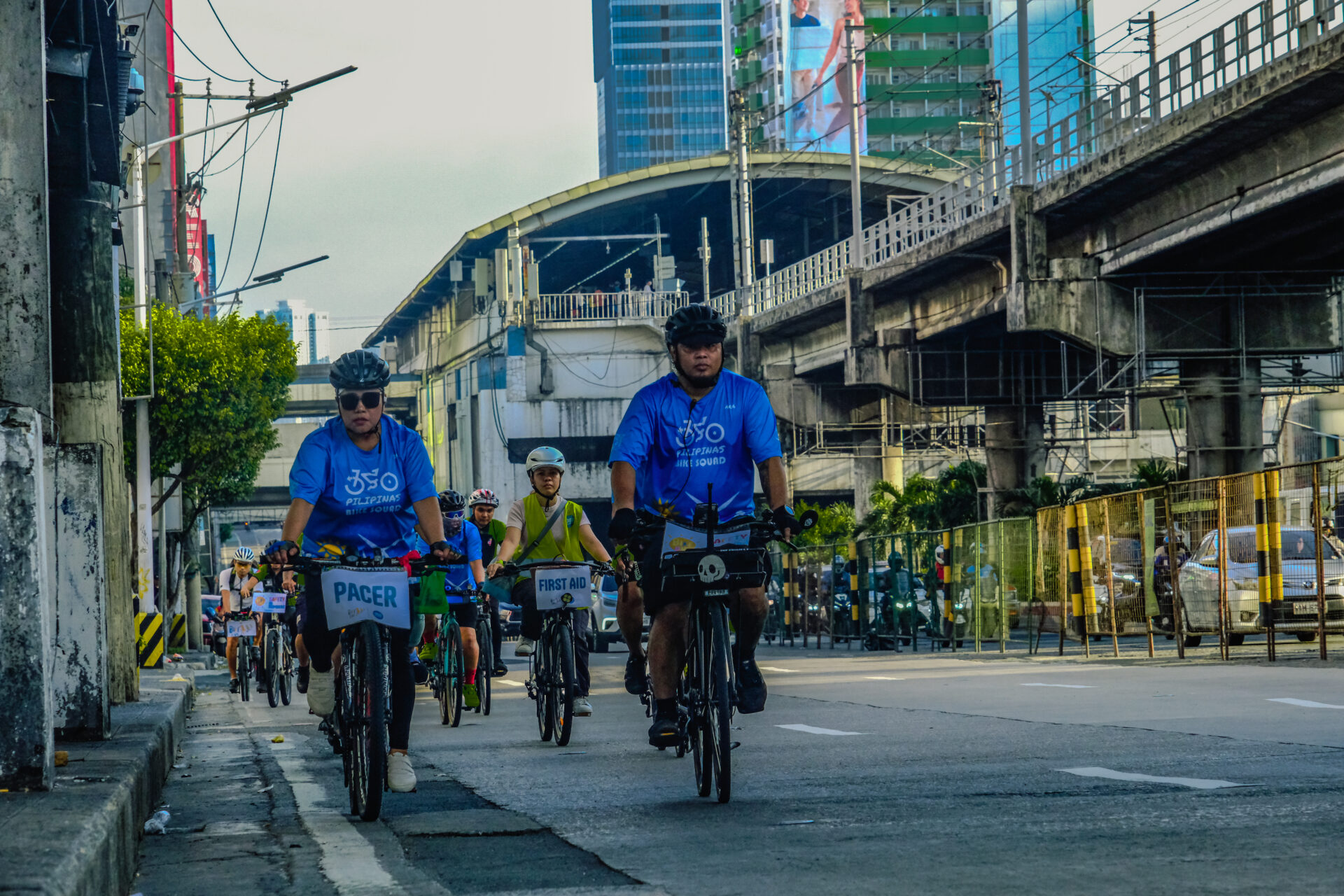
Cruz says they designed the bike routes. The June 4 route copied their customary Quezon City to Rizal route, and the June 11 course was a test to see how Edsa could accommodate the Bike Bus as a “soft infrastructure” unit on the road.
“It was also a call for both local government units and national agencies, like the MMDA and DOTr, to adopt such practices to [give] workers… diverse modes of transportation,” she says.
Challenges
A Bike Bus starts with coworkers agreeing to ride together to work or the reverse, on a route meticulously planned after consideration of each rider’s point of origin and schedule, safer routes with low-traffic volume, pickup stops, and potential bike service shops. Safety is paramount, so the routes must be tested repeatedly for timing and possible hazards.
Importantly, a Bike Bus must have a ride leader (aka driver or pacer), a marshal, a sweeper (aka conductor), a medic, and a bike mechanic.
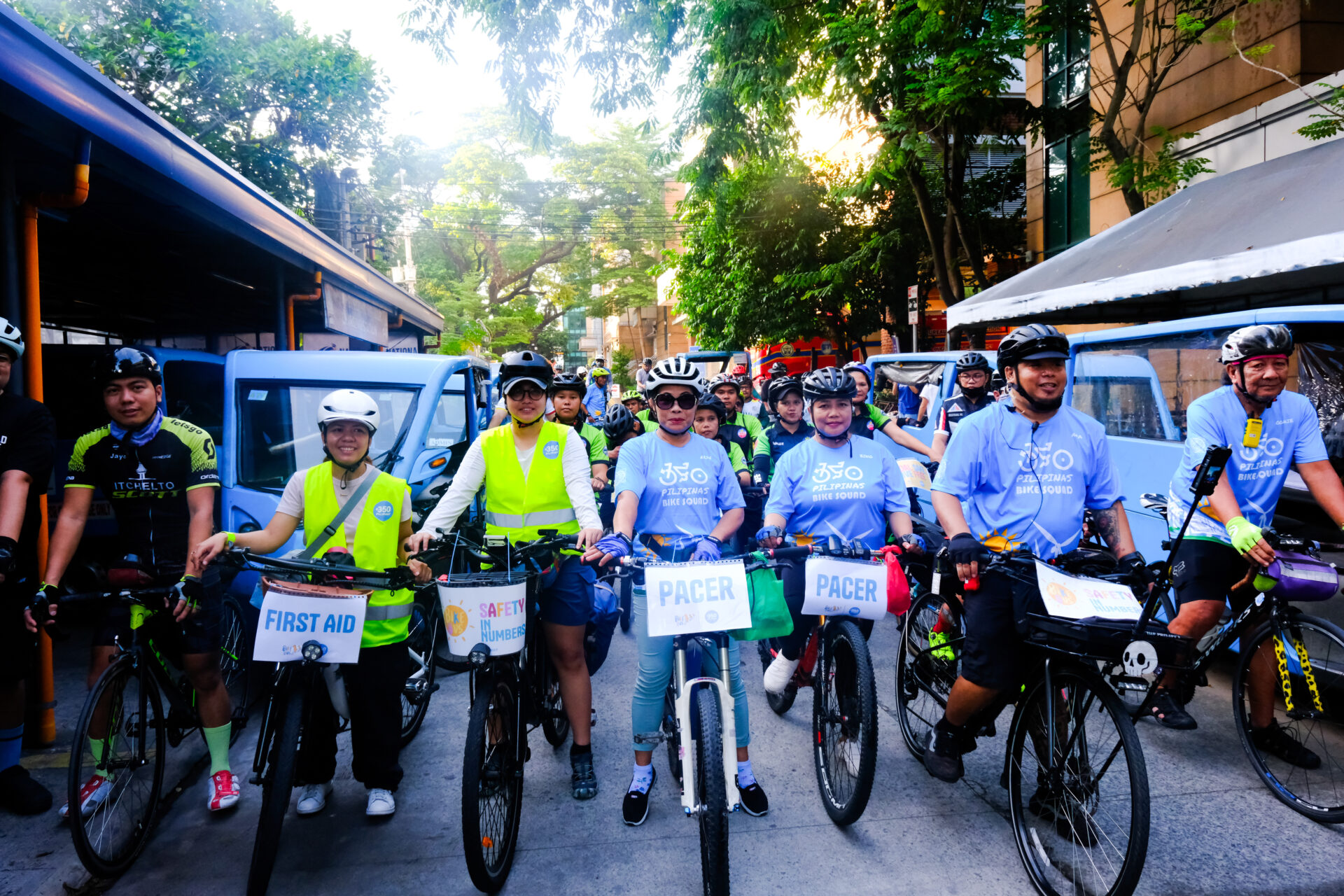
Still, implementation doesn’t always go smoothly, and bike commuters are faced with challenges such as night biking on rainy days when there is low visibility, says Cruz. She says the lack of diversified transport options for regular commuters and active mobility advocates (walkers and cyclists) is the primary challenge, which results from the absence of support from communities and local governments.
An equally pressing problem is the scarcity of well-engineered bike infrastructure, says Jayme. “Many bike lanes are worn out, poorly placed, and lack proper barriers separating cyclists from motor vehicles,” he points out. “There’s also still limited public appreciation and understanding of the cycling culture.”
An education drive for motorists and other road users is urgently needed, Jayme says. This would make them aware that those taking up less road space must be protected, and their safety and dignity upheld, he says.
Research shows that funding for the active mobility program has been insufficient to expand bike lanes and improve pedestrian infrastructures. The 2024 budget of ₱1 billion was reduced to ₱60 million in 2025, and although the funding climbed to ₱105 million in 2026, the allocations for 2025 and 2026 were still smaller compared to the ₱700 million budget in 2023. Given this, the DOTr is seeking ₱1 billion for 2027 to further expand the lanes for bikers and pedestrians, and improve sidewalks. (Of the targeted 2,400 km of bike lanes, only 1,100 km have been constructed.)
Fossil-free mobility
The pandemic forced many Filipinos to bike to work, resulting in clearer skies, cleaner water, more breathable air, and reduced noise pollution. But bike commuting was pushed to the back burner post-pandemic, when the world returned to how it was before. Bike commuting became a viable solution again when fuel prices skyrocketed after the US-Israel attack on Iran.
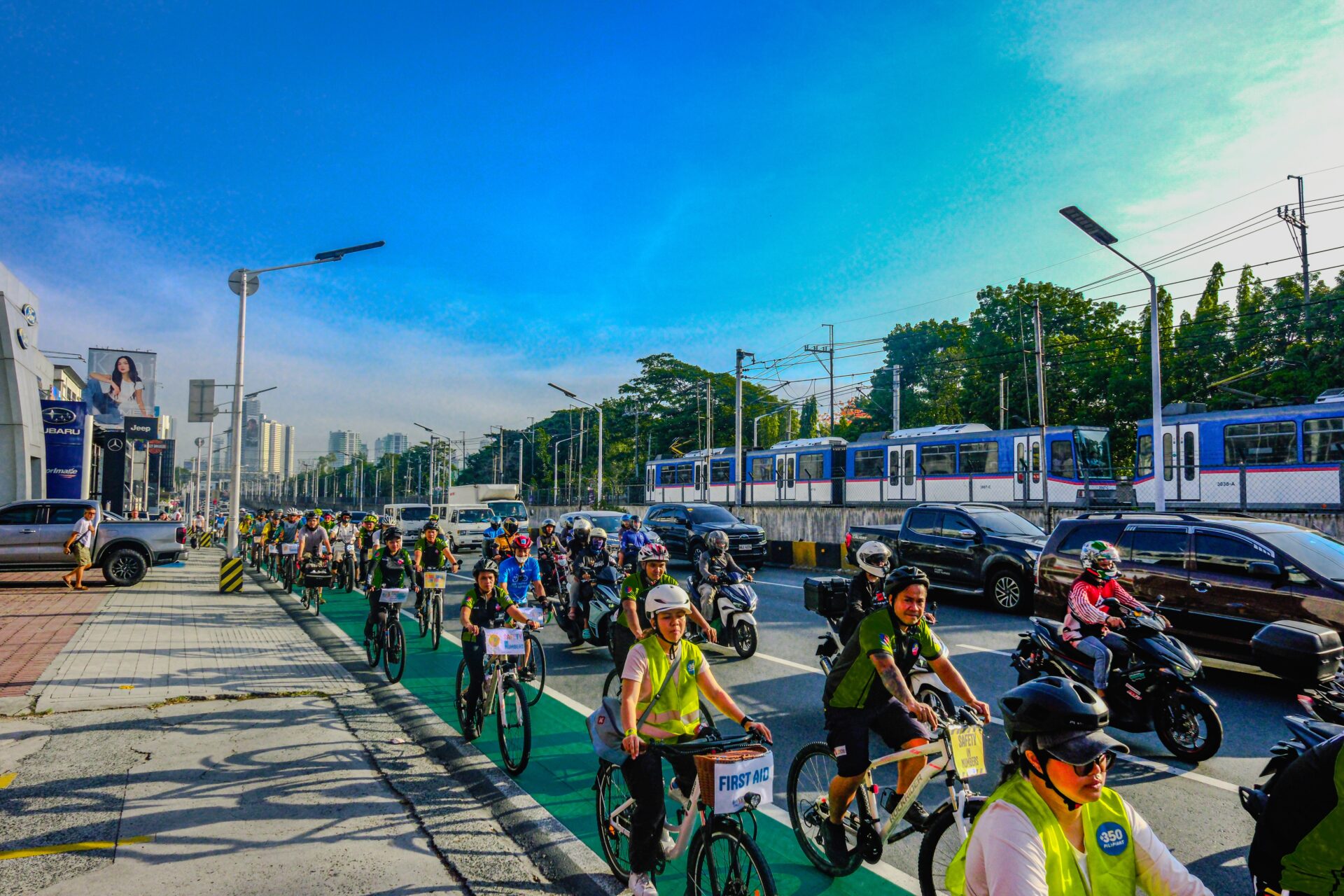
Bike commuting is a big step toward weaning the Philippines from dependency on fossil fuels. It’s the best option for the underprivileged. It increases road safety, and it’s good for the environment and humanity.
Bike commuters are undaunted by the challenges and are supporting Bike Bus. As Alejo said, “There’s visibility in numbers.” There’s also safety in numbers, which translate to safer, inclusive roads. #
350 Pilipinas plans a Bike Bus from Quezon City to Rizal once a week. To join, visit https://bit.ly/bikebusviber.