
In this modern age of our permanently online lives, I find that my empathy — and those of others – are stretched thin. I jump from app to app to fill the gaps in my days scrolling through posts mindlessly, and I have gotten used to the dissonance of seeing mundane posts of friends and family contrasted with articles showcasing the state of disarray of the world around us. An endless stream of headlines detailing a new atrocity. Money being siphoned from the pockets of our people for corrupt politicians, an economic crisis putting thousands out of their livelihoods and our leaders, who have a responsibility to the people, are at each other’s throats and conspiring against one another.
As the endless void of my feed spit out more and more headlines, it’s easy to just numb yourself from the barrage of articles describing the continued collapse of our country.
Living here, you start realizing a pattern. Corruption, killings and hate have always embedded themselves in our history. The victims change, but it’s the same disappointing cycle repeated over and over again. I am lucky that I am in a position to give my sympathies instead of being part of the oppressed, but one can only have so much compassion to spare. Having the energy to extend one’s virtual goodwill to every single injustice is noble, but ultimately futile.
I’ve accepted my powerlessness and now find myself in a similar cycle: wake up, scroll through my apps, see the constant failings of our government and continue on. I’ve perfected this routine to the point that the horrible situations I skim through just become words on a screen.
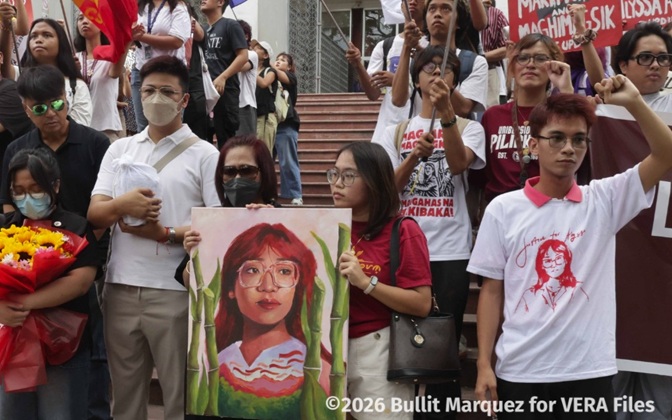
I found myself perpetuating this bad habit again one afternoon. But during the endless scrolling, something caught my attention. It was the image of a young woman, no older than myself. Her name was Alyssa Alano. The post was calling for justice. Justice for her killing.
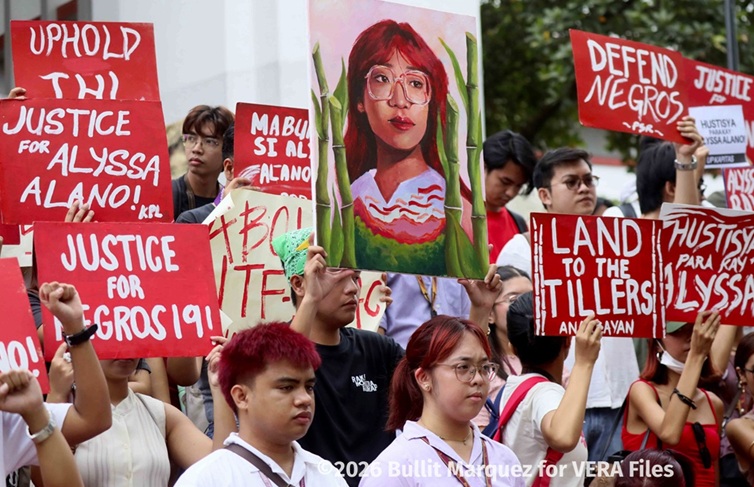
I stared at the post and suddenly, something snapped me out of my routine. Maybe it was the fact that she resembled and reminded me of friends that I cared so deeply about. Maybe it was the realization that someone this young, who had her entire life ahead of her, was just suddenly extinguished.
Or maybe it was the thousands of comments and reactions below the post — laughing, celebrating and cheering about this woman’s death. Questions swirled around my head as I continued to read through the insults thrown at Alyssa. Why? What could this student have done to earn the vitriol of thousands of her countrymen?
It felt hypocritical for me to invest in this ordeal. I haven’t made much of an effort to understand more thoroughly the plight of people in our country, but now that this happened to someone I could relate to, I suddenly needed answers.
I did my best to ignore the hateful remarks against her to get to the truth, but with the knowledge that the truth in this country is often obscured — intentionally or not — piecing together an objective reality seemed impossible. I looked where I could: reports, news articles and testimonies detailing what led to Alyssa’s untimely death. By accounts from her peers, she was a bright-eyed activist and student leader dedicated to the marginalized communities in Negros where she had immersed herself.
A deadly encounter
On April 19 this year, an armed confrontation broke out between the Philippine Army and the New People’s Army. resulting in nineteen deaths, which included Alyssa and other activists who were in the community when the violence began.
It was a tragedy, and I felt a responsibility to involve myself in the lives of these people who had put themselves in danger to better understand the plight of the vulnerable. As I learned more about the April 19 incident, it became clearer to me why the public reaction was to drag the dead through the mud and figuratively spit on their corpses. To these people, those killed were rebels and terrorists who deserved to die.
I was led into a deeper rabbit hole with a new question: were these so-called victims really aggressors or unfortunate collateral damage? I looked further to different sources to try to piece the picture together. As I dug deeper and deeper, I uncovered not just more information, but the depths of depravity our people sank to: memes generated using artificial intelligence, images of the remains of the dead fully displayed for everyone to see, vigils vandalized with insults and slurs. The corpses, literally and figuratively were dragged through the mud to push agendas.
I watched in real time as the dead were stripped of humanity and dignity.
As my research came to a close, I found nothing to prove anything conclusive. The Philippine Army claimed the dead were armed combatants. Their bodies were shown wearing battle gear. The NPA denied this.
In the end, I asked myself the more important questions: why would it matter if these people were affiliated with the NPA? Do they not deserve the same reverence and respect that we give our dead? Does your membership with this so-called terrorist organization relinquish your humanity?
If they were indeed involved with the NPA, these were still young lives steadfast in their beliefs. They were disillusioned with the treatment of the Negros communities because of the neglect of the government. They uprooted their own lives of comfort and safety to travel to these areas and immerse themselves in the lives of the impoverished.
Seeing the condition the residents of these communities lived in, how could one not be dissatisfied and want to take action? They could have justified joining a dangerous organization and risking their lives for their fellow Filipinos because they saw no other choice. Whether they were NPA or not, they made that choice because they thought that they could make a difference in these communities that so desperately needed it. Their conviction and dedication to the cause led to their deaths.
When making sense of this tragedy, the deaths, and the supposed justification by our government, I’m taken back ten years ago when the streets and slums were piled with the dead. Only a poorly drawn placard admitting their supposed guilt spoked for them. No dignity, no justice, just a statistic with the justification that they were keeping our streets safe.
I remember stories told from the 1970s. Martial law had to be declared because of the growing communist and Islamic threats. Thousands died in the following 14 years of brutal authoritarian rule, but it was deemed necessary to keep the peace. Time and time again, our government has abused their monopoly on violence and effectively branded victims as “others” to be ostracized and dehumanized. Rebels, communists, drug dealers, whatever new demonym to justify the use of force against them.
Blindly following constructed narratives
What is more disappointing is the lack of solidarity and critical thinking within our community. We blindly follow constructed narratives presented to us as fact and cast aside our fellow countrymen. Anger has been sown and cultivated within all of us.
Arguments devolve into shouting matches, with all our energy funneled into coming up with clever insults to call each other with instead of any semblance of understanding. All this while another thing to get angry about happens. A new incident to argue about for a week or two with no resolution or justice for the victims.
The wheel never stops going. Turning too fast for us to even comprehend the amount of injustices that they get away with. It is easy to take a step back and see how powerless one is and retreat into your own bubble, relishing in apathy.
Even I am guilty of just blocking everything out and trying to live my own life, but the deaths of Alyssa Alano and the other students have shocked me out of my comforting bubble that I have isolated myself in. I saw myself in them. Not just because of their age, but because of their steadfast conviction. I have my own beliefs and advocacies that I want to fight for, but I always find myself stalling. I tell myself that I’m powerless, but truthfully, I am lazy. I saw these people who were in a similar situation as I was, have these beliefs and have the will to endanger themselves to follow through on them and it cost them their lives.
It should not take a death that hits particularly close to you, to get you to finally look around yourself and start caring again, but that’s what it took for me. It is difficult to derive any sort of conclusion for what happened in Negros. Young students are dead and no amount of people having the same revelation as I did can make up for it.
What is the next step after this? Eventually another tragedy will inevitably grip the Filipino people and we’ll be too busy arguing about that as their names will fade into irrelevancy in the public consciousness. I attempted to find some sort of reprieve or silver lining at the end of this tragic event to try and find meaning in their deaths. On a smaller scale, to the people whose lives were touched by the dead, they will continue to carry forward what they stood for.
I did not know them personally, but in death, they have empowered me to take the steps in fighting for what I believe in. That is what I tell myself to make some sense of what happened. As I continue to see the wheel spin and the cycle of tragedy and rage continue, I find myself still clueless on what is to be done, but I am no longer struck by apathy.
The feeling of powerlessness is still there, but I find myself motivated to do something or anything to fight against injustice. It will take a while to fully realize what I must do, but change starts on an individual level and eventually I believe that I will find my own way and the memory of Alyssa and the other students shall be preserved. Not with the arguments of their allegiances and the vitriolic hate that their spirits had to endure, but with the knowledge that their will to do the right thing has inspired others to follow.