

Celebrating Art Deco’s 100 year anniversary, the National Museum of Fine Arts presents one of its largest exhibitions—Art Deco: Modernity and Design in the Philippines 1925-1950, featuring over 300 objects from more than 40 collections, at Galleries VII and X, 2F. With many objects shown for the first time, the exhibition runs until 31May 2026.
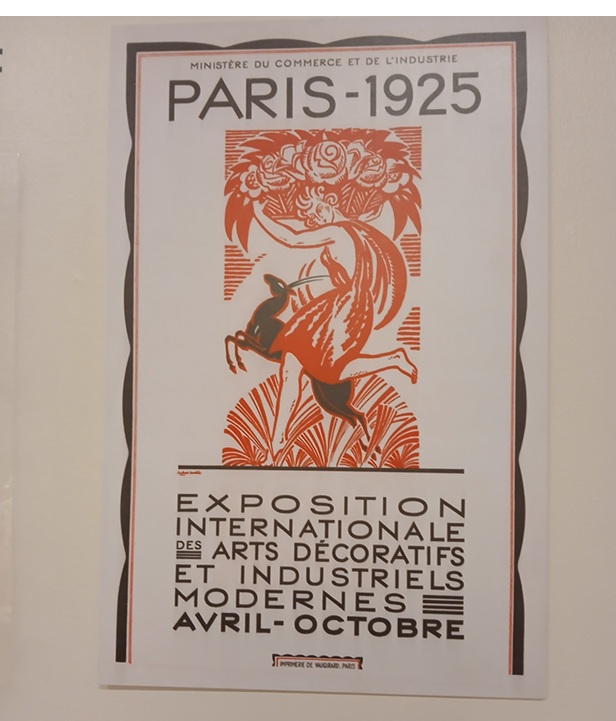
In 1925, the Exposition Internationales des Arts Décoratifs opened in Paris, France. Organized by the French Government, it highlighted the contemporary moderne style reflected in architecture, interior decoration, industrial design, transportation, and lifestyle. Leading European designers and manufacturers expressed such ideas in their artistic output.
Known as Art Deco, the design legacy from this landmark exhibition in Paris spread to the Americas, Africa, and Asia, peaking in the 1930s and disappeared with World War II.
Building Modernity
After Spain, the entry of American colonialism (1901-1946) sparked a construction frenzy in Manila that expanded into new districts beyond Intramuros. It paved the entry of new and modern architectural designs in Manila and other provincial centers.
Pensionados and Art Deco
Art Deco came into the country in the late 1920s with the return of Filipinos who studied in Europe and the United States. Andres Luna de San Pedro, educated in the Philippines and France, was one of the earliest exponents of Art Deco and served as the city architect of Manila from 1920-1924. His works included the First United Building (1920), Crystal Arcade Building in Binondo (1932), and Lizares Mansion, Iloilo City (1937).
The 1903 Pensionado Act sent Filipinos to study in the United States. Graduates in architecture such as Tomas Mapua, Juan Arellano, and Antonio Toledo worked at the Bureau of Public Works; their public building designs were imbued with modernist Art Deco elements. Other pensionados included Carlos Barretto, Tomas Arguelles, and Juan Nakpil, all influenced by the Art Deco style they learned in America and adapted to Filipino sensibilities. Some of their works still stand to this day.
Art Deco Philippines
Aspiring towards a modern lifestyle, Art Deco permeated the everyday lives and of Filipinos in architecture, furniture, fashion, and jewelry, showing Filipino craftmanship at its best. Art Deco design touched everyday objects such as radios, telephones, clocks, lamps, and electric fans.
Original elements and design motifs of Art Deco directly inspired by the 1925 Paris Exposition included stylized floral patterns, sunbursts, frozen fountains, ziggurats or stacked pyramidal forms, zigzags, and geometric shapes.
In its early days, Filipino designers adapted the classic French Art Deco elements in a variety of architectural works that included “commercial structures, entertainment halls, public facilities, residences, fair pavilions, and even funerary mausoleums.”
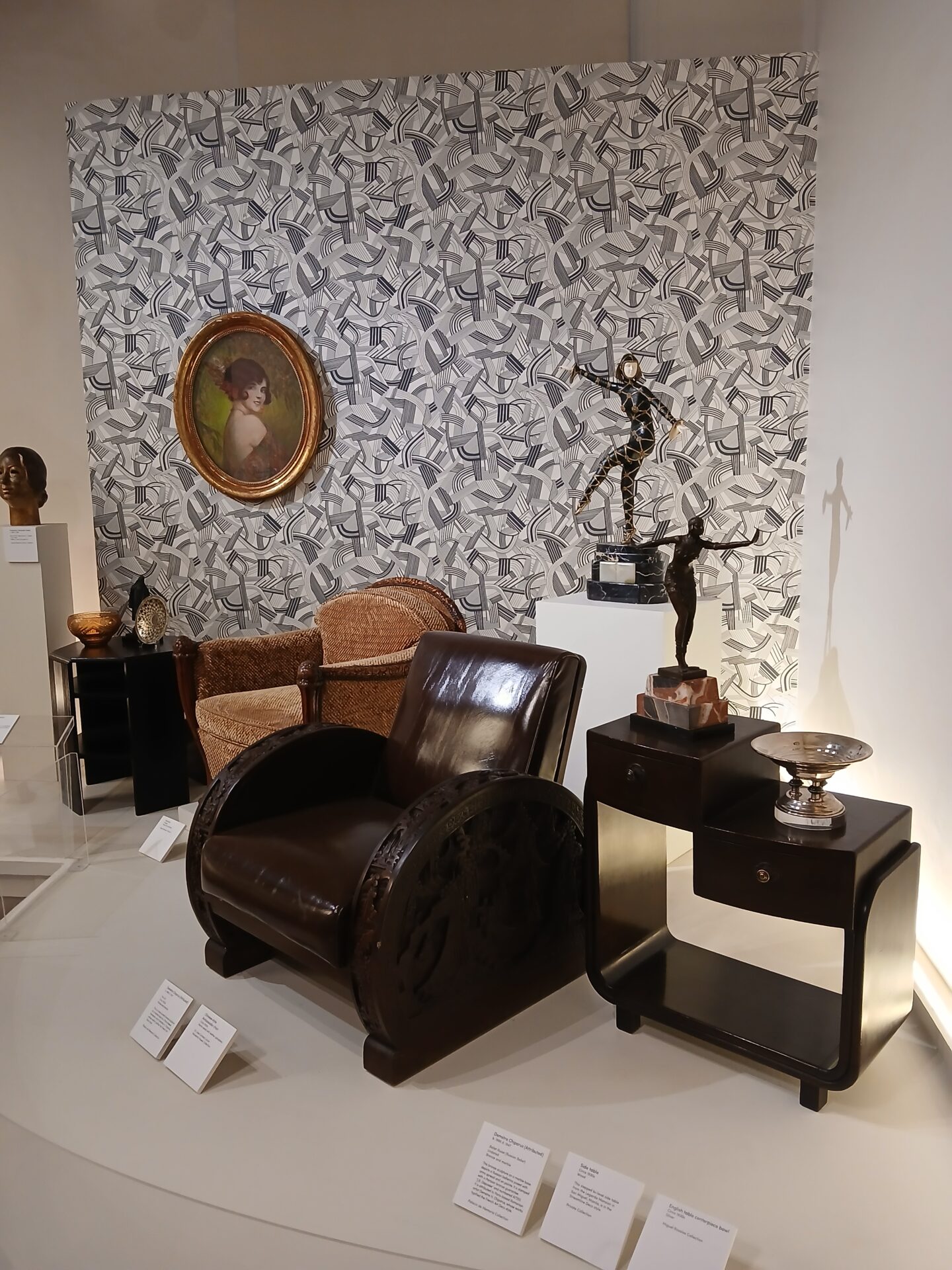
Designers also appropriated Art Deco elements into interior and furniture design, and traditional clothing, as seen in the evolution of the Philippine terno that combined Art Deco geometric patterns and streamlined silhouettes. In Manila, made-to-order and mass-produced furniture in local hardwoods featured Art Deco motifs such as stylized floral patterns, geometric forms, streamlined angles, and speed lines.
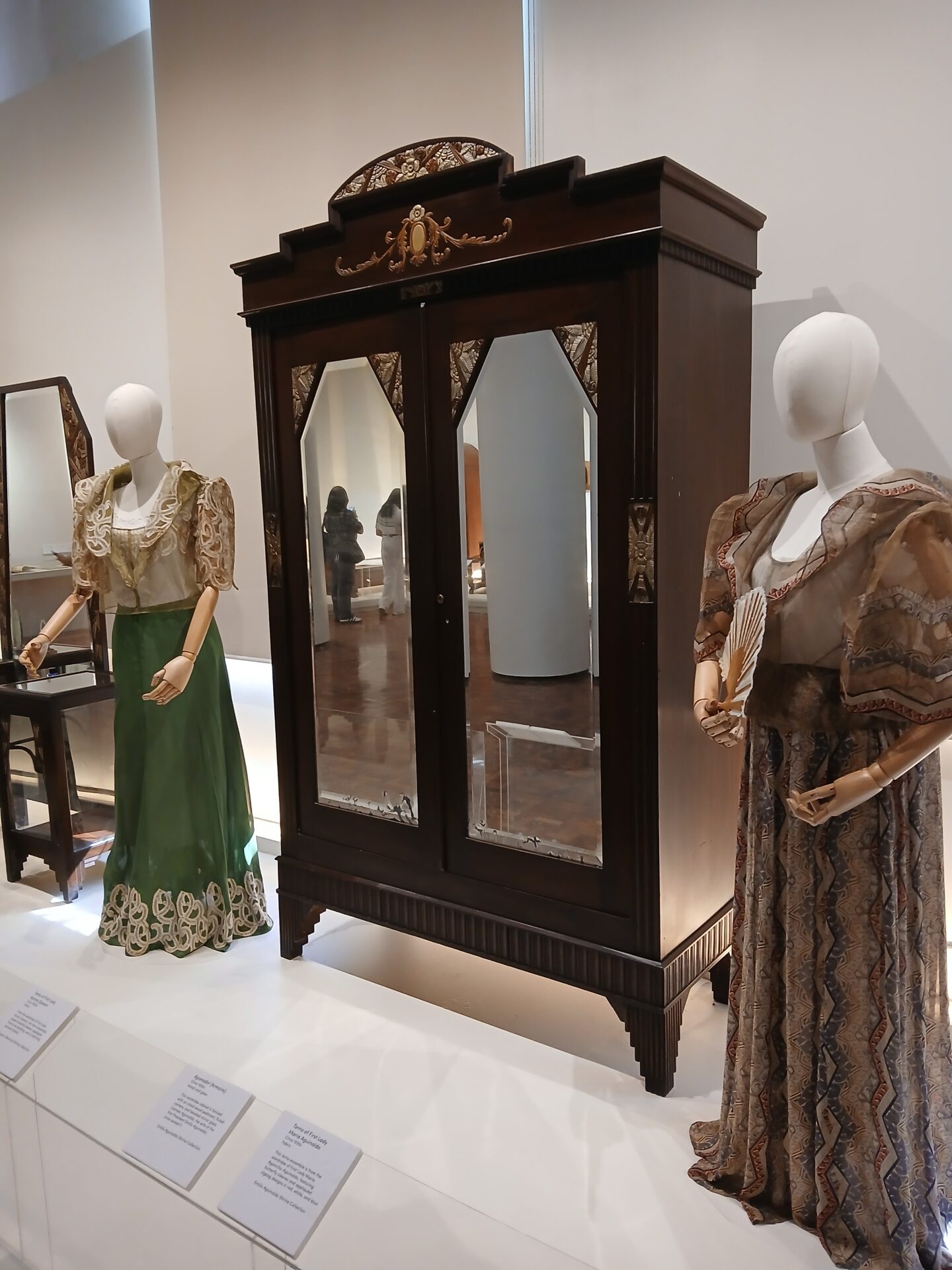
One of the most popular furniture was the Ambassador Style, a set of low-slung, lounge style seating with solihiya or woven rattan seats. Traditional handcrafted furniture were decorated with Art Deco detailing, as seen in the aparadores (armoire), tocadores (dressing table), and plateras (display cabinet) described as “modernistic, Parisian, Egyptian, or radio-inspired Art Deco.”
By the mid-30s, Art Deco evolved into the more American-inspired Streamlined Moderne, referencing modern transport and technology expressed in speed lines, porthole or circular openings, and smooth and curvilinear surfaces. It emphasized sleek lines and aerodynamic forms, signifying speed, machinery, technology, and modern transportation.
Retaining its Filipino spirit, Philippine Art Deco is characterized with “an eclectic and hybrid interpretation” of traditional motifs integrated with the international style of Art Deco. Using stylized tropical flora such as bamboo, coconut tree, mangoes, bananas, sampaguita, as well as Mindanao’s okir designs, capiz shells, and indigenous textile patterns provided a rich overlay of forms and textures.
Art Deco Buildings
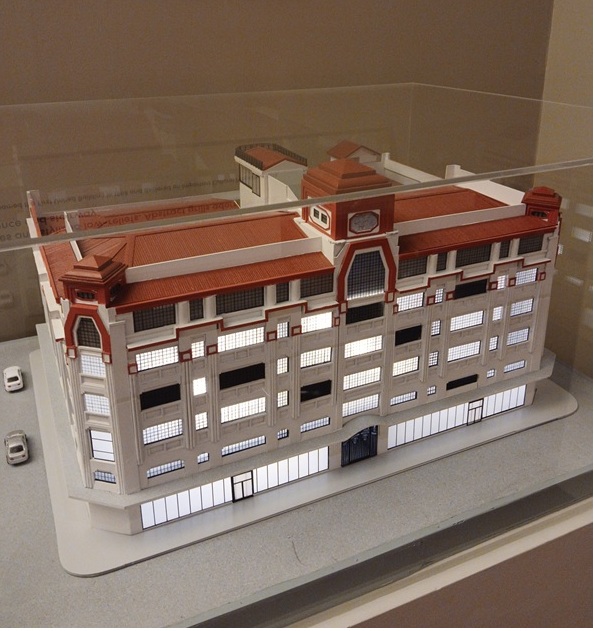
Located in Escolta, Manila, two early Art Deco buildings include the Burke Building (1919), the first building in the country to have an elevator, designed by Tomas Arguelles and the First United Building Manila (Edificio Perez-Samanilla,1928), the earliest multistorey Art Deco building in the city. Classical Art Deco ornamentation accents its façade’s canted arches and stylized low-reliefs. Abstract grills embellish the main entrance and stairways.
Other notable structures include the Capitol Theater Manila (1930) by Juan Nakpil, Manila Metropolitan Theater (1931), Old Jaro Municipal Hall (1934), Rizal Memorial Coliseum (1934) by Juan Arellano, and the Misamis Oriental Provincial Capitol Building, Cagayan de Oro (1950), with its symmetrical façade and geometric floral motifs.
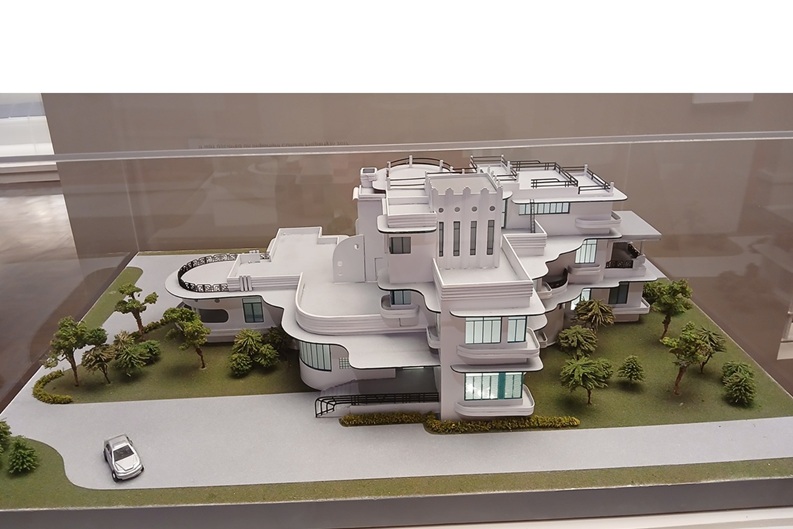
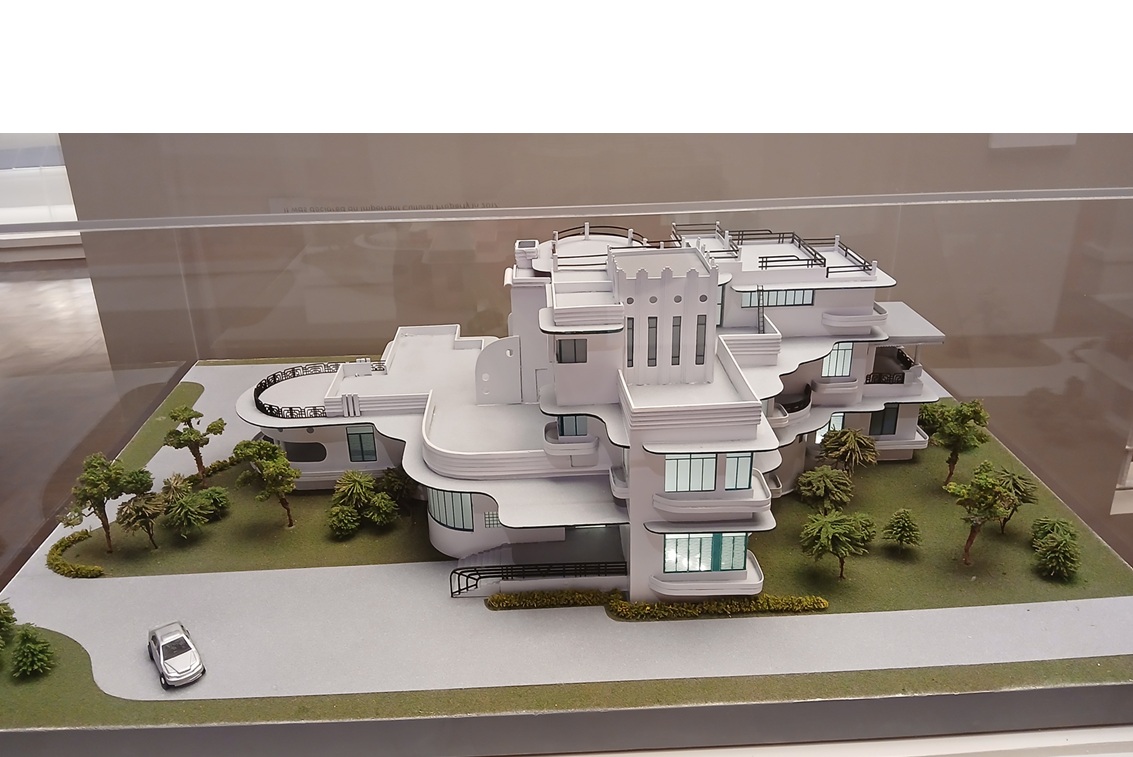
The Generoso Villanueva Mansion, Bacolod (1936) is a three-storey mansion known as Daku Balay, designed by Engineer Salvador Cinco for sugar farmer Generoso Villanueva. The Streamline-Moderne style is seen in its aerodynamic curves, horizontal lines, and nautical elements.
Today, nostalgia abounds for that era of a forward-looking and modernizing Philippines, full of young Filipinos who returned and served the country with pride and integrity, through the ideals of Art Deco.