
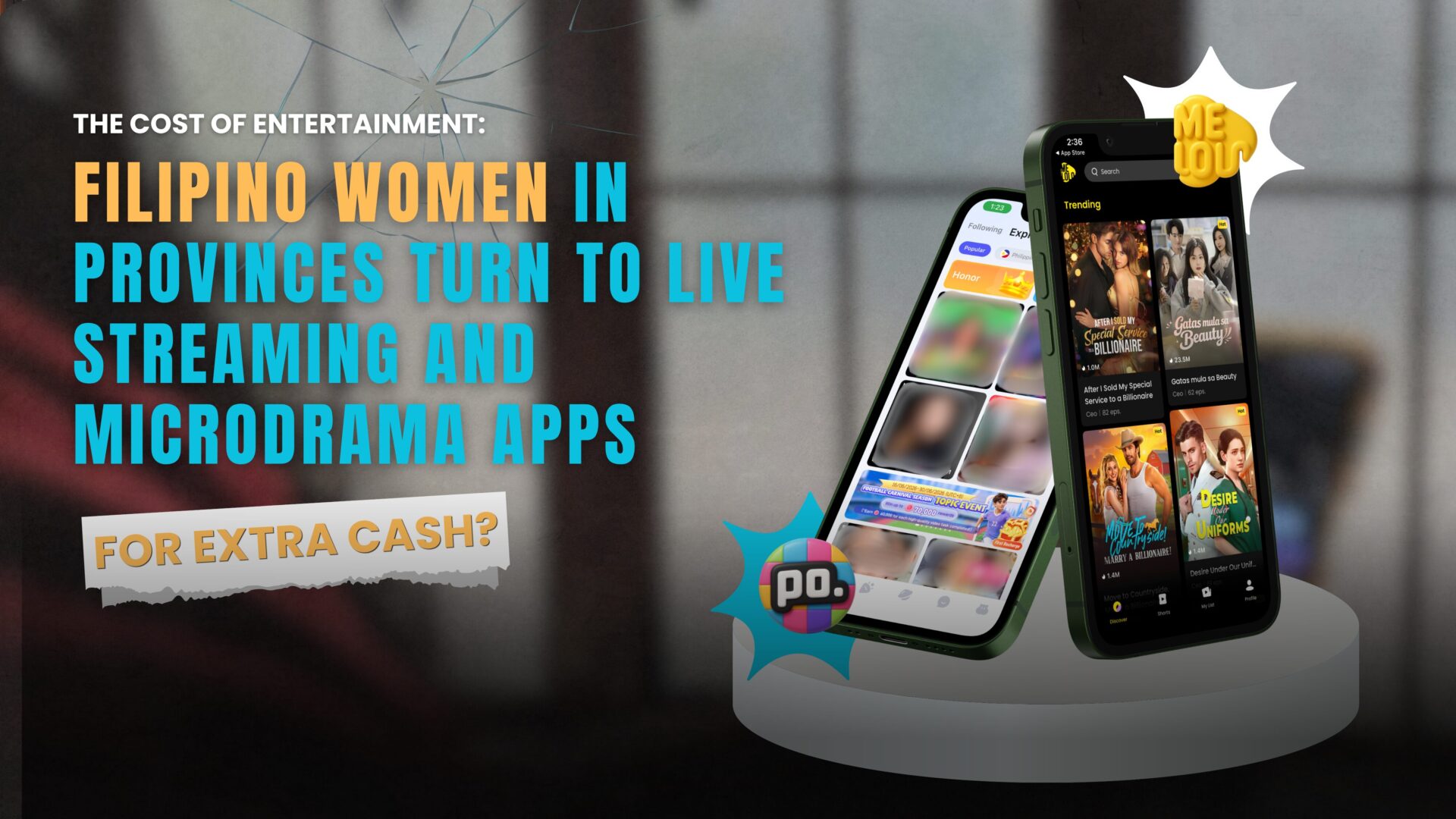


From Eastern Samar in the Visayas to Albay and Sorsogon in Luzon – Filipino women in the provinces, usually busy with household tasks, have found new companions in livestreaming and microdrama platforms. These mobile apps are not only for entertainment but also promise extra income in exchange for their time.
But data privacy and digital security questions emerge as these apps increasingly capture Filipinos’ attention online.
Microdrama and livestreaming apps in the countryside
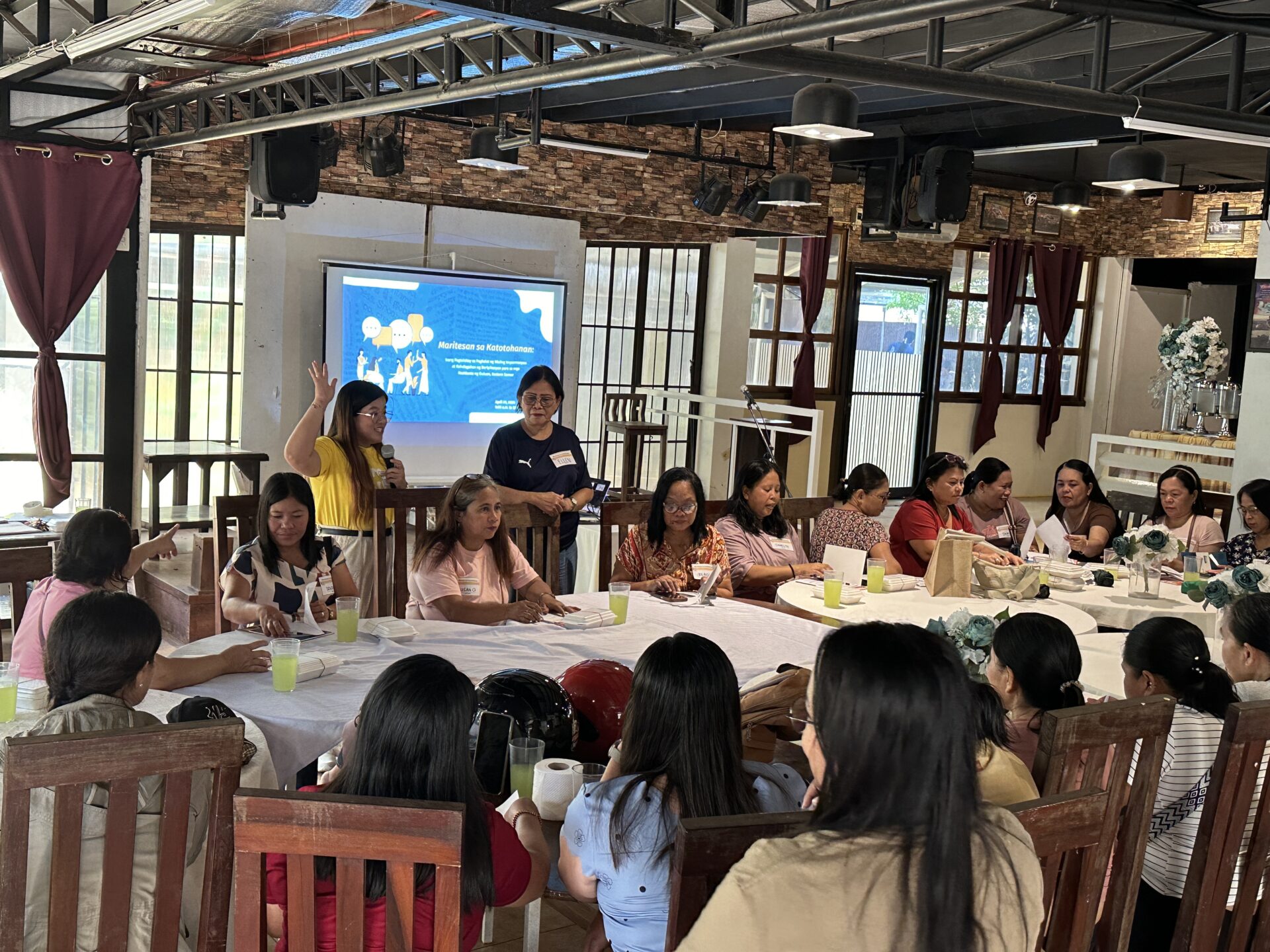
Back in April, the VERA Files team met with a group of women, mostly housewives, in Guiuan, Eastern Samar for a dialogue-workshop on the spread of disinformation. What particularly caught the team’s attention were their mentions of mobile applications that require them either to livestream their faces and daily routines or to watch drama clips.
According to workshop participants, its main attraction is convenience in using the apps, particularly how it fits in their usually fragmented schedules. With only a smartphone and access to the internet, these women can livestream as they wash their clothes or watch videos while waiting for their kids to come home from school in exchange for extra money.
The same patterns seem to repeat across provinces over 400 kilometers away from Guiuan.
In Malilipot, Albay, Bernadith Lana, 35, learned about Poppo Live through Facebook and TikTok through a content creator’s post that was enough to pull her in.
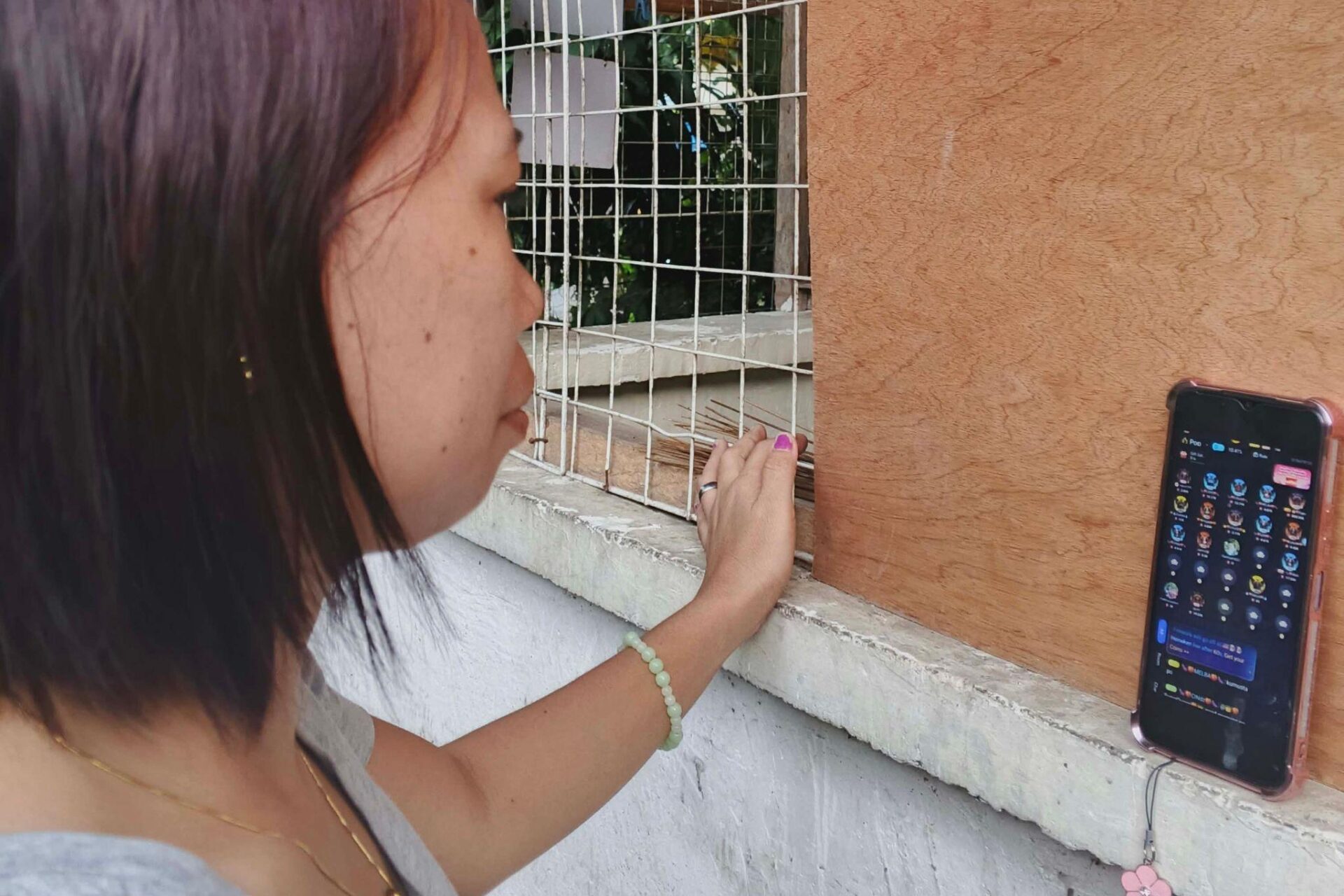
For over a year, she streamed two to four hours daily, earning roughly P1,000 to P2,000 a week, money that somehow helped with necessities.
“Pero kung gagawin mo talagang pinakahanapbuhay mo, konti lang (but if you’re really going to make this your main source of income, it’s only a little),” she further explained.
Bernadith later noticed something unsettling while using the app – some accounts used fake information or displayed suspicious behavior.
She cited as example one user promising big earnings or a prize in exchange for money or personal information. While she eventually gave up the app, it was not because of distrust, but because she simply had no time to go online to fulfill tasks.
The livestreaming apps also appealed to the younger demographic.
In Irosin, Sorsogon, “Cecil,” 23, a recent college graduate, encountered a more elaborate ecosystem within Poppo Live. A college classmate invited her to join, explaining that completing tasks would allow her to get enough points that could eventually be converted to real money.
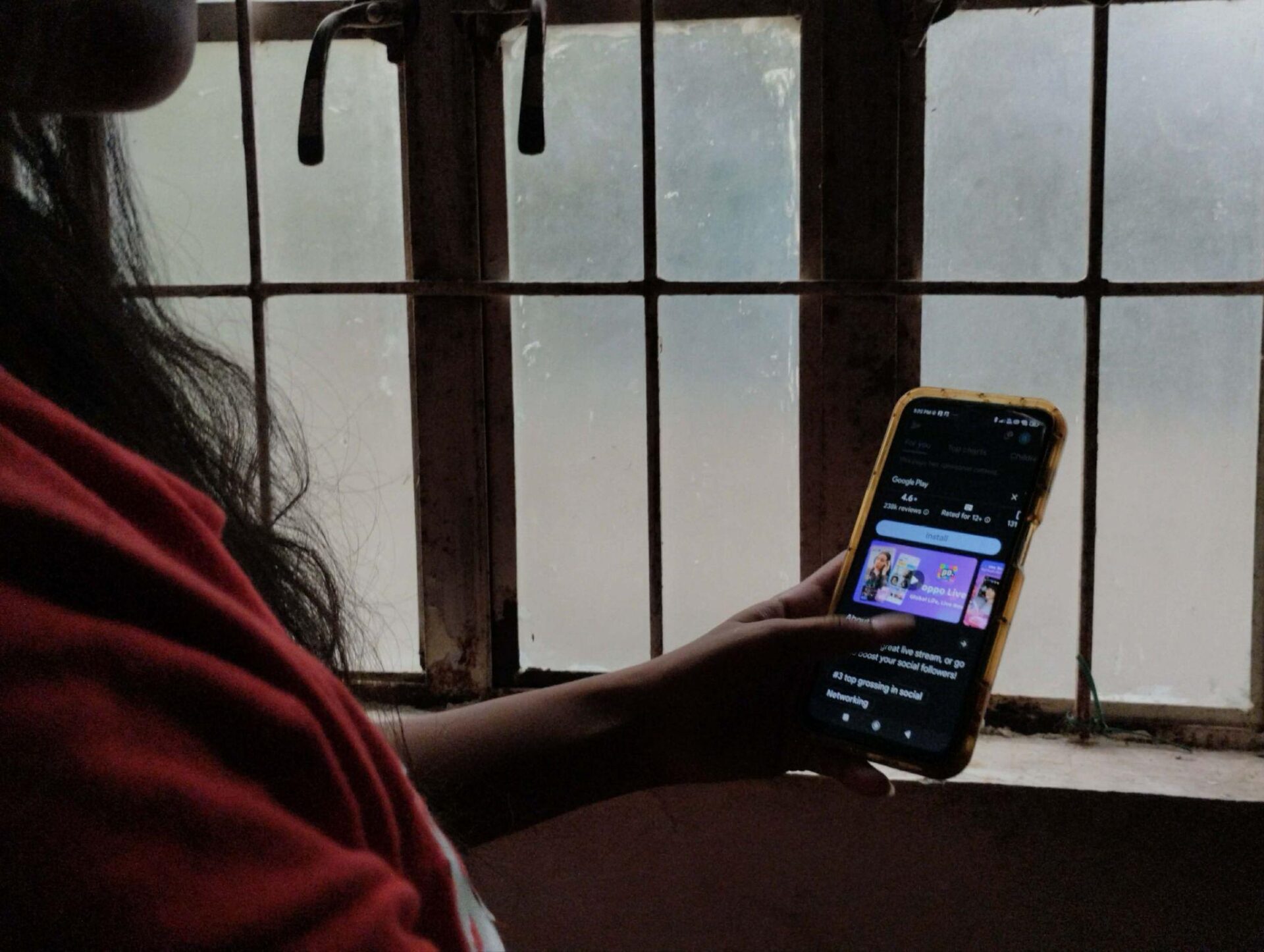
She later became part of an “agency” – a structure in which members, called “agents,” gather in a host’s livestream, sometimes anonymously, without even turning on their cameras or microphones.
During special events like birthday celebrations – the setup resembled a party – agents paid coins to “sit” on virtual chairs, with certain rules.
“An agent might need 40,000 coins to sit on a chair, 10,000 coins to give to the birthday celebrant, and another 10,000 coins for trading with other agents,” Cecil explained.
She noted “there was also a chance of receiving a corresponding reward from the system, which felt similar to gambling.”
As she went deeper into the rabbit hole, Cecil noticed an unusual pattern. Female agents mostly handled the live streams and received more system rewards, while male agents frequently used their coins to send gifts.
After six weeks of using the app three to four hours a day, she was only paid meager amounts. She received P500 the first month and got P800 the next month.
“[The money] somewhat helped me when I needed money for my studies at that time, particularly for purchasing mobile data to access the internet,” Cecil recalled.
However, she admitted it was “not really” enough to meet her broader financial needs.
She also flagged a stricter rule that didn’t sit right with her. Livestreamers were required to keep their faces visible at all times, or else they would “receive a notification stating that they had violated the platform’s rules regarding face visibility during live broadcasts.”
In a country like the Philippines, where household members must balance work and school obligations on limited budgets for daily necessities, this extra money can go a long way.
But what exactly are these platforms, and why have they captivated Filipino women?
Livestreaming and microdrama platforms on the rise
These livestreaming and microdrama platforms are not new. They have long been part of the “attention economy,” in which technologies operate on business models designed to capture and monetize people’s attention.
One of the most mentioned livestreaming apps was Poppo Live, a social live streaming application run by a Singapore-based VSHOW PTE. LTD, which operates on a virtual gifting economy.
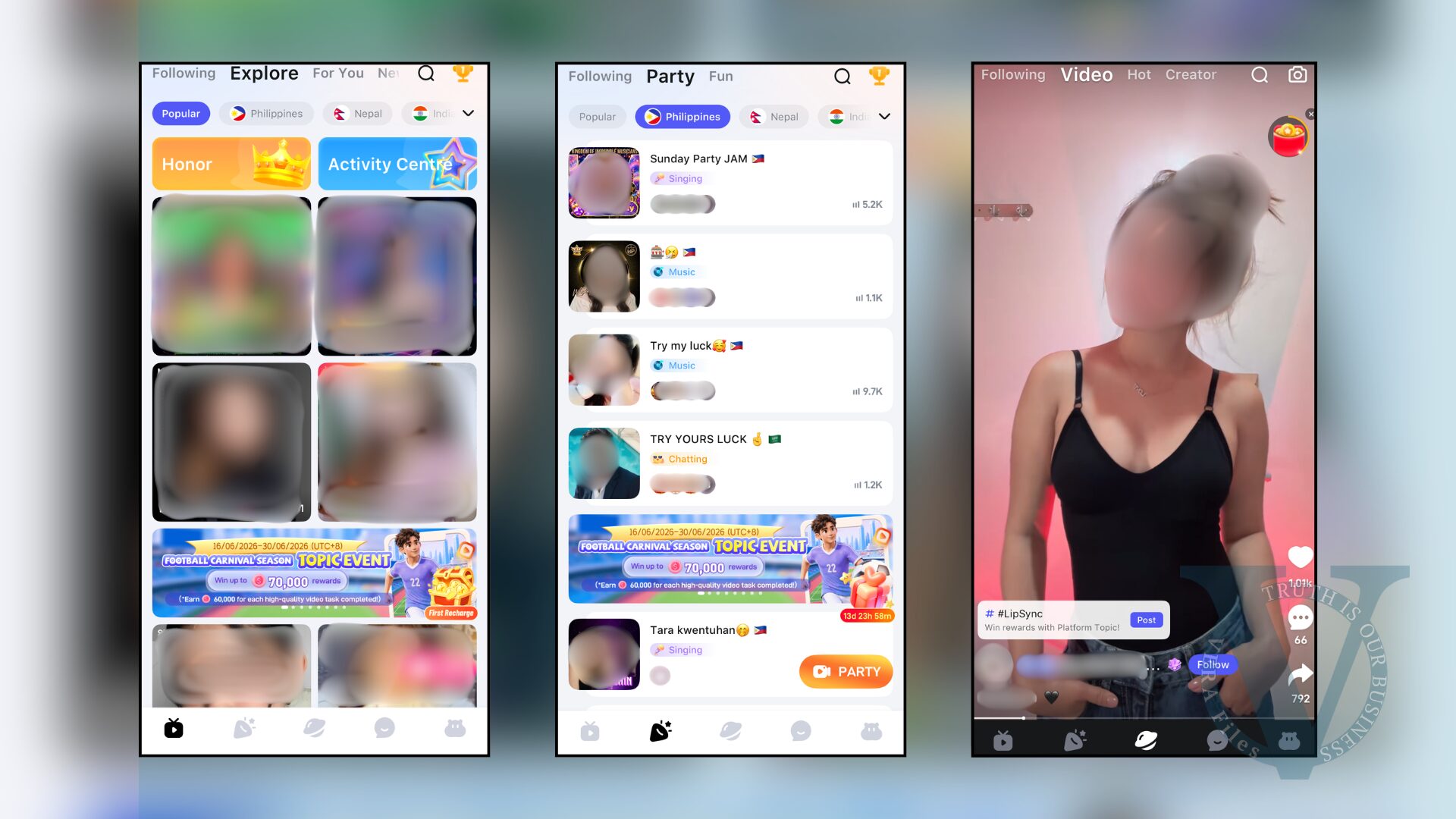
Viewers purchase in-app coins or diamonds and send these as a gift to the host during the live broadcast. Hosts then convert a portion of those collected gifts into real money that they can later withdraw using e-wallets.
This platform operates on a task-based salary system, meaning host earnings depend on the streaming activity and performance.
Other applications operate in the same way. Two of which are BoloUP and Niki Live. These applications are run by Hong Kong-based companies, namely JIULI TECHNOLOGY CO., LIMITED and SINYNN TECHNOLOGY CO., LIMITED, respectively.
All three livestreaming applications give hosts 70 percent of gift values collected from live streams and 40 percent from one-on-one chats, at a conversion rate of 10,000 points, coins, or diamonds per one US dollar that they can later withdraw as real cash.
Some participants use microdrama apps where they also convert their watchtimes into extra income.
Among the microdrama applications they mentioned is Melolo, a free mobile streaming platform that offers bite-sized and vertically-formatted dramas. Filipino users who open the app for the first time are greeted with a seemingly endless selection of drama series dubbed and subtitled in Filipino.
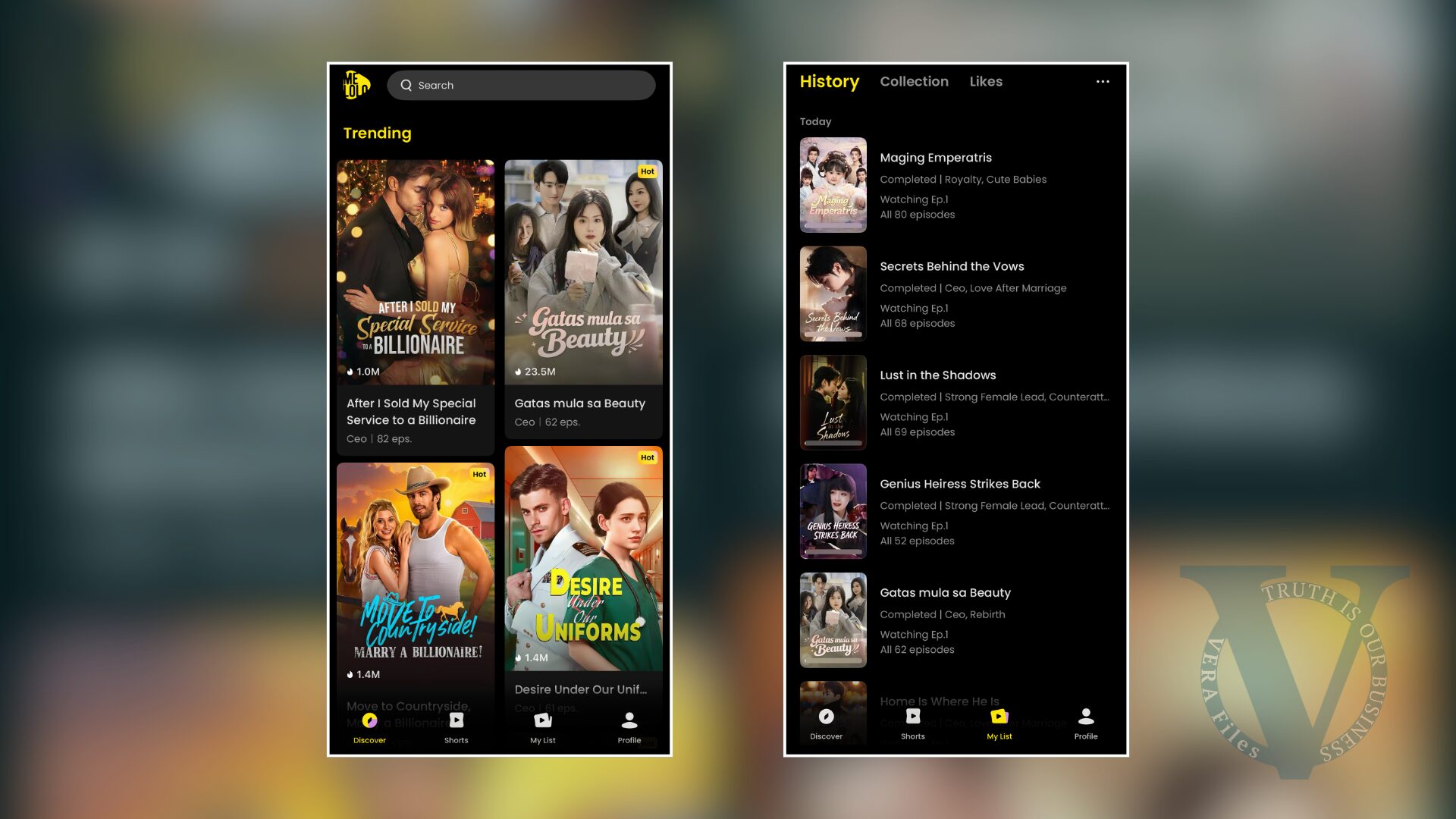
Launched in November 2024, Melolo is operated by the Singapore-based Poligon, a subsidiary of ByteDance, the company behind the popular video-sharing platform TikTok.
Melolo users can earn “coins” by watching series, completing daily missions and inviting friends using referral codes. Once accumulated, these coins can be converted into pesos and withdrawn through digital wallets such as GCash.
However, some users shared that it took a lot of time before they could earn a significant amount of money, as points accumulate slowly before they can be exchanged for cash.
Another microdrama application with rewards systems is FreeReels, also launched by a Singapore-based company. Other Filipino viewers are likewise drawn to microdrama platforms such as DramaBox and ReelShort, although these apps do not necessarily offer cash rewards.
These livestreaming and microdrama platforms are generally called “beermoney” apps because they allow users to earn small amounts of money by completing online tasks. While they can be a source of extra money, the rewards are modest amounts – just enough to cover a cup of coffee, a snack, or, as the term suggests, a bottle of beer.
Risks behind the platforms
VERA Files spoke with Levin Ledesma, a cybersecurity advocate from Deep Web Konek, a group that monitors and documents digital threats affecting Filipino users.
Ledesma observed that these platforms deliberately target Filipinos, citing two key vulnerabilities.
“The developers of these applications know that the Philippines has a lot of social media users, and they’re also aware that Filipinos are not that knowledgeable [on digital literacy],” he said.
Women, particularly housewives, are among the most targeted. Ledesma explained that their circumstances make them especially susceptible to these platforms.
“Housewives are usually at home; they’re the ones focused on their families, on their kids. At the same time, they also want to have their own money, so they try these livestreaming apps,” he said.
Beyond earnings and entertainment, there is a question that very few users are likely to ask when using these apps, and perhaps the most important one: what happens to their information?
These livestreaming apps and microdrama sites collect a wide range of personal information from their users, including account details, device data, their location, and, most strikingly, the faces of the people who use these platforms for engagement.
Ledesma warned that the dangers go beyond what users can immediately see, noting that the data collected by these platforms does not simply disappear.
“If they retain [your information], they might sell it to data brokers or use it for any kind of malicious intent,” he warned.
He added that this kind of passive data exposure is alarming among users who may not fully understand what they are agreeing to. Ledesma warned that users of these livestreaming applications may be passively revealing their precise location to the platform and its third-party service providers every time they go live – often without realizing it.
The requirement for hosts to show their faces during livestreams is alarming for digital advocates like Deep Web Konek.
“At the onset of deepfakes, if your face needs to be seen, what for? I can screenshot it, I can record your whole video and then transfer it to a deepfake software,” he said.
“How you speak, how you blink, how you move your hands, it can be copied. It can do all of your mannerisms and whatnot. So those features are really high-risk. It’s high-risk, and the rewards are not like that,” he explained.
As for microdrama sites, every drama they watch, every episode they linger on, every genre they gravitate toward, is being logged, analyzed, and monetized, not for their benefit, but for advertisers paying to reach them.
Ledesma asserted that the small earnings offered by these apps are nowhere near worth what users stand to lose.
“What they’re giving is just like trinkets of the commission. It doesn’t outweigh the risk that your data can be used for any kind of financial fraud, for identity theft,” he lamented.
Ledesma’s advice is straightforward: download only from legitimate platforms like the Play Store, think twice before granting app permissions, and never link financial accounts like GCash or Maya to apps whose origins are unclear.
“It’s nice to have a small income, but for shady apps like this, don’t risk it; it’s not worth your security and privacy,” he concluded.
Unregistered livestreaming platforms
Despite providing entertainment and a small income to its users, these applications could be trouble in disguise. None of the mentioned livestreaming platforms are registered to operate in the Philippines.
In August 2025, Poppo Live, BoloUP, and Niki Live were on the lists of illegal applications operating in the country, and the issue became the subject of a congressional hearing.
FPJ Panday Bayanihan Party-list Rep. Brian Poe disclosed to the House Committee on Appropriations on August 20, 2025, that these applications were earning an estimated $50 million to $70 million monthly from Filipino users solely through unregulated and untaxed operations.
PAGCOR Chairman Alejandro H. Tengco also confirmed at the same hearing that these apps were indeed operating illegally.
The identification of its illegal operation has prompted the National Telecommunications Commission to give directives to the Philippine telecommunications companies, such as PLDT/Smart, Globe Telecom, Converge ICT, and DITO, to block these apps along with 41 other applications.
In the same month, President Ferdinand Marcos signed Republic Act 12312, the Anti-POGO Act, to institutionalize the ban on offshore gambling operations in the country.
However, despite all these legal safeguards, Poppo Live, BoloUP, and Niki Live remain available for download in app stores in the Philippines.
Ledesma acknowledged that while the government has existing legal frameworks and agencies such as DICT, PNP-ACG, and NBI working to protect Filipinos financially and their data, the overall approach remains largely reactionary.
“Without someone reporting this kind of platform, it won’t be detected right away. There is room for improvement for our law enforcement when it comes to this,” he said.
Who benefits in the end?
Beneath the coins and modest cash-outs lies a tougher question – who really benefits from these platforms?
For the mothers in Guiuan, for Bernadith, for Cecil, and for every Filipino logging in between chores and classes, is this truly extra income, or is someone else quietly cashing in on their time, faces, and data?
Think twice. If you are not being asked to pay for a service, chances are you are the product. In the case of livestreaming and microdrama sites, it is users’ personal information, attention, and time that are at stake.