
𝐇𝐚𝐥á𝐧𝐠𝐝𝐨𝐧: 𝐓𝐡𝐞 𝐀𝐫𝐭 𝐨𝐟 𝐉. 𝐄𝐥𝐢𝐳𝐚𝐥𝐝𝐞 𝐍𝐚𝐯𝐚𝐫𝐫𝐨 is a permanent exhibit dedicated to selected works of J. Elizalde Navarro at the National Museum of the Philippines, Iloilo. It is a tribute to Navarro as a halángdon, an honorable and praiseworthy Antiqueño for his contribution to Philippine arts.
Showing some 28 works, it is a survey of Navarro’s art practice that spans painting, sculpture, assemblage, printmaking, and graphic design using a diverse media of oil, acrylic, watercolor, metal, wood, and found objects.
Celebrating Navarro’s birth centennial, the exhibit was launched in December 2024 with works donated by Emma V. Navarro and Pearl Navarro to the National Fine Arts Collection.
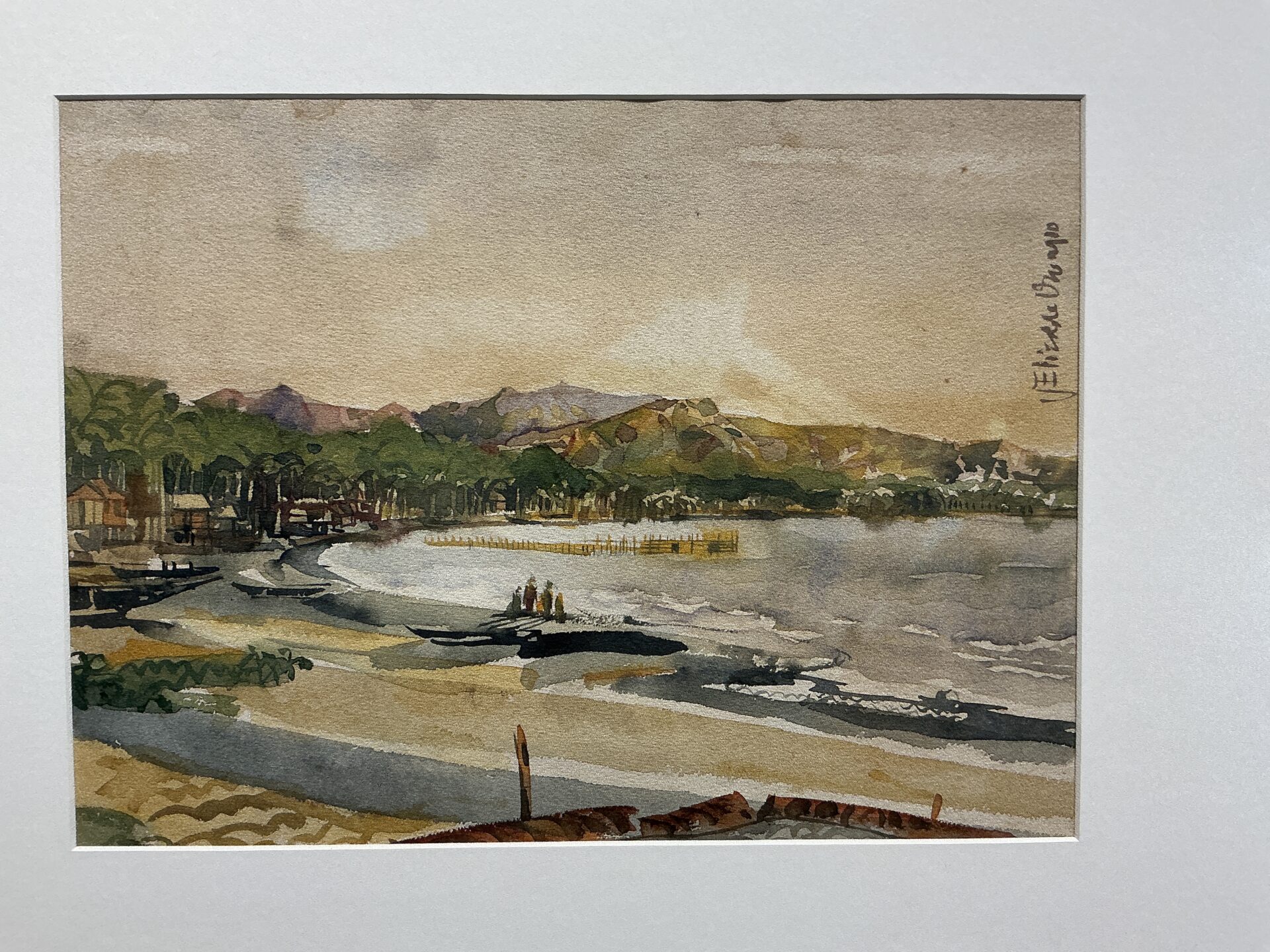
Exuding warmth and grace, 𝐒𝐚𝐧 𝐉𝐨𝐬𝐞 𝐝𝐞 𝐁𝐮𝐞𝐧𝐚𝐯𝐢𝐬𝐭𝐚, a watercolor on paper of his birthplace in Antique, reflects the artist’s fond memories of his hometown.
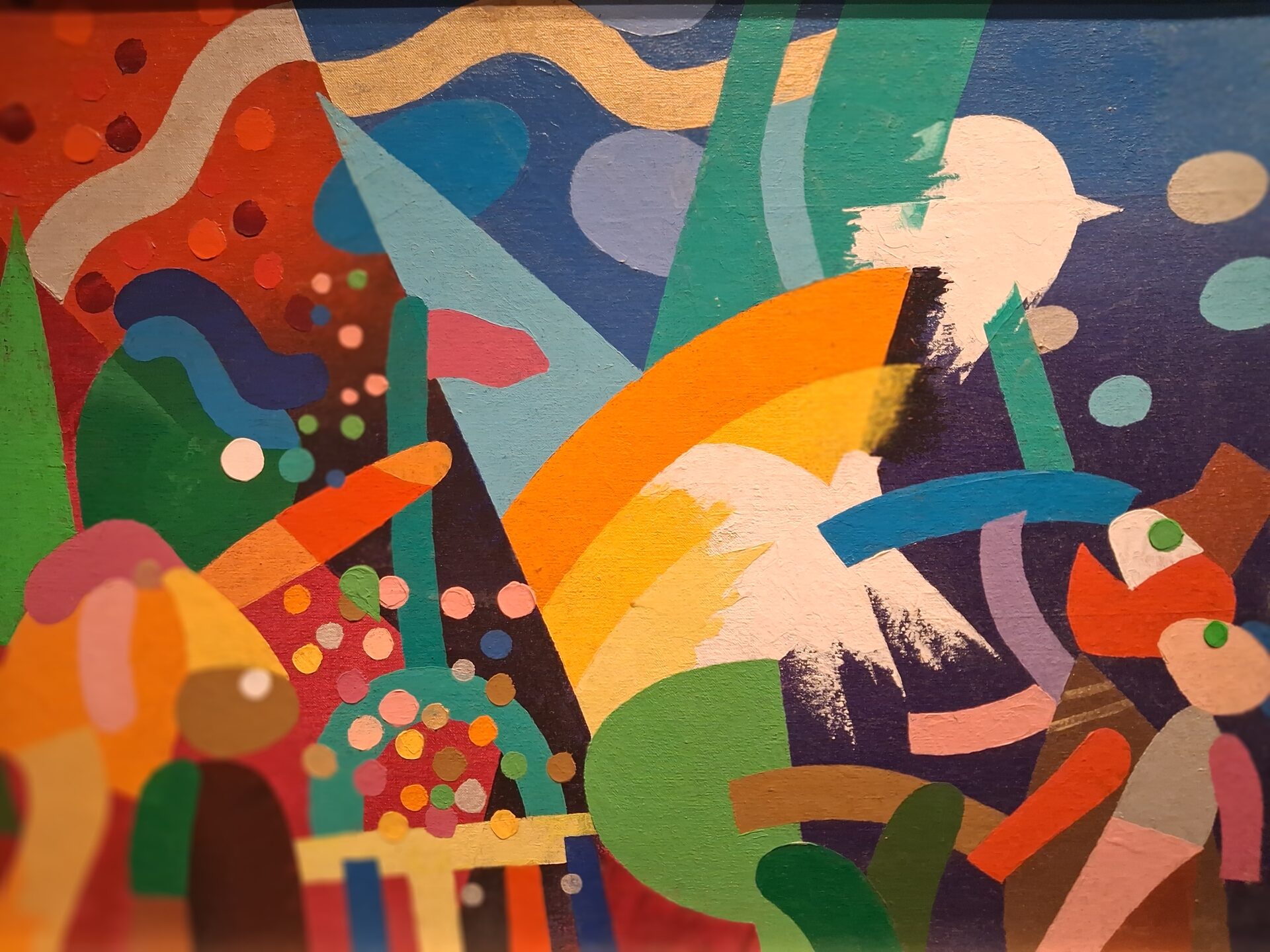
Notably, the Halángdon exhibit encapsulates Navarro’s mastery of colors in abstract and figurative works with vibrant hues, sensual forms, and organic materiality. In 𝐒𝐮𝐧𝐝𝐚𝐲 𝐚𝐭 𝐭𝐡𝐞 𝐏𝐚𝐫𝐤, 1994, Navarro’s bold and colorful abstracts express pure exuberance, bursting with playful tones that bring smiles to viewers.
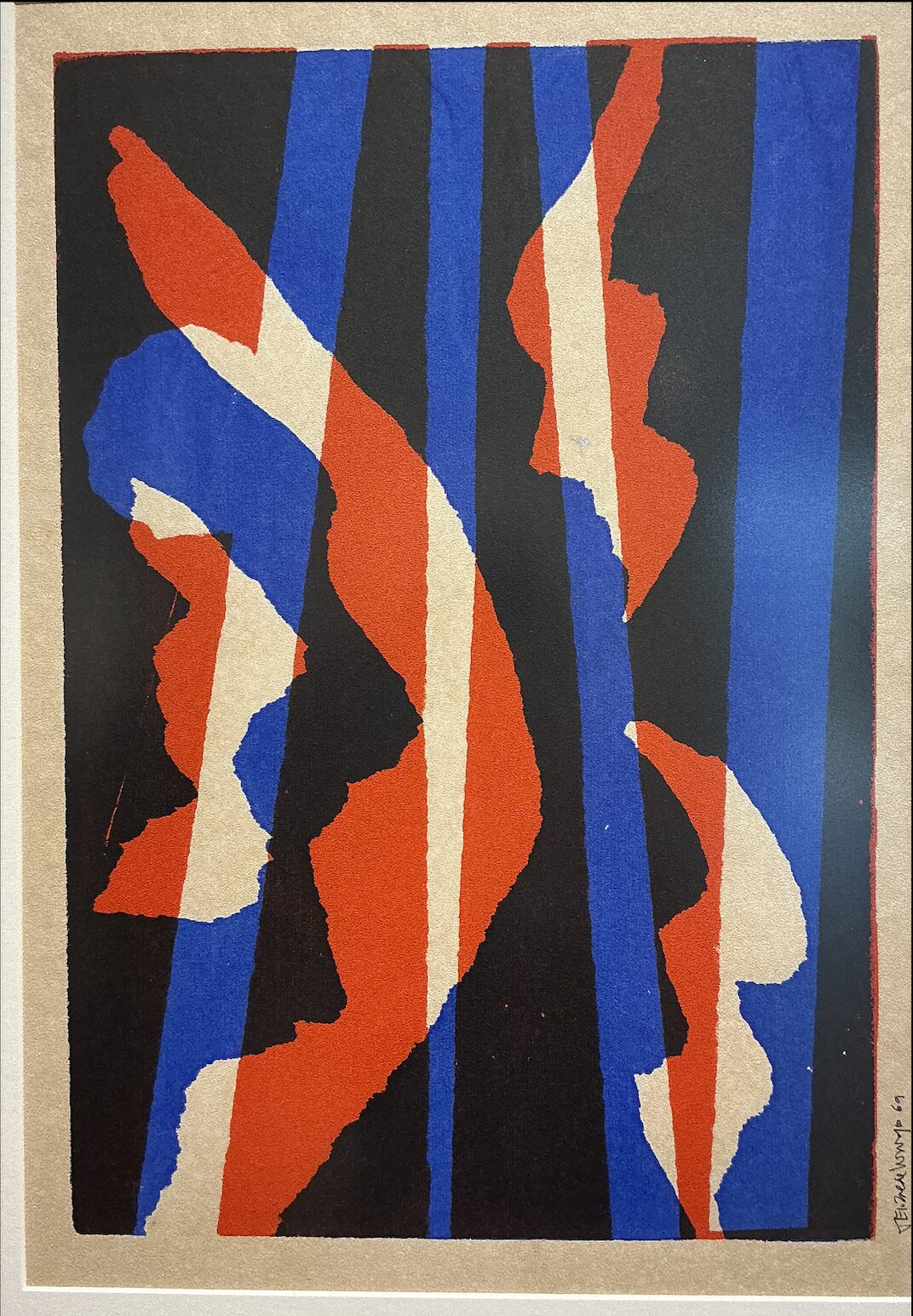
In three serigraph prints, 𝐔𝐧𝐭𝐢𝐭𝐥𝐞𝐝 (3 of 3, 1969), Navarro’s color combinations of blues, oranges, and yellows radiate his own sense of vitality in life as he lives it.
In a 1998 interview with Reuben Cañete, PhD (The Infinite Palette of National Artist Jerry Elizalde Navarro, You Tube) he says that he does not work at night; he works mostly with colors, and “colors need daylight…”.
Navarro adds that while he is overjoyed when people buy his works, the art market does not dictate what he does. Most of the things that he has been doing is mostly to satisfy himself, his primary consideration.
He tells Cañete that abstraction is “my real first love.” The works of Wassily Kandinsky (1866-1944), a Russian painter and one of the pioneers of abstraction in Western art mesmerized him during his first visit to the Museum of Modern Art in New York in 1953.
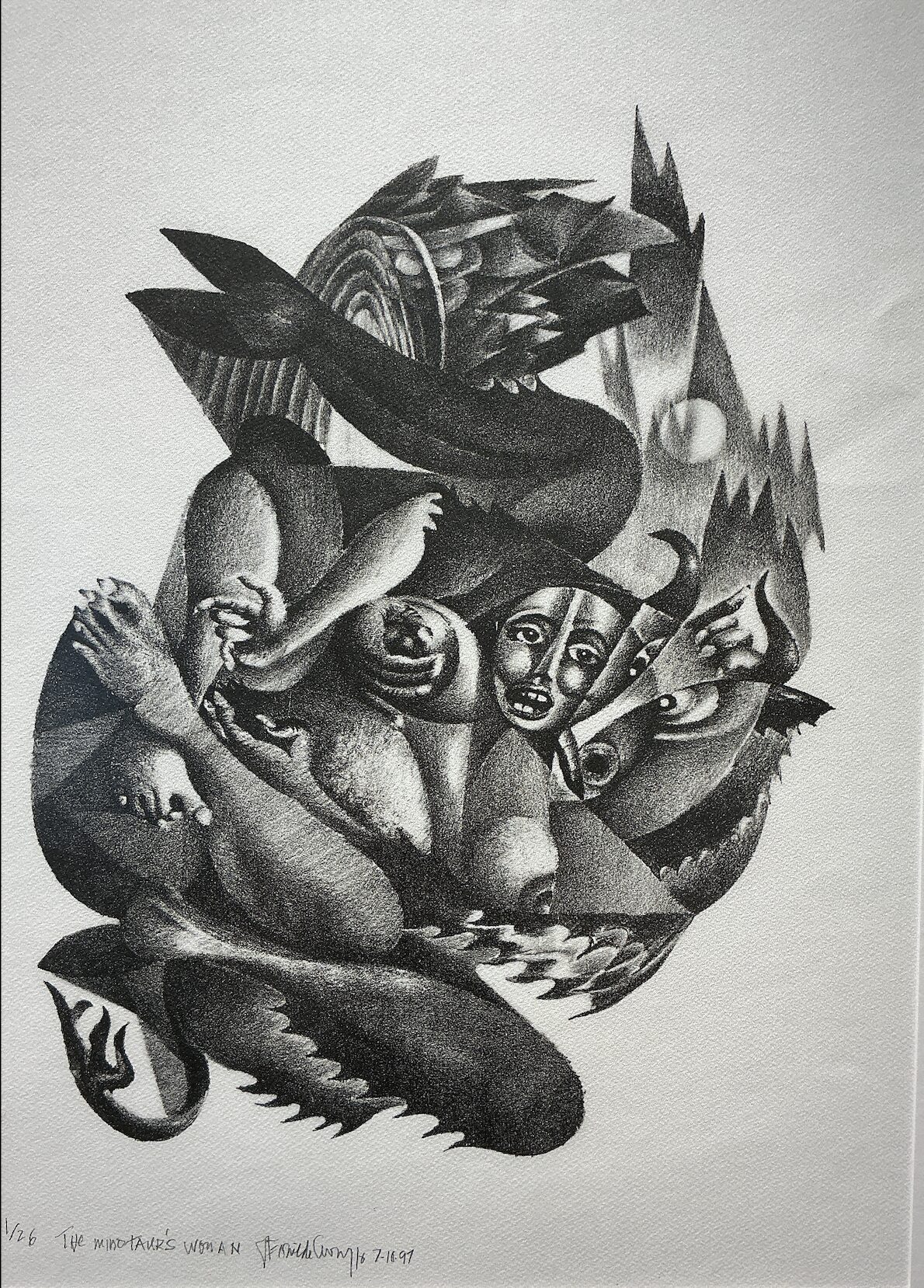
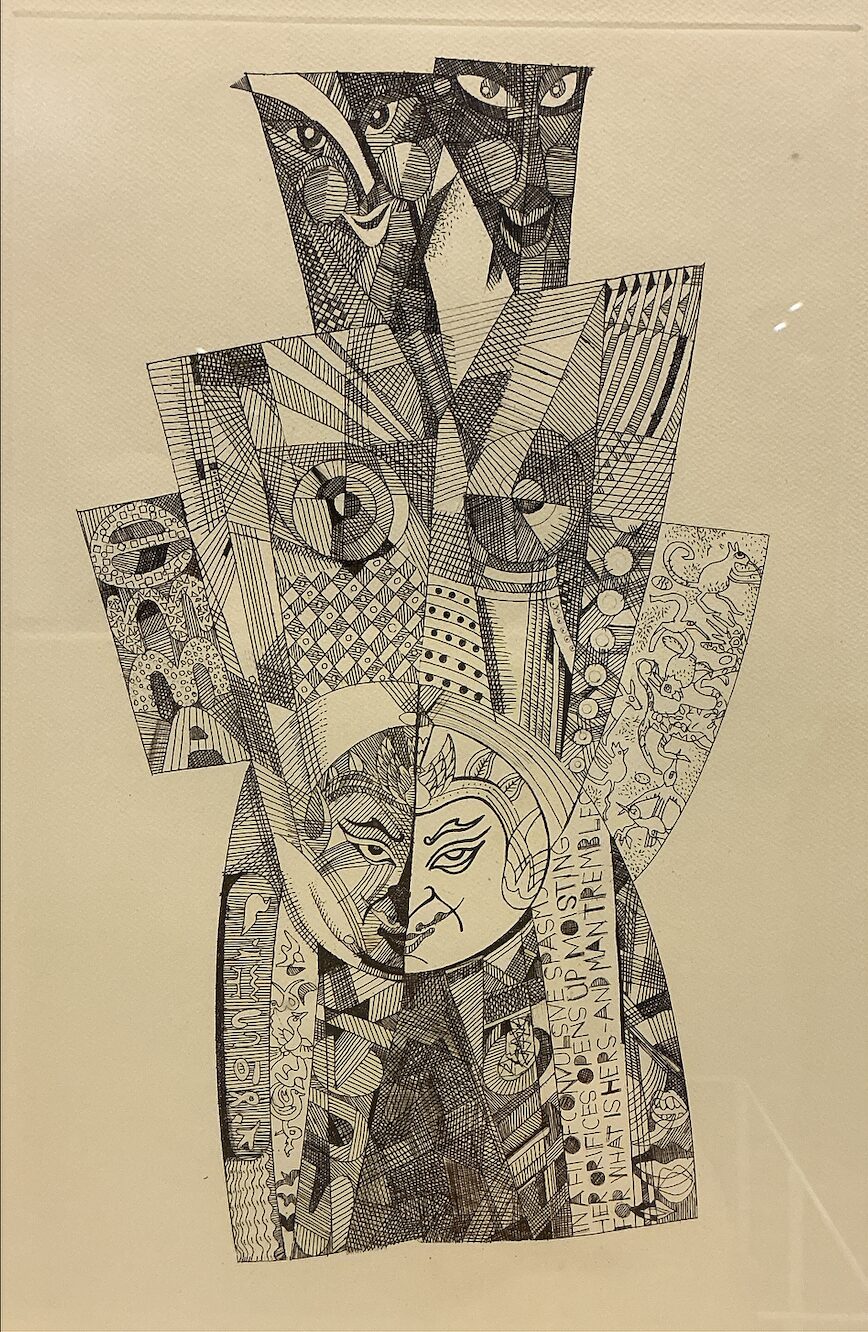
Many of Navarro’s rarely seen prints are in the exhibit, reflecting his mastery of printmaking techniques that include woodcut, serigraphy, intaglio, and copperplate or steel plate printing —seen in his works Musicians 51/88, 1960s, Igorot and Muslim, and Harana.
Many of his prints portrays women: The Women I knew, undated; The Minotaur’s Woman 1/26, 1997; The Bali Woman, Meow Woman; and several Untitled prints.
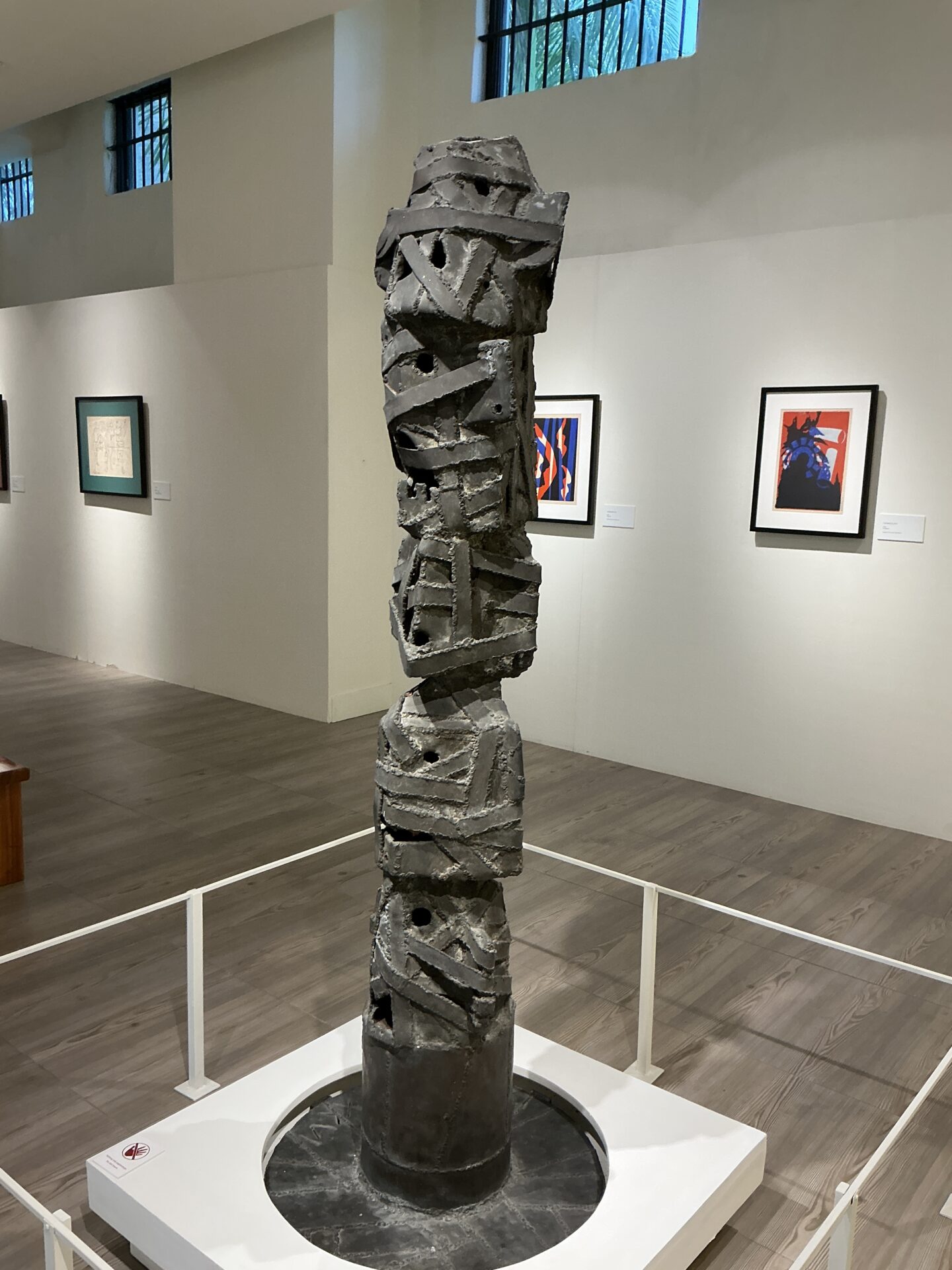
𝐃𝐞𝐬𝐚𝐩𝐚𝐫𝐞𝐜𝐢𝐝𝐨𝐬 (The Missing), 1996. A tower of strips of bronze binds into squashed faces and bodies tightly bound and tied on top of each other. It is to remember a decade of arrests, torture, and killings, and a tribute to those who “disappeared” during martial law (1972-1986) under Ferdinand Marcos Sr.
𝐉𝐞𝐫𝐞𝐦𝐢𝐚𝐬 𝐄𝐥𝐢𝐳𝐚𝐥𝐝𝐞 𝐍𝐚𝐯𝐚𝐫𝐫𝐨 (1924-1999, San Jose de Buenavista, Antique): He studied art at the University of the Philippines Manila, as a Ramon Roces Publication Scholar; a year later, he transferred to the University of Santo Tomas where his idol, Carlos “Botong” Francisco (1912-1969) was one of his teachers. He became the art editor of The Varsitarian, UST’s official student publication and graduated with a fine arts degree in 1951. He taught for nine years in his alma mater.
Early on, he started as an apprentice illustrator in the Roces publishing business; as a professional in advertising and graphic design, he became an art director of the pioneer Filipino advertising firm Ace Advertising Agency, now Ace Saatchi & Saatchi. Later in 1973, he was appointed as graphics director of the Design Center of the Philippines.
His visits to Bali, Indonesia in the late 1980s and 1990s as a resident artist in Ubud heightened his use of intense tropical colors in depicting Balinese dancers, Hindu temples, and Bali’s rituals and festivals.
In his interview with Cañete, his use of bright and vivid colors reflected his emotional and psychological state, a freeing of his spirit, “I had all the freedom…” when he was in Bali, in what he describes as his second life (e.g., separation from his first wife, sculptor Virginia Ty-Navarro in the late 1960s, her death in 1996, and his remarriage to Emma Villanueva.)
𝐀𝐰𝐚𝐫𝐝𝐬: Navarro’s first solo exhibition of woodcuts and mixed media using metal, wood, and found objects was at the Philippine Art Gallery in 1954. In 1967 and 1970, he represented the Philippines in the sculpture category at the Sao Paolo Art Biennial in Brazil; in 1972, he was the country’s representative at the Biennale de Art Graphiques, Brno, Czechoslovakia. In 1989, he was the first Filipino artist represented at the Neka Art Museum in Bali, Indonesia.
Six months after his death in 1999, Navarro was awarded the National Artist for Visual Arts.
NMP-Iloilo
The repurposed National Museum Western Visayas, located within the Iloilo Provincial Capitol Complex, Iloilo City, was the Iloilo Provincial Jail built in 1911 and used as a prison until 2006. In 2018, it was inaugurated as a regional museum of the National Museum of the Philippines. Its five galleries are dedicated to Geology and Paleontology, Natural History, Archaeology, Habol Panay, and Fine Arts.