
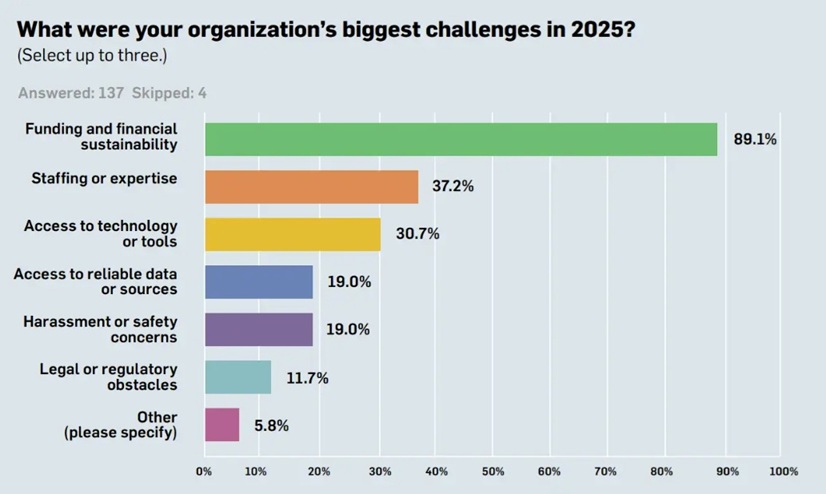
When Meta CEO Mark Zuckerberg announced its withdrawal from their third party independent fact-checking program, starting with the United States in January 2025, many news organizations were left with revenue deficits.
Dulamkhorloo Baatar, journalist and founder of the Mongolian Fact-Checking Center, felt the effect of this sudden pullback decision firsthand. Meta was their organization’s primary source of revenue through their third-party fact-checking program.

To keep the outlet alive, Baatar said they had to collaborate with government organizations and private sector companies in combatting the disinformation online, while safeguarding their editorial independence.
“We have collaborated with the general police authority on combating scam-related disinformation, which was quite a success. But in the background, it has been a huge, huge challenge [for us],” Baatar shared during the International Fact-Checking Day webinar spearheaded by the International Fact-Checking Network on April 2.
Baatar experienced a double whammy with funding from the United States Agency for International Development (USAID) also being cut this year. USAID is a major supporter of Nest Center for Journalism Innovation and Development, another organization she also leads. These scaled back contracts with Meta and USAID created an immediate operational deficit.
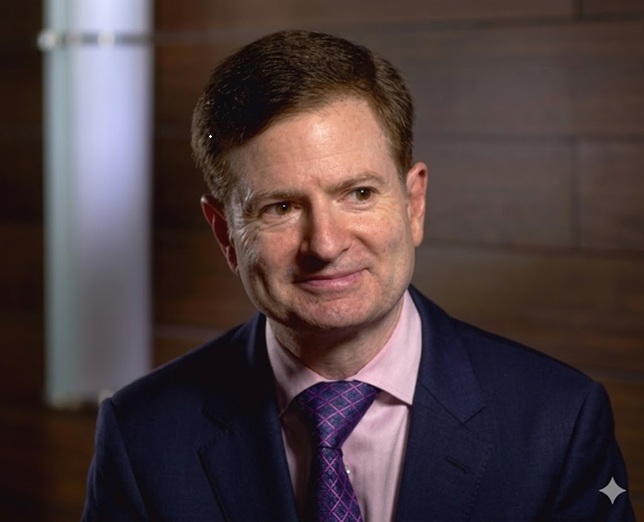
Glenn Kessler, former editor and chief writer of The Washington Post Fact Checker, who left the post in July last year due to institutional downsizing, believes that relying on a sole revenue source poses a risk to the fact-checking community.
“It is risky to put all our eggs in one basket… [I] mean, what you’re [Baatar’s] doing in Mongolia, those were all excellent ideas to try to diversify and to figure out a way [to] be sustainable and not rely so much on the whims of one entity,” said Kessler.
In pursuit of truth across the social media landscape, fact-checkers still persevere despite facing pressures over the years. The IFCN State of the Fact-Checkers 2025 report confirms their focus remains on Meta’s ecosystem – Facebook, Instagram, WhatsApp and Threads – the most commonly cited sources of false information they work to dismantle.
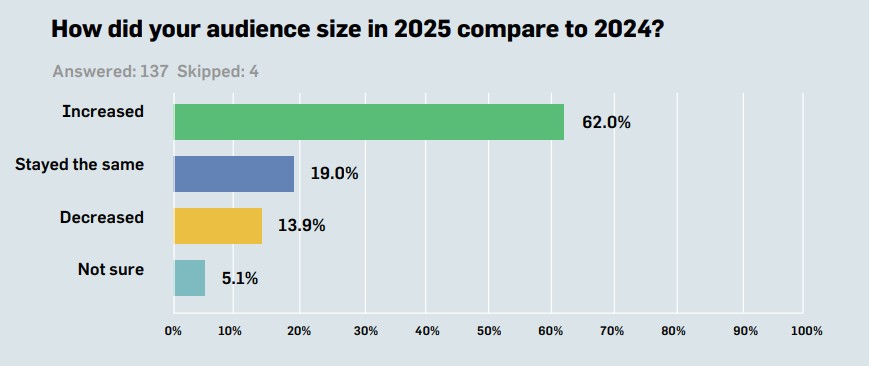
Despite shrinking budgets and staff cuts, data shows a massive growth in audience engagement, based on a survey on 137 fact-checking organizations globally. The IFCN report says this evident increase in numbers was influenced by strengthening collaboration with partner institutions, while adapting their work to a faster and more visual information environment with the aid of Artificial Intelligences (AIs).
Baatar believes this rise, aside from fostering a fact-checking coalition, is also due to the added effort in thinking of an effective strategy to boost audience engagement in protecting the news and online information ecosystem.
“I think fact-checkers are probably trying more when we are in survival mode. To be honest, I think the audience matters most to us now more than it did before,” she shared.
Factchecking at a crossroads
Aside from fact-checkers feeling a bigger financial strain in 2025, organizations also face changes and uncertainty within their newsrooms. While small organizations with 10 or fewer staff members still make up 61.7% of the industry, their numbers have considerably decreased. This group incurred a 12% loss since the 2024 survey, highlighting the increasing pressure on smaller fact-checking teams. On the other hand, larger organizations with at least 11 to 31 and more full-time employees gained an overall 12% increase in 2025, based on the IFCN survey.
The survey also showed the majority of fact-checking organizations have integrated the use of AI in their operations but without compromising ethical and editorial standards. The majority of them use AI tools mainly for information gathering and translation and expect these to play a supporting role in their work over the next three years.
IFCN Director Angie Holan identifies political pressure as among the uncertainties faced by fact-checkers in different regions in Eastern Europe, Latin America, Africa, and Asia, which keep these organizations on the edge due to constant change.
“I think we’re facing a couple of headwinds here with the [undeniable] political pressure in the United States on the tech platforms to reduce their investment in fact-checking, and then the USAID program that ended very suddenly, [which] has had a big effect on fact-checkers, ” Holan rued.
Why global fact-checking trends matter locally
Globally, elections and political claims alongside social issues and public health remain among the most frequently fact-checked topics as shown in IFCN’s recent data for the past 24 months.
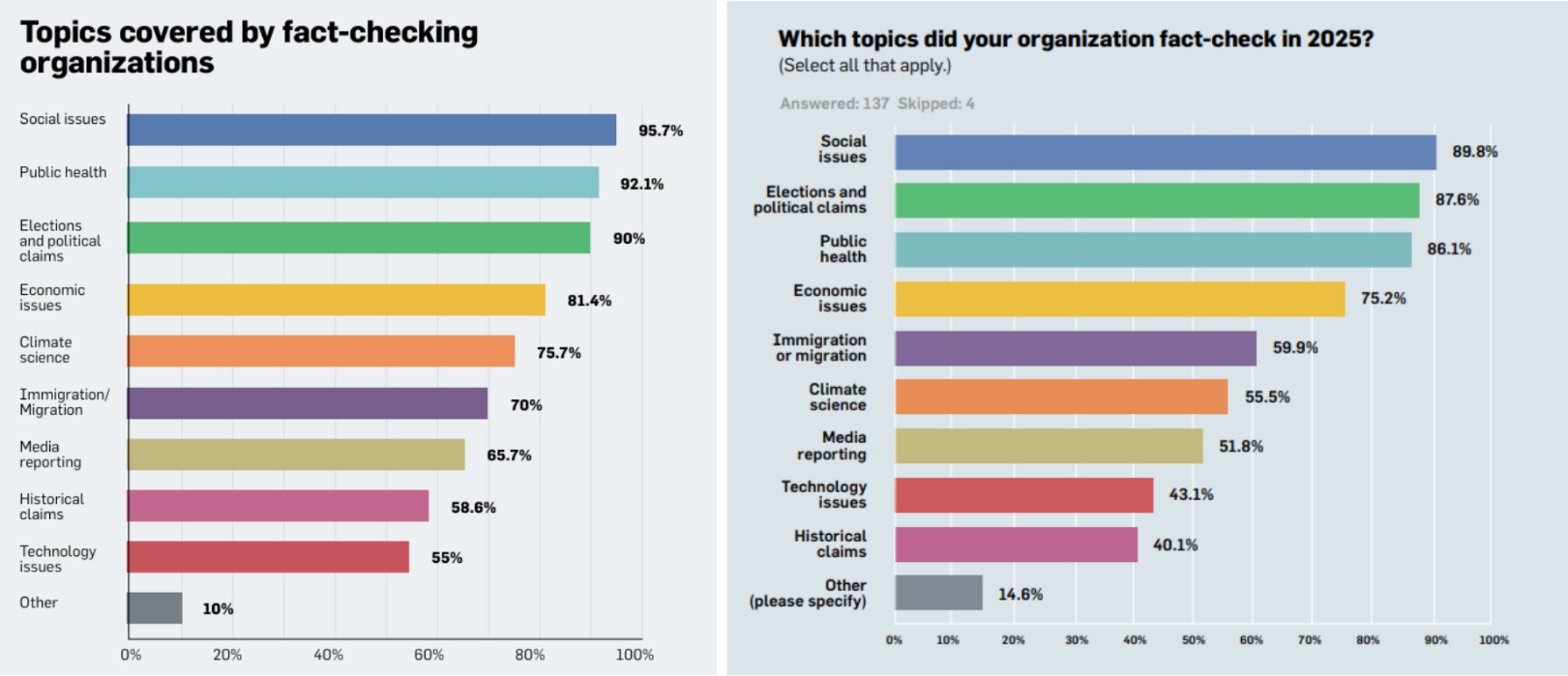
In the Philippines, with national elections scheduled in 2028, the significant need for fact-checking across social media platforms remains vital in flagging disinformation online.
Exactly a decade ago, VERA Files Fact-Check was put under pressure during former president Duterte’s administration where he, with his allies, reaped the most benefits from an election-related disinformation in 2016. The same thing happened in the 2022 national elections where today’s President Ferdinand Marcos Jr., and his allies, also benefited from the widespread use of ‘positive’ disinformation.
These trends mirror the Philippine information landscape, where political narratives, social tensions, and health-related claims often dominate public discourse, especially during election seasons. The high volume of fact-checking in these areas signals not only the persistence of disinformation but also the growing demand for credible, verified information during moments when public opinion is most vulnerable to manipulation.
Read the full 2026 State of the Fact-Checkers Report here.
The author is a journalism student from Bicol University and currently doing her internship with VERA Files.