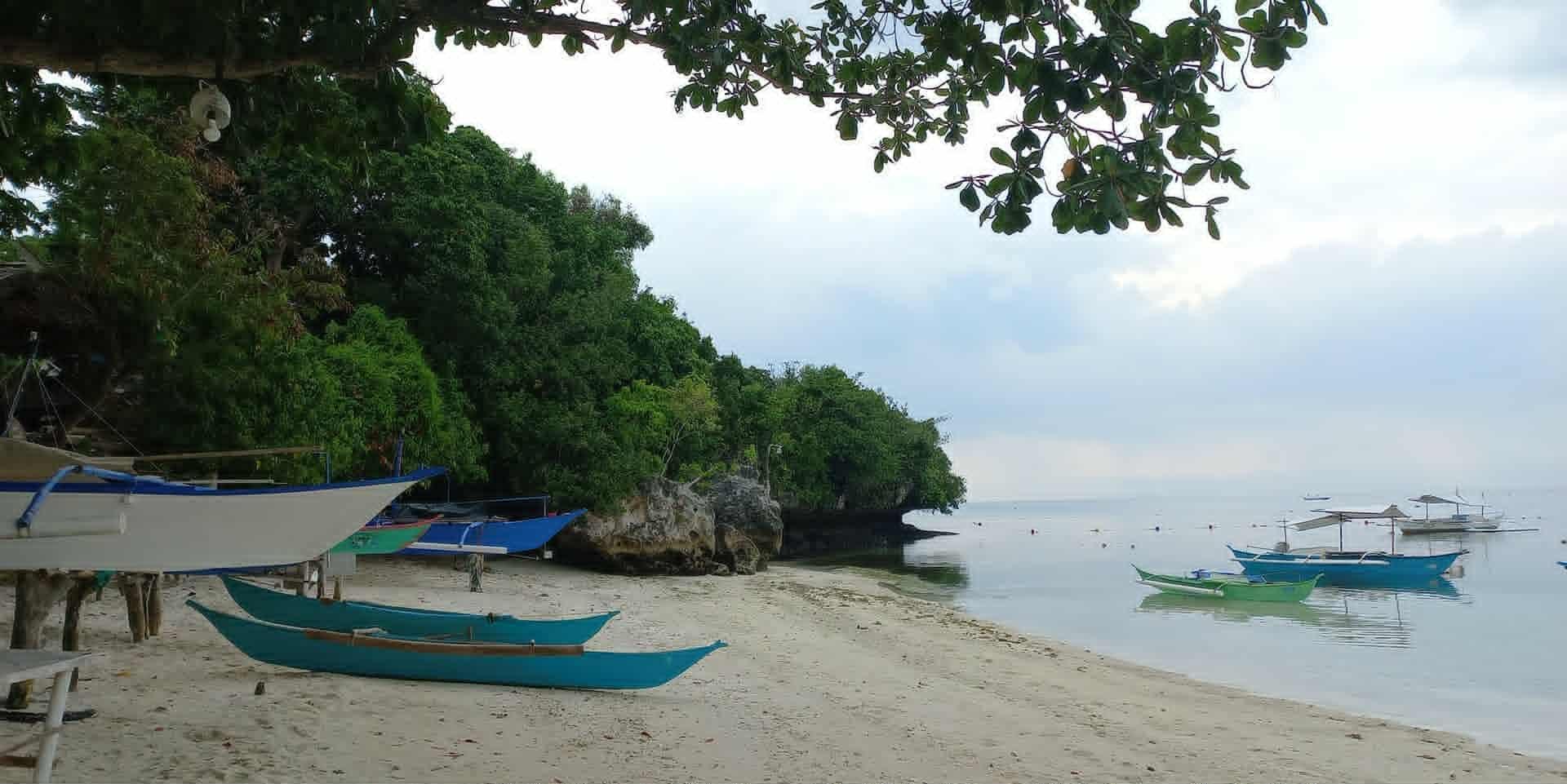
Bingag, Dauis, Bohol — The sun is only beginning to rise over the quiet waters of Bingag when the first visitors arrive.
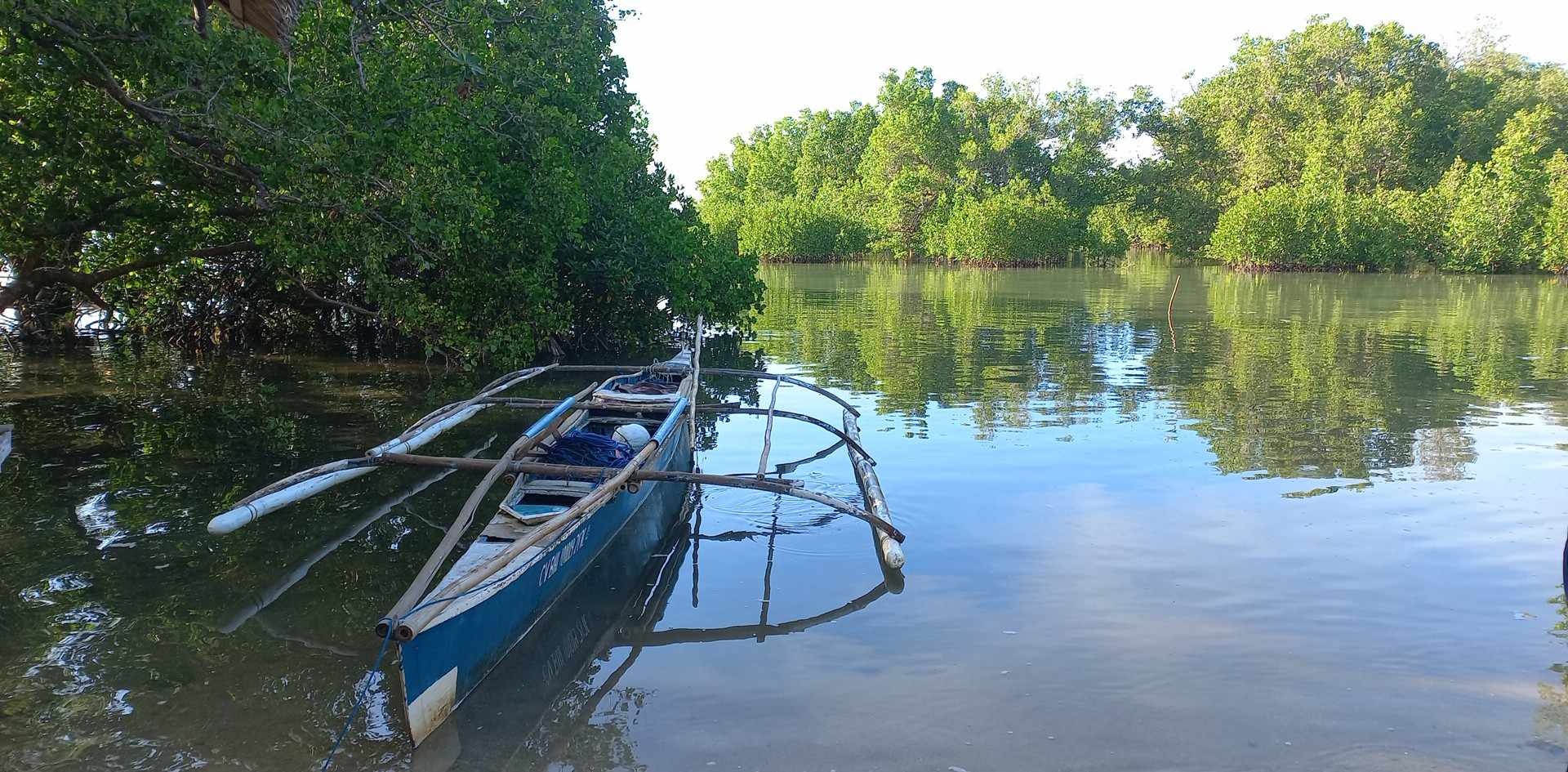
A few boats rest near the shore. Fisherfolk prepare for another day. Tourists — some from Europe, others from Asia — walk toward a white-sand beach where small outrigger boats are waiting.
From a makeshift tent overlooking the bay, the scene looks ordinary. But beneath the calm surface about 300 meters from the shore lies a different world — Bingag Reef, a marine protected area where coral gardens, seagrass and marine life have been given a chance to recover.
For visitors, it is a snorkeling destination. For the local community, however, it is much more than that. It is a source of livelihood, a classroom for younger generations and, most importantly, a living example of what can happen when fisherfolk themselves become guardians of the sea.
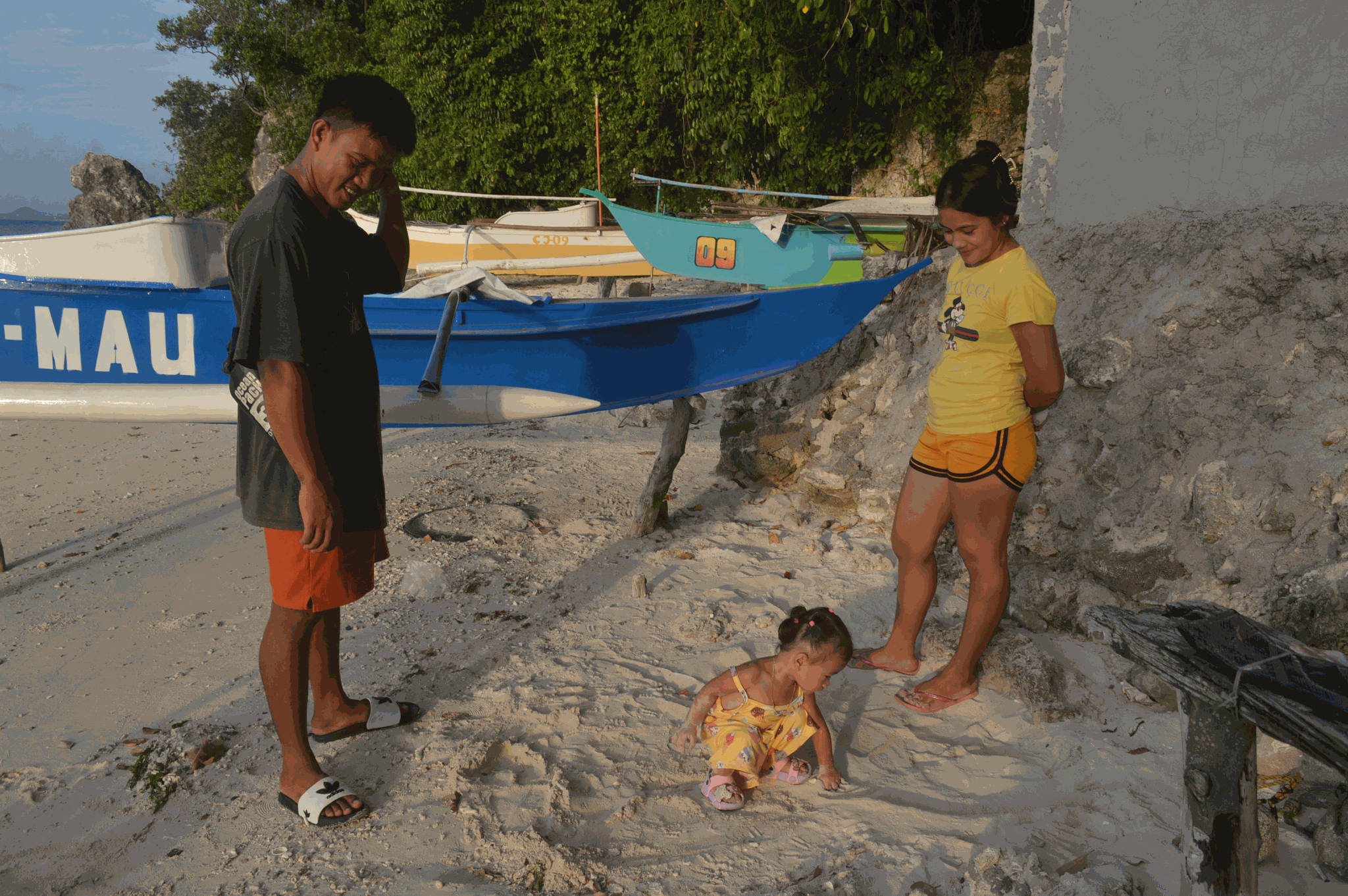
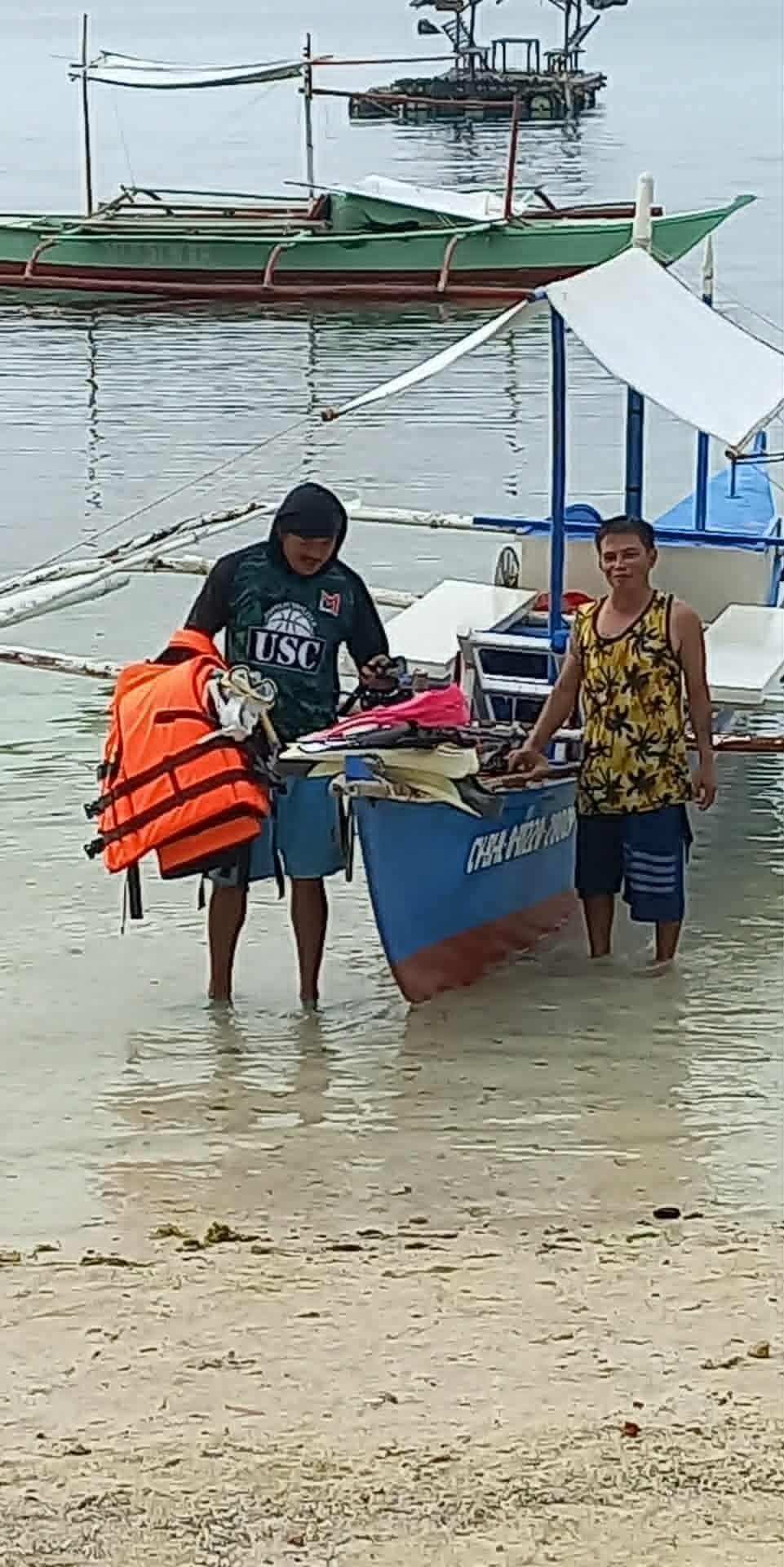
Among those preparing to take tourists out is Juanito Guimaras, one of the 40 active members of the Bingag Dapdap Fisherfolk’s Organization, or BIDAFO. He takes five tourists aboard his boat for P500, each of whom pays P100 as entrance fee to the barangay. The group also pays P300 for a tour guide .
By late afternoon, Guimaras had taken two groups out to sea. It is not the same volume of tourists seen at Panglao’s famous beaches. And that is precisely the point. Bingag offers something increasingly rare in a heavily visited island destination: a quiet encounter with nature.
There is one important rule: the snorkeling and viewing period is limited to one hour.
The restriction is intentional. The community wants tourists to enjoy the reef without allowing tourism itself to become a threat.
A reef away from the crowds
Located farther east along the coast of Dauis, Bingag Reef provides a very different experience from the commercial bustle around the popular Alona Beach.
The reef is relatively secluded. Its shallow, clear waters make it accessible even to casual snorkelers. Visitors can look down and discover hard and soft corals, small reef creatures and, at times, even a spectacular sardine run.
Gerardo Peligrino, a former boxer and now a fisherman who helps manage visitors at the sanctuary, says Bingag attracts people because they can explore the reef without dealing with the crowds and strong currents found in some more commercial marine-tourism sites.
But that is only one part of the story. Merced Puguso, a retired Navy officer who later became a fisherman, remembers the waters of Dauis decades ago. In the 1980s, he recalls, there were many tulingan, or frigate tuna (Auxis thazard). That is no longer the case.
Today, the community understands that protecting marine habitat is essential if future generations are to continue benefiting from the sea.

BIDAFO members undergo training on visitor safety and marine conservation. They learn how to brief tourists about what they can and cannot do inside the sanctuary:
- Do not touch the corals.
- Do not disturb giant clams.
- Do not harass sea turtles.
- Do not treat the reef as an underwater playground.
- Do take memories in photos or videos.
These may sound like simple rules, but they are the foundation of community-based conservation.
When fisherfolk become guardians
The Bingag-Dapdap Marine Protected Area was established along with four others through Municipal Ordinance #7 in 2005 and covers approximately seven to eight hectares of coral reef and seagrass habitat, according to Jose Erwin Tuazon, Acting Dauis Municipal Environment and Natural Resources Officer.
Its story is important because the sanctuary did not begin as a large national conservation project. It grew from the local community, starting with the formation of the Bantay Dagat (Sea Patrol) nightly watch, coral reef and fish density monitoring.
According to Bingag barangay chairman Ricardo Pojas, there are 16 volunteer fish wardens who alternately watch the marine sanctuary at night from a floating guardhouse. At daytime, the fisherfolk of BIDAFO are in charge of watching.
The MPA is part of the Visayas Marine Biodiversity Hotspot within the Coral Triangle that covers six countries, including the Philippines. Conserving these ecosystems contributes directly to the Global 30 x 30 Conservation Initiative, which aims to protect and conserve 30 pct of the world’s land, freshwater and ocean areas by 2030.
BIDAFO became the principal organization involved in managing the sanctuary, working with the barangay and the Municipality of Dauis, as well as the Bohol Provincial Environment Management Office, national government agencies, universities and conservation groups, says Tuazon.
By 2024, BIDAFO had 48 active members. Over time, the organization developed the basic machinery needed to make conservation work on the ground: patrols, marker buoys, a guardhouse, boats and rules governing access to the sanctuary. Tourism fees and penalties for violations also became sources of income.
This matters because many marine protected areas fail not because the idea is wrong, but because there is no institution capable of enforcing the rules every day, Tuazon notes, adding that out of the five MPAs established in Dauis, only Bingag has sustained its conservation activities.
In Bingag, with a population of 5,659 (PSA, 2024), conservation has become part of everyday community life. That may be the sanctuary’s most important achievement, says Yvonne Guillena, Dauis Chief Executive Assistant, who considers the protection of the MPA as a continuing target of the town, now classified as a first-class municipality.
From Bingag to the Panglao Island Protected Seascape
Bingag-Dapdap does not exist in isolation. The small community-managed sanctuary sits within the wider ecological and governance landscape of the Panglao Island Protected Seascape, or PIPS.
Under the Expanded National Integrated Protected Areas System, PIPS covers about 2,445.08 hectares around Panglao Island. Its protected environment includes coral reefs, seagrass meadows, mangroves, tidal flats and other coastal habitats.
This creates an interesting evolution. What began as a relatively small fisherfolk-managed sanctuary became part of a much larger protected seascape system.
The 2016–2026 period is particularly important because it shows how community conservation increasingly became connected with provincial monitoring, biodiversity restoration, tourism management, scientific research and protected-area governance.
Bohol’s provincial government established an MPA Management Council and institutionalized annual underwater biophysical assessments. BPEMO reports that these assessments have been conducted since 2015.
That means conservation was no longer based solely on what people could see from the shore. Scientists and trained divers began going underwater to measure what was happening beneath the surface.
This distinction is crucial. A reef can look beautiful to a tourist and still be ecologically stressed. Conversely, a reef damaged by a typhoon may look devastated immediately afterward but still has the biological capacity to recover. Science helps communities distinguish between the two.
What the underwater assessments tell us
Available evidence points toward an encouraging story. Community members have observed more fish and healthier coral since the sanctuary was established. In 2024, the provincial environment management office and the Coastal Conservation and Education Foundation (CCEF) documented Bingag as a functioning community-managed marine protected area.
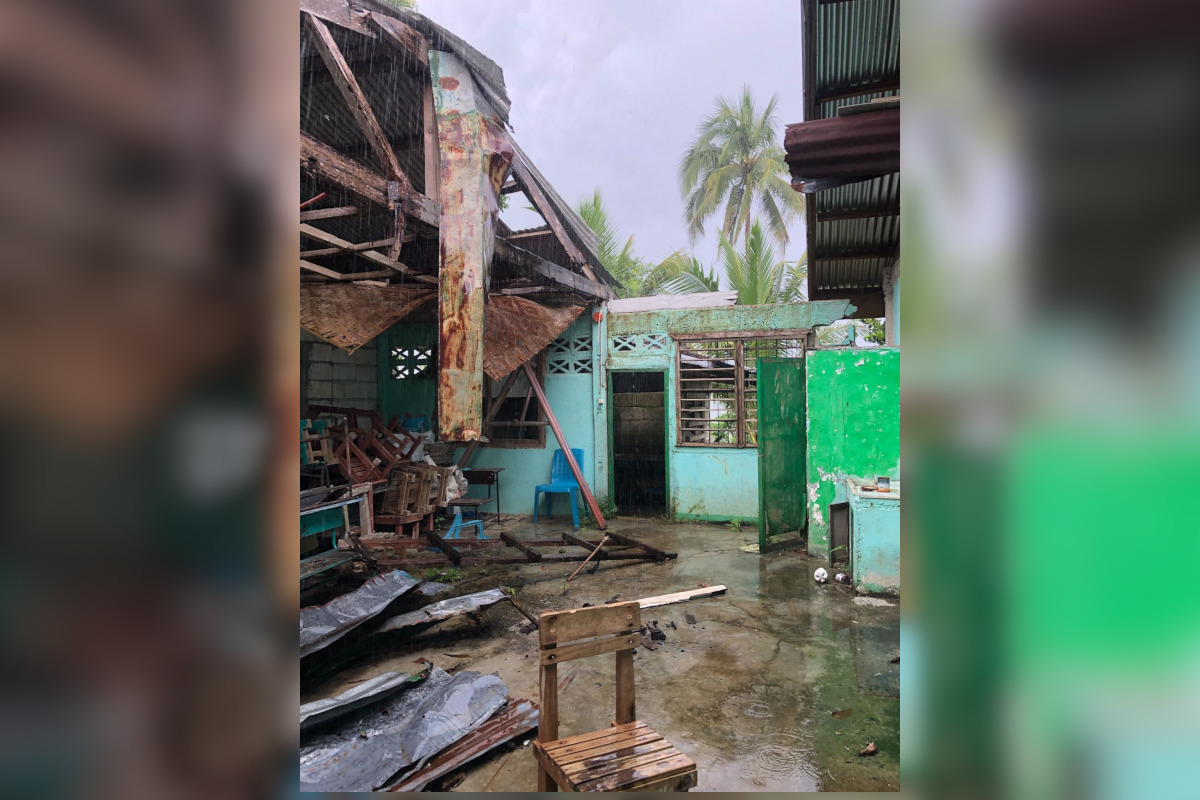
The broader monitoring of PIPS also provides evidence of resilience. After Typhoon Odette struck Bohol in 2021, reefs in the area suffered significant damage. Yet a 2024 provincial monitoring activity reported encouraging increases in coral recruits, or baby corals that survive their critical first weeks of life, and an overall improvement in marine life.
That finding is significant. A marine protected area cannot stop a super typhoon or prevent unusually warm water. It cannot control every change in ocean conditions. What it can do is reduce the everyday pressures caused by human activities. When fishing, physical disturbance and other stresses are reduced, surviving organisms have a better chance of rebuilding after a major disturbance.
In other words, conservation is not about creating a reef that can never be damaged.
It is about creating a reef that has a better chance of coming back, experts say.
The visible boundaries of conservation
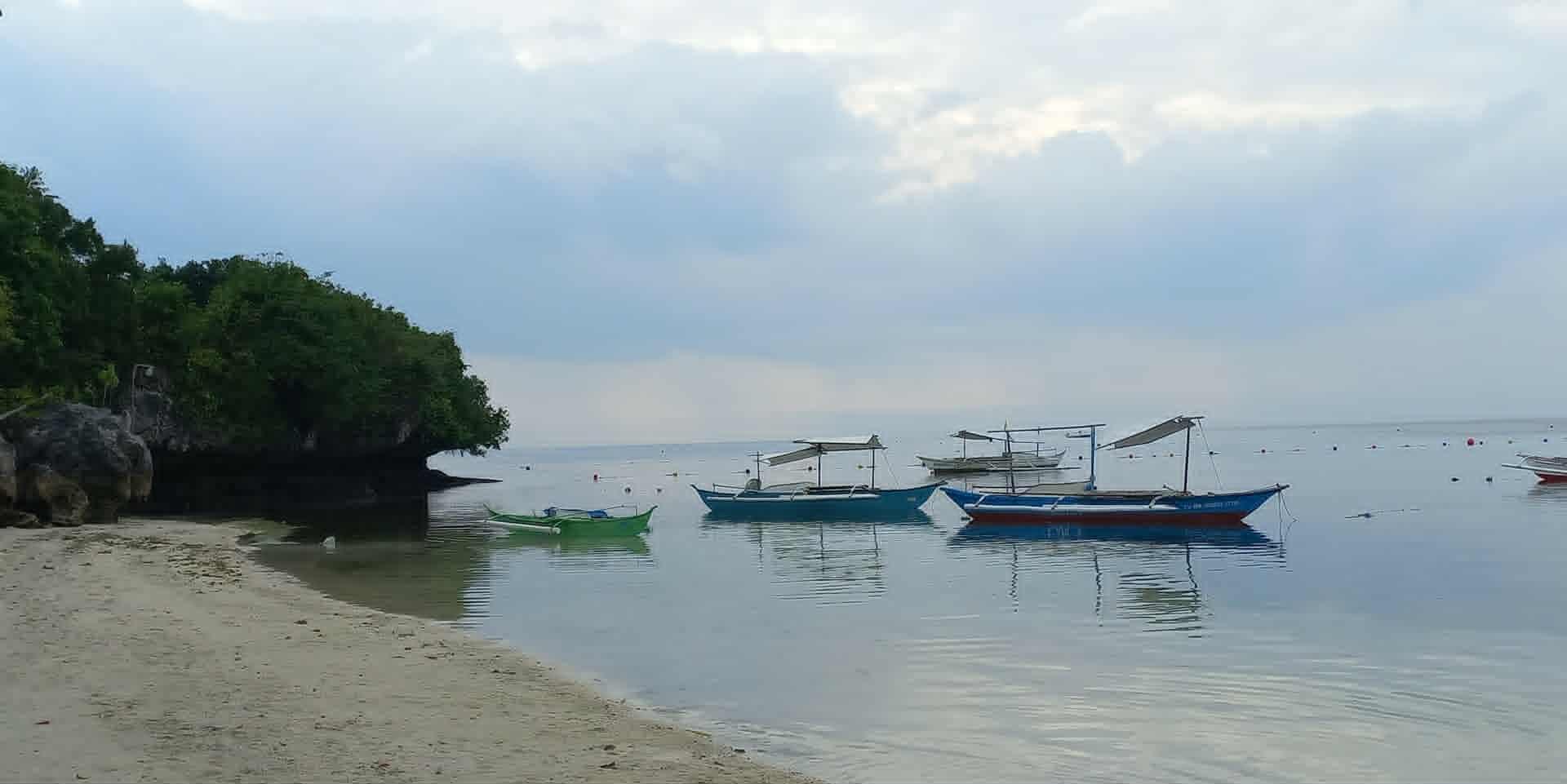
One of the less glamorous but most important lessons from Bingag is the value of buoys. In the water, conservation boundaries need to be visible.
A 2024 seagrass assessment noted that Bingag was completely enclosed by buoy markers and that human intrusion was prohibited. The nearshore area was observed to be dominated by live coral growth.
In February 2026, BPEMO provided the sanctuary with 20 additional float balls and eight rolls of polyethylene rope for boundary demarcation. These materials may seem ordinary compared with coral reefs, giant clams or sea turtles, but they are part of the infrastructure of conservation.
The lesson is straightforward: community enforcement becomes easier when protected areas are clearly marked and physically recognizable.
Fish: the conservation dividend fisherfolk can see
For many scientists, coral cover and biodiversity indices are important measures of ecosystem health. For fisherfolk, however, one indicator often speaks louder than any technical report: fish. Are there more fish? Are they larger? Are there more species?
Can people see them again in places where they had become scarce?
The community’s observations at Bingag suggest that fish density has improved since the sanctuary was established.
There is also broader evidence from Bohol’s marine-conservation programs. Provincial monitoring associated with giant-clam restoration found that marine protected areas participating in the program experienced a 68.46 percent increase in fish-species richness and a 23.69 percent increase in the density of macro-benthic invertebrates or bottom-dwelling animals without backbones.
These figures should not be presented as Bingag-only results. They apply to the wider group of MPAs involved in the giant-clam program, according to the provincial environment office. They demonstrate an important principle: protecting and restoring reef habitats can benefit much more than a single species.
Giant clams: small animals, big ecological role
Official monitoring reports record a steady population of 149 juvenile giant clams that were previously relocated and restocked into the sanctuary, plus 46 older/broodstock giant clams. The juvenile giant clams were transferred to the sanctuary to protect them following typhoon Odette.
Giant clams are impressive simply because of their size and appearance. But their importance goes beyond being attractive underwater. They filter water, contribute to reef structure and provide additional habitat complexity.
Their restoration therefore represents more than replacing a missing species. It is an investment in the ecological functioning of the reef, according to BPEMO sources.
Bingag’s approach combines two strategies. First, protect what already exists.
Second, actively restore biodiversity where it has been depleted, Tuazon notes.
That combination is stronger than relying exclusively on either strategy. Protection gives existing ecosystems space to recover. Restoration can help rebuild species populations and ecological functions, he says.
The unsung heroes: small reef animals
When people talk about coral reefs, they usually picture colorful fish and corals.
Less attention is paid to the animals living on and around the seafloor. These benthic invertebrates — clams, sea stars and other bottom-dwelling organisms — play important roles in the ecosystem. Some graze on algae, some filter water, some recycle organic matter and others act as predators or prey.
For this reason, Bohol’s monitoring program includes macro-benthic invertebrates as one of the indicators used to assess reef health. The giant-clam restoration program provides evidence of wider ecological benefits, including the reported 23.69 percent increase in macro-benthic invertebrate density in participating MPAs.
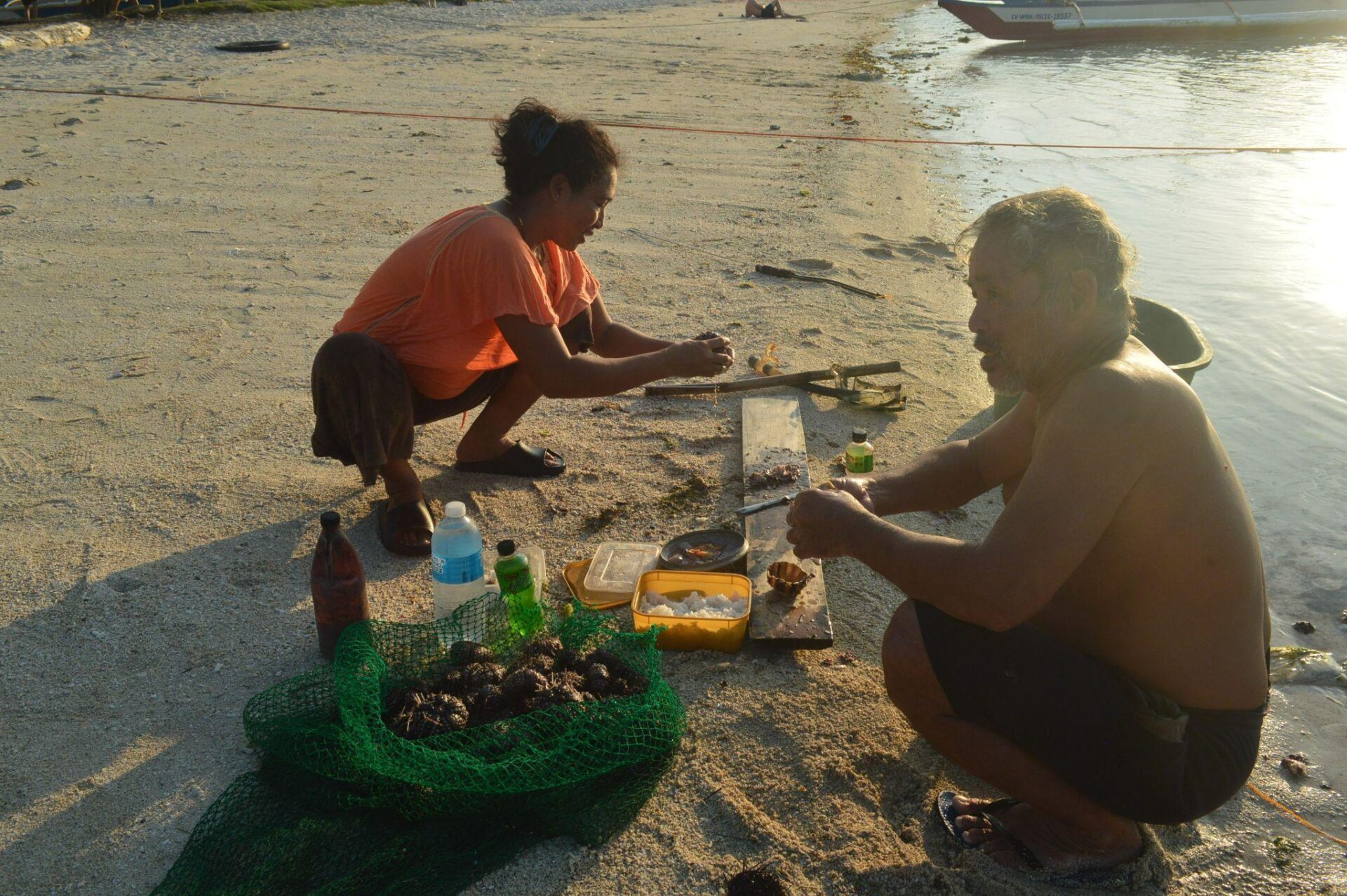
But community management also means dealing with organisms that can become threats. In June 2026, BPEMO, the Municipality of Dauis, Barangay Bingag, BIDAFO and national-agency divers conducted a reef-cleaning and preservation operation that removed 121 crown-of-thorns starfish from the sanctuary.
Crown-of-thorns starfish eat live coral. During outbreaks, large populations can cause serious damage to reefs. The operation illustrates an important change in the way the community understands conservation.
The seagrass paradox
But perhaps the most valuable lesson from Bingag is not a success story at all.
It is a warning against assuming that every conservation indicator will improve at the same time. A 2024 scientific assessment of seagrass communities in Maribojoc Bay surveyed eight sites, including Bingag and nearby Tabalong in Dauis.
Seven seagrass species were recorded across the study area. Yet Bingag had only 23.36 percent seagrass cover, classified as poor. Nearby Tabalong, which was not an MPA, recorded 57.70 percent cover, classified as good.
The difference was statistically significant. Bingag also had lower seagrass diversity.
Its Shannon diversity index was 1.08, compared with 1.42 in Tabalong. Evenness was also lower in Bingag: 0.56 compared with 0.73 in Tabalong.
At first glance, this might seem to undermine the conservation story. In fact, it makes the story more interesting, according to a marine biologist.
The researchers observed that Bingag’s nearshore area was dominated by live coral. One possible explanation for the lower seagrass cover was competition between coral and seagrass communities. In other words, protecting an area did not automatically cause every habitat within it to expand.
This is a crucial lesson for marine management. Nature is not a checklist in which every indicator is expected to move upward. More coral does not necessarily mean more seagrass.
A protected reef may develop differently from an adjacent seagrass meadow.
The goal should not be to maximize one habitat while ignoring the others. Instead, managers need to understand the relationship between coral reefs, seagrass meadows, mangroves and other coastal habitats. The objective is a healthy ecological mosaic.
Tourism: opportunity and threat
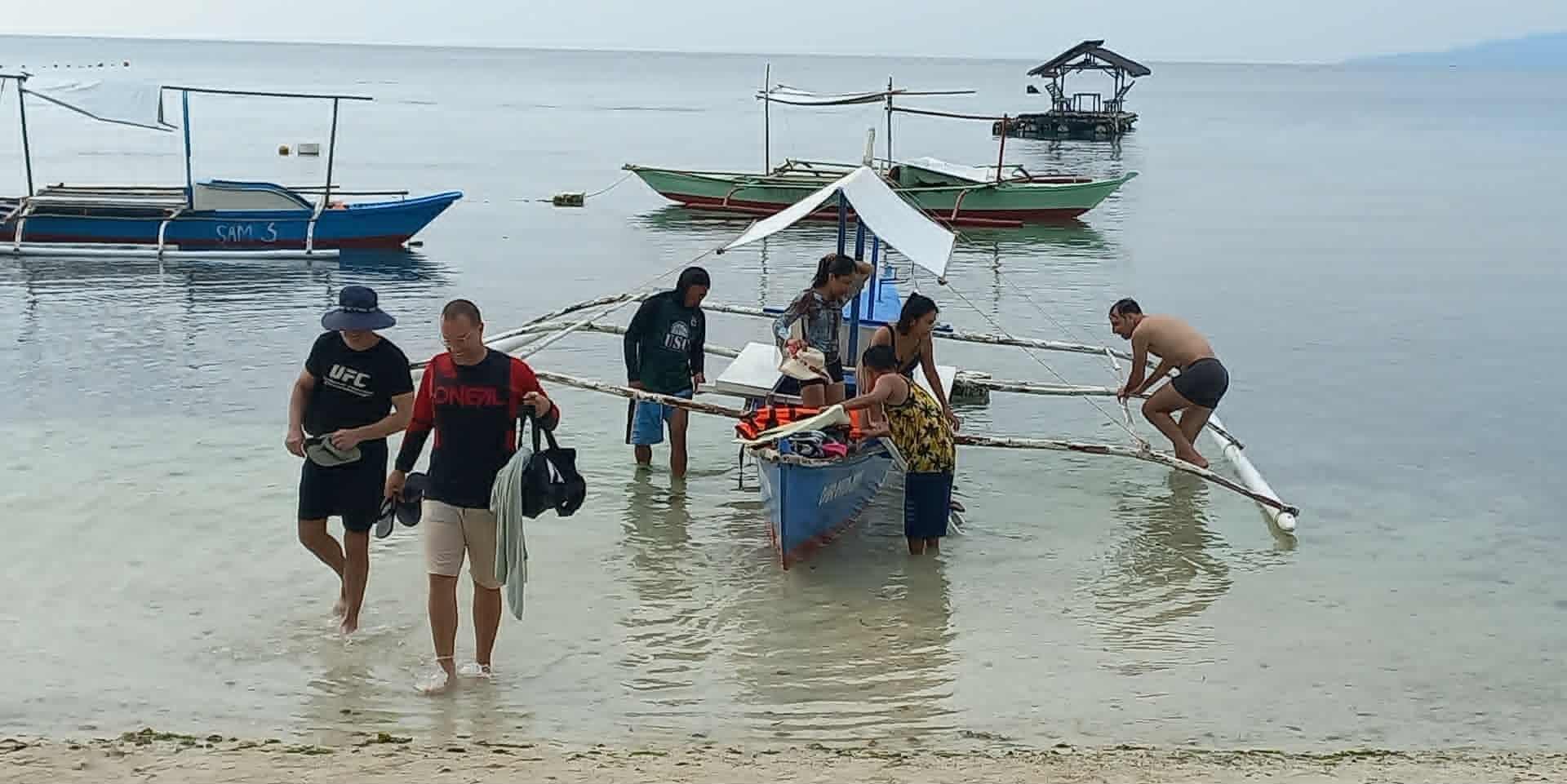
Bingag’s tourism model also illustrates the delicate balance between conservation and livelihood.
The sanctuary generates income for fisherfolk and the local community. Tourists pay for boat services, guides and entrance fees. This creates an incentive for local people to protect the very resource that attracts visitors.
But tourism can also become a threat. Too many boats, careless snorkelers, anchoring on corals, physical contact with marine life and unmanaged visitor numbers can damage the ecosystem that tourism depends on.
This is why the one-hour snorkeling limit matters. So do visitor briefings and trained guides. So do boundaries.
The wider Panglao Island Protected Seascape has experienced much greater tourism pressure, including coral damage and governance problems. These pressures contributed to the closure of portions of the protected seascape in 2024 and the adoption of stricter marine-tourism regulations in 2026 when it reopened, like 250 tourists every two hours as carrying capacity limit, according to Paolo Paclibar, DENR Region VII’s Coastal Extension Officer.
The experience offers a warning to communities elsewhere: tourism income can help finance conservation, but uncontrolled tourism can eventually destroy the resource that generates that income. Eco-tourism activities, including snorkeling and diving in reef sites in Dauis, need regulation, Guillena stresses.
Beyond a small sanctuary
The real significance of Bingag is therefore not its size. Seven or eight hectares may sound tiny compared with a protected seascape covering more than 2,400 hectares.
But conservation does not begin with hectares. It begins with people. Bingag demonstrates how a community organization can turn environmental rules into daily habits.
Fisherfolk can become boat operators, guides, patrol members and environmental stewards. Tourism can provide an income stream. Scientists can provide information. Government agencies can provide technical assistance, equipment and enforcement support. MPA management is a joint effort among various forces, Guillena points out.
Each has a different role. No single group can manage the marine environment alone.
The community knows the water and the people who depend on it. Scientists can measure changes that cannot be seen from the shore. Government can provide the legal authority and resources. When these pieces work together, a small sanctuary can become part of a much larger conservation system.
A more honest definition of success
The Bingag experience also suggests that marine conservation should be judged differently. Success does not mean that coral cover rises every year. It does not mean every species increases. It does not mean a typhoon will never cause damage. And it certainly does not mean that declaring an area protected is enough.
In this case, success is the ability to protect, monitor, learn and adapt. Bingag’s coral habitat shows signs of resilience. Fish and marine life are perceived by the community to have increased. Giant clams have been restored. Boundaries are maintained. Crown-of-thorns starfish are actively removed when necessary.
The wider PIPS experience reveals the risks created by tourism pressure. These are not contradictions. They are the reality of managing a living ecosystem. The most valuable conservation programs are not those that claim everything is perfect. They are those that recognize problems early enough to respond, Tuazon observes.
From fisherfolk to environmental stewards
Back on the shore in Bingag, the work can look ordinary. A fisherman prepares his boat.
A guide briefs tourists. Visitors put on masks and snorkels. A patrol member checks the boundaries. Someone collects an entrance fee.
Yet these ordinary activities represent more than tourism. They are the daily machinery of conservation.
The story of Bingag shows how a fishing community can move from simply depending on the sea to actively managing it. Over more than two decades, the sanctuary has evolved from a local marine-protection initiative into a functioning community conservation institution embedded within the much larger Panglao Island Protected Seascape.
This shows that marine conservation can never be a one-time project. It is a continuing conversation between people and the ecosystem on which they depend. For the fisherfolk of Bingag, that conversation is now part of everyday life.
The sanctuary may be small, but the idea behind it is much bigger. As Dauis environment officer Tuazon observes, when communities are given the responsibility, knowledge and support to protect the sea, conservation can become not just a government rule, but a way of life.
(This story was produced under the Global 30X30 Conservation Initiative grant from Internews’ Earth Journalism Network. All photos were taken by Cooper Resabal).