The escalating conflict in the Middle East may be thousands of kilometers away from Manila, but its consequences are already being felt by Filipinos through rising fuel prices, economic uncertainty and anxiety for loved ones working abroad.
As the Philippines prepares to host and chair the Association of Southeast Asian Nations this year, the crisis underscores the fragile intersection of global conflict, domestic politics and national preparedness.
For ordinary households, the impact begins with energy. The country relies heavily on the Middle East, importing roughly 90% of its oil from the region. This dependence makes the Philippines highly vulnerable to price shocks and supply disruptions. When tensions threaten key shipping routes such as the Strait of Hormuz, global oil prices surge, pushing up transportation, electricity and food costs in importing economies like the Philippines.
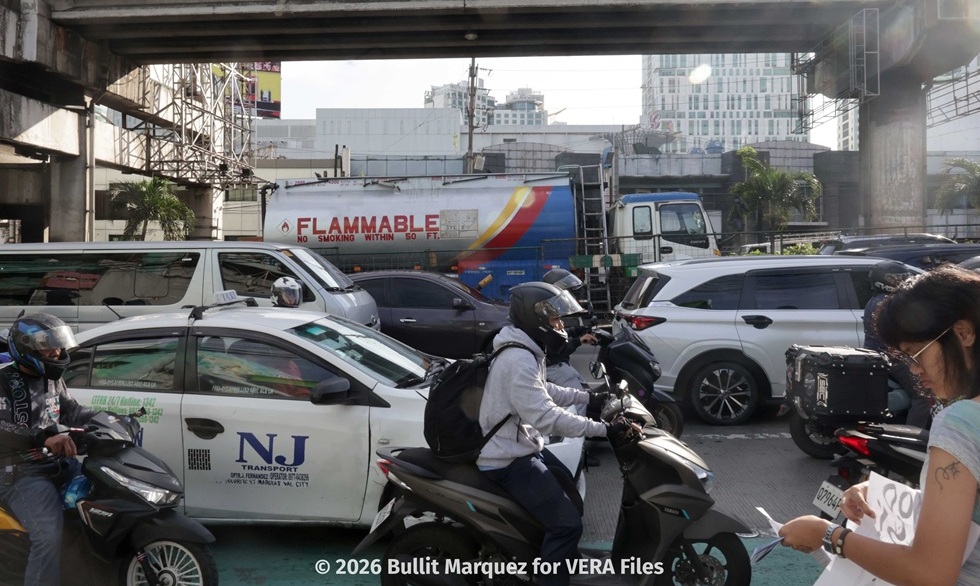
With oil prices climbing amid the Middle East conflict involving the United States, Israel and Iran, Filipinos are already feeling the impact. Grocery stores have begun adjusting price tags even on existing stocks, while the Department of Transportation is expected to rule this week on petitions for fare hikes.
Electricity costs are also rising. Meralco’s earlier announced 64-centavo per kilowatt-hour rate increase, which will bring the total residential rate to P13.82 per kWh, is largely attributed to higher transmission charges from the National Grid Corp. of the Philippines and increased generation costs, even before the latest round of global oil price hikes.
Higher oil prices accelerate inflation, eroding the purchasing power of households already struggling with tight budgets. When oil prices rise, almost everything else follows.
Immediately following the end of February, fuel prices saw a “big-time” hike. Gasoline increased by P1.90 per liter, diesel by P1.20 and kerosene by P1.50. Fuel prices continued to climb, marking the ninth straight week of increases for gasoline and the 11th for diesel/kerosene, with reports of gasoline rising by P7 to P13 per liter in some areas by the second week of March.
The economic consequences of Middle East instability extend beyond fuel prices. They reach directly into Filipino homes through overseas workers. The region hosts millions of Filipino workers in sectors such as health care, construction and domestic service. Their remittances support countless families and remain a cornerstone of the economy.
For families relying on remittances to pay rent, tuition and daily expenses, instability in the region is not an abstract geopolitical issue. It is a question of stability and survival.
The government has responded with a mix of short-term mitigation and precautionary planning. Energy conservation measures such as a possible four-day workweek, potential fuel tax adjustments and contingency plans for OFW evacuation are among the immediate responses.
These steps may cushion the impact, but they also highlight a deeper structural vulnerability: the country’s heavy dependence on imported energy and overseas labor markets.
Complicating the economic challenge is the country’s diplomatic responsibility as ASEAN chair. Hosting regional leaders will require extensive logistical preparation, security arrangements and diplomatic engagement. While the summit offers an opportunity to demonstrate leadership in Southeast Asia, it will also require careful fiscal management.
This makes the 2026 national budget a crucial instrument. Government spending must balance the costs of hosting international events with domestic priorities such as social protection, infrastructure and economic stabilization. At a time of global uncertainty, the margin for fiscal error narrows.
Yet external shocks are not the administration’s only challenge. Domestic political tensions threaten to complicate an already delicate moment.
The continuing rivalry between the administration of Ferdinand Marcos Jr. and political forces aligned with former president Rodrigo Duterte has intensified over the past year. Allies of the Duterte camp, including Vice President Sara Duterte, have openly criticized government policies and questioned the administration’s direction.
Political contestation is normal in a democracy. But when rivalry escalates into sustained destabilization, the consequences can ripple across governance and economic stability.
Markets are sensitive not only to global conflict but also to domestic political uncertainty. Investors prefer predictability. Businesses delay expansion when tensions threaten policy continuity. Foreign partners also watch closely for signs of internal instability, particularly when a country is hosting a major regional summit.
For the Marcos administration, political friction could complicate efforts to pass budget priorities, implement emergency economic measures or coordinate national responses to external shocks. Legislative gridlock, public protests or intensified political attacks could divert attention and resources at a moment when steady leadership is most needed.
More importantly, ordinary Filipinos often bear the cost of prolonged political conflict. When leaders focus on political survival rather than economic management, reforms slow and policy execution weakens. Programs meant to protect vulnerable sectors, from fuel subsidies to social assistance, can become entangled in partisan disputes.
In this sense, the convergence of three forces — global conflict, fiscal pressure and domestic political rivalry — creates a uniquely difficult environment for governance.
The Middle East crisis alone would test the resilience of the Philippine economy. Add the responsibility of chairing ASEAN and the turbulence of domestic political divisions, and the challenge becomes even more formidable.
Still, the moment also presents an opportunity for leadership.
For Marcos, the task is to show that governance can remain focused despite political noise. Ensuring energy security, protecting overseas workers and stabilizing prices must remain central priorities. Transparent fiscal management of the Asean summit budget can also reinforce public trust that international commitments do not come at the expense of domestic welfare.
At the same time, political actors across the spectrum should recognize that moments of national vulnerability call for restraint. Democratic debate is essential, but destabilization for its own sake risks undermining the country’s credibility at a critical moment.
ASEAN leadership will place the Philippines under a regional spotlight. The country will not only represent its own interests but also help guide Southeast Asia through a period of geopolitical tension and economic uncertainty.
For ordinary Filipinos, the hope is simple: that their leaders can rise above political rivalry long enough to safeguard economic stability and national interests.
Global conflicts may be beyond the Philippines’ control. Domestic politics, however, are not. And in a year when the country must navigate both international turbulence and regional leadership, unity of purpose, however temporary, may prove to be the country’s most valuable resource.
The views in this column are those of the author and do not necessarily reflect the views of VERA Files.
This column also appeared in The Manila Times