An exhibition titled Sulunod features the prints and ceramic works of Nelfa Querubin in her own permanent gallery at the UP Visayas MACH (Museum of Art and Cultural Heritage). Its title comes from the Hiligaynon root word suno (according), suluno (consistency or in accord with), and sulunod (one after the other) that describes a lifetime of Querubin’s creative work on paper and clay.
Prints
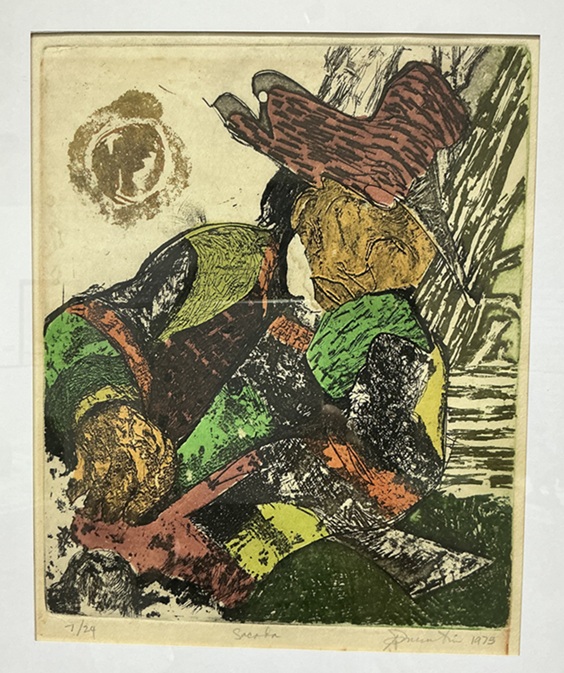
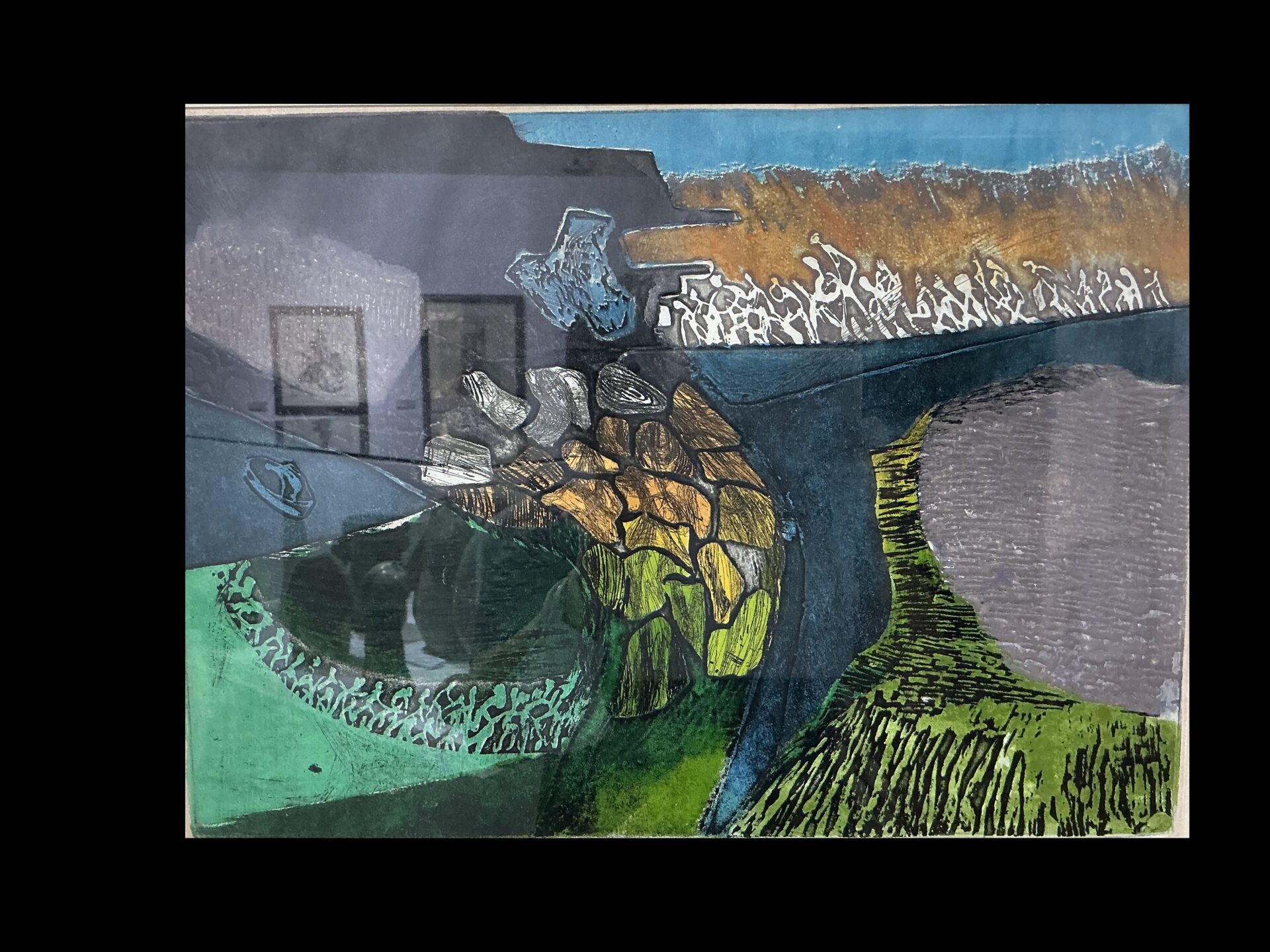
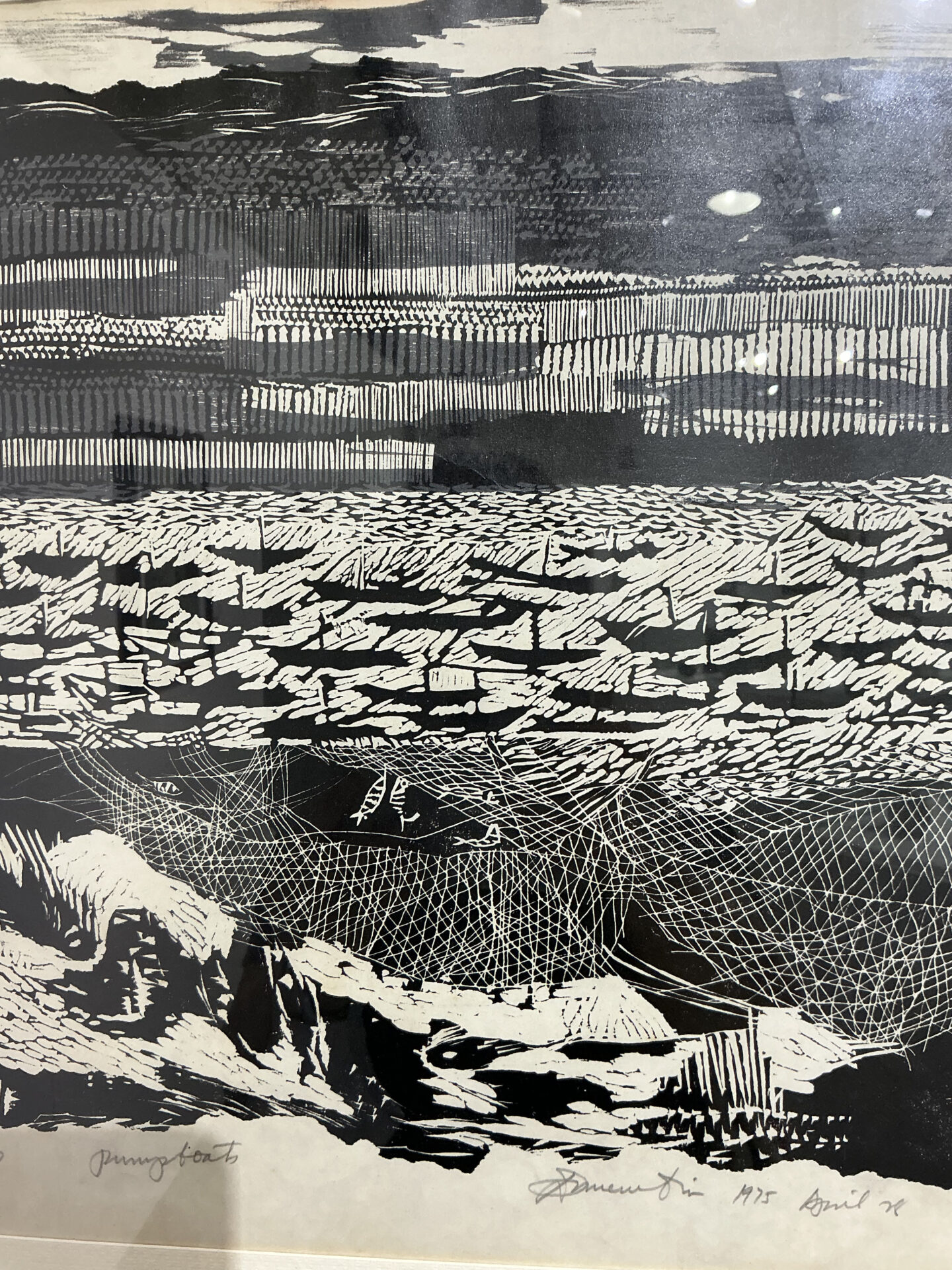
Querubin started her printmaking in the 1960s, with works in rubbercut, etching, lithograph, collograph, and intaglio. The prints reflect her meticulousness and technical mastery of the medium, made more challenging with the use of multiple colors in a single print.
Her early 1970s work (Sacada,1973, Passage of Slaves,1975, and Prisoners Rebellion, 1971) depict the country’s turmoil in Negros related to issues of social justice: the exploitation of farmers and workers, militarization, and military-led killings that have continued to this day with brazen impunity.
Other works include figures of ordinary people who supply us with food such as the sweet potato diggers, rice harvesters, and fishwives.
Outshining the humble clay
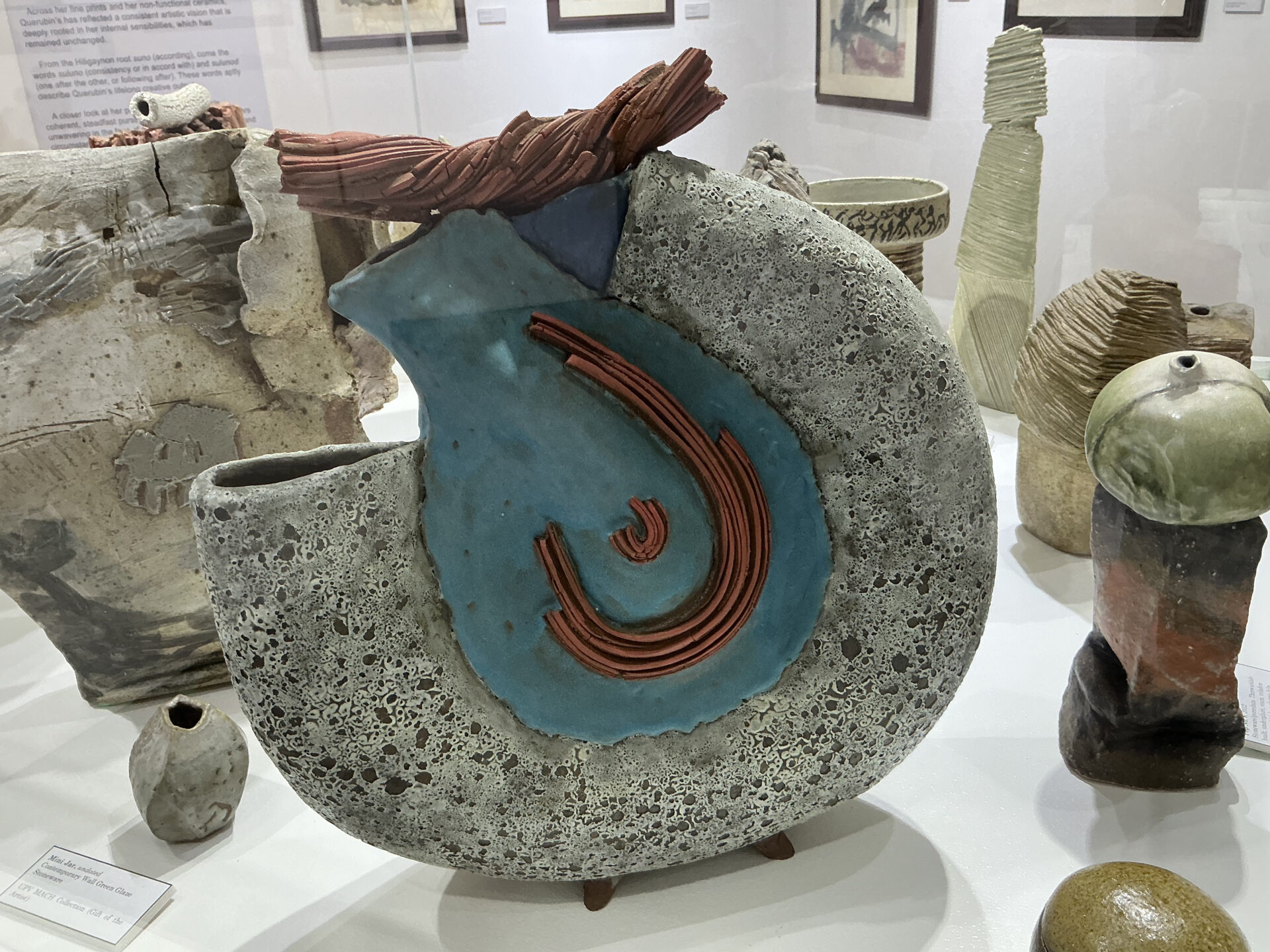
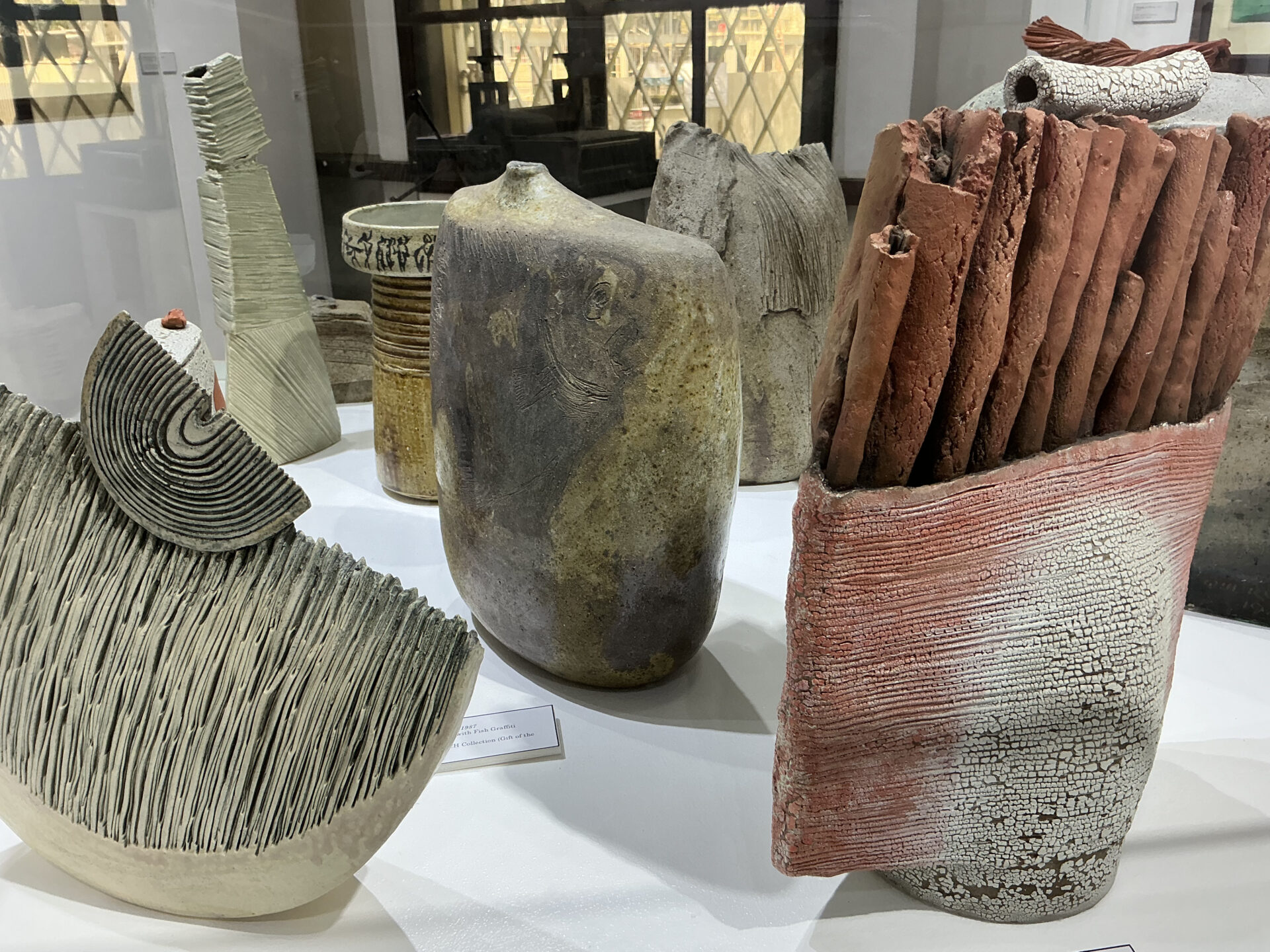
Protected inside glass cases, one instinctively wants to touch and caress these ceramic pieces. Of course, the do-not-touch rule remains! Instead, one takes in each piece slowly, savoring visually their striking forms, vivid colors, and varied textures— each a stunning piece of visual delight.
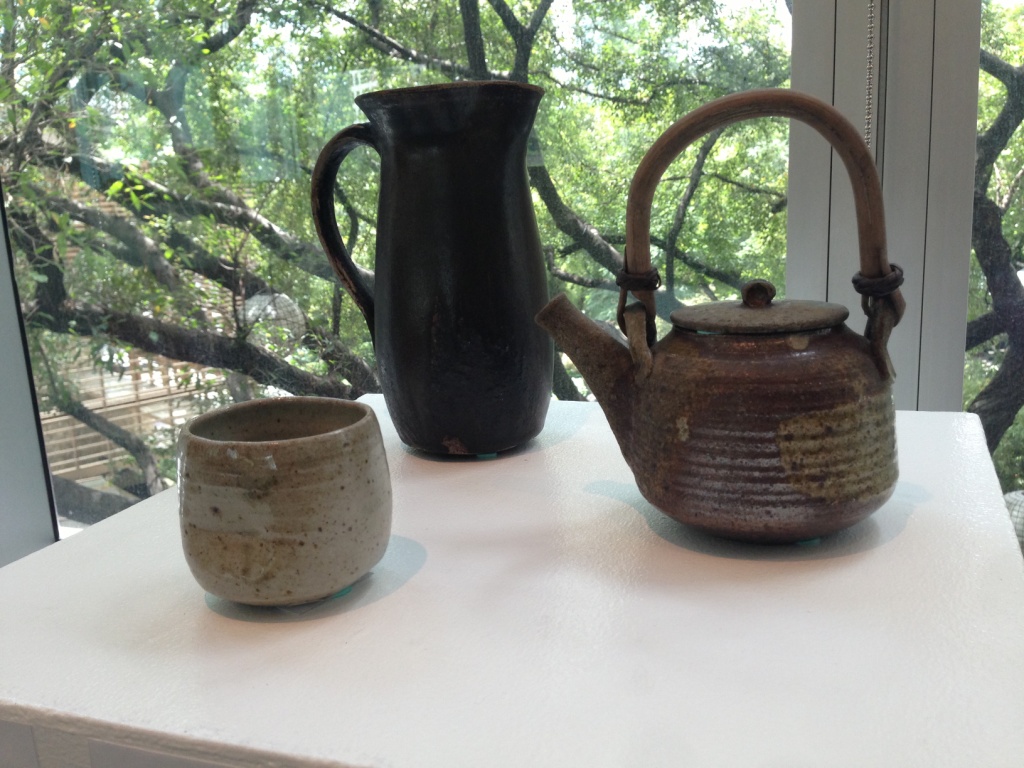
Querubin’s use of texture and color remain the most striking characteristic of her ceramic art with surface treatments reflective of her own prints. Earth colors are predominant in shades of terracotta, olive green, ochre, brown, rust, and beige, giving warm and muted hues that recall the sea and earth, the soil, sand, vegetation, and rock in our environment.
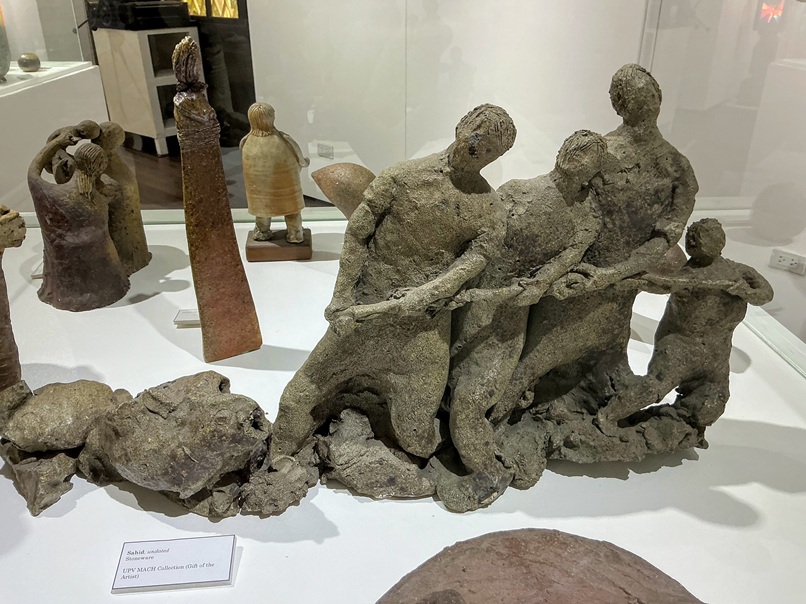
Aside from teapots, plates, vases, bottles, and cups, Querubin made human figures such as The Family, 1980; Old Couple A, 1981; Bottle Woman 11, 1981; and The Maid, 1981. Sculptural and nonfunctional pieces of deconstructed vases and jars reveal their abstracted forms.
Elevating its tactile appeal, Querubin’s raised ceramic surfaces are ribbed, speckled, slashed, carved, hand-shaped, and indented. Horizontal and vertical stripes and indentations abound. Her use of crawl glaze creates “islands” or thick beads of glaze, and exposed clay in between, offering a highly tactile, matte, or glossy surface.
Nelfa Querubin Gallery, UPV MACH
Querubin’s pottery and stoneware collection spans three decades, from the 1970s to the 1990s. It celebrates Querubin’s work that encapsulate Philippine aesthetics with contemporary sensibilities and innovations in ceramic art.
In 2023, UPV MACH opened its first exhibition on Nelfa Querubin’s pottery and stoneware titled Gindáp-ung (to throw into or put on fire) with 15 colorful ceramic pieces made in the 1990s in the United States using electric and gas kilns, on loan from Central Philippine University. Also included are 10 wood-fired pieces of local clay from the 1970s and 1980s, from the UPV art collection.
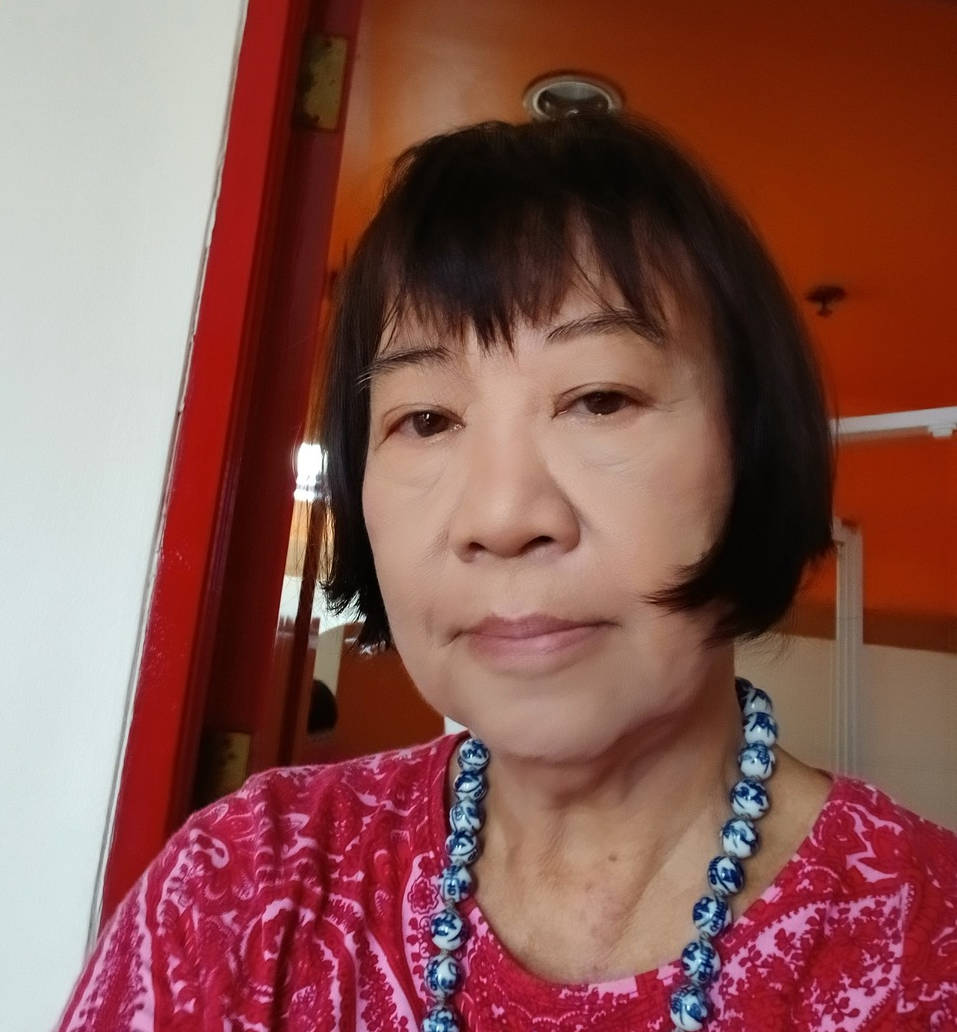
Nelfa Querubin (1941, Concepcion, Iloilo): A fisherman’s daughter from a large family, she studied at the Iloilo School of Arts and Trades and Philippine Women’s University.
One of the country’s pioneers in pottery, Querubin opened her pottery studio in Dingle, Miagao in 1973. She experimented with all kinds of local clay, glazes, and pottery techniques.
She built her own wood-fired kiln made from local kaolin from Estancia, Iloilo with the help of another clay pioneer, Jon Pettyjohn (b. 1950). Through trials and experimentation, she formulated her own clay bodies and glazes and made her own tools and equipment using local materials and found objects.
Long before the internet, she learned from books and magazines given to her by friends. Her kiln was based on a design by Daniel Rhodes (1911-1989), a celebrated ceramic artist and educator at Alfred University. Her mentor, Leonardo Villaroman, who was then working at Mariwasa tile company, gave her ceramic magazines. A book on African pottery traditions, Pioneer Pottery, 1969 by Michael Cardew guided her on how to search and prepare her own clay.
Her early pieces were mostly functional; she also started making deconstructed vases and jars as well as stylized figures of humans and animals that became much more visible in her later work. In the late 1980s, she moved and settled in Colorado where she has continued working with clay.
Awards and exhibitions
Querubin’s awards included the First Prize and the Third Prize for Prints, Philippine Association of Printmakers (PAP), 1969 and two First Prizes in Etching and Intaglio in 1971. In 1980, she received the Thirteen Artists Awards from the Cultural Center of the Philippines. In 1981, the CCP organized an exhibit for Querubin titled Non-Vessel Ceramics by Nelfa Querubin at Sining Kamalig.
In the United States, she has received the Juror’s Award, 1990 National Greely Art Exhibition and two First Prizes in Ceramics at the 1995 Castle Rock Art Festival and the 2003 Colorado Arts Festival, both in Colorado, U.S.
Some of her major exhibitions: ‘35 Years On,’ UP Visayas Art Gallery, Iloilo City, 2008; “Terrain:” A Retrospective Show in Ceramics by Nelfa Querubin-Tompkins, Ayala Museum, Makati, 2013; and Patterned and Inscribed: The Art of Nelfa Querubin, UP Vargas Museum, UP Diliman, 2013.