
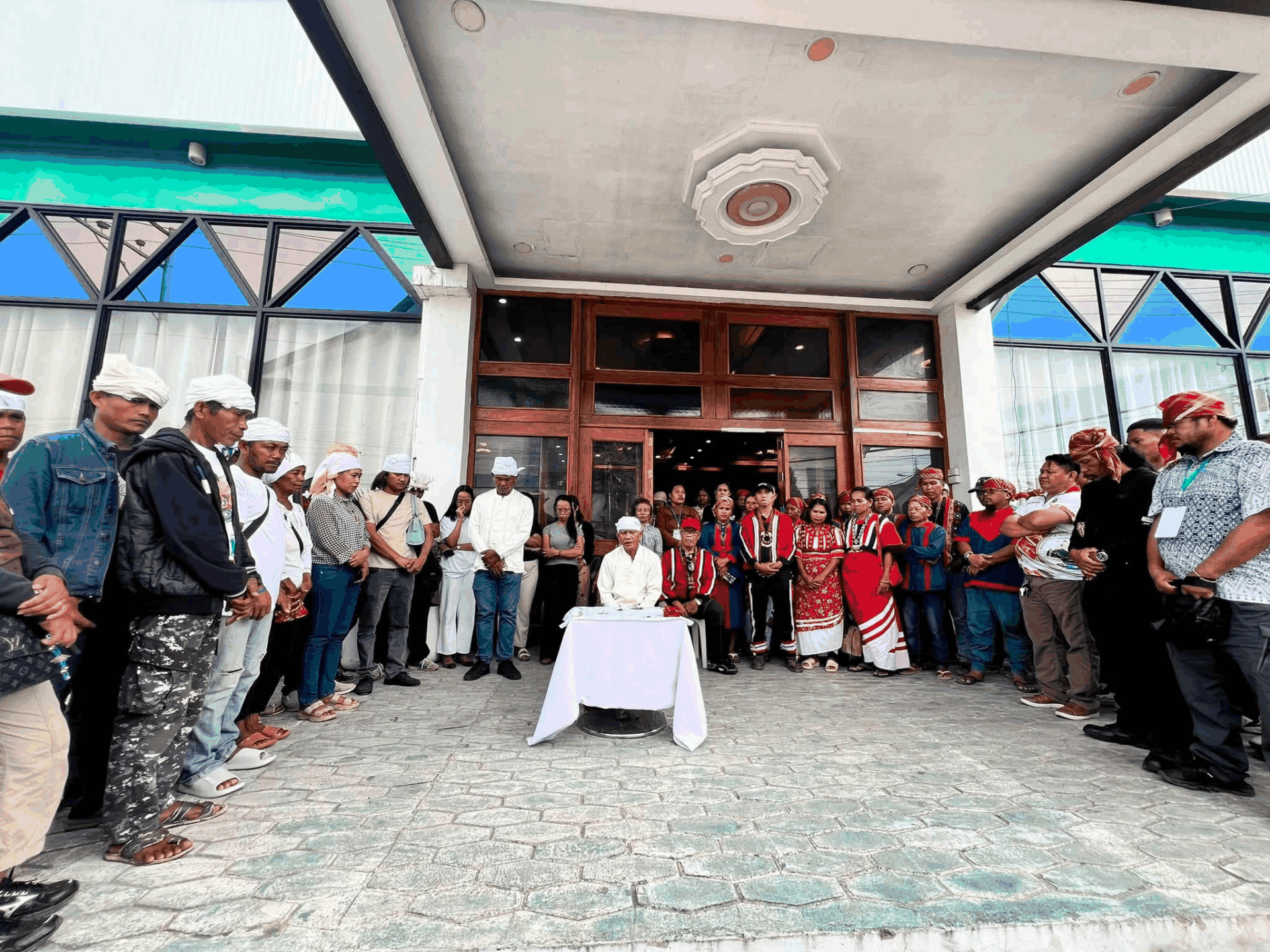
Two weeks before the first-ever parliamentary elections of the Bangsamoro Autonomous Region in Muslim Mindanao on Sept. 14, international poll observers flagged the persistence of “key implementation risks” for reserved sectoral seats despite the “important democratic milestones” of Bangsamoro Organic Law’s provisions on broader representation across sectors.
Citing reforms of the sectoral elections, the Asian Network for Free Elections (ANFREL) and the National Democratic Institute (NDI), in their joint pre-election assessment report released on Sept. 1, noted that while “reserved representation guarantees access to seats, [it] does not necessarily guarantee political agency over who occupies them.”
Bangsamoro Autonomy Act (BAA) No. 88, enacted on February 11, shifted the selection of six sectoral representatives for women, youth, settler communities, Ulama (religious leaders), and traditional authorities from sector-based assemblies to direct voting by the general electorate, except for the Non-Moro Indigenous Peoples (NMIP).
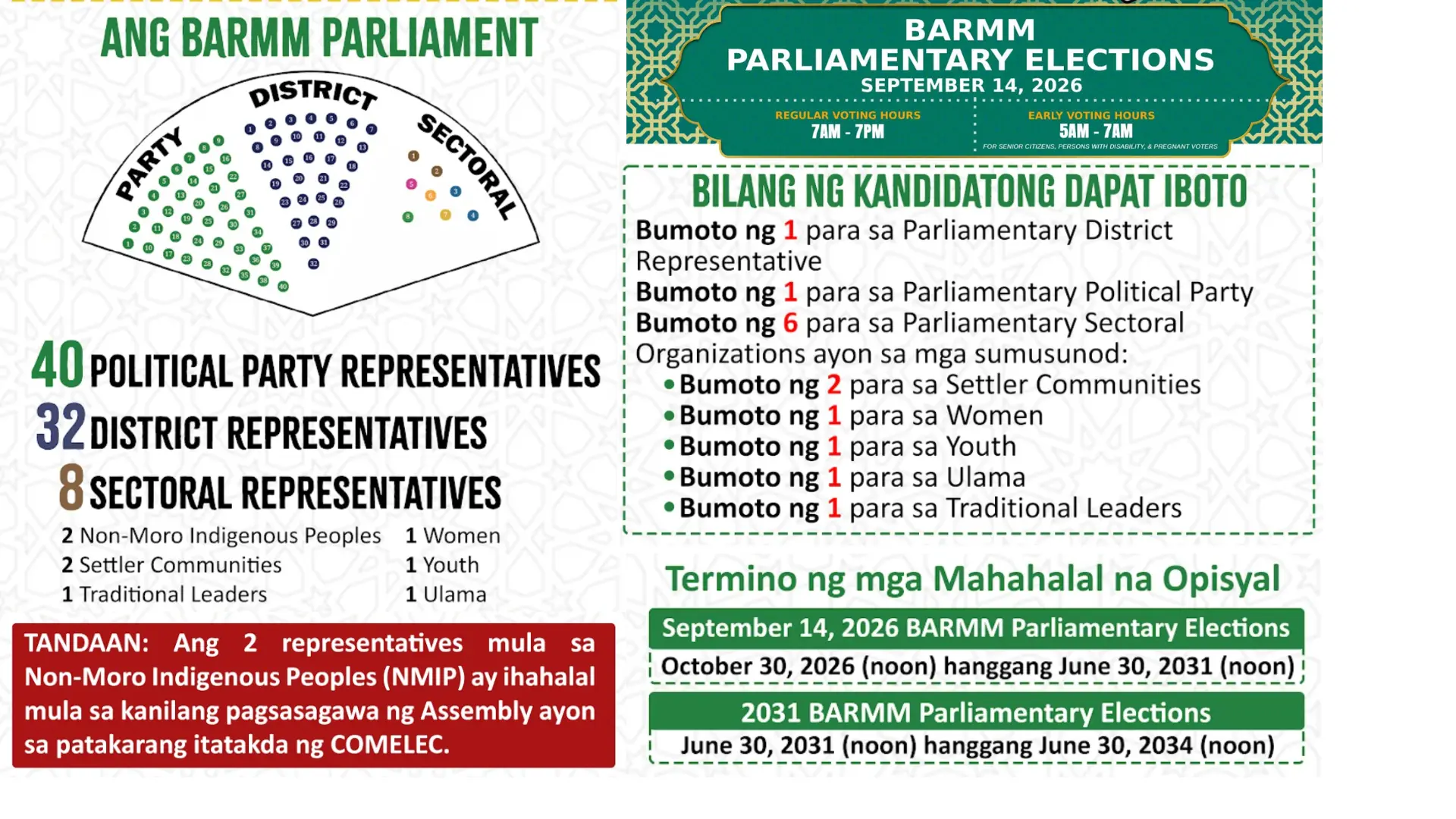
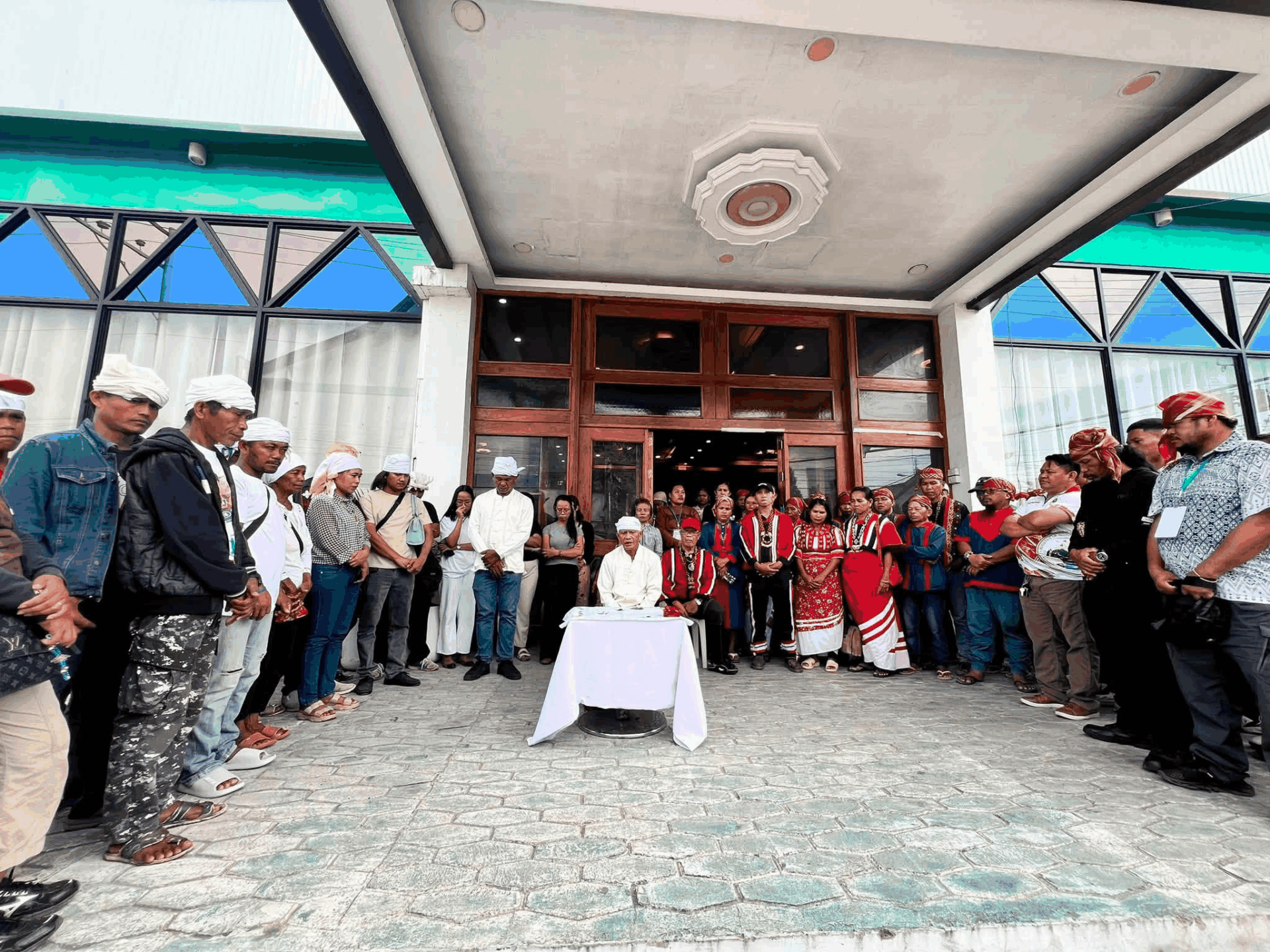
During the Aug. 25 Regional Inter-Tribal Convention at Pagana Kutawato, Cotabato City, the region’s six NMIP communities—Teduray, Lambangian, Dulangan Manobo, Erumanen ne Menuvu, Higaonon, and Blaan—have already selected Jo Genna Martin Jover from the Teduray and Leticio Datuwata from the Lambangian to be their representatives for the upcoming 80-member BARMM Parliament.
Electoral analyst Amaël Vier said the sectors affected by the changes introduced by BAA No. 88 expressed “disappointment,” noting that, for example, the women’s representative will be chosen by the electorate at large, including both women and men.
Brizza Rosales, Executive Director of the ANFREL, emphasized that the disappointment stemmed from the main concern regarding “genuine sectoral representation.”
“According to them [the interviewees], if sectoral representatives are elected by the broader electorate rather than primarily by members of their own sectors…the question becomes, ‘To whom are they ultimately accountable?'” Rosales said during the report’s online launch.
While others might see the election through direct plurality as “providing a broader democratic mandate,” Rosales added that some stakeholders were worried that “broader political machinery [and] popularity could outweigh the actual preference of the sector.”
Considering that the new system will be implemented for the first time during the historic Bangsamoro elections, the poll observers stressed that “its ability to produce representatives who are regarded as genuinely accountable to their respective sectors will be an important measure of meaningful representation.”
Other specific sectoral concerns
While most parties met the 30% quota for women party-list nominees, most of them were listed in lower, unelectable positions, which, for multiple stakeholders, was a mere “symbolic gesture rather than a genuine attempt to elect women.”
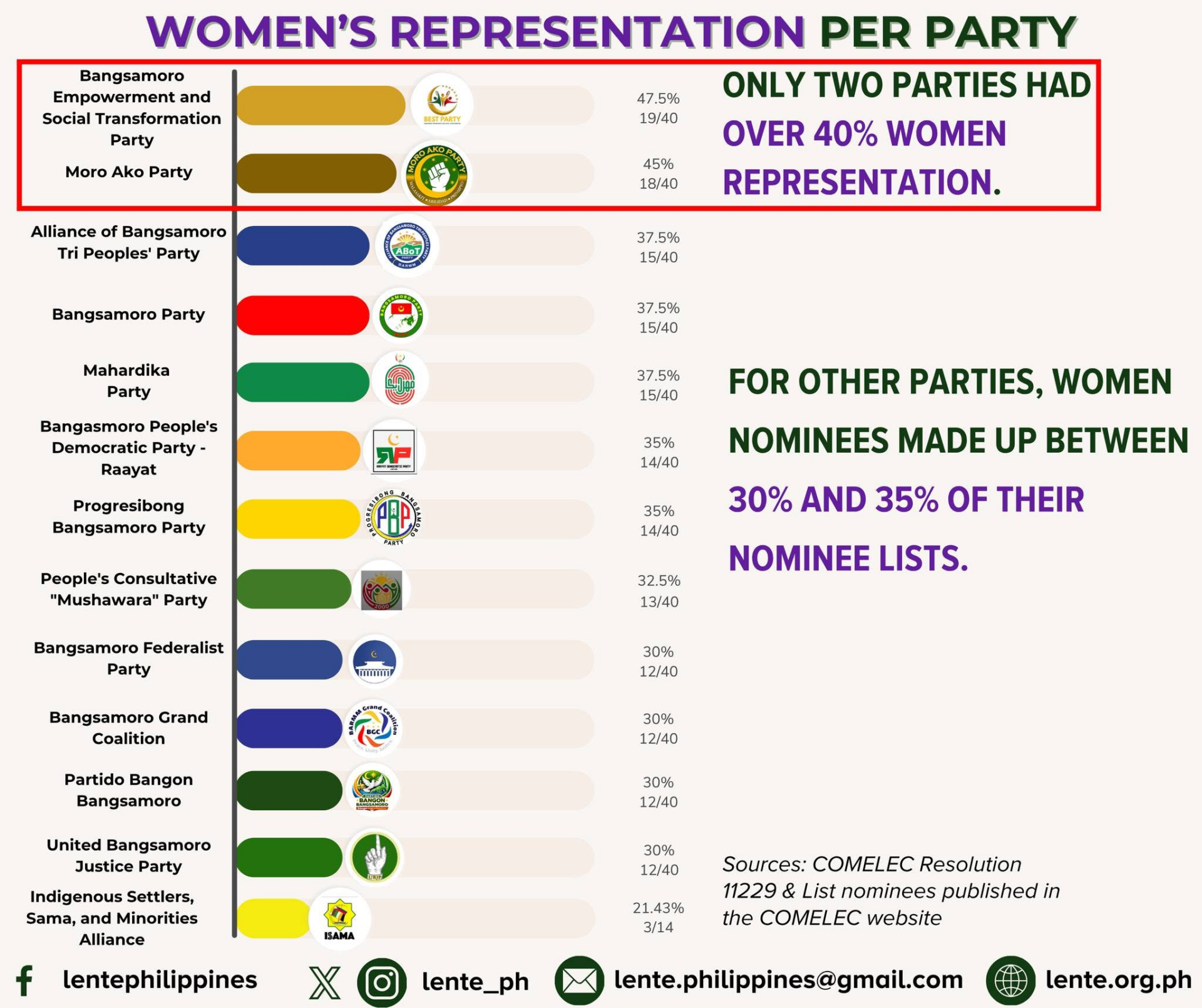
The ANFREL-NDI assessment further disclosed that women fared “markedly worse” in the 32 single-member district races where the seats carry no gender requirement. Only 14 of 107 district candidates are women, with Maguindanao del Sur as the lone province that has none.
On the youth’s part, no grassroots or independent youth groups were accredited for this election. Only representatives from the three largest parties—Bangsamoro Federalist Party, Bangsamoro Grand Coalition, and United Bangsamoro Justice Party—are vying for one reserved seat, with no female candidates.
Stakeholders from the settler community and Ulamas and traditional leaders both “broadly welcomed” their respective reserved sectoral seats in the Bangsamoro Parliament. However, questions remain whether these are adequate for “meaningful influence” and “[reflection] of diversity,” respectively.
Even though the NMIP groups have already chosen representatives through traditional processes prior to the Sept. 14 polls, there is also still a similar concern whether formal representation translates into effective participation and influence, given the “diverse interests of geographically dispersed communities and longstanding concerns relating to ancestral domains, displacement, security and access to decision-making.”
Political dynasties
Meanwhile, even reserved sectoral seats are not immune to the existence of political dynasties in the region.
The ANFREL and NDI described the political competition ahead of the region’s first parliamentary elections since the ratification of the Bangsamoro Organic Law as “vibrant,” citing the diverse field of 16 regional parliamentary political parties, with 13 contesting for party representative seats.
However, stakeholders flagged the influence of entrenched political clans and dynasties as among the factors that hinder fair electoral competition and party institutionalization.
While Article III, Section 9(d) of BAA No. 35, or the Bangsamoro Electoral Code, prohibits individuals within the second degree of consanguinity and affinity from simultaneously appearing among a party’s nominees, its impact is “likely to be gradual,” according to the joint report.
Revealing that some sectoral nominees for the upcoming BARMM polls “come from established political families,” the pre-election assessment said that “a well-resourced dynasty’s backing was repeatedly described as more decisive to a candidate’s prospects, sectoral seat or not, than grassroots standing within the sector itself.”