
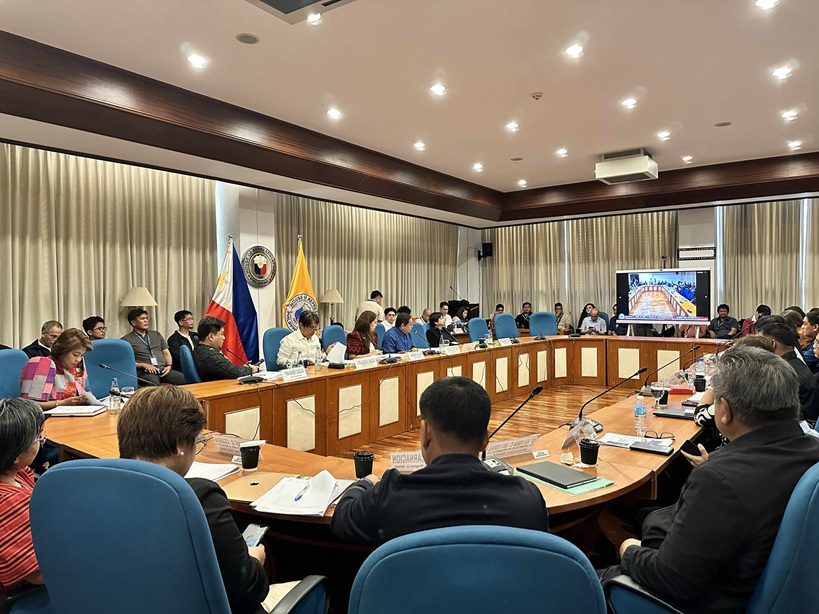
Geneva, Switzerland — The Philippine delegation’s promise before the 11th Conference of the Parties to the World Health Organization-Framework Convention on Tobacco Control was put to a test barely a day after declaring on Tuesday the country’s unwavering commitment to the first global public health treaty aimed at stopping the harms of tobacco use and nicotine addiction.
In a strongly worded three-page letter, the 39-strong Northern Luzon Alliance from the House of Representatives asked the delegation to oppose the COP11 agenda items on forward-looking tobacco control measures and “ensure that the Philippines’ agricultural and developmental interests must be given due weight in any global tobacco control framework.”
The forward-looking measures are proposed strategies envisioned to end the tobacco epidemic and finally create a “tobacco-free generation,” among others.
The alliance, composed of lawmakers from the tobacco-growing Regions I (Ilocos) and II (Cagayan Valley) and the Cordilleras also known as the “Solid North,” expressed “firm opposition” to proposals calling for an end to government support to tobacco farmers, imposing quotas on the manufacture and importation of tobacco products, and banning or phasing out of tobacco sales.
Written in bold letters, part of the letter said: “These measures are excessive, impractical and inconsistent with the socio-economic realities of the Philippines as an agricultural country.”
The other agenda items also pushed for policies that “disregard the perspectives and welfare of affected stakeholders and the legitimate role of the tobacco sector in the Philippine economy,” it added.
Signed by Ilocos Norte Rep. Angelo Marcos Barba, first cousin of President Ferdinand Marcos Jr., the letter dated Nov. 13, 2025, was addressed to Frederick Go, Office of the Special Assistant to the President for Investment and Economic Affairs; Agriculture Secretary Francisco Tiu Laurel Jr., and Trade and Industry Secretary Maria Cristina Roque. Marcos appointed Go as Finance secretary last Nov. 17, replacing Ralph Recto who was, in turn, named presidential executive secretary.
Barba is president of the Northern Luzon Alliance and chair of the House Committee on Luzon Growth Quadrangle. Barba and Marcos hail from Ilocos Norte, a tobacco-growing province. Northern Luzon is a Marcos bailiwick.
The copy of the letter from Northern Luzon Alliance was received Nov. 17 by the office of Ambassador Carlos Sorreta, Philippine permanent representative to the United Nations and head of the country’s 23-man delegation to the COP 11 WHO-FCTC.
The last-minute move by the alliance was apparently unsuccessful. The delegation deftly addressed the situation that avoided a repeat of the country’s controversial participation in the COP10, where the Philippines received a Dirty Ashtray Award, reportedly for blocking negotiations on regulating new tobacco products supposedly due to industry influence.
Voluntary, not obligatory
Asserting the Philippine position at the opening of the five-day conference on Monday, Sorreta said: “We remain committed to advancing the Convention with sincerity, pragmatism, and a firm belief that tobacco control is essential to sustainable development.”
The WHO-FCTC is the only international treaty dedicated to tobacco control with 183 Parties that meet every two years. The Philippines ratified the Convention in 2005, shortly after it entered into force.
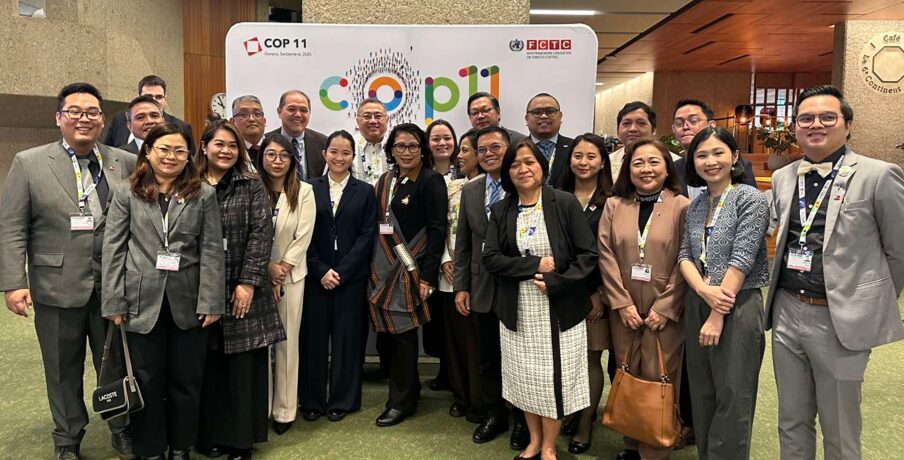
In a less than a two-minute presentation of the Philippines’ position on forward-looking measures, Sorreta said the Philippines is “ready to engage constructively in discussion on this agenda (forward-looking measures).” He noted that the measures are voluntary, not obligatory, and should “complement, not replace” the implementation of the convention.
There was no indication that the Northern Luzon Alliance got what it wanted from the delegation.
Sorreta, however, highlighted the “difficult” role of local governments and civil society organizations in sustaining the implementation of tobacco-free and vape-free ordinances, community mobilization and advocacy efforts.
Sources familiar with the discussions within the Philippine delegation said there were tense moments as some its members, particularly officials of the agriculture, local governments, and trade and industry departments were adamant in their general opposition to the proposed forward-looking measures, citing the loss of livelihood and welfare of two million tobacco farmers and industry dependents.
The Northern Luzon Alliance claimed that a phase out of the sale of tobacco products altogether “would effectively criminalize a lawful and regulated industry that continues to contribute significantly to our agricultural and fiscal sectors.”
It added: “It would also disregard the fundamental principle of national sovereignty by compelling states to adopt policies that may not be appropriate or feasible in their domestic context…This is not pro-Filipino.”
Tobacco is one of the leading preventable causes of death, killing seven million people each year.
In the Philippines, studies attribute more 100,000 deaths per year to tobacco use and second-hand smoke.
Speeches after speeches during the COP 11 plenary and side event sessions noted the alarming increase in the use of novel tobacco products, particularly among the youth, and the need to take aggressive, decisive and strong action to “prevent history from repeating itself.”
While these new and emerging tobacco products and nicotine pouches are peddled by the industry as harm-reduction devices, WHO Director General Tedros Adhanom Ghebreyesus said “it is harm production, not harm reduction.”
The Expert Group on forward-looking measures under Article 2.1 of the WHO FCTC presented a long list of measures, 16 of which covered four main topics: supply, institutional/market, produce and consumer. The Parties established the Expert Group during the COP 10 session in Panama,
Proposals under supply included: retain reduction, bans on retailer incentives, minimum price policies, generational sales ban, higher minimum age, and sales bans/phase outs.
Under market proposals are the imposition of environmental taxes on tobacco products and waste, ending government support for tobacco growing, reducing supplier profits and pricing power, ending commercial sales for profit, and “sinking lid” quotas.
The Expert Group recommended very low nicotine content, bans on additives and flavorings, freezes on new brands/variants and filter bans. It called for expansion of smoke-free protections, including in private and semi-private settings.