
How difficult was the life Filipinos endured after World War II? One is given pause after hearing historian Dr. Ricardo Jose speak about postwar life at the opening of the exhibit “Through War and Peace: Life After Liberation,” ongoing at the Ayala Museum until Nov. 29.
Jose, who curated the exhibit, said the road ahead was filled with domestic and international problems for Filipinos who were still mourning their dead and their losses despite the country emerging as an independent nation and an official member of the United Nations.
But “we [stood] tall and recovered,” said Jose who specializes in military and diplomatic histories with focus on the Japanese occupation of the Philippines. “Within a few years, buildings, roads, forts, and other infrastructures were built…due to funds provided by the US-Philippine War Damage Commission.”
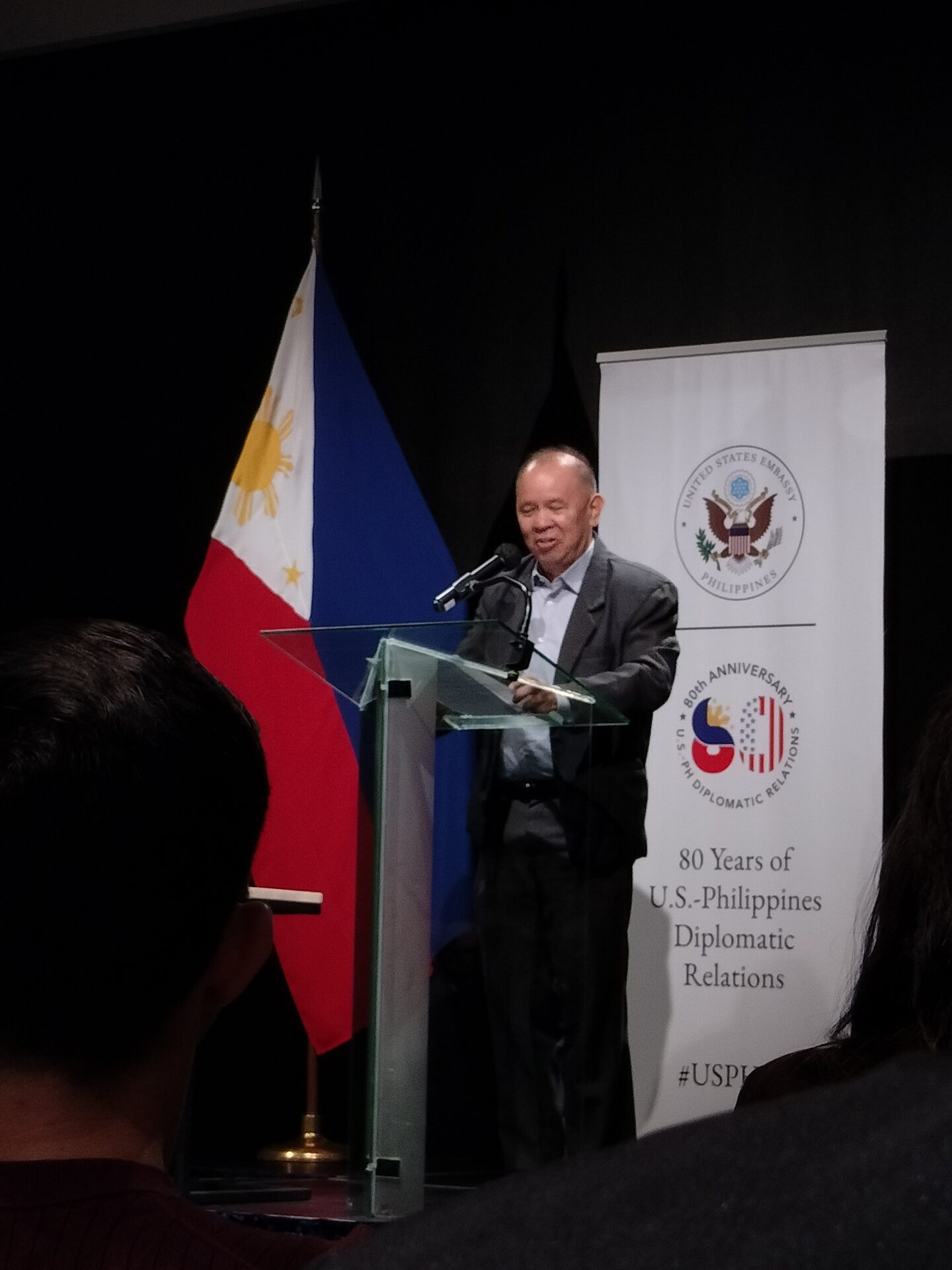
Jose noted that “Through War and Peace” marks the 65th anniversary of Ayala Foundation, the 80th year of US-Philippine diplomatic relations, and the 30th year of Filipinas Heritage Library (FHL), an Ayala Foundation-managed digital research library that provides access to visual, aural and printed materials on Philippine history, art and culture from the 1930s to the 1950s.
The exhibit spotlights the untold story of what happened immediately after the war “not just in physical terms and especially in human terms” through archival photographs, documents, periodicals, and videos, Jose said. It doesn’t “dwell on the politics of the era [because] it’s already well documented,” and focuses on “the daily life and relationship between the US and the Philippines,” he said.
Multidiscipline exhibit
The exhibit is open to the public free of charge. In going through the different periods, visitors are assisted by a timeline that Jose described as “interrelated but quite separate.” Like a virtual docent, he explained the tattered hanging panels at the entrance as symbolizing the destruction wrought by the war. He urged everyone to look closely and make out the people trying to earn a living amid the rubble.
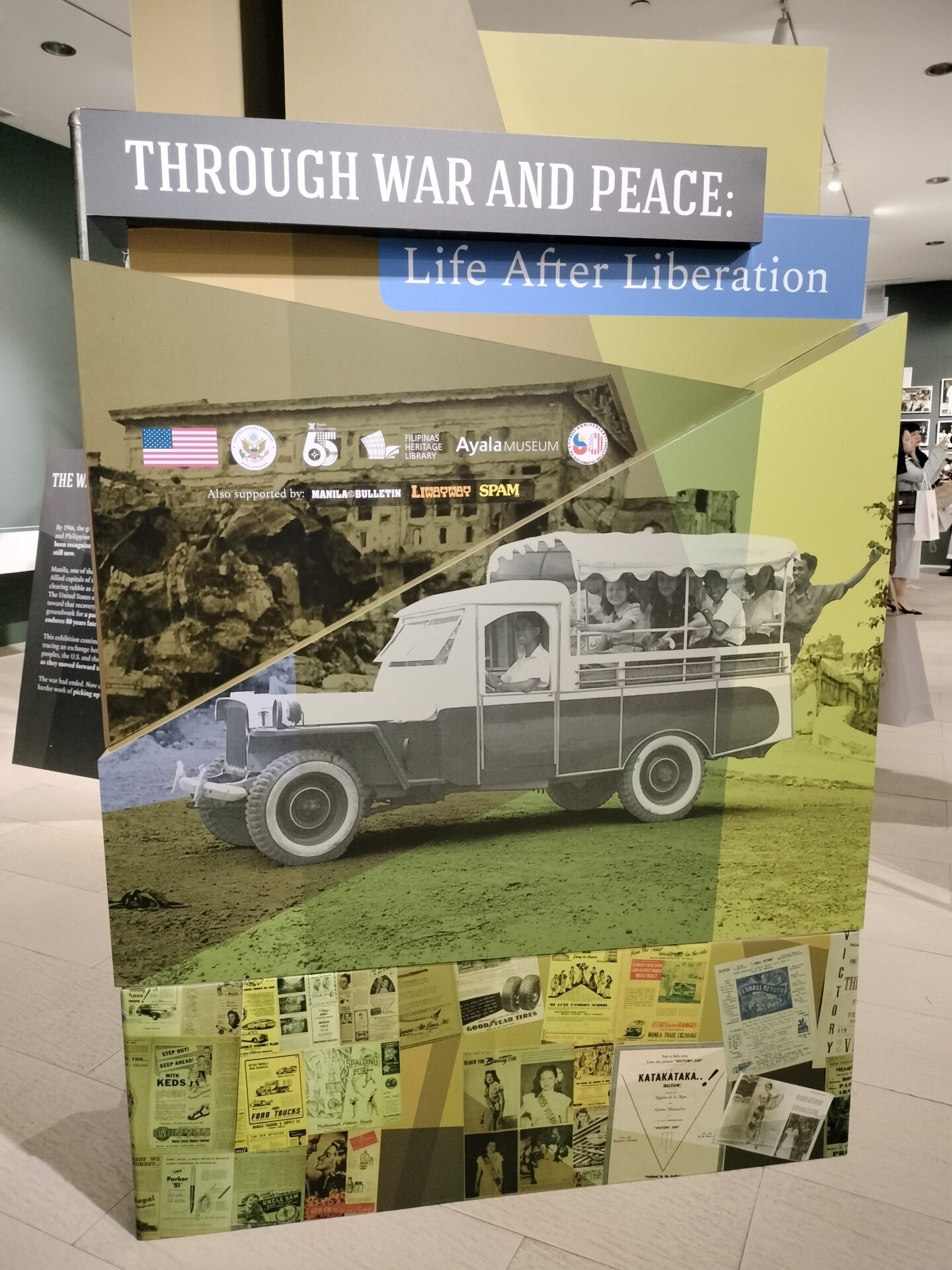
He called attention to a section on the building of the Philippines as a nation after the end of the war, as well as “the large section between two flags” that talks about popular culture. He cited the argument that Filipinos had become colonial-minded, buying into everything the Americans offered, and countered: “Filipinos adapted from the US, converting it into something we could use which was more Filipino than American.”
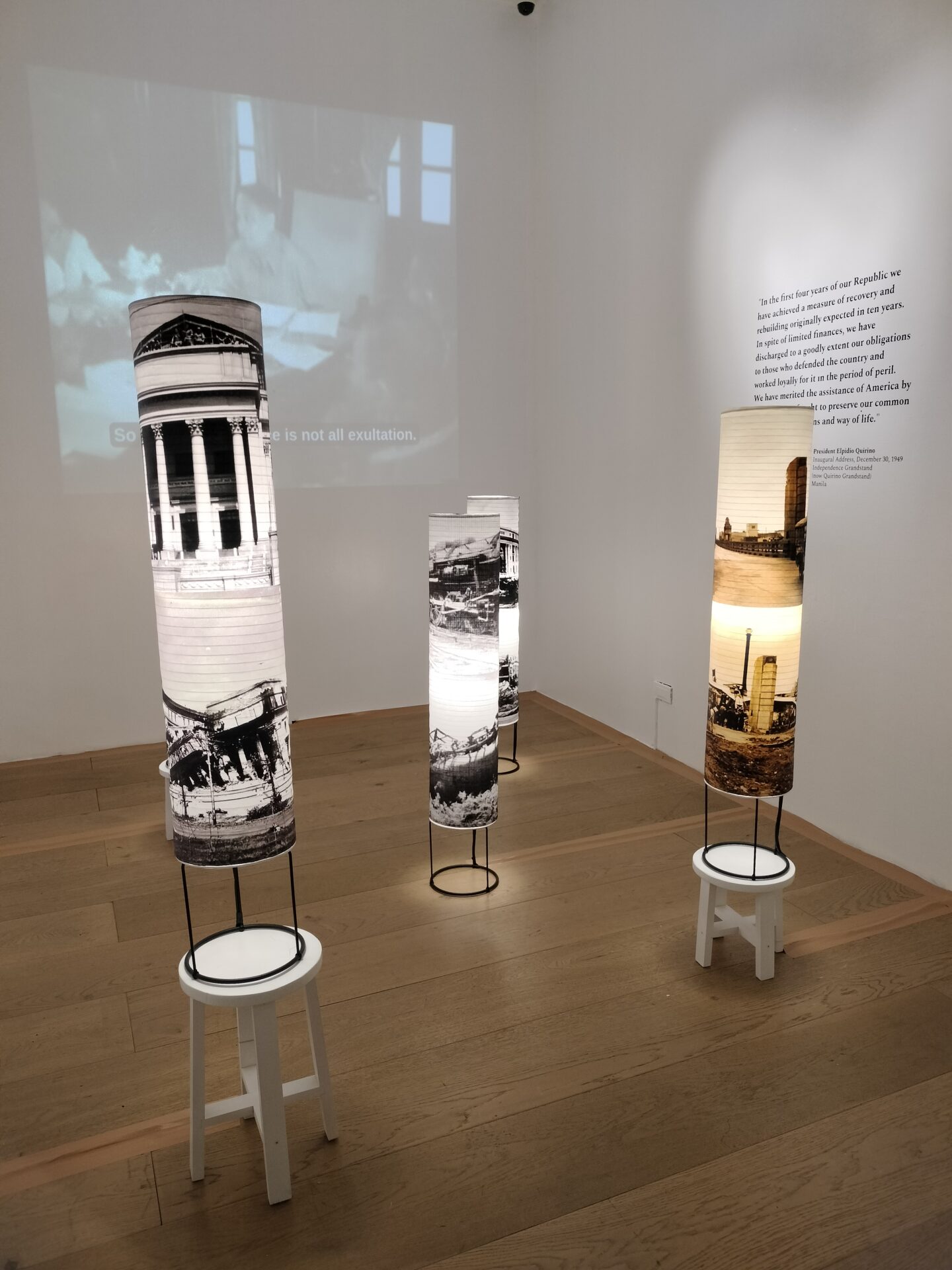
Jose said the large cubes are meant to be held, “Through War and Peace” being a multidiscipline exhibit. The cubes show “pictures of buildings destroyed and rebuilt,” he said.
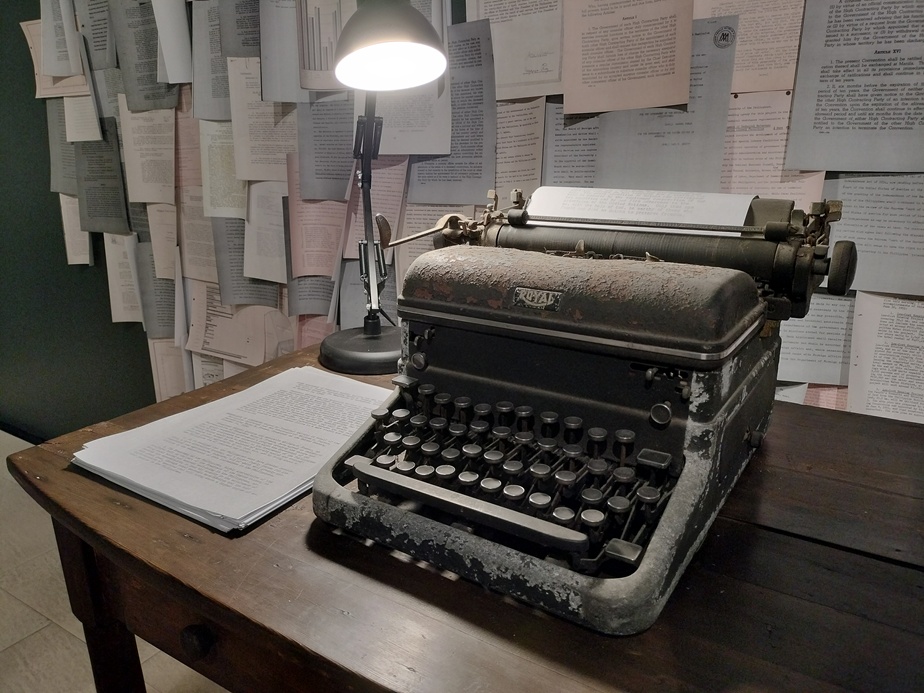
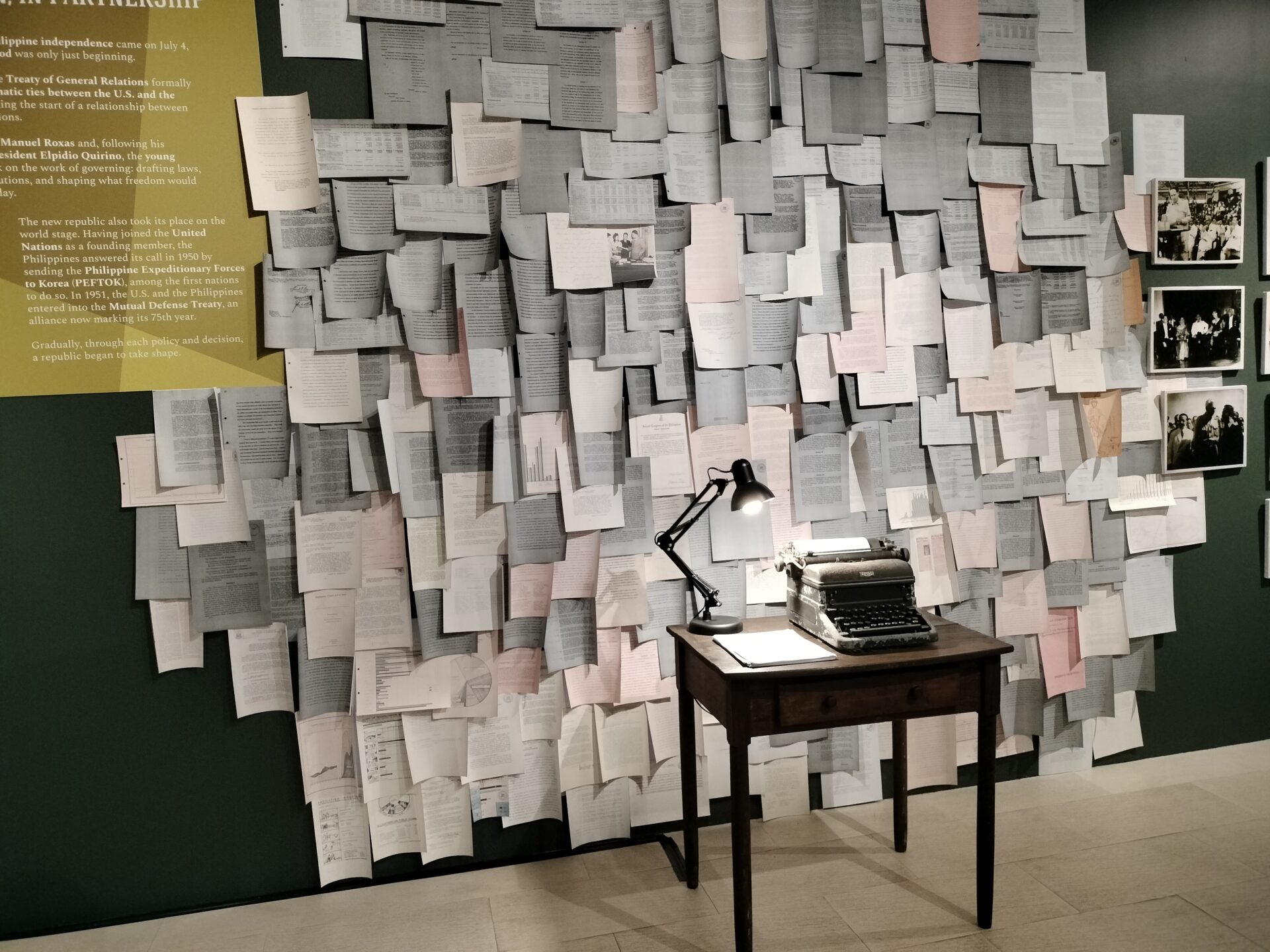
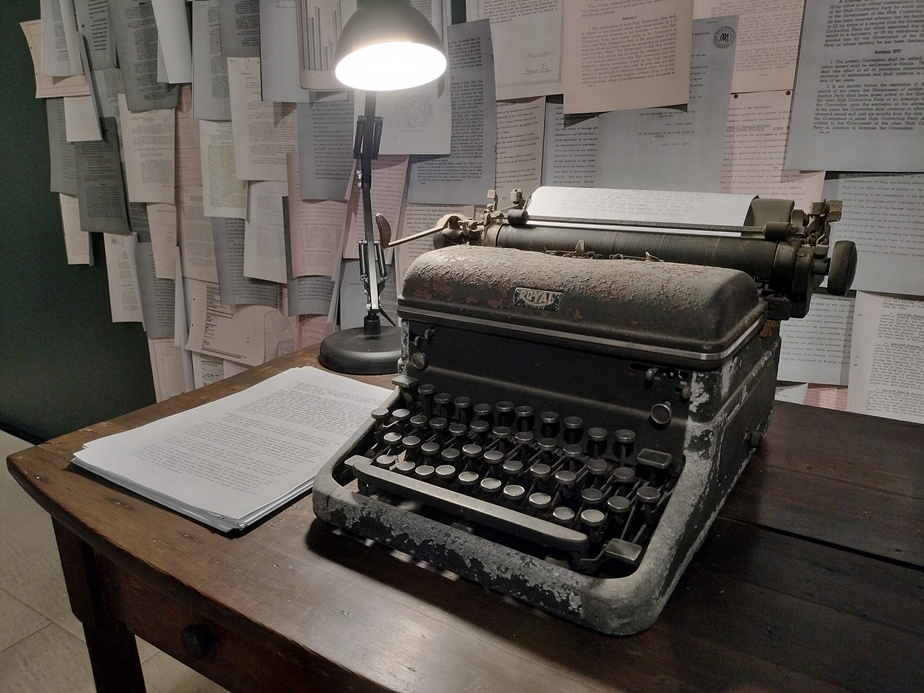
He advised visitors not to overlook the wall with an antique Royal typewriter in front of it. The wall is plastered with facsimiles of typewritten official government documents like the Quirino papers (the originals are archived at the FHL). He said the extant papers illustrate the complexity of “running a nation, from diplomatic resolutions to internal governance.”
Another section not to be bypassed, said Jose, is the corner where one can become part of a living archive and collective memory by scribbling messages on postcards that are reproductions of photos of the 1940s-1950s. The wall text encourages visitors to write to a relative or a prominent figure about their postwar experiences, tell a friend or family member currently living in the United States about everyday community life, or leave a message for the future generations.
Rebuilding Manila
The postwar rehabilitation saw the emergence of the Third Republic of the Philippines that prevailed from July 4, 1946, until Dec. 30, 1965. It superseded the Commonwealth era and was said to be characterized by its independence from America and the efforts to rebuild the economy and infrastructure. The presidents during the period were Manual Roxas (1946-1948), Elpidio Quirino (1948-1953), Ramon Magsaysay (1953-1957), Carlos P. Garcia (1957-1961). and Diosdado Macapagal (1961-1965).
Roxas set up the Department of Foreign Affairs, initiated the Philippine Veterans Bill of Rights, and forged diplomatic ties with other countries. Magsaysay put down the Hukbalahap movement and championed land reform for the common Filipino. Quirino focused on rural welfare, economic rehabilitation, and agricultural financing. Garcia promoted the “Filipino First” policy and campaigned for support of Filipino products and services. Macapagal initiated the Philippine National Railways and proclaimed June 12 as Philippine Independence Day.
American culture
Jose said the rehabilitation programs were bolstered by the Filipino spirit of rising “above simply surviving.” He said the Filipinos’ strength shines in the archival photos of people in the ruins smiling for the camera while “selling goods [to] earn a living.”
Filipinos adapted to the times, said Jose, citing the innovative jeepney that replaced the destroyed public buses. He said that with their ingenuity, Filipinos converted the abandoned Willys and Ford military jeeps into jeepneys that, to this day, ferry passengers to and from their destinations. A photo of a jeepney is at the exhibit’s entrance; the original, according to Jose, was taken less than a year after the war in front of the ruined legislative building.
American culture permeated postwar Manila. Jose said Hollywood films banned during the Japanese occupation were shown. (My research showed that the restored cinemas — Avenue, Capitol, Ideal, Lyric and Times — screened Humphrey Bogart’s “Casablanca,” Danny Kaye’s “Up in Arms,” Bob Hope’s “The Princess & The Pirate,” and other movies capitalizing on popular postwar and liberation themes, such as John Wayne’s “Back to Bataan” and “They were Expendable,” and Tyrone Power’s “American Guerrilla in the Philippines.” Wayne’s films depicted the defense of Bataan and Filipino guerrilla resistance in 1941-1942; Power’s film showed US soldiers fighting beside Filipino guerrillas in Leyte.)
Filipinos got to taste American food, particularly Spam (“spiced ham”). Jose said Filipinos accepted the luncheon meat from American soldiers experiencing palate fatigue from eating it thrice a day.

Exposure to American culture also meant engagement with school books and scholarships, i.e. the US government-sponsored Fulbright Program. Jose said he frequented the defunct Thomas Jefferson Cultural Center on Buendia (now Gil Puyat) Avenue, “borrowing books, records, VHS and Betamax tapes,” and was himself a Fulbright scholar.
According to an introductory panel in the exhibit, recovery efforts also included support for education. A Special Educational Fund (SEF) was set up under the supplemental US war damage appropriation. Seed money from SEF helped establish the Fund for Assistance for Private Education (or FAPE), which still supports private schools today.
Relevant past
Lectures and historical exhibits like “Though War and Peace: Life After Liberation” are a remedy in sight for what has become the ordinary Filipino’s aversion to history and the sheer dearth of Philippine history lessons. Such avenues are crucial because they correct the prevalent misconception that the past is immaterial to the present.
Jose argued that the events of 80 years ago remain relevant today, with the nation facing different challenges . The Philippines “overcame the difficulties of the immediate postwar years and, by the 1950s, [was] more than just back on [its] feet [with] assistance from the US,” he said, adding:
“It’s timely to look back and see how the diplomatic relations worked out.”