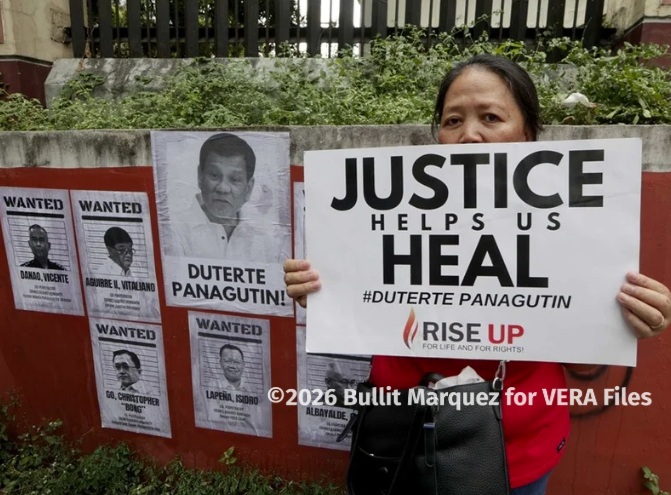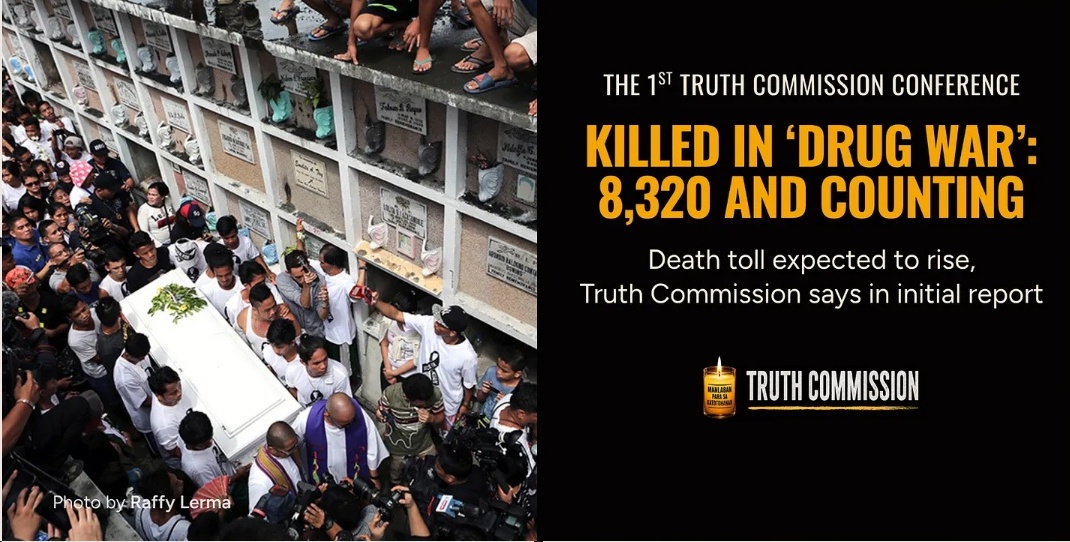
Read aloud each entry in the Truth Commission’s National Registry — a name, an age, the place of death — giving each about 10 seconds, and you would be reading for nearly a full day and night without a pause. For 499 of those entries, you would have no name to read. That is how long it takes simply to say that 8,320 people were killed in the so-called “war on drugs,” and how much is still missing from the telling.
On Nov. 23, at the Philippine Normal University in Manila, the commission will present its first report, the product of six months of work. A week later, on Nov. 30, Rodrigo Duterte’s trial for crimes against humanity is scheduled to open at the International Criminal Court. The timing is a reminder that a decade after the killings began, the Philippines still has no agreed account of them.
Consider the count. The government’s most cited figure, 6,252, covers only suspects killed in operations by the police and the Philippine Drug Enforcement Agency through May 2022. It leaves out the victims of masked gunmen and the bodies dumped on roadsides. The ICC prosecutor has cited 12,000 to 30,000 deaths, drawn from several published sources. Our research traced the widely repeated figure of 30,000 and could not find an original count that anyone can reproduce. That does not make it false. It means no one has reconciled the numbers.
The Truth Commission’s number, 8,320, is not the final toll either. It is the number of killings from 2016 to 2022 that we can document, each tied to a source the public can check. My own research on patterns of violence contributed 7,893 of those cases; Program Paghilom and Caritas Kalookan added the rest from church and survivor-support records.
Documenting a killing is not the same as identifying the person killed. In the registry, 499 entries carry no name, because the sources that reported those deaths recorded the victim only as “unidentified.” Those sources are ABS-CBN’s tracker, “The Death Toll of the War on Drugs,” the Philippine Daily Inquirer’s “Kill List” and the caregiving organizations that contributed to the registry. We have kept those entries in the count and marked them plainly, rather than drop them. A person who was killed without being named was still killed.
Who died, and where
The record shows whom the campaign fell on. Of the 8,320 victims, 96.6 percent were men. Where age is known, four in five were between 25 and 54 — breadwinners and parents. Sixty were children. The youngest, Marjon Ocampo, was one year old.
Killings were documented in 730 of the country’s 1,633 cities and towns, but they were not spread evenly. Metro Manila and Central Luzon, home to less than a quarter of Filipinos, account for 56 percent of the dead. Just 25 cities and towns account for half. Within them, the killings clustered in waterfront, resettlement and informal-settler barangays: Tondo, Bagong Silang, Payatas. In North Bay Boulevard North in Navotas, about one in every 550 residents was killed.
The killings also began almost everywhere at once, in nearly every region within weeks of July 2016. Violence that spreads on its own moves outward gradually, the way an epidemic does. This did not. It points to a single national trigger.
The killings followed the police
The timeline bears this out. When the police were pulled from the campaign in January 2017, documented killings fell by 58 percent, and killings attributed to police by 91 percent. When PDEA took sole charge in October 2017, killings fell by 78 percent. Each time the police returned under a renamed operation plan, the killings rose again. Arrests, meanwhile, held steady at 4,000 to 5,000 a month through 2022. The killing was never a necessary part of enforcing the law.
What of the official explanation, that suspects fought back? If thousands had drawn guns on police at close range, many officers would have died too. Our news archive records nine police officers killed by ordinary drug suspects from 2016 to 2020, against 1,269 people killed in police operations in our dataset — about 141 to one. Of 805 news accounts of buy-bust operations with a poseur-buyer, 781 ended in death; only 15 mentioned the signal that is supposed to lead to an arrest. Where the method is known, 99.5 percent of the killings were shootings. When Dr. Raquel Fortun, a member of the commission, examined the exhumed remains of 46 victims, 24 had been shot in the head.
What the official record hides
Darwin Hamoy was 17 when he was shot at a birthday gathering in Payatas, Quezon City, in August 2016. Police said he fought back. His body was removed before the scene was processed. His mother, Mariza, obtained the police spot report only after threatening to go to the media. And when it came, it did not even name him. The Commission on Human Rights found in 2017 that his right to life had been violated. The Ombudsman dismissed the criminal complaints in 2018, and the Office of the President dismissed the administrative case in 2022. More than 10 years on, no one has been held to account — not for Darwin, and not for any of the eight killings that families brought before us in detail.
His case is not unusual. We have found case files that cannot be opened, folders holding documents from unrelated incidents, and reports that give the same person different names and ages. On Nov. 9, the commission asked the Professional Regulation Commission to investigate the doctors who signed the death certificates of 13 victims. None of this should surprise the police: a 2014 Philippine National Police circular had already admitted inconsistent crime recording and, in some offices, deliberate under-reporting.
The unidentified dead are the far end of the same failure. Some of the 499 were found with their heads wrapped in packing tape, or with other marks of torture that left them hard to recognize. Some were buried in mass graves. The government did not care to identify them.
Their families could not do it for them. Many were too afraid to come forward, and those who did had no resources to establish an identity on their own. Darwin had a mother who fought to put his name on the record. These victims entered it only as the news reports of the time described them: unidentified.
Much of what the public read at the time came from the official side. Of the 4,110 news articles in our archive, 1,942 cite police reports or officials; only 531 cite families, neighbors or witnesses.
Why the record matters
I study patterns of violence for a living, and the lesson from other countries is consistent: where killings go unrecorded, denial fills the gap. After Argentina returned to civilian rule in 1983, a national commission documented nearly 9,000 people who had disappeared under the military. Its 1984 report, “Nunca Más,” or “Never Again,” became key evidence when prosecutors put the junta leaders on trial the following year.
Experts call this work transitional justice: how a society reckons with mass abuse after the fact. Trials are one part of it. The other is the slower work of establishing what happened and making amends to the families. Both need a record that anyone can check.
Until now, families have done the state’s work for it. Mothers searched hospitals and morgues for their sons, paid funeral parlors to release their bodies and chased records for months. Our report sets out 27 reforms drawn from their testimony. Five cannot wait: preventing deaths in custody, responding to threats, protecting witnesses and families, preserving evidence and correcting death records. Many need no new law. Twelve existing laws and issuances already set out the duties families described as unmet. They are simply not enforced.
Some will say that counting the dead only reopens old wounds. The families we work with have never been allowed to close them. Many are still waiting for someone in authority to tell them the truth about how their loved ones died.
The National Registry is public, and it is growing. Every entry can be traced to a source, and we will correct any entry a family or researcher shows us we got wrong. Where an entry has no name, the work of finding one belongs to the state, not to families who are still afraid.
Each of the 8,320 is a person the country has a duty to count. It still has a duty to name 499 of them.
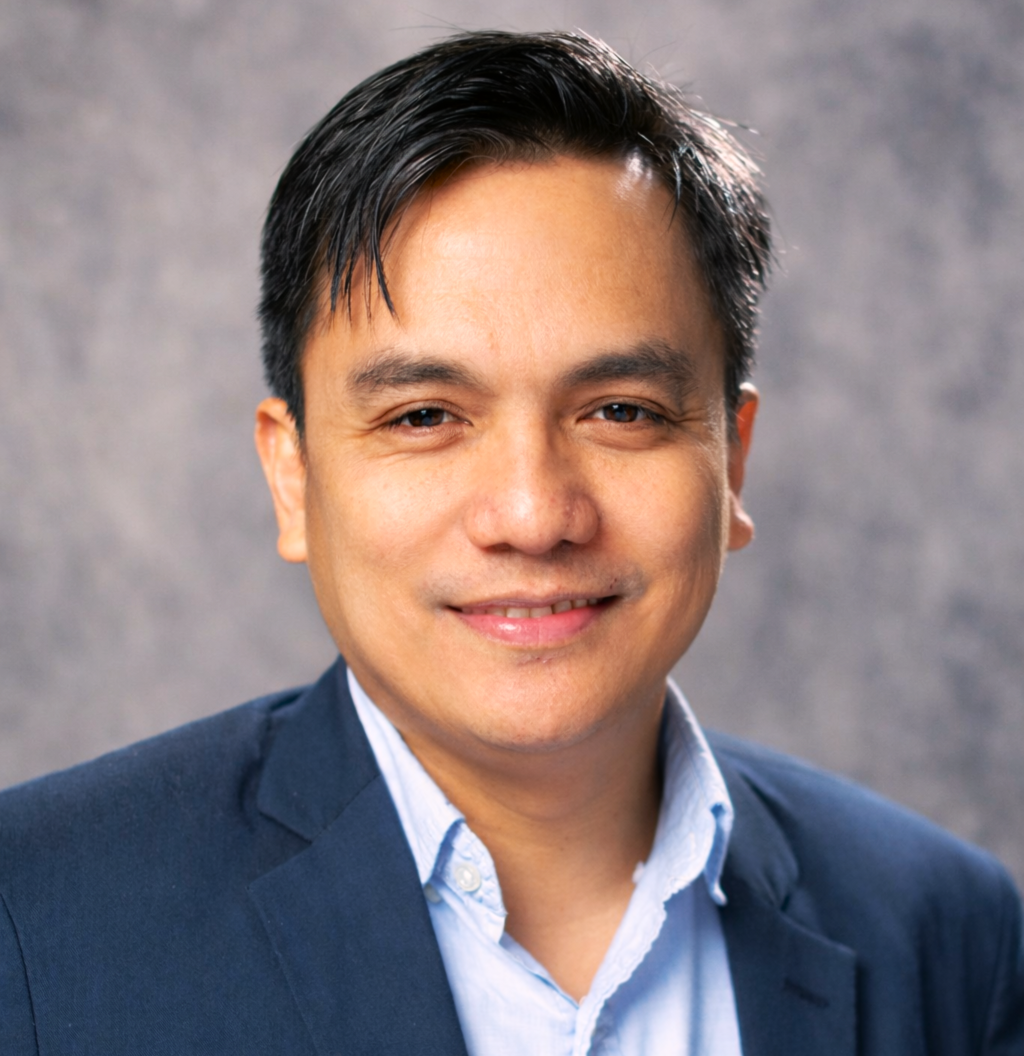
Dr. Christopher N. Magno is the executive director of the Truth Commission. His academic work focuses on patterns of violence and the use of crime as a political tool.