(Editor’s Note: This article was first published May 10. A few hours after posting, I got a call from one of those involved in this initiative to unpublish this saying that the “premature” publication about the Truth Commission has put in danger those whose names were mentioned. He also said that others might opt out of the Commission. We decided to pull out the article. With the launching of the Truth Commission today, we are republishing this column )
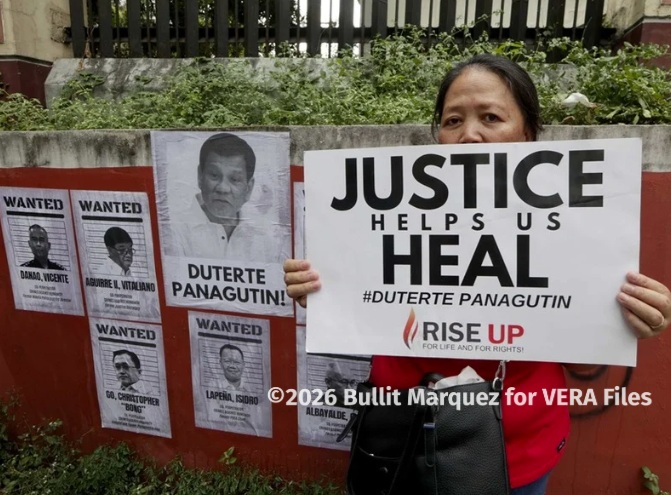
If the families of victims of Rodrigo Duterte’s fake drug war were to hear the word “finally” (sa wakas, sa katapusan, bandang tauli), it would be music to their ears. As early as November the previous year, they had already made an appeal to the government – establish a Truth and Reconciliation Commission.
Their perspective on the macabre bloodbath that killed their kin by Duterte’s state-sponsored killings have yet to be addressed by government. Now is their moment.
The momentum for a truth commission was propelled way back 2024 by the so-called Quadcomm hearings in the House of Representatives. But in legislative hearings, political posturing and grandstanding can muddle the search for truth. Duterte himself, as usual not beyond reproach, lied about signing a waiver for his bank accounts in one hearing. His police perpetrators also lied, especially one officer named Marvin Marcos.
Victims’ suffering is central and foundational to a truth commission, serving in fact as the core justification for its existence and the primary metric of its success. Rather than focusing on prosecuting perpetrators, truth commissions are specialized, victim-centered, non-judicial bodies aimed at ferreting out the truth. For victims most especially, it aims to restore human dignity, at the same time provide a platform to hear their stories.
And so finally, a truth commission will finally come to fruition later this month. It is private-sector organized to be funded by church and civil society benefaction. Neither Malacañang nor the residual leaders of Duterte had influence or knowledge on its planning. In fact, its conceptualization was advised by a Filipino academic in a Pennsylvania university who is an expert on the criminal justice system.
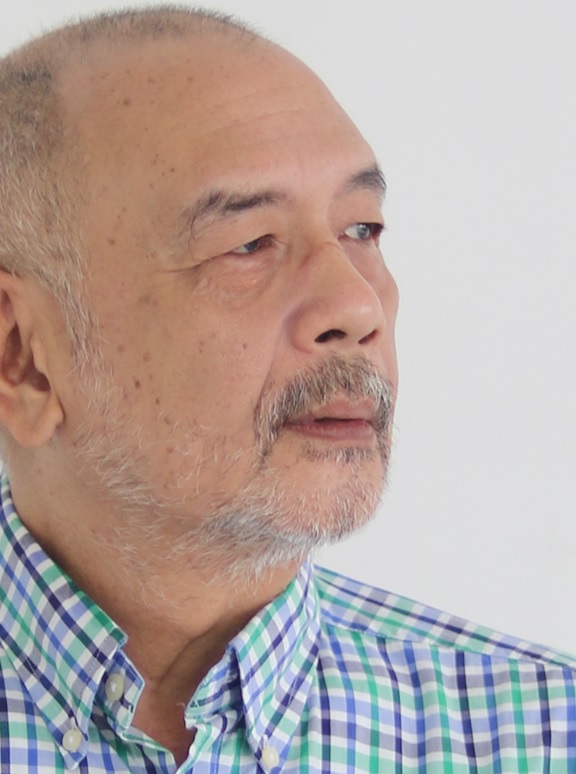
The five commissioners will be Raul Pangalangan the former judge of the International Criminal Court who will chair the commission, Raquel Fortun the forensics doctor who made the most authoritative lab analysis of some of the victims’ corpses, Carlos Conde the former senior Philippines researcher of Human Rights Watch and former reporter for the New York Times, Al Fuertes who holds a PhD on conflict analysis and resolution from George Mason University where he teaches and who is also an ordained pastor of the United Church of Christ, and Fr. Daniel Franklin Pilario CM who is president of Adamson University of the Vincentian congregation. There is also geographical diversity; Conde is a native of Mindanao and Pilario is a native Cebuano – two regions hardest hit by the fake drug war.
Acting as special adviser will be the Bishop of Caloocan, Pablo Virgilio Cardinal David. Also assisting is Fr. Flavie Villanueva SVD whose Project Paghilom has been assisting victims’ families in various capacities, including providing a decent burial for the victims.
The main mandate of the commission will be to gather as many victims’ families as it can and hear them out. It will not be prosecutorial. However, its aim is also to recommend reforms to government. It is expected to operate for about a year.
A few years ago, truth commissions impressed the world’s publics. In 1983, Argentina established the National Commission for the Disappeared following the end of the dreaded Jorge Videla dictatorship. The military junta was responsible for thousands of desaparecidos. The commission’s final report was landmark – Nunca mas (Never again).
The one that caught heavy international attention was South Africa’s Truth and Reconciliation Commission (1995 to 2003). Led by the famous Nobel Peace Prize laureate Archbishop Desmond Tutu, its hearings were nationally televised. It investigated atrocities committed by both sides during the period of apartheid. It had the unique power to grant amnesty to perpetrators who publicly confessed their human rights abuses.
Our truth commission will be facing a formidable task. Even police officers such as Lito Patay are still in active service, made sure by Duterte impunity that the present Marcos Jr. government never bothered to correct.
And yet because they are front and center in this momentous endeavor, victims’ families deserve the hope of this truth commission. Without truth there will be no justice. Without justice there will be no full and complete accountability.
The views in this column are those of the author and do not necessarily reflect the views of VERA Files.