An ICC warrant in the case against former President Rodrigo Duterte helps explain an empty seat in Manila. Whether that seat counts could shape his daughter and Vice President Sara Duterte’s impeachment verdict.
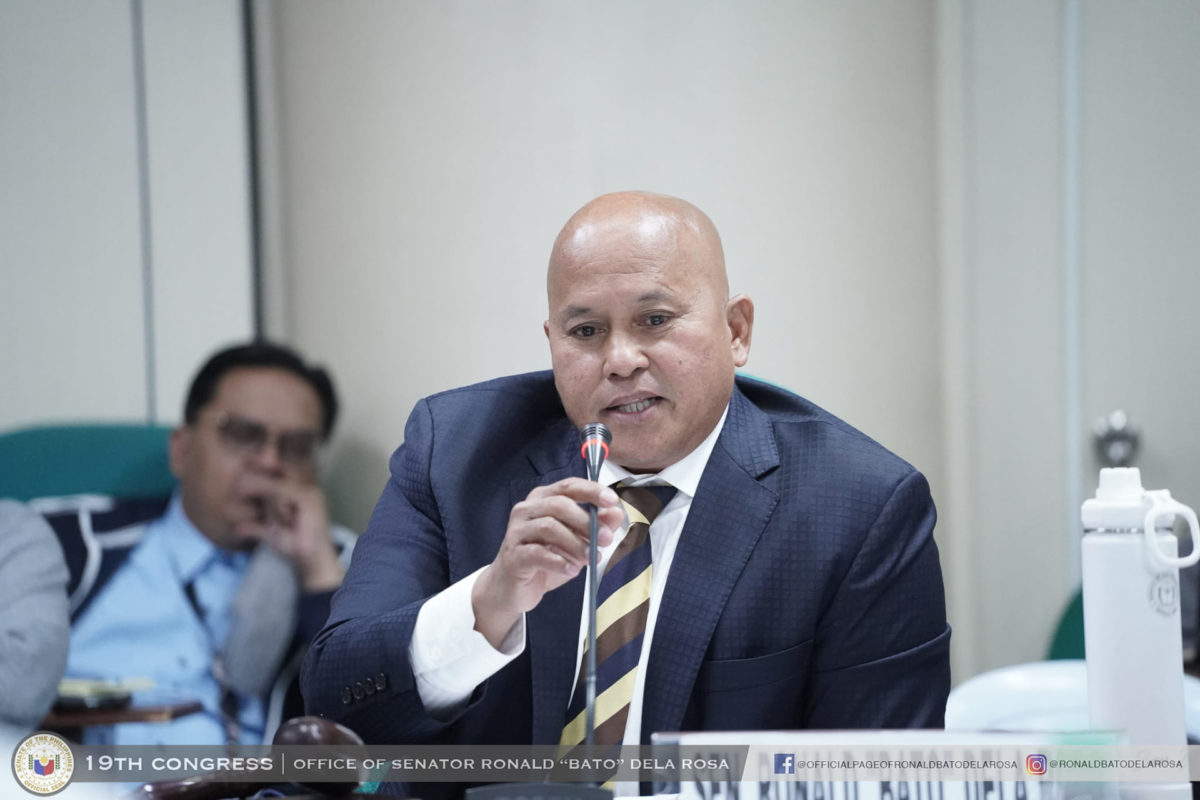
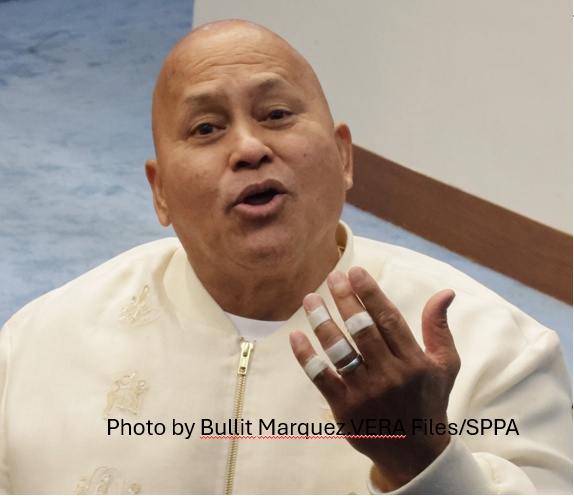
The most revealing seat in Sara Duterte’s impeachment trial is empty. Ronald “Bato” dela Rosa, a sitting senator who led the Philippine National Police when Rodrigo Duterte took his war on drugs nationwide, is being sought under an International Criminal Court warrant. Philippine authorities have offered a 50 million peso reward, but he remains at large. When the Senate votes on whether to convict the vice president, it may have to decide whether a man who is not there should still count.
His absence connects two proceedings that ask entirely different questions. Rodrigo Duterte’s criminal trial, scheduled to open on November 30, concerns three counts of crimes against humanity involving alleged murder and attempted murder. Dela Rosa is not on trial with him – yet. The separate warrant says there are reasonable grounds to believe he bears responsibility for the crime against humanity of murder in connection with at least 32 alleged killings. In Manila, meanwhile, Sara Duterte’s lawyers are presenting their defense on alleged unexplained wealth and failures to declare assets, the only impeachment article left after House prosecutors withdrew three others. The Senate is not deciding the drug-war case by proxy.
The Philippine Constitution requires two-thirds of “all the Members of the Senate” for an impeachment conviction. On a full count of 24, that is 16 votes. In September, though, the Senate sitting as an impeachment court decided that only senators legally and actually able to participate at the time of judgment would count. As University of the Philippines law professor Dante Gatmaytan explained, the Senate still has to decide who meets that test. The rule does not automatically turn an absence into an exclusion.
Four senators were reported absent in mid-November. Dela Rosa was wanted under the ICC warrant. Jinggoy Estrada and Rodante Marcoleta were detained in separate plunder cases, and Loren Legarda was on medical leave abroad. If all four are excluded, conviction would require 14 votes out of 20.
Senator Christopher “Bong” Go, a former Duterte aide, is also one of the eight alleged co-perpetrators named by ICC prosecutors. He denies involvement and faces no publicly confirmed ICC charge or warrant – yet. He is entitled to challenge the Senate rule. His position shows how much of the political network described in a Hague courtroom is still exercising considerable power in Manila.
The family’s grip on politics is still real – if waning, and the court of public opinion will perhaps speak quicker and louder across the Philippines than either the senate or the Hague. Current President Marcos has already been casted as a lame duck as the Presidential election in 2028 comes into focus. Currently the only declared candidate is Sara Duterte and if she is impeached (and barred from running) her brother Sebastian, the mayor of Davao City has been nominated to as the families ‘plan B’.
In September, Social Weather Stations found that 42 percent of Filipino adults were following the impeachment trial very or somewhat closely, a smaller share than in the earlier impeachments it surveyed. A separate question found that 55 percent had followed news of a specific development in Rodrigo Duterte’s case.
The domestic soap opera of the impeachment is wearing thin and at times has risked descending into farce with witnesses openly mocking proceedings the arcane procedures all seem to be alienating the public. The spectacle is easy to mock with the wearing of red robes as a costume to play the role of villain and visual effects to match, it all feels like its jumped the shark.
While Manila counts senators, a different question about who gets heard is before the judges in The Hague. In October, the trial chamber declined to add one alleged killing to the prosecution’s case because it fell outside the period covered by the charges. The Registry then flagged 13 victim applications for possible reassessment. As VERA Files and The Manila Times report, victims’ lawyers say the narrower reading could affect families whose relatives were allegedly killed on June 30, 2016, when Duterte took office, or just days into October 2018. Both dates fall within the ICC’s broader jurisdictional window in the Philippines. The lawyers’ point is that taking part as a victim does not add a killing to the charges or establish that it occurred. The judges have not ordered those applicants excluded.
The same lawyers are backing a separate prosecution request to admit interviews recorded in 2022 with an alleged Davao Death Squad insider who is no longer available to testify. They say the interviews could bear on Duterte’s individual responsibility. Defense counsel was present when the interviews were recorded, but the defense cannot question the witness live at trial. Whether the judges admit the material, and what weight they give it if they do, are distinct questions still live 20 months after Duterte’s arrest. This is set to be a drawn-out protracted affair that also may leave the Filipino public cold after too long.
And so as the public waits for justice, the public record is already being made in places that no court controls. In November, Filipino scholars and artists opened an exhibition at Purdue University to commemorate a decade of drug-war killings. Writing in Rappler, two of the organizers describe Kiri Dalena’s work shielding the faces of victims’ relatives and Bheng Densing’s work putting his brother’s name in the title. One allows people to be seen without being identified. The other refuses to let a name disappear. Neither asks the viewer to settle for a verdict as the only way to remember what happened.
In Manila, the independent Philippine Truth Commission is due to present findings on gaps in government records. The Dahas Project is still documenting drug-related killings under President Ferdinand Marcos Jr. That does not mean every killing it records is an extrajudicial execution, but it does mean the violence cannot be filed away as a Duterte-era question. Philippine investigators and prosecutors can preserve records, protect witnesses and tell families whether their complaints are being pursued at the very least.
The Senate will, eventually, not without a lot of grandstanding and theatrics no doubt, find a way to account for Bato’s empty seat. The Hague will either get Bato – if not others involved in the drug war, or it will slowly just grind away at an increasingly frail single Rodrigo Duterte while his children aim for the throne back home. The harder test is whether the Philippine state will account for the people whose deaths neither courtroom will decide. That might ultimately determine the future of the country’s politics rather than either court.
*Tom Smith is an academic who focuses on Southeast Asian security and Human Rights. tom.smith@port.ac.uk