
Between fiestas and family celebrations, the task of cooking for the everyday goes on. What Recipes Don’t Tell (Ateneo University Press, 2025, 202 pp.) by Felice Prudente Sta. Maria unravels Philippine food history that reflect the changes and transitions in “culinary abilities, attitudes, and values” in Philippine society.

The book is shortlisted for the 32nd Gourmand World Cookbook Awards, 2026 with 1,453 finalists from 210 countries and international organizations.
Right away, Sta. Maria tells us that it is not a cookbook; instead, it tries to fill in the sociohistorical circumstances through 50 key words that strengthen appreciation, admiration, and respect for “an ingredient, a cooking process, a dish, or a heritage.”
It covers from 1521 to 1949, from Magellan’s voyage to the Philippines to the end of World War 2. It was during the Spanish and American colonial years when major culinary transformation occurred (eating beef with the introduction of cows in the archipelago, rice as staple food, tasting caffeine through chocolate drink and coffee, eating spaghetti, sandwich, ice cream, and cold drinks).
Sta Maria dedicates the book to Nick Joaquin (1917-2004) who inspired the making of this book.
Philippine food in 50 words
Some of the 50 words in Philippine food: Luto, Hilaw, Kilaw, Ihaw, Saing, Laga, Guisa, Prito, Inorno, Asin, Suka, Asukal, Toyo, Ginataan, Lugaw, Paksiw, Adobo, Suman, Pansit, Tinapay, Birthday Cake, Sandwich, Halohalo, Tuba, Salabat, Tsokolate, Tamarindo.
The book is divided into five parts: Cooking (14 words), Cooked Foods (20 words), Beverages (8), Eating (8), and Influencers Anonymous
In Cooking, the culinary procedure of cooking itself has given recipes their names: ihaw or sugba (inihaw, sinugba); kilaw, (kinilaw.kilawin); laga (linaga); guisa, prito, and inorno.
Accompanying Ferdinand Magellan in his 1521 voyage, Venetian Antonio Pigafetta gave the initial written account of food in the Philippines such as roasting when he ate roasted fish and roasted pork. He also gave the first written description for making coconut wine or tuba from coconut and nipa palms.
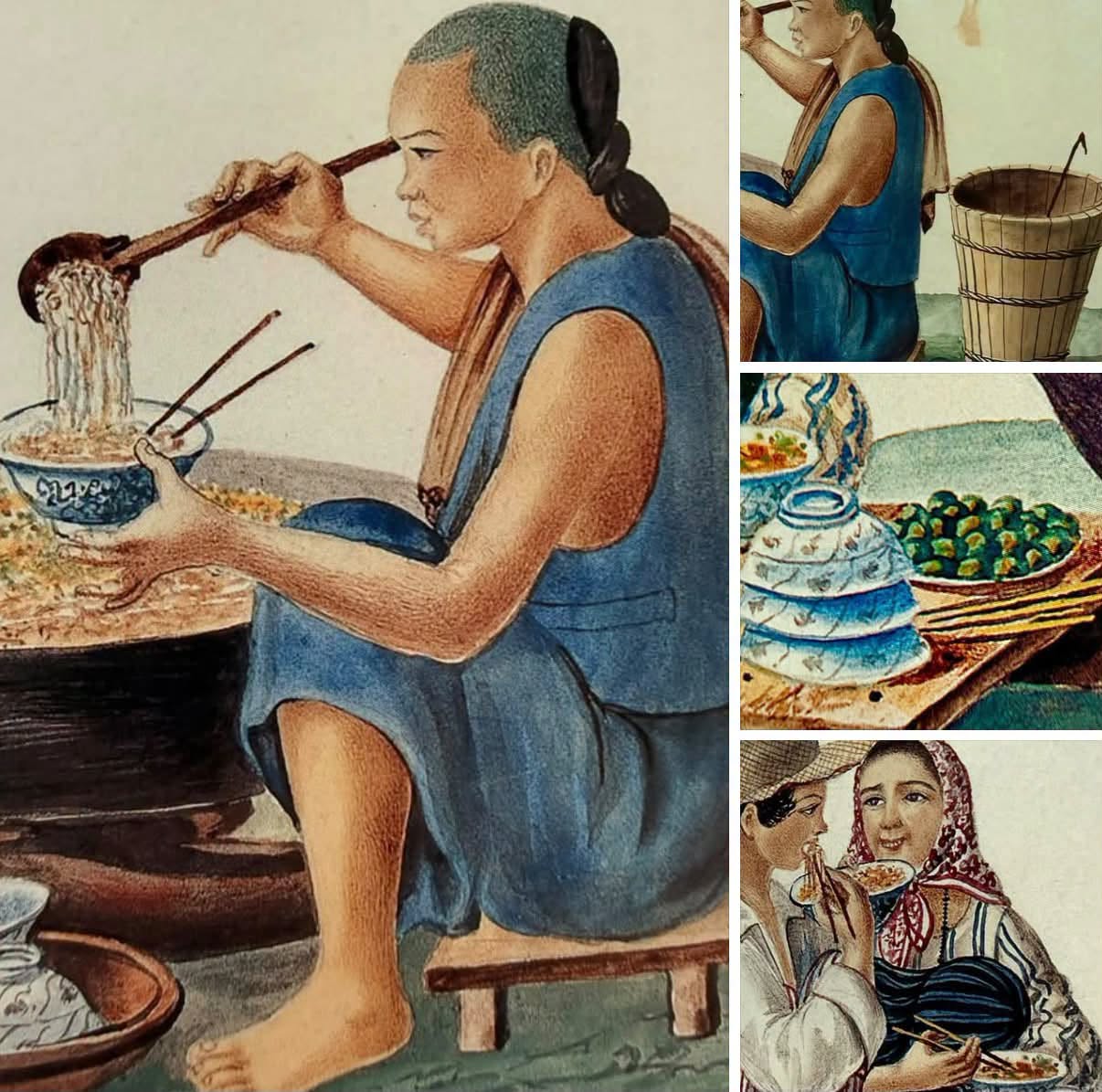
In tracing the entry of a dish or the use of an ingredient in Philippine communities, Sta. Maria uses historical reports, accounts, memoirs, travelogues, “government reports, traveler accounts, textbooks, dictionaries, maps, photographs and illustrations, advertisements and menu cards, agricultural and commercial research, friar relations and other written period material to guess, as best as possible, what went on in antique kitchens” interwoven with recent archaeological evidence.
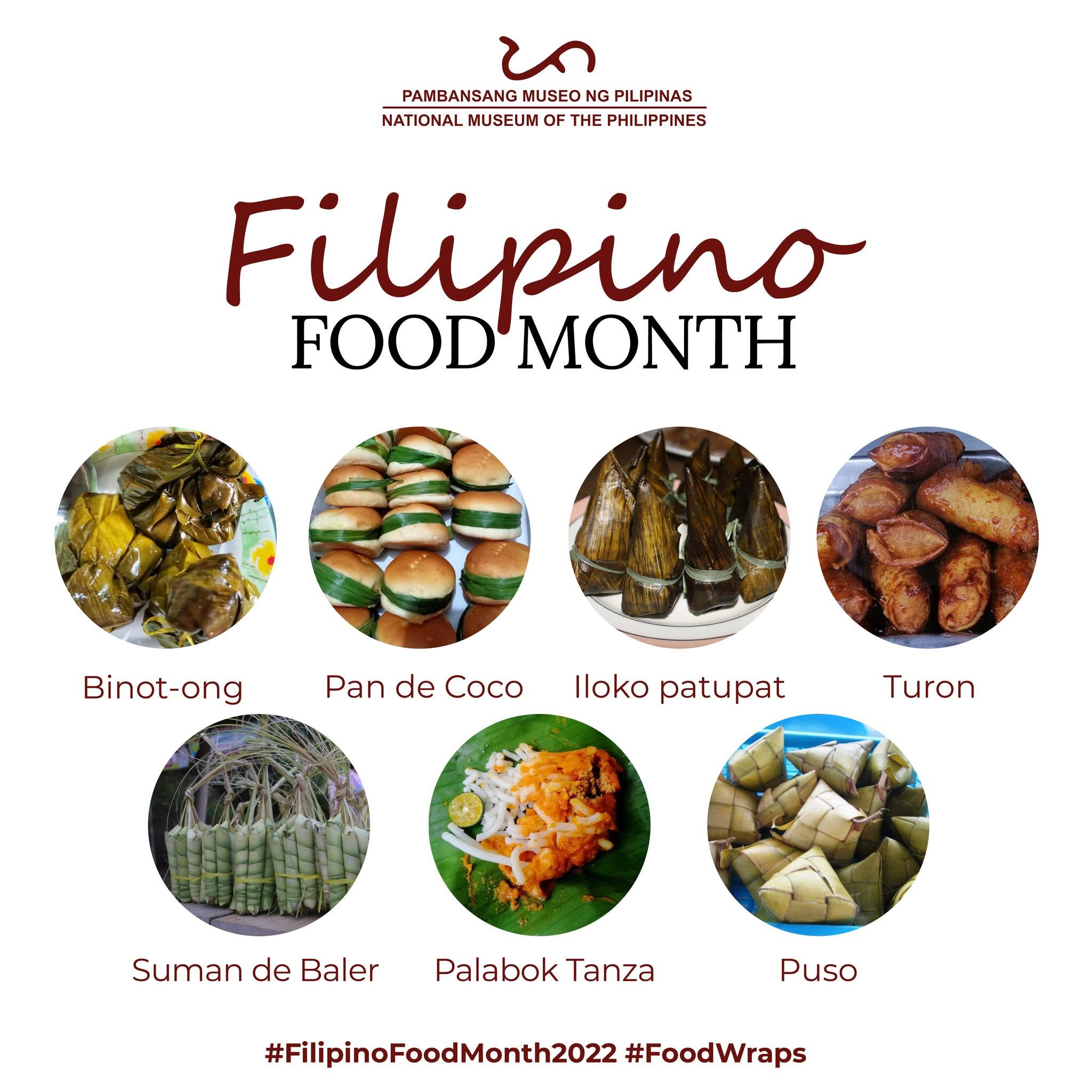
She tries to trace where a cooked dish is first mentioned. For example, pacsiu or paksiw in 1609 or suman in 1613 described as “wrapped rice.”
Historical evidence is also gathered from Tagalog dictionaries and vocabularies collected by Spanish friars, namely Francisco Blancas de San Jose OP (?-1614), Pedro de San Buenaventura, OFM (?-1627), Francisco de San Antonio, OFM (?-1624), and for Visayan, Alonso de Mentrida, OSA (1559-1637).
In Cooked Food, ginataan reflects the versatility of coconuts in daily life from gata or coconut milk, coconut water, coconut oil, ubod, and the extensive Philippine vocabulary for coconut found in Spanish colonial records; lugaw or rice porridge and its variations of arroz caldo and arroz caldo con goto; sinigang, its first written mention by Francisco Blancas de San Jose in his unpublished dictionary of 1699.
Nick Joaquin and “Guisado”: It was Nick Joaquin, National Artist for Literature, 1976 who noted in his book Culture and History (1988) that the introduction of guisado is one of the 12 greatest events in Philippine history.
In a chance encounter in 2007, Sta. Maria asked him about it. Why do you credit guisado as one of the most important Spanish contributions to Philippine culture? He replied, it’s simply his gut feeling. Sta Maria wanted to prove him right, through historical and written evidence, thus, this book was born.
San Buenaventura in his compilation, Vocabulario de la Lengua Tagala (1613) noted that Filipinos did not guisa in precolonial times, so we have no word for it. Guisado or guisa and frito would come with Spanish colonization.
Our prehistoric food was cooked by roasting and grilling, baking in embers, simmering and boiling, or cooking with vinegar or natural acids. No frying, no guisa, then.
Behind each of the 50 words, there is history in every bite and in every dish. Sta. Maria shares her meticulous documentation with us. We get to savor the knowledge that comes with eating our food as they are today.
Documenting food in a never-ending task. Listen and write down what your grandparents, aunts, and uncles say about the food they used to make, its methods of cooking, ingredients, and its sources before “memories and skills are compromised.” And before they are all gone six feet under.
Felice Prudente Sta. Maria: A pioneer food historian of the Philippine colonial era (1565-1946), she has written numerous books, including The Governor General’s Kitchen: Culinary Vignettes and Recipes, 1521-1935, 2006; The Foods of Jose Rizal, 2012; Pigafetta’s Philippine Picnic: Culinary Encounters During the First Circumnavigation, 1519-1522, 2021; and When Mangoes and Olives Met at the Philippine Table, 2025. She is the creator of the Philippine Food History website, 2022.