

“Does masturbation make you dumb?” “Is it okay to have sex with a girl who’s having hermenstruation?” “Will I get poisoned if I swallow semen?”
Kevin de Vera recalled these questions from high school students when he discussed adolescent reproductive health under a program of the Forum for Family Planning and Development (Forum)a health and social development advocacy organization.
“We all know that adolescents have curious interests in sex, reproduction, relationships and behaviors, but wait till you hear their thoughts and questions.” De Vera, Forum’s director for programs and advocacy said.
A boy asked if coconut juice can cure gonorrhea because his friend had the sexually transmitted infection. It turned out that the boy was the friend.
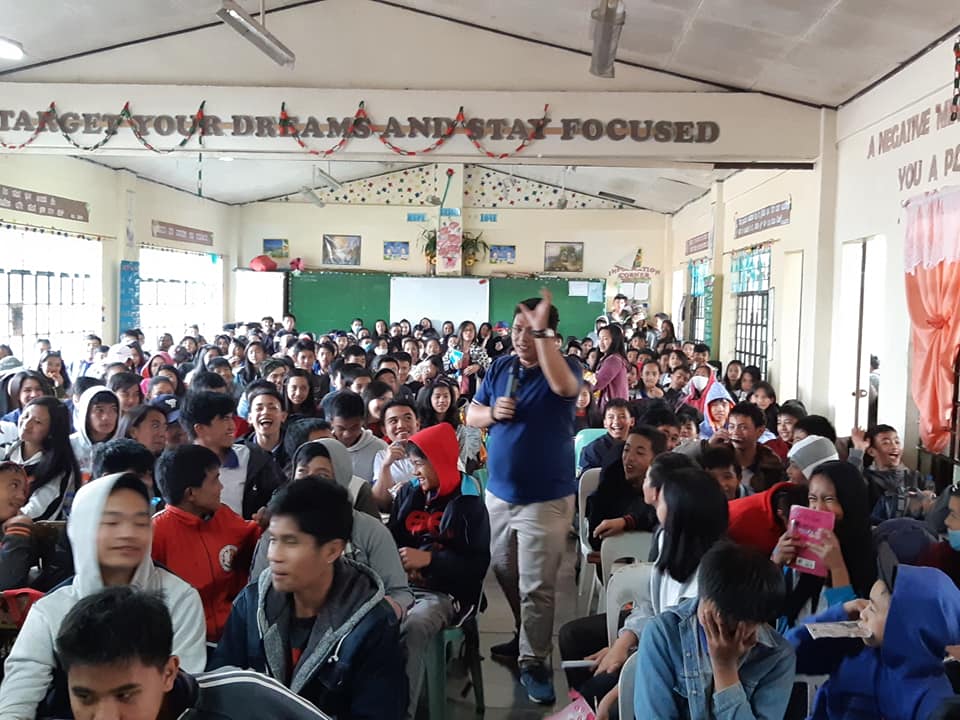
De Vera said Forum’s project that required talking to thousands of high school students, including in over 35 night high schools in the cities of Cebu, Mandaue and Lapu-Lapu from 2015 and intermittently until 2023, has been completed but he noted that young people continue to have questions. This highlights the critical need for sex education.
“This is where we provide correct, scientific, factual, age-appropriate information to help them make the right decisions when they are in situations that their parents fear,” De Vera said. “Telling them not to have sex yet, not to have a boyfriend or girlfriend yet, or to act properly without explaining what these mean will never work.”
Seeking answers elsewhere
De Vera’s realization, however, is not reflected in the country’s educational system where many teachers admit their lack of readiness and training to teach the subject due to values-related conflicts and dearth of educational resources on the topic.
“In our experience in the night high schools, teachers are all willing to improve the state of ARH,” he said. “They know there is data and evidence as reliable sources of information to teach young people, but most of them have concerns.”
The 2021 Young Adult Fertility and Sexuality Survey of the University of the Philippines Population Institute that surveyed more than 10,000 youth aged 15 to 24 noted gaps in their access to sexual and reproductive health information and services.
The survey said 44% of the girls and 39% of the boys said they did not have access to material sources of information about sex. Those who did have access got their information from social media, educational materials, movies, videos, TV, radio and print media.
When asked about the top five persons they consulted for questions about sex, 65% of the male respondents and 50% of the females listed their friends, parents, and health professionals in that order. Notably, a sizeable number said they did not seek answers from anyone.
De Vera said teens become pregnant or get STIs such as human immunodeficiency virus or HIV due to early dating and sexual contact, prostitution — especially those from poor families, and lack of sex education which drives them to make wrong decisions.
“We must normalize the discussion of sex. Informing the youth prevents them from engaging in unsafe sexual activities and becoming pregnant,” he said.
Unsettling, terribly wrong
In March 2025, the Commission on Population and Development reported that an eight-year-old girl became pregnant and gave birth at nine, the youngest recorded case of pregnancy in the Philippines.
Also last year, Undersecretary and CPD executive director Lisa Grace Bersales said two other girls aged 10 from the Bicol Region and Western Visayas also became pregnant. Citing data from the Philippine Statistics Authority, Bersales said births from girls aged 10-14 years old reached 8.9% in 2024.
Pregnancies among girls 10-14 years old were prevalent in populous regions: CALABARZON, Central Luzon, Metro Manila and SOCCSKSARGEN.
“When a child becomes a mother, something has gone terribly wrong. These are girls who should be in school, discovering their dreams—not raising children before they even understand adulthood,” Bersales said.
In 2023, the PSA noted that 3,343 girls under 15 reportedly delivered their first child. Among girls aged 10-14, this translates to nine live births per day.
PSA noted and called attention to the more unsettling problem of repeat pregnancies that occurred among 38 girls under 15 that same year, noting that 17 had five or more live births before they turned 20.
In 2022, the PSA recorded 25,358 second, third, fourth, and even fifth livebirths among girls aged 10-19. There is also a rising number of adolescent fathers, from 5,054 in 2018 to 8,665 in 2019.
Statutory rape and abuse

Young protesters call attention to statutory rape in the wake of high teen pregnancies during the Defend CSE march on February 2025 in Mendiola. Photo by Forum for Family Planning and Development.
Dr. Juan Antonio Perez III, vice president of the Forum and former CPD executive director, said PSA records showed that live births among girls in the below-sexual consent age of 10-15, significantly increased from 8,914 in 2021 to 10,826 in 2022.
In 2023, only 21 fathers were of similar age of the 3,343 mothers aged 8-14, and 1,234 fathers to girls 8-14 were aged 17-22.
“These are indicative of sexual abuse, as they are already considered as statutory rape as per Republic Act 11648,” he noted.
RA 11648 promotes stronger protection against rape, sexual exploitation and abuse, increasing the age for determining the commission of statutory rape from below 12 to below 16. Sexual activity with a person under 16 is considered statutory rape regardless of whether consent is given, as a minor cannot legally consent.
“This implies that sexual and reproductive health rights of those under 16 are being violated with impunity despite the RPRH Law,” Perez said, citing the Responsible Parenthood and Reproductive Health Law of 2012 (RA 10354).
“Government agencies should have acted on the law three years ago,” he added, stressing that the Department of Justice and Department of Education were specifically mentioned in the law.
Perez said girls have little freedom and autonomy over their bodies and decisions.
“More 8-16 girls were raped in the Philippines in 2023 than the entire adult female population; their risk for rape is five times higher than all women and girls,” he explained.
“Most pregnant girls 8-14 probably dropped out of school, were seen by health workers and their parents or guardians were aware or became aware of the pregnancies,” said Perez. “Yet no one reported a single case under RA 11648.”
The official said that 2023 PSA data noted a 7% increase of 3,343 births among 9-14 year-olds and 8% or 8,136 births among under-16 girls. But there were also no rape cases filed under RA 11648.
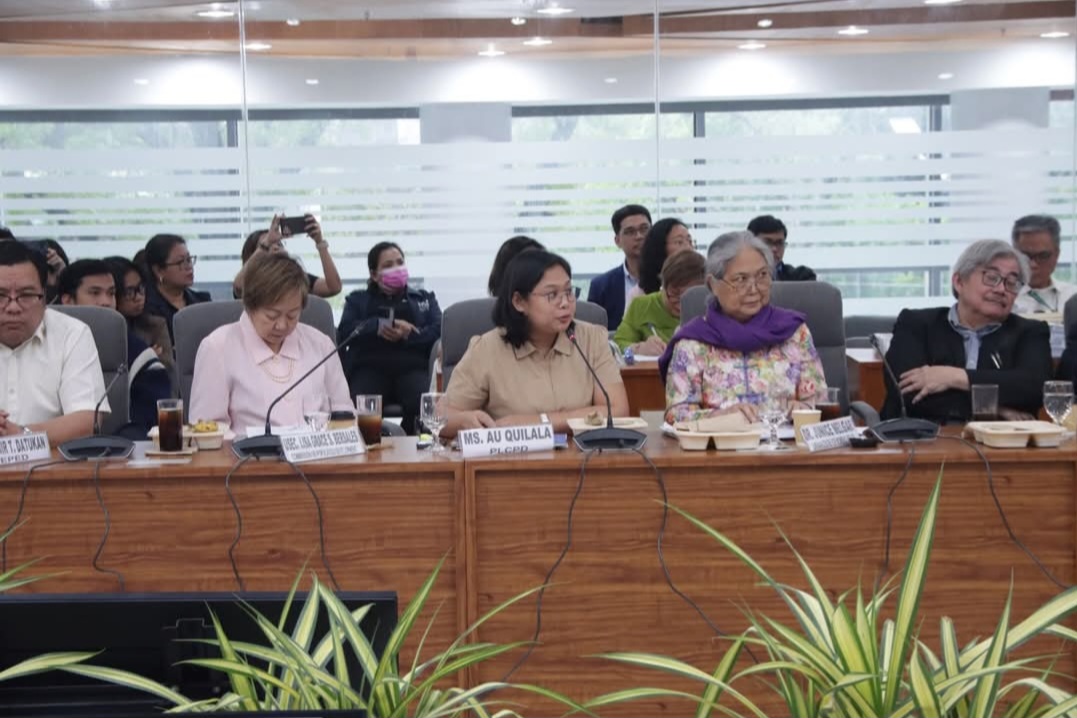
Au Quilala, executive director of the Philippine Legislators Committee on Population and
Development, agreed, saying, “The number of very young girls getting pregnant is not eventhe saddest story”
“Data shows that most of these pregnancies may involve statutory rape, as the men who impregnated the girls were practically adults or significantly older than them,” she concluded.
The advocates urged Congress to enact the Adolescent Pregnancy Prevention Bill in the a hearing on March 17 by the House Committee on Youth and Sports Development.
In that first hearing, Quilala said, “No girl deserves this. All of us adults in this room, especially the duty bearers, should not let this situation continue.”