TACLOBAN CITY — Beneath the canopy of Paraiso’s mangrove forest, the story of restoration becomes a story about what comes next.
For the Bureau of Fisheries and Aquatic Resources, that question begins with the young fish that use mangrove areas as habitat. Mangroves are not simply trees growing along the shoreline. They are part of a network of critical coastal habitat.
Mangrove areas serve as important habitats for young fish during a vulnerable stage of their lives, said Miriam Amigo of BFAR Eastern Visayas.
For Roque Regis, a volunteer who has helped care for Tacloban’s wetland, Paraiso is part of the community’s memories of a coastline that once provided food for his community; its livelihood and its future.
Their perspectives come from different places. But both point to the same concern: a mangrove forest can only continue to provide for a community if the ecosystem itself is protected.
More than a decade after Super Typhoon Yolanda (Haiyan) devastated Tacloban’s coastline, the mangroves of Barangay 83, Paraiso, have grown from the seedlings planted during the community’s post-disaster recovery into a living coastal ecosystem.
But bringing the trees back was only the beginning. Today, the harder question is how to keep the ecosystem healthy—and ensure that the people who depend on the coast continue to protect it.
A nursery for young fish
For Amigo, Fisheries Management Area focal person of BFAR Eastern Visayas, the mangroves can serve as a habitat where young fish can survive and grow before moving into other parts of the marine environment.
The shallow coastal environment can provide food while offering conditions that may be less harsh for young fish than deeper waters. Some species, she explained, may prefer the lower salinity conditions found in coastal areas during their early stages.
And that eventually connects the forest to fisheries. Some of the species that use these habitats during their early stages can later become important fisheries commodities caught by fisherfolk.
That connection, Amigo said, makes protecting critical habitats important not only for individual species but also for the balance of the wider ecosystem. Protecting the places where species spend their most vulnerable stages, she said, helps maintain those ecological relationships.
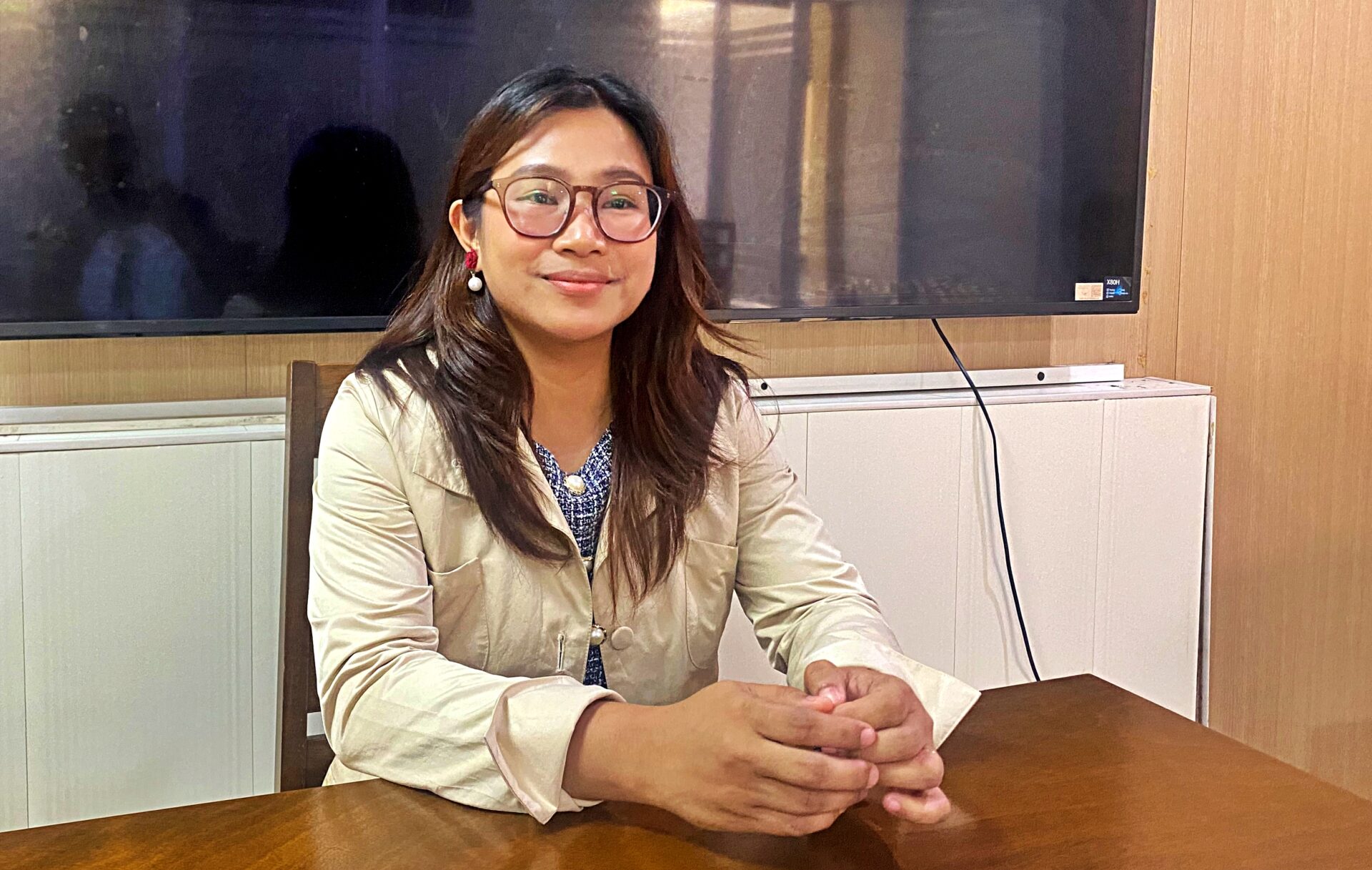
“Dapat ma-preserve ‘yung habitat, ‘yung quality and integrity ng mga ganitong critical habitats (The habitat should be preserved, the quality and integrity of these critical habitats),” Amigo said.
The mangrove is not an isolated environmental feature. It is part of the system that supports marine life—and eventually, the fisheries resources on which people depend.
From habitat to livelihood
Long before Paraiso became an eco-learning park, the mangrove was already part of the community’s relationship with the sea.
Regis remembers that relationship from childhood. “When I was young, this entire coastline was covered with mangroves. They were our source of life.”
Residents gathered shellfish, crabs and other coastal resources from the mangrove area, he recalled. But Regis also witnessed the gradual decline of those resources. “Over the years, I saw those resources slowly disappear. Too many people harvested them without proper regulation, and there was little effort to protect what remained.”
His recollection gives a human dimension to the ecological role described by BFAR.
Where Amigo sees habitat and fisheries resources, Regis remembers the food and livelihood The two perspectives meet in the same place: the mangrove.
What happens when the habitat is lost?
The loss of a mangrove ecosystem does not necessarily become visible all at once.
Trees disappear. Coastal resources decline. Habitats are altered. And over time, the relationship between the community and the ecosystem changes.
For Regis, restoring Paraiso therefore means recovering more than a stand of trees. It means recovering part of the ecological foundation that once supported the community.
But he also recognizes that restoration can take years — and that development decisions made today can affect whether that recovery lasts.
“If we build infrastructure, we must think about balance,” Regis said. “Development should never come at the expense of the ecosystem because once nature is destroyed, it is very difficult to restore.”
His concern is not necessarily about stopping development. It is about what happens when development is planned without considering the surrounding ecosystem.
That tension is particularly relevant in a coastal city where infrastructure, communities and natural habitats occupy the same limited space.
Paraiso’s history shows why restoration cannot be measured simply by the number of seedlings planted.
The first organized rehabilitation activities began in 2014, shortly after Yolanda. Some seedlings survived. Others did not. Succeeding storms damaged earlier plantings, requiring communities to return and replant.
More than a decade later, the forest that stands in Paraiso is evidence of persistence. But the continued presence of trees does not eliminate the need for monitoring and protection.
A mangrove ecosystem requires suitable environmental conditions for trees to establish, grow, and reproduce.
The Food and Agriculture Organization notes that successful mangrove restoration depends on matching appropriate species to site conditions, including hydrology and substrate or sediment conditions, and that monitoring and continued management are important to the development of functioning mangrove ecosystems.
Who is responsible?
The answer is not as simple as identifying one agency.
Amigo explained that mangroves themselves are not within BFAR’s direct jurisdiction.
BFAR’s role can instead include working with fisherfolk communities through capacity-building and empowerment.
That can help communities become active partners in managing fisheries and aquatic resources and in understanding the importance of the habitats that support them.
Protecting Paraiso, therefore, requires cooperation among local government, environmental agencies, fisheries authorities, community organizations, and conservation partners.
And ultimately, it requires the people living alongside the ecosystem to have a continuing stake in its protection.
The guardians are growing older
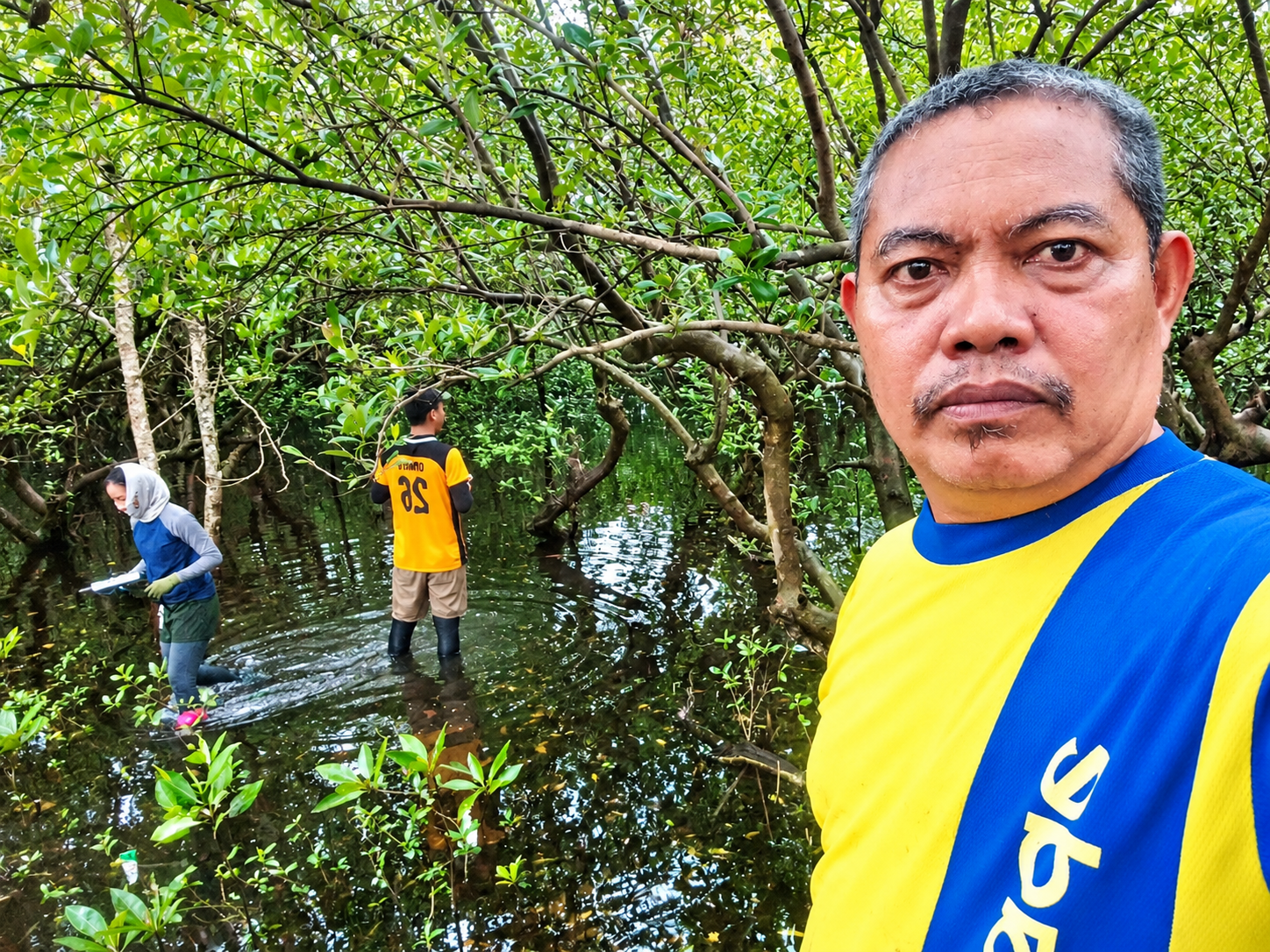
For years, volunteers and community members have helped care for the mangrove. But those who carried the work through the years are getting older.
Regis worries about who will take their place. “My greatest hope is that young people will continue protecting this place. Many of us who have cared for these mangroves are already growing old, and we need a new generation to take our place.”
His concern goes beyond the trees. It is about knowledge, and memory. It is about whether the next generation will understand what the mangrove once provided—and what could be lost if it disappears again.
The forest that today’s visitors see did not appear overnight. It is the product of years of planting, replanting, maintenance, partnerships and community involvement. And without continuity, that work can be undone.
A forest with a memory
Regis remembers a Paraiso coastline that younger residents may never have known. He remembers the mangroves as a source of shellfish and crabs.
He also remembers the gradual disappearance of those resources. And he has seen the forest return.
For residents who experienced the coastline before and after its degradation, the forest provides a visible connection between those two periods.
Its recovery demonstrates what sustained rehabilitation can accomplish. Its vulnerability demonstrates how difficult it is to sustain that recovery.
That is why Regis speaks about accountability as well as conservation.
“There must also be accountability. If mistakes are made, they should be acknowledged and corrected. We owe that to future generations.”
The statement reflects a broader reality of environmental management: restoration can repair some damage, but prevention is often less costly than restoring an ecosystem after it has been degraded.
From recovery to sustainability
The first challenge in Paraiso was restoring the mangroves after Yolanda. The next was organizing the people and partnerships needed to sustain them.
Today, another transition is taking place. The question is no longer simply whether the community can restore the forest. It is whether the forest can remain protected amid changing environmental pressures, development needs, and generations of changing community leadership.
BFAR’s perspective highlights the ecosystem’s role in supporting young fish and, eventually, fisheries resources.
Regis’s experience highlights what that ecosystem means to the people who live beside it.
One perspective is ecological. The other is deeply personal. Together, they tell a larger story.
The value of Paraiso cannot be measured only by the number of mangroves standing today. It also lies in what those mangroves continue to support: marine life, fisheries, coastal functions, community livelihood and the knowledge of generations who have lived alongside them.
The next generation
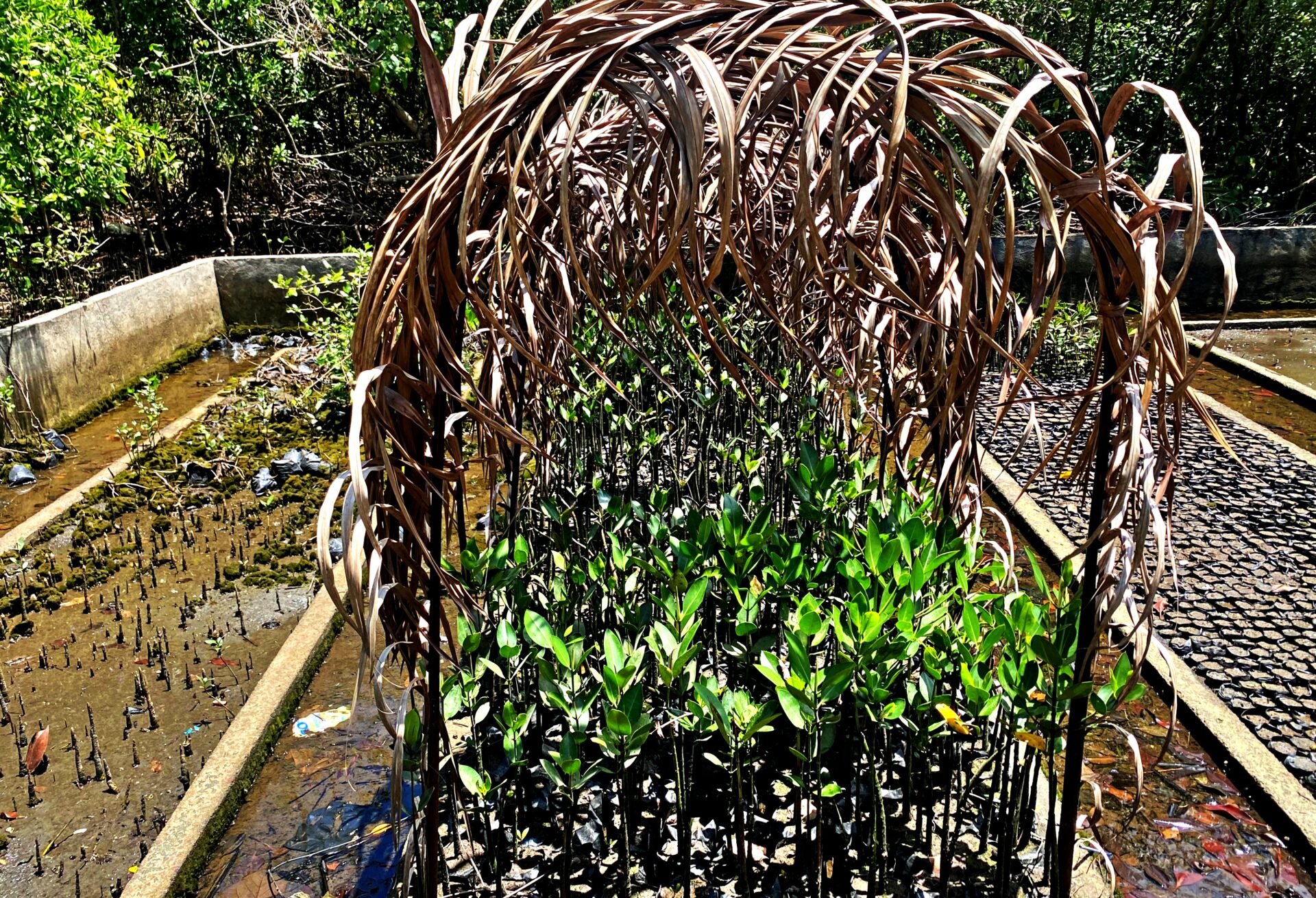
Regis has one particular fear. “If we lose this forest, Tacloban may never again have a mangrove ecosystem like this.”
Whether that becomes reality depends partly on what happens now. The people who planted and protected the mangroves after Yolanda cannot be expected to carry the responsibility forever.
The next generation must understand the ecosystem’s value. Institutions must continue providing technical and policy support. Communities must remain involved.
And development must account for the natural systems that make coastal communities more resilient.
For Regis, that responsibility is personal. “This place does not belong to me. But as long as I can, I will continue protecting it—for my children, and for everyone.”
It is a simple statement, but it captures the central challenge facing Paraiso.
The forest belongs to a future that neither Regis nor the people who planted its first seedlings will completely see. What they can do is leave behind a forest—and the knowledge, institutions and community commitment needed to protect it.
After the planting
More than a decade after Yolanda, the mangroves of Paraiso have moved beyond the first chapter of their recovery.
The seedlings planted after the disaster have become part of a larger ecosystem. Fish use the coastal habitat.
The community continues to interact with the forest. Government agencies and conservation organizations remain part of the story.
But restoration is never truly finished simply because the trees have grown. The forest still needs protection. The ecosystem still needs monitoring. And the community still needs people willing to care.
For BFAR, protecting the habitat means protecting the ecological foundation that supports fisheries.
For Regis, it means protecting a place that once fed his community and could continue to provide for generations to come.
Between those two perspectives is the central lesson of Paraiso: Restoration brings a forest back. Sustainability determines whether it stays.
And perhaps the most important guardians of that future will be the people who learn to see the mangrove not simply as a forest that survived Yolanda, but as a living system whose survival depends on what the community chooses to do next. (Read Part 1 here).
(This story, part of Taklub Digital News’ continuing coverage of mangrove conservation, marine biodiversity and community resilience in Eastern Visayas , was produced under the Global 30X30 Conservation Initiative grant from Internews’ Earth Journalism Network).