
CEBU – WITH hooks and fishing lines, a group of fisherfolk in Barangay Madridejos, Alegria in southwestern Cebu catches less than a kilogram of sardines to feed their families.
On Sept. 7, 2026, SunStar Cebu observed about 15 fisherfolk along the Madridejos coast around 9 a.m. using “sab-it,” a method of catching sardines individually with hooks and lines.
For 30-year-old Joseph Gomez, fishing focuses more on securing food than earning an income. A survivor of super typhoon Odette, Gomez said he does not usually sell his catch.

“Dili, sud-an ra (No, just for food),” he said.
The sardines Gomez and other fisherfolk catch come from waters within the Tañon Strait Protected Seascape (TSPS), a protected area spanning Cebu, Negros Oriental and Negros Occidental.
While residents continue to depend on these waters for livelihood, Alegria is preparing to revive its oil and gas operations under Service Contract (SC) 89 alongside plans for coastal infrastructure.
Gomez knows there is a dormant oil site in town but remains unaware of plans to revive it. For him and other coastal residents, the immediate concern remains whether there will be enough fish to catch.
The planned development comes as the Philippines works to expand coastal and marine conservation under the Kunming-Montreal Global Biodiversity Framework and its 30-by-30 target.
Declining catches
Alegria is one of the municipalities within the 534,589-hectare Tañon Strait, a protected seascape recognized as a feeding, breeding and resting ground for dolphins and whales. The 161-kilometer channel separating Cebu and Negros islands hosts 14 cetacean species, most of which appear off Bais, Negros Oriental.
Alegria has four coastal barangays — Madridejos, Santa Filomena, Poblacion and Legaspi — where families depend on the sea. Some fishers bring sardines home, dry them or use them as bait for tuna and swordfish.

“Manab-it rami kay bawal man na ipukot (We only use hooks because using a fishing net is prohibited),” Gomez said.
“Kung ipukot sab na, wala nami kuhaon (If we use fishing nets, there would be nothing left for us to catch),” he added.
Gomez recalled catching mamsa (trevally), sailfish and malasugi (swordfish) weighing up to 20 kilograms.
For 62-year-old Nicholas Bindolo Sr. of Barangay Poblacion, who has fished for more than 40 years, the sea remains his main livelihood despite a drastically declining catch. Bindolo started fishing in the 1980s and recalled that fishermen could once catch about 50 kilograms in a few hours. Now, after fishing from 6 p.m. to 4 a.m., he sometimes returns with less than two kilograms.

“There are days when there is a catch, and days when there is none,” Bindolo said.
He attributed the decline to the growing number of fishermen. The Poblacion fisherfolk association now has more than 100 members, compared with about 20 when formed in 2002, prompting some younger residents to shift to construction work as catches shrink.
A two-kilogram catch of tamarong sold at P200 per kilogram earns about P400, which barely covers expenses.
“Not enough,” Bindolo said.
His wife sells the catch, while his children sometimes help with household expenses. He spends about P100 on gasoline for roughly three fishing trips.
Renewed energy operations
The Department of Energy (DOE) approved SC 89 for Texcal Energy Mahato Inc. in April 2026. Texcal made a courtesy call to the Municipal Government but is still securing permits and clearances before expected operations begin in the last quarter of 2026.
“For every development, naa gyud na’y (there will always be) negative effect, naa gyud na’y (there will always be) collateral damage,” Municipal Planning and Development Officer Jesus Rey “Tetu” Cavalida said.

The previous operator, China International Mining Petroleum, developed several production stations in Alegria in 2009 but did not operate at full scale. Crude oil was previously transported by truck to Bataan province for refining, but under SC 89, Texcal plans to establish an on-site refinery in Barangay Montpeller.
Cavalida said local processing could keep more economic activity in Alegria instead of sending the raw product elsewhere.
“The peso you spend in Alegria will be the peso within the economic activity within Alegria,” he said.
The Municipality has yet to receive a copy of SC 89 from the DOE and wants to review its coverage, obligations and limits. Alegria is also proposing a finger port in Barangay Legaspi near the oil development area.
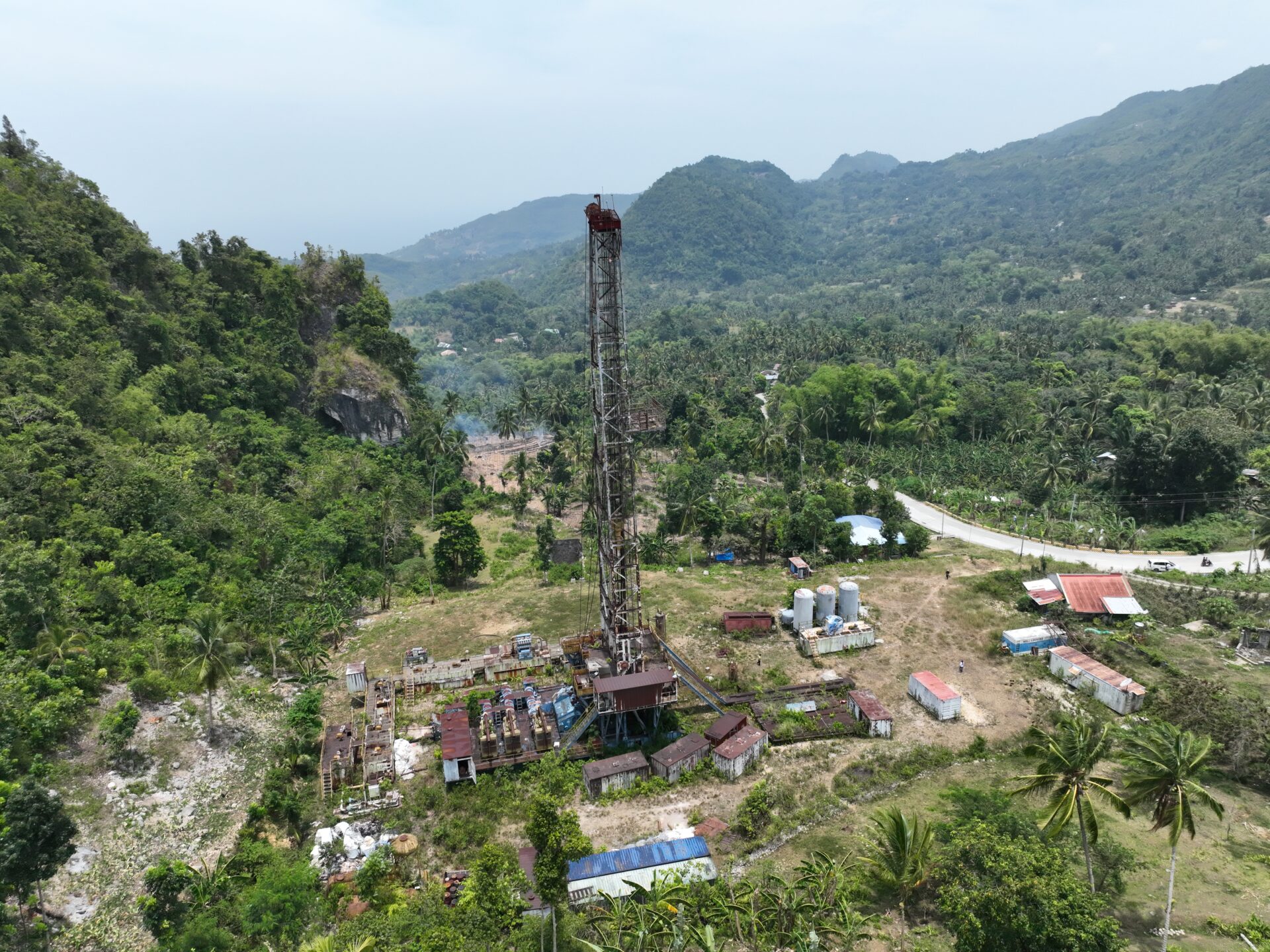
Cavalida clarified that the port is a municipal investment proposal rather than a Texcal project. It was initially envisioned to support oil transport but could also serve passenger movement, agricultural products, roll-on/roll-off operations and tourism.
The proposed site is yet to be submitted to the TSPS Protected Area Management Board, with the Municipality working toward the required clearances.
“The direct contractor, direct contract per se, is Texcal and the Republic of the Philippines, represented by the Department of Energy,” Cavalida said.
Alegria serves as the local conduit and recipient of the activity, with the local government assisting as required under the Local Government Code. The municipality is not the direct contracting party, and its potential income depends on applicable government revenue-sharing and local revenue mechanisms.
SunStar Cebu visited the DOE Visayas Field Office in August to inquire about an interview schedule. In September, the newsroom sent an official letter and followed up in person, seeking project updates, the Environmental Impact Assessment, Environmental Compliance Certificate, a copy of SC 89 and an interview with DOE Visayas Director Renante Sevilla. The office had not responded as of publication.
President Ferdinand Marcos Jr. approved SC 89 in April, allowing Texcal Energy Mahato Inc. to undertake the development and production of the Alegria field after about three years of dormancy.
Amid Cebu’s continuing power supply concerns, Gov. Pamela Baricuatro called an emergency meeting on Sept. 4, 2026, with officials from the DOE Visayas Field Office, National Grid Corp. of the Philippines, Visayan Electric Co. and electric cooperatives.
Baricuatro also asked Sevilla to arrange a meeting with Energy Secretary Sharon Garin to get an update on the redevelopment of the oil and gas field in Alegria.
“I want to ask about the Indonesian company that wants to do oil exploration. We want an update because, based on our meeting, they have a facility where they can bring their power barge and convert this 150 megawatts of gas from Alegria,” Baricuatro said.
She said previous discussions with the Indonesian-based company included the possibility of using Alegria’s natural gas to generate up to 150 megawatts of electricity. The company reportedly had a large power barge facility in Indonesia that could potentially convert gas into electricity and supply it to local distribution utilities.
“Based on our committee [meeting], they have a facility from Indonesia — a big barge they can convert into energy — and pwede nila masulod sa inyong mga distributor (they can feed it into your distribution utilities),” Baricuatro said.
The proposed power barge and its potential 150-megawatt capacity remain unconfirmed in publicly available DOE documents and rely on Baricuatro’s account.
Economic expectations
Sevilla said Texcal was reviewing data on the Alegria field and completing local permits before full operations could resume.
“They are asking for help to facilitate converting their company into a local entity. Whatever requirements or local regulations exist, they have to fulfill them. We are trying to push for the process and facilitate their requirements,” Sevilla said.
DOE estimates released in April placed the Alegria field’s oil resources at about 27.93 million barrels in place, with about 3.35 million barrels considered recoverable. The field also has an estimated 9.42 billion cubic feet of natural gas, of which about 6.6 billion cubic feet is considered recoverable.
Texcal has continued preparations under SC 89 for the redevelopment of the field, including proposed well testing, workover operations, geological studies and production facilities. The company has also proposed processing some of the oil into diesel and bunker fuel.
Alegria remains heavily dependent on National Government transfers, with about 86 percent of its income coming from the national tax allotment and only 13 to 14 percent from local sources. Its annual budget increased from P163 million in 2024 to P188 million in 2025 and P226 million in 2026, while annual income rose from P158 million in 2024 to P188.5 million in 2025.
Cavalida said the Municipality faces a proposed P45-million budget gap for the following year, with tourism, education, health and agriculture among its priorities. Against this financial backdrop, the Municipal Government sees the revival of oil and gas as a potential source of jobs, revenue and economic activity.
Cavalida estimated that the previous operation generated only about P600,000 for the Municipality because it did not reach full production. The scale of the economic benefits from the renewed operation remains uncertain since Texcal has yet to provide specific job projections or established production levels.
“Hopefully for the next generation to come, they could feel the fruits of our oil and gas production,” Cavalida said.
Alegria has about 1,580 fisherfolk who earn minimal income and Cavalida acknowledged that a port or docking area could limit access to fishing grounds.
“Unsa na lang imohang panginabuhian (What will we do for a living now)?” Cavalida said.

The Municipality is considering linking affected families to port-related jobs such as hauling, security and driving, as well as small businesses. It is also eyeing a buffer zone where fishing would be prohibited around docking areas.
“One family member of them working within the port area, and that’s a win-win solution,” he said.
Cavalida noted the transition would require social preparation and coordination with fisherfolk groups and coastal barangays. Bindolo supports the proposed oil revival and port because they could bring jobs to residents.
“That would benefit the constituents,” Bindolo said.
Poblacion Barangay Captain Cristino Villamor Jr. also supports the projects but said development should come with environmental safeguards to protect the coast.

“I’m hoping to get ahead and increase our income. At the same time, while benefiting from the project, we should also protect the environment for sustainability,” Villamor said.
“Oh, yes, I support the port. As long as it doesn’t cause any damage,” he added.
Villamor said the project should consider coral areas, follow TSPS recommendations and complete required consultations while keeping fisherfolk informed.
Environmental safeguards
The renewed oil project also brings back concerns from the previous operation, where some landowners experienced delayed rental payments. One affected landowner is 63-year-old Regina Cardente, who owns about 3,753 square meters in Barangay Montpeller previously leased for P1 per square meter per month. In 2020, she received P13,000, about 30 percent of the more than P40,000 she expected.
“Bayran lang sa mi sa una (They pay us first),” Cardente said.
She said future use of the property would depend on settling past obligations and making future payments on time.
“Sakto (Exactly). Malipayang unta og i-advance (Hopefully, they’ll pay us in advance),” she said.
TSPS was declared protected in 1998 through Presidential Proclamation 1234 because of its importance as a feeding, breeding and resting ground for dolphins and whales. It is managed through a Protected Area Management Board, Executive Committee and Site Management Units.
Its management structure developed through the years: the Tañon Strait Commission was created in 1999 and abolished in 2002, revised Nipas rules came in 2008, the TSPS Executive Committee was established in 2009, and the PAMB held its first en banc session in 2015.
That same year, the Supreme Court ruled on an earlier offshore oil exploration case in Tañon Strait, recognizing the public trust doctrine and the constitutional right to a balanced and healthful ecology. Environmental lawyer Gloria “Golly” Estenzo-Ramos was among those who challenged Japan Petroleum Exploration Co.’s offshore exploration in 2007.

The campaign brought together environmental groups, scientists, fisherfolk, students, teachers, the business community and the church through the Save Tañon Strait Citizens Movement. Ramos recalled that ships arrived near coastal communities during drilling and that there were reports of fish kills.
The SC issued its decision on April 21, 2015, in Resident Marine Mammals of the Protected Seascape Tañon Strait v. Secretary of Energy. Ramos said the ruling became a landmark environmental decision based on the public trust doctrine and the constitutional right to a balanced and healthful ecology.
“It’s not just a right, it’s a duty,” Ramos said.
She said the ruling recognized Tañon Strait as a single ecosystem spanning Cebu, Negros Oriental and Negros Occidental. Unlike during the earlier controversy, the protected seascape now has established management mechanisms.
Ramos said the onshore location of the Alegria oil field does not separate it from the coastal and marine ecosystem, particularly with the proposed refinery. Environmental assessments should cover the oil field and its links to coastal areas, municipal waters and the movement of materials and products.
“It’s a real threat to our existence,” Ramos said, referring to the planned revival and refinery.
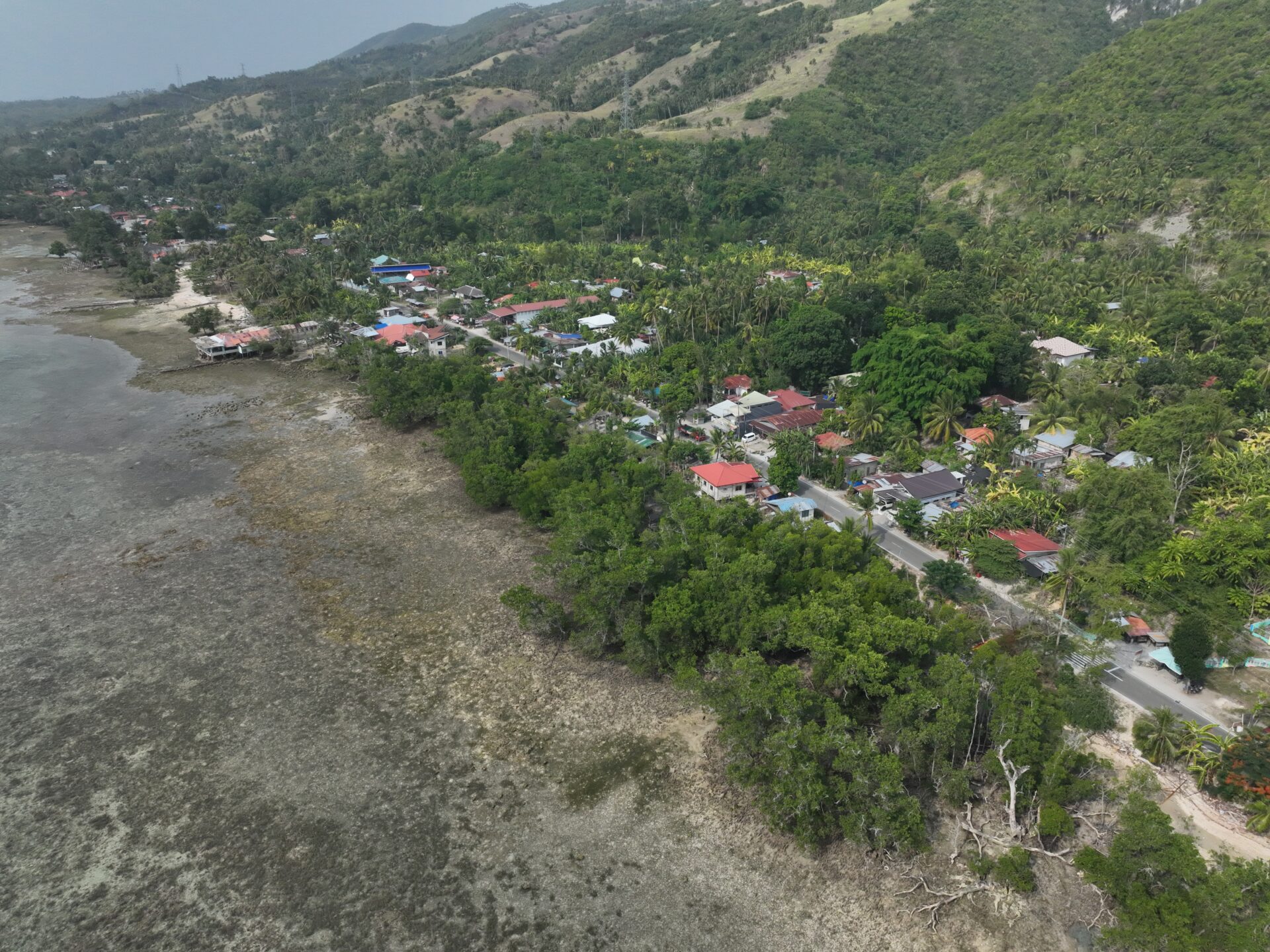
“Why are we setting up another refinery? We’re supposed to reduce our dependence on fossil fuels,” she added.
Ramos said government agencies should assess potential effects on coastal areas and ensure fisherfolk are represented in decisions affecting their fishing grounds.
“We also need the scientists to speak up,” she said.
The Alegria project unfolds as the Philippines expands protection of coastal and marine ecosystems. The Philippine Biodiversity Strategy and Action Plan 2024–2040 aims to expand coastal and marine areas under effective conservation and management to 16 percent.
The plan aligns with the Kunming-Montreal Global Biodiversity Framework, adopted in December 2022, which includes the 30-by-30 target of effectively conserving and managing at least 30 percent of the world’s land and ocean by 2030.
SunStar Cebu sought updates from the Department of Environment and Natural Resources (DENR) 7 and the Environmental Management Bureau (EMB) 7 on the project’s environmental assessment, permits and monitoring but received no response as of publication.
The only interview granted was with the Coastal and Marine Ecosystems Management Program (CMEMP) of the DENR 7 Conservation and Development Division.
“We are really aiming that under 30×30 we can reach 16 percent of our marine waters protected, as right now only 1.46 percent is protected at the national level,” CMEMP head Laverna Siarot said.
CMEMP covers ecosystem assessment and monitoring, marine protected areas, restoration, pollution reduction, sustainable use, climate resilience, research and technical assistance to local governments.
For Alegria, the challenge is not simply whether oil development can proceed, but how new economic activity, coastal infrastructure and protected-area obligations will be managed alongside the people who depend on Tañon Strait.
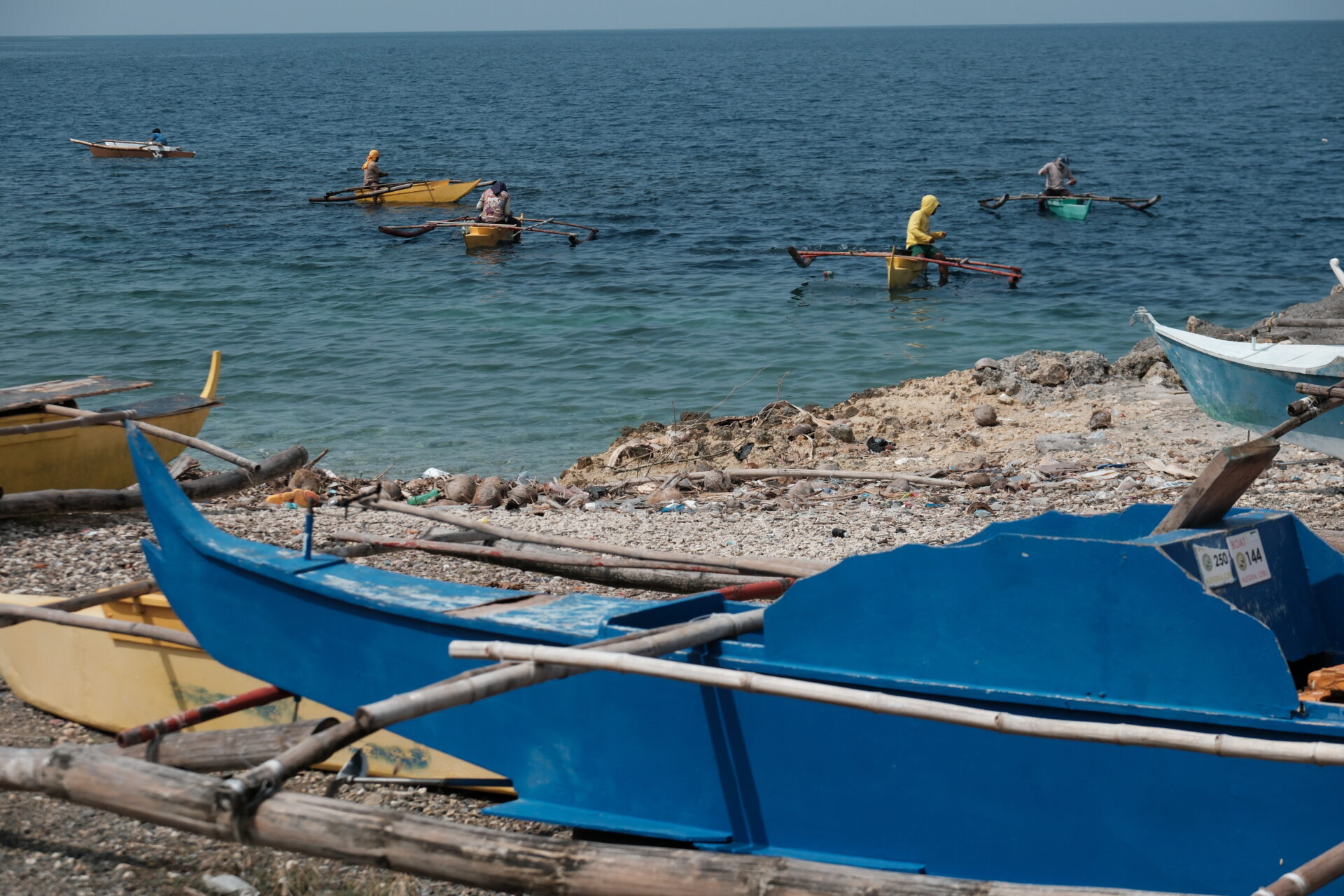
For Bindolo, who has spent more than 40 years fishing, the immediate concern remains income.
“Dili na man ko dawaton kay tigulang na man (They won’t accept me anymore because I’m already old),” he said, referring to possible jobs from the new development.
For Gomez, the need is simpler: enough fish to bring home. “Sud-an ra (Food to eat).”
(The story, first published by Sunstar Cebu, was produced under the Global 30X30 Conservation Initiative grant from Internews’ Earth Journalism Network).