BORONGAN, Eastern Samar—Shortly after his reelection in 2019, Borongan City Mayor Jose Ivan Dayan Agda moved to tap the People’s Survival Fund, a national climate finance mechanism, to support the city’s climate adaptation efforts.
“The People’s Survival Fund has been popular in the sense that it’s difficult to hurdle… you need to thread the needle’s eye,” Agda said.
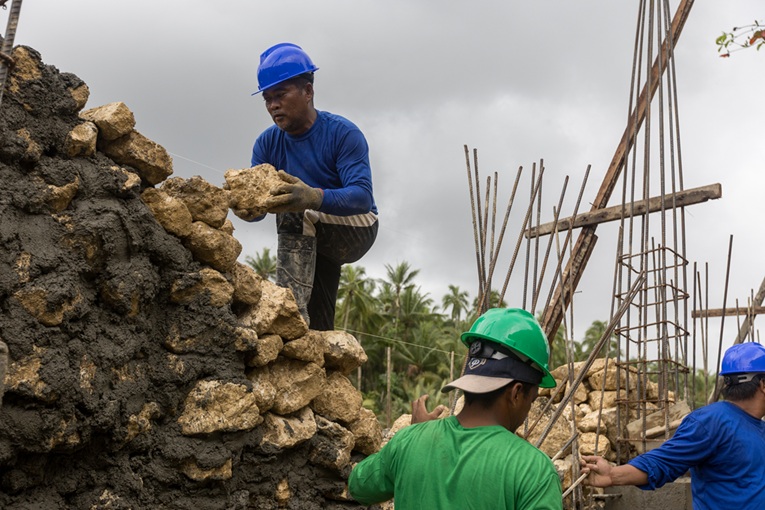
He formed a technical team to develop a proposal for a flood-control promenade along the Lo-om River, a major waterway cutting across several barangays. The project combined riverbank reforestation and bamboo planting with limited structural works—departing from the usual reliance on concrete barriers.
“But I told the team, this is ‘suntok sa buwan’ (a punch at the moon),” the mayor said.
Agda admitted he worried his support for Leni Robredo during the 2022 presidential elections might hurt the bid.
But to his surprise, the PSF board granted Borongan P118 million in 2023 to fund flood-control structures and reforestation along the Lo-om River—making it a model for other LGUs seeking access to the fund.
Agda attributed their success to a dedicated team that handled extensive documentation, including the Local Climate Change Action Plan ensuring these were “not doctored” but based on real data from their experiences.
The LCCAP, required of all LGUs, outlines local strategies for climate adaptation and mitigation. Around 90% of LGUs already have one, according to the Climate Change Commission.
It is essential to establish the “climate rationality” of PSF proposals, a common stumbling block for LGUs that must prove their projects are data-driven and directly tied to climate risks.
Even Borongan had to revise and resubmit its proposal several times to meet this requirement.
“Everything you submit has to be backed by data,” Agda said.
Hard infrastructure vs nature-based solutions
Flood control—largely through hard infrastructure—dominates most proposals submitted to the PSF board, according to the Climate Change Commission unit that reviews them.
The PSF, however, encourages nature-based and community-centered solutions, including mangrove restoration, health programs, risk insurance, and early warning systems
Damage to infrastructure and agriculture from Typhoon Ruby, estimated at over P120 million in Borongan, nearly triple the impact of Typhoon Yolanda, pushed the city to rethink its approach.
Ronnie Tejero, chair of Barangay H in Borongan, said flooding continues to threaten residents, especially fisherfolk who depend on the river for livelihood. A previous concrete barrier built by the national government was destroyed and could no longer protect them, he said.
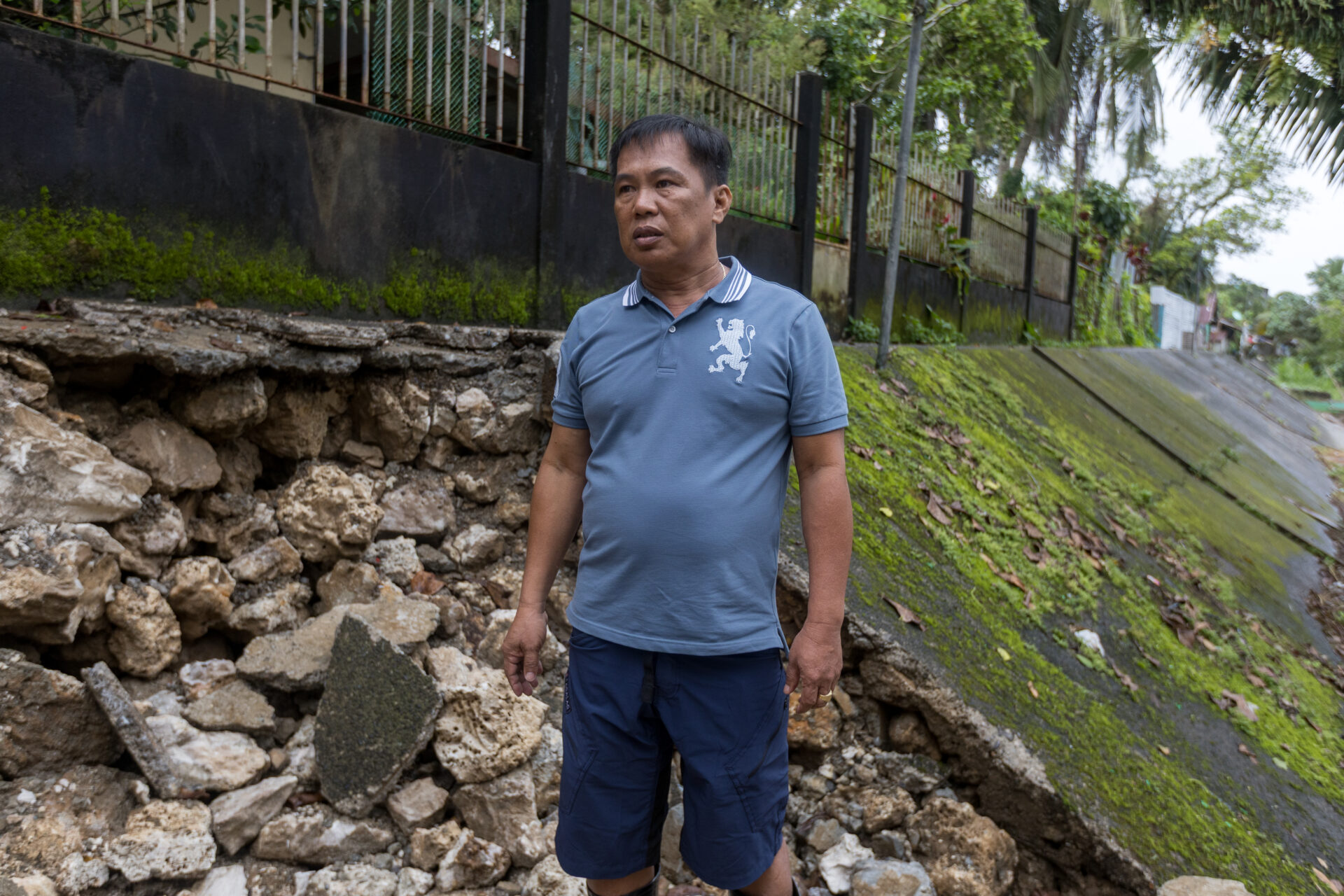
“The previous structure that we had was too low and not durable. But this time, we can see the new structure could not be easily washed away by floods,” he said.
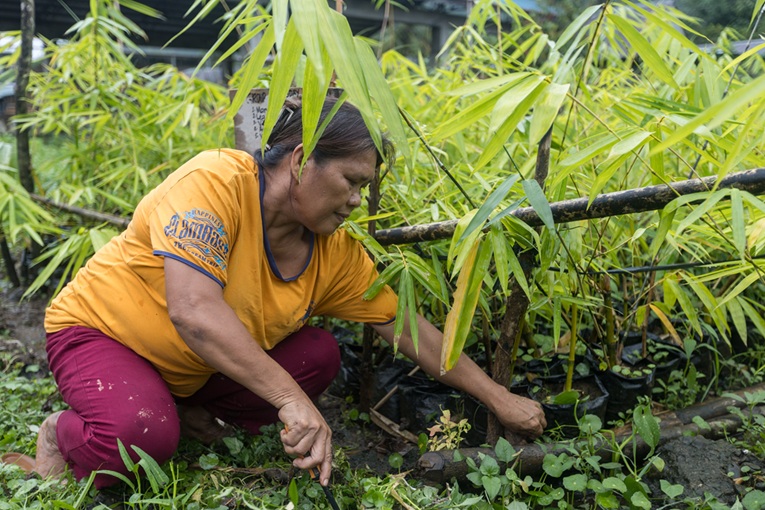
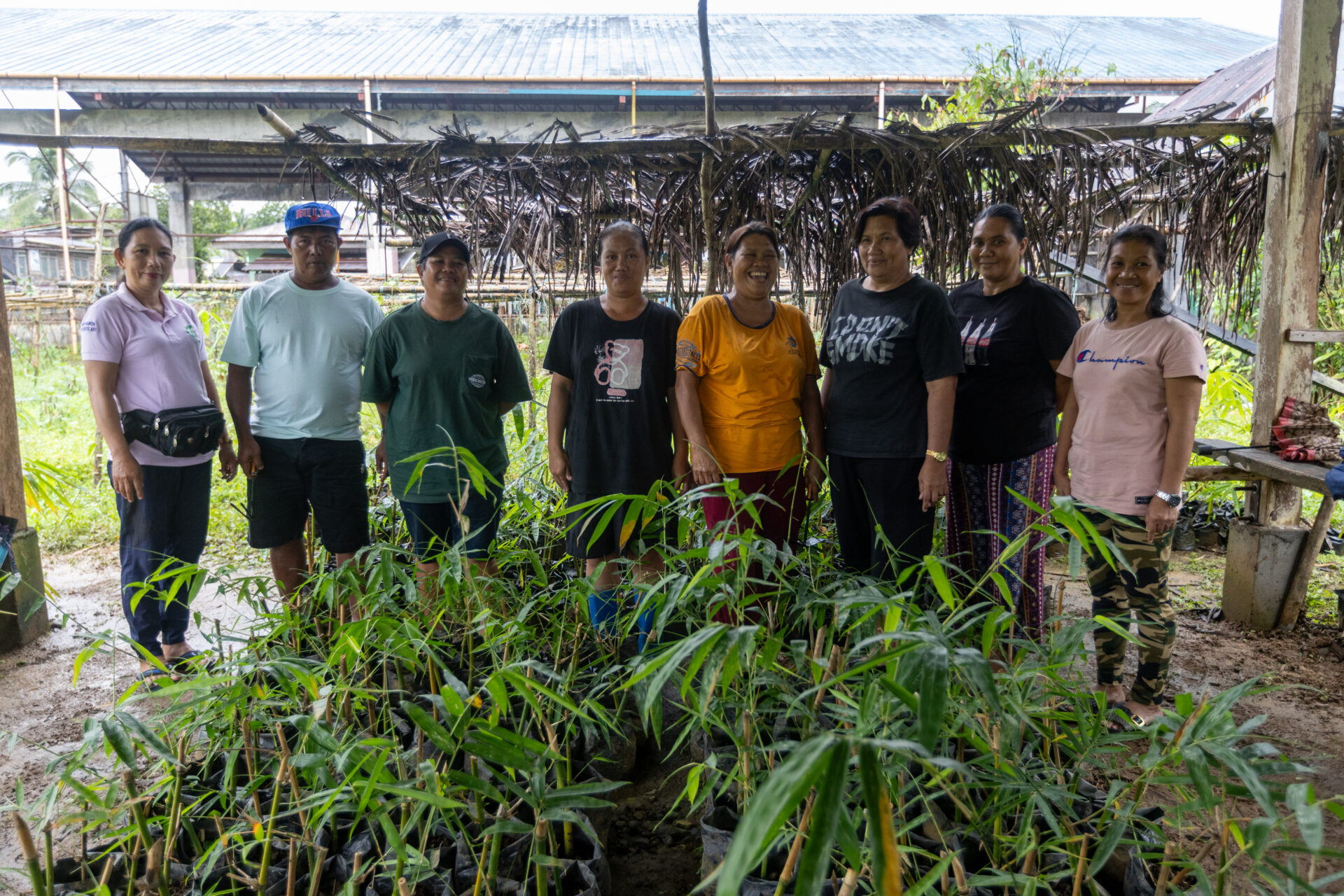
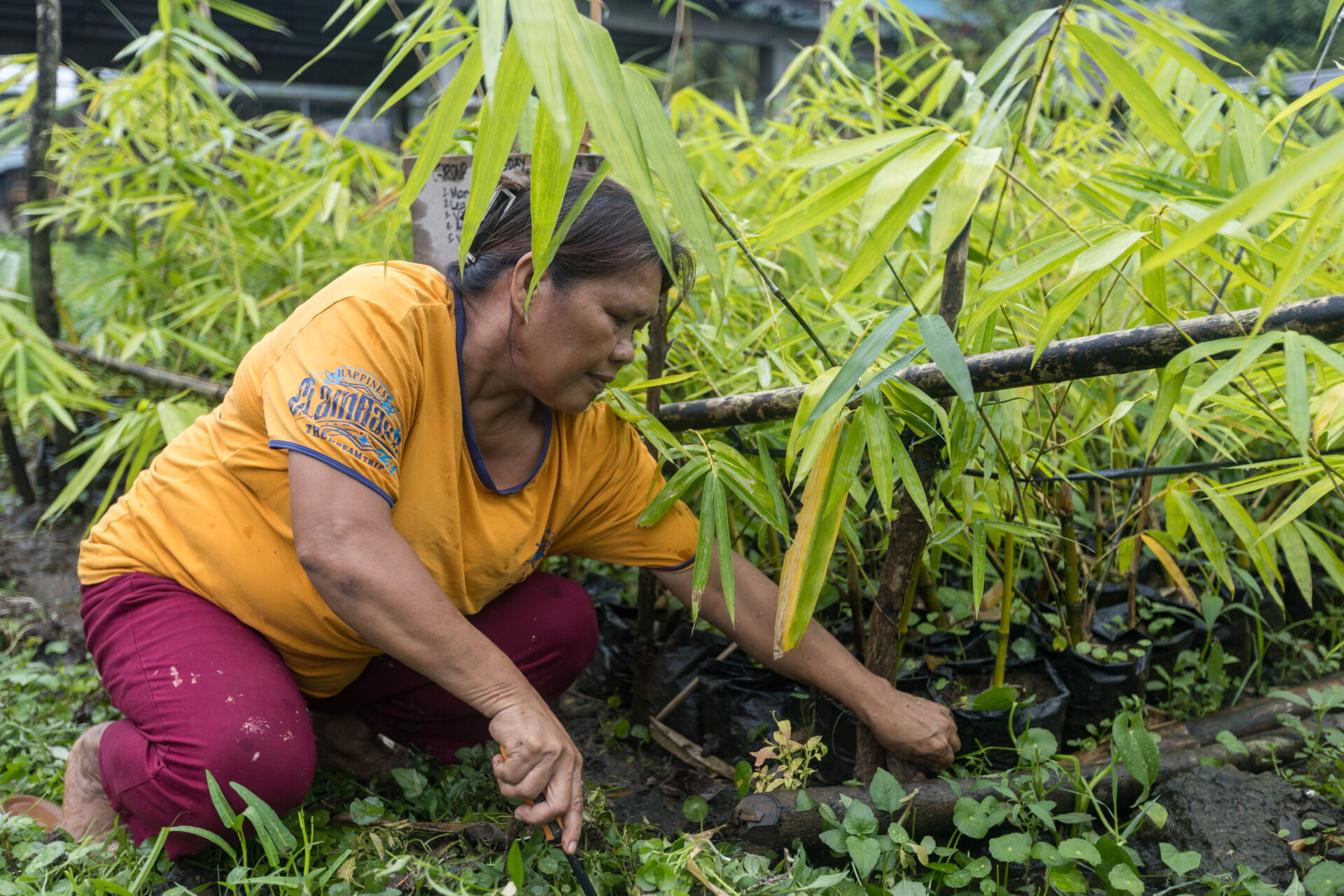
In San Gabriel, the farthest town from the city center and situated by Lo-om River, a group of volunteer women was tasked to grow and replant thousands of bamboo trees to help stabilize riverbanks and reduce flooding and erosion.
“Typhoon Ruby really flooded our city, especially our public market, which was submerged by water and mud,” Agda recalled.
He added that combining structural measures with reforestation offers a more sustainable solution, but one the city cannot fund alone.
“I cannot dedicate all the resources of the city to solve a single problem,” he said.
While Borongan secured PSF support, many vulnerable LGUs were not as lucky.
Last year, the DOF launched a PSF caravan to guide LGUs on accessing funds for climate adaptation projects. Still, many lack the resources to meet technical requirements, including costly scientific studies often slowed by bureaucracy.
Technical barriers
The Eastern Samar provincial government also attempted to secure PSF funding for a flood control project in Jipapad, a fifth-class municipality located in a catch basin between the Oras and Catubig rivers and prone to frequent flooding.
Gov. Ralph Vincent Evardone said the proposal stalled due to requirements for a hydraulic analysis and a river basin master plan.
“PSF is tricky because the scale of the project should really benefit a lot of people, and it has to be backed by a feasibility study,” he said.
The governor added that the PSF board’s criteria for being “prone to natural calamities” can be too broad and subjective, sometimes disadvantageous to applicants like Guiuan.
“They could ask: How often do we get hit by a Yolanda-type of a typhoon?” he said.
For Jipapad, the province proposed a flood control system with a public park designed to redirect floodwaters. But required studies had to come from national agencies, not the LGU.
Evardone said the PSF board requested a hydraulic analysis and a river basin master plan, which he expected from the Department of Public Works and Highways (DPWH), then working on a flood control project along the Oras River in Arteche.
“The problem is, we were not given a copy. Either they didn’t want us to see the studies or because there weren’t any plans,” he said.
At the same time, the province did not have the expertise and resources to produce such studies independently.
“We didn’t have an engineer with that kind of expertise,” he said.
The case highlights a persistent barrier: Many LGUs lack technical capacity, while access to data from national agencies remains limited.
Borongan faced similar issues.
Although its city engineers designed the P118-million project, securing certification from the DPWH caused delays.
“Our plan turned out to be cheaper than DPWH. But that’s when we experienced delays… the DPWH was hesitant to approve our project because of the price gap,” Agda said.
But Borongan City’s success with a nature-based flood control promenade points to a needed shift in local climate finance: from “business-as-usual” infrastructure toward more holistic, data-driven adaptation strategies.
At the same time, the struggles of other LGUs in Eastern Samar underscore the tension between urgent protection needs and the technical barriers that block access to critical funding.
“It’s important to have access, but it doesn’t stop at that, Evardone said. “It ends when the funding actually reaches LGUs.” (Read Part 1 here)
This story was produced with support from Internews’ Earth Journalism Network.