BORONGAN/GUIUAN, Eastern Samar—Since 2016, the coastal municipality of Guiuan, Eastern Samar—ground zero for Typhoon Yolanda—has been trying to access the People’s Survival Fund.
This government fund is meant to help vulnerable communities get ready for and cope with severe weather.
“Guiuan is very typhoon-prone. In fact, jokingly, we call ourselves the welcoming committee of typhoons,” said Rectito Melquiades, coordinator of the Guiuan Recovery and Sustainable Development Group for Resilience.
Despite being one of the first and hardest hit by climate disasters, Guiuan’s push adaptation funding remains stalled by government delays. As a result, residents continue to face growing risks as extreme weather intensifies.
The PSF is a legislated national mechanism that supports long-term climate adaptation projects through direct funding—a pioneering model for locally led adaptation financing in Southeast Asia.
This P1-billion annual fund is a critical lifeline for climate-vulnerable communities, but many local government units see it as a needle’s eye — difficult to pass through due to exhaustive requirements and unpredictable approval timelines.
In an interview, the Climate Change Commission said proposals for PSF funding are prioritized based on poverty incidence, vulnerability to climate hazards, and the presence of key biodiversity areas.
Guiuan, a second-class municipality bordering the Pacific Ocean and the Leyte Gulf, meets all these criteria. It also manages over 60,000 hectares of protected marine landscape and seascape and has complied with all the requirements, Melquiades said.
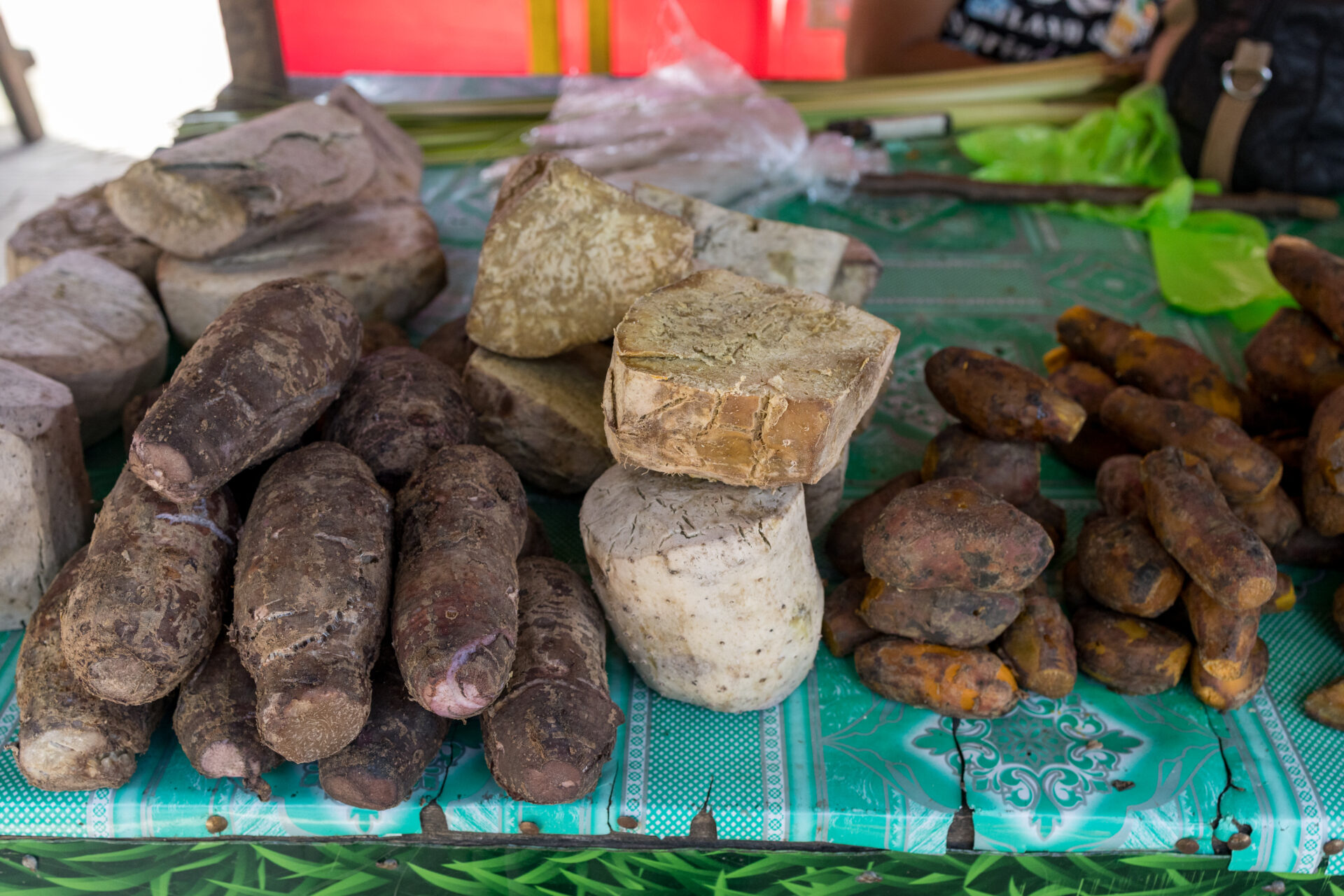
Their 35-page proposal for PSF seeks to address food insecurity and water resource issues, including the creation of a root crop research center focused on “palawan,” a resilient crop that sustained communities when rice supplies were cut off during Yolanda.
Local officials remain puzzled by the lack of approval by the PSF board. Ten years after its initial submission, Guiuan is still waiting for answers.
Rather than prioritizing hard infrastructure, the proposal focuses on sustainable food systems and marine protection—areas experts say are often overlooked in Philippine climate adaptation efforts.
Melquiades said they have yet to receive clear feedback or a formal rejection from the PSF board.
“We’re still hoping this will be considered by the PSF secretariat because we’re hoping to address our difficulties on food security and water resource management,” he said.
“For a very long time, LGUs were left clueless about where they were in the entire process. It’s as if they submitted a proposal in some black hole, and hopefully on the other side of that wormhole, there’s an approval or rejection,” said Kairos Dela Cruz, executive director of the Institute for Climate and Sustainable Cities and a former PSF board member until 2024 as NGO representative.
“It’s hard to be in limbo,” he said.
The billion-peso paradox
The Philippines is consistently ranked as the world’s most vulnerable country to extreme weather and natural disasters, leaving over a thousand LGUs competing for a share of the PSF.
“It’s very hard to compete with each other because it’s becoming largely a victimhood approach… ‘What’s the edge of your vulnerability compared to mine, because mine is also real?’” Dela Cruz said.
In a document shared by the Climate Change Commission, the PSF board— headed by the Department of Finance— has approved 15 projects totaling over P1.4 billion since 2016. It has supported nine municipalities in developing their project proposals, with total grants of P18 million.
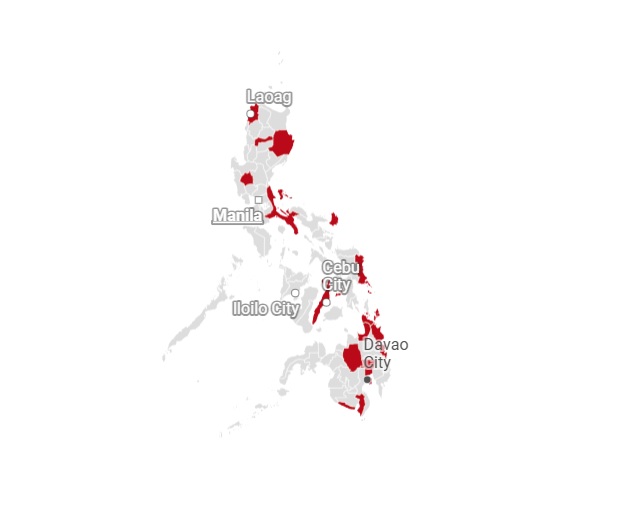
Local government units with PSF-approved projects from 2016 to 2023 are shaded in red
Unlike global climate finance mechanisms such as the Green Climate Fund, the world’s largest dedicated fund helping low-income countries respond to climate change, the PSF is a unique, locally led adaptation fund sourced from the national budget.
The PSF was established in 2012 through Republic Act No. 10174, which amended the Climate Change Act of 2009.
Dela Cruz, who was part of the transition council when the PSF law was passed, said it was a long process before the initiative was kick-started.
“It was not even funded until 2015. So for a long time we have had a law, but we didn’t have any means of implementing it,” he said.
The PSF is meant to maintain a P1-billion floor, but it has only been replenished once since its initial allocation, said Dela Cruz.
Last year, the DOF announced a P1.42 billion financing commitment for the PSF.
The agency did not respond to repeated requests since February for an interview or comments.
Audit reports also show that the underutilization of the PSF has been a long-standing issue since its creation 14 years ago.
Unpacking the ‘Yolanda’ narrative
Gloomy skies and heavy rains can be seen from the office window of Eastern Samar Gov. Ralph Vincent Evardone in Borongan City in late February, well beyond the typical “habagat” (southwest monsoon) season in the Philippines.
“The weather has become erratic,” said Evardone. “We didn’t get to experience that a few years ago.”
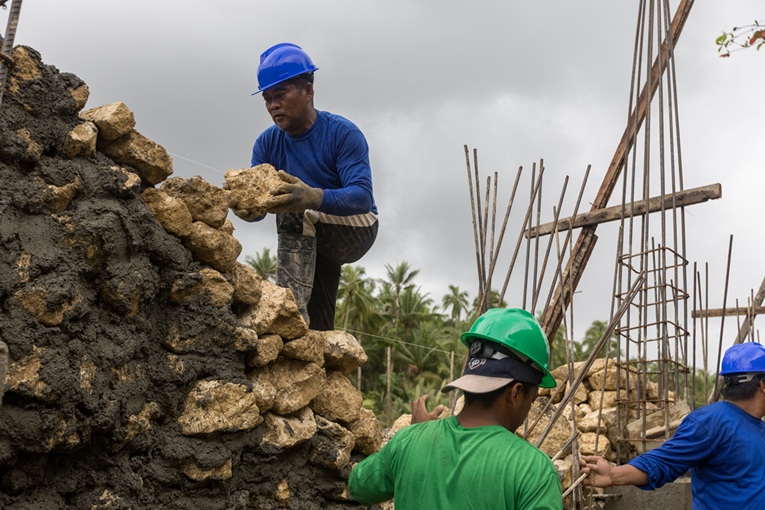
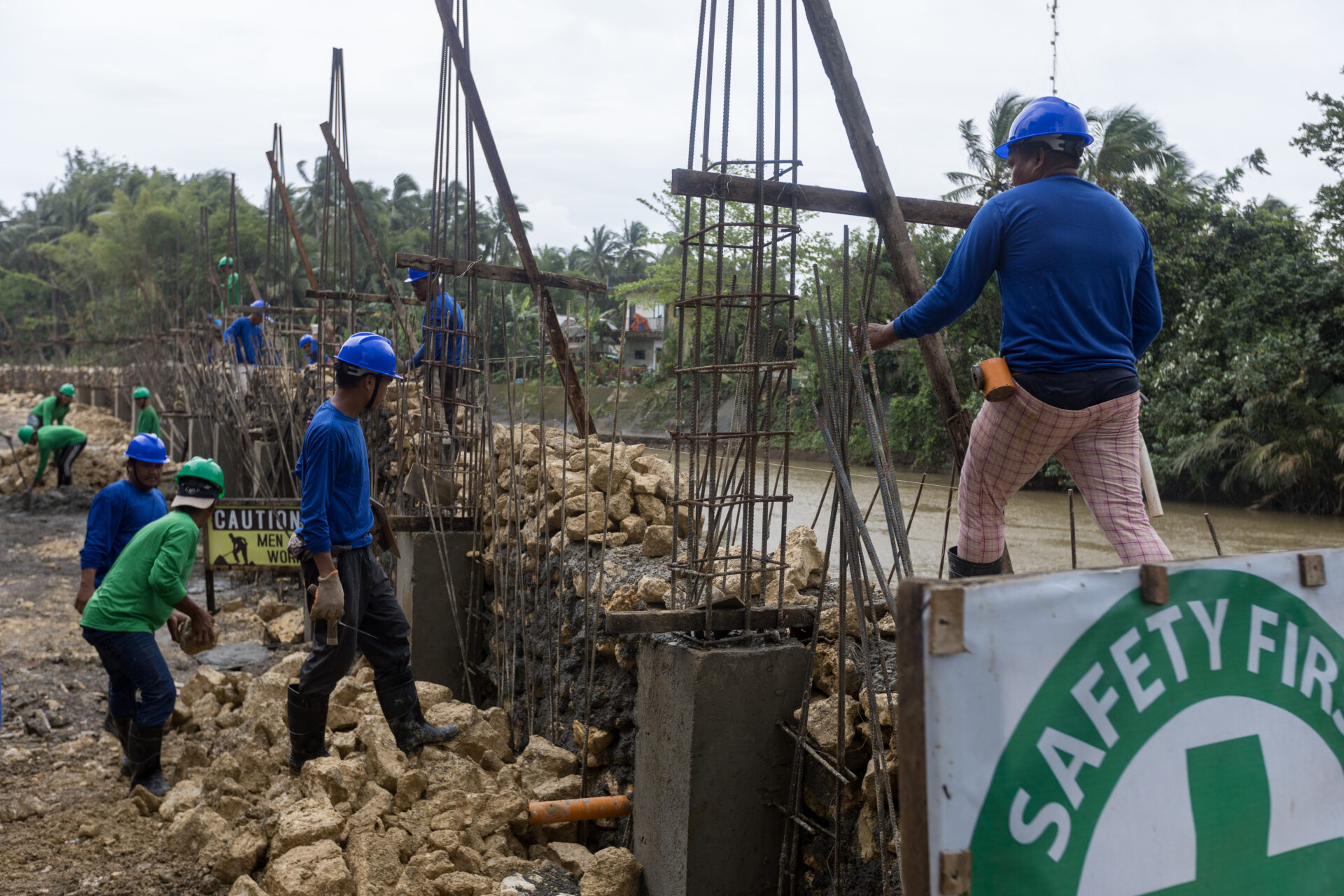
From being the ground zero of two of the strongest typhoons in history—Yolanda in 2013 and Ruby in 2014—Eastern Samar is now facing increasingly unpredictable weather patterns brought by climate change, making it harder for local government units to prepare for the next disaster.
“How can you prepare for something that no one warns you about?” Evardone said.
While the governor said the province has enough funds for disaster response, it cannot afford large-scale projects that could prevent disasters brought by extreme weather events, such as flood resilience structures in river basins.
Eastern Samar has submitted three PSF applications—for Borongan, Guiuan, and Jipapad—but only Borongan’s proposal has been approved.
Dela Cruz said a key but often overlooked barrier is the limited capacity of LGUs to translate climate vulnerabilities into actionable development strategies.
“Climate change is here, it’s here to stay. But it would take some time for local governments to understand… how the Philippines’ development goals mean for them,” Dela Cruz said.
He added that this challenge is particularly evident along the country’s eastern seaboard— a vital, resource-rich but typhoon-prone region area —where the “Yolanda narrative” is often “co-opted” to secure climate finance.
At the 10th anniversary of Typhoon Yolanda in 2023, former Eastern Samar governor Ben Evardone said the PSF could help address climate change issues, but access remains difficult. He asked President Ferdinand Marcos Jr. to relax the requirements so more LGUs can qualify.
Dela Cruz said this is “a really valid concern” for LGUs that experienced Yolanda firsthand and struggled to get their proposals approved.
“But I think it’s also symptomatic of the level of dire need on further assisting LGUs on how to come up with the proposal, and to visualize and co-create their development strategy moving forward,” he said. (Read Part 2 here)
This story was produced with support from Internews’ Earth Journalism Network.