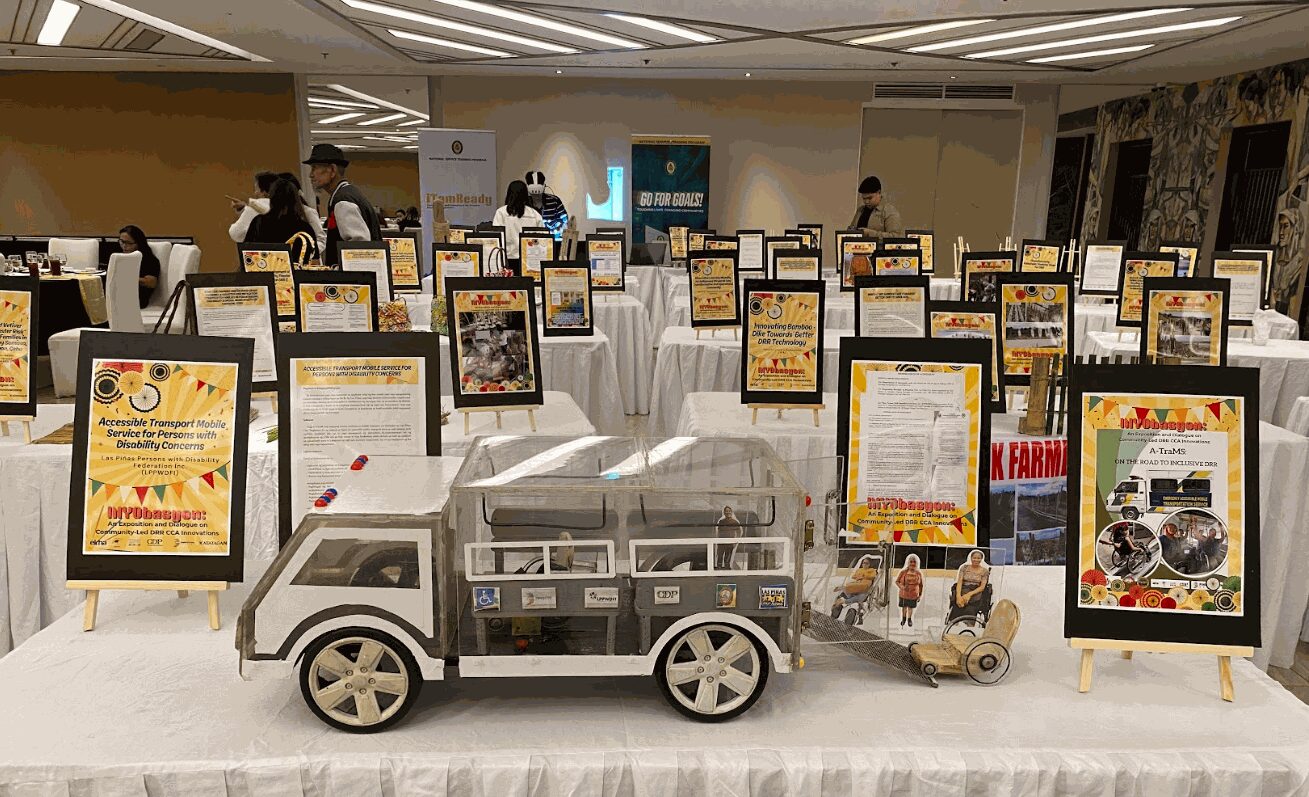
When Typhoon Uwan struck the country last November, Maria Fe Maravillas was grateful that the Accessible Transport Mobile Service (A-TRAMS) was there to help move her to the evacuation center more conveniently.
A member of the persons with disability community, Maravillas recalls how the custom-built mobile allowed her to reach the evacuation center with far less difficulty than in past disasters, when mobility meant relying on two to four people physically lifting her into a vehicle.
“Dahil sa modifications na ito, kahit isa lang magtulak sa iyo, makakapasok ka na safe na safe dahil may lock ang gulong ng wheelchair (Because of these modifications, even if only one person pushed you, you can enter [the vehicle] safely since the wheelchair has a lock),” Maravillas shared about her experience.
Before the introduction of A-TRAMS, many PWDs, including Maravillas, often feared disaster situations due to the difficulty of transportation and the lack of prioritization as they were often the last to be evacuated. This innovation, spearheaded by the Las Pinas Persons with Disability Federation Inc., has since eased her anxiety during emergencies while also reducing the physical strain on those assisting her, making the evacuation process safer and more convenient.
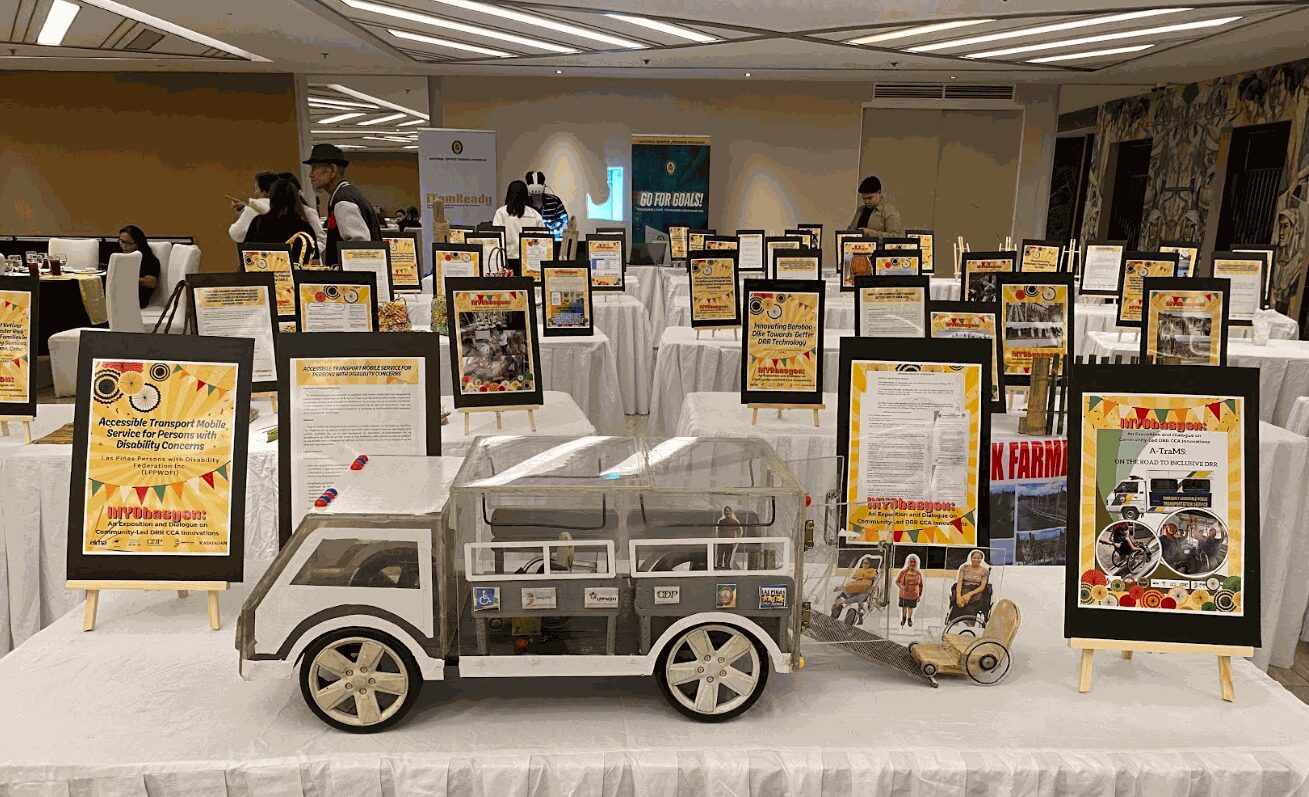
In the southern Philippines, another PWD, Darlito Palermo from Tagum City, Davao del Norte designed a rattan-made wheelchair for children. What makes Ligkuranan sa Kagawasan unique is it was designed for various ages and considers different types of physical disabilities.
Unlike wheelchairs provided under government programs, this innovation is customized to meet the specific needs of each individual, an aspect often overlooked in conventional designs.
In an interview with VERA Files, Palermo noted there are people whose bodies are deformed, or do not have legs, or are polio-stricken.
“Ibig sabihin, dahil kami po mismo ang gumagamit ng wheelchair, alam po namin kung ano ang mas angkop sa sitwasyon namin kaya po in-inovate ang rattan wheelchair depende sa tunay na pangangailangan ng gagamit nito,” Palermo explained.
(In other words, since we use wheelchairs ourselves, we know what is more suitable for our situation so we innovate the rattan wheelchair depending on the actual needs of the user.)
Palermo serves as president of the Davao del Norte Persons with Disability Association. He underscored the importance of building strong partnerships with relevant stakeholders to localize and expand this innovation nationwide, so that more children can benefit from it.
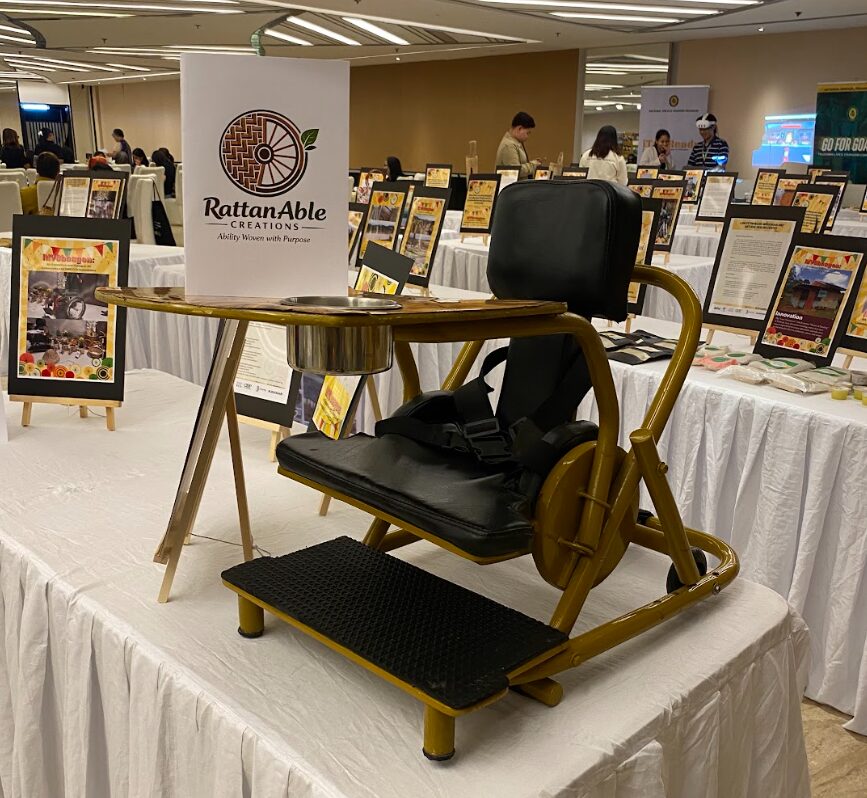
The A-TRAMS vehicle and rattan-made wheelchair are two notable innovations focused on assisting PWDs across the country, particularly in Mindanao. These are part of a broader range of community-driven solutions supported by the Kalipunan ng mga Tagapaglikha para sa Katatagan ng Komunidad (KATATAGAN) – a national coalition of grassroots innovators dedicated to addressing the needs of sectors often overlooked in disaster planning.
KATATAGAN’s primary mission is to bridge gaps for sectors often excluded from the benefits of state-led development by highlighting and promoting grassroots initiatives that address oft-neglected needs of marginalized groups.
The INYObasyon conference, held on March 13 in Quezon City, featured a dialogue on community-led Disaster Risk Reduction and Climate Change Adaptation, and showcased existing local innovations across the Philippines towards mitigating disaster risks and climate crisis adaptation. It was organized by the Center for Disaster Preparedness Foundation Inc. under its Pinnovation Academy project.
Gendered burdens in layered disaster vulnerabilities
When it comes to disaster risk, indigenous women in Mindanao struggle with limited access to resources and being excluded from decision-making, which makes them more vulnerable during emergencies. With the rise of women-led groups, their call for inclusion and recognition of women participation in the community beyond their supposed caregiving responsibilities in their household has been further amplified.
Zenith Ballerta, a member of Teduray, a group of indigenous people in Mindanao, embraces the value of traditional remedies through medicinal herbs in treating sick people in her community. She noted this group has been marginalized due to the lack of access to hospital care and limited funds.
She leads Pandan Tri-People Women’s Organization and established a platform called the ‘Lawi Fitinanaan’ or the House of Healing that uses organic ingredients to innovate herbal medicines like teas, ointments, salves, and soaps for skin disease.
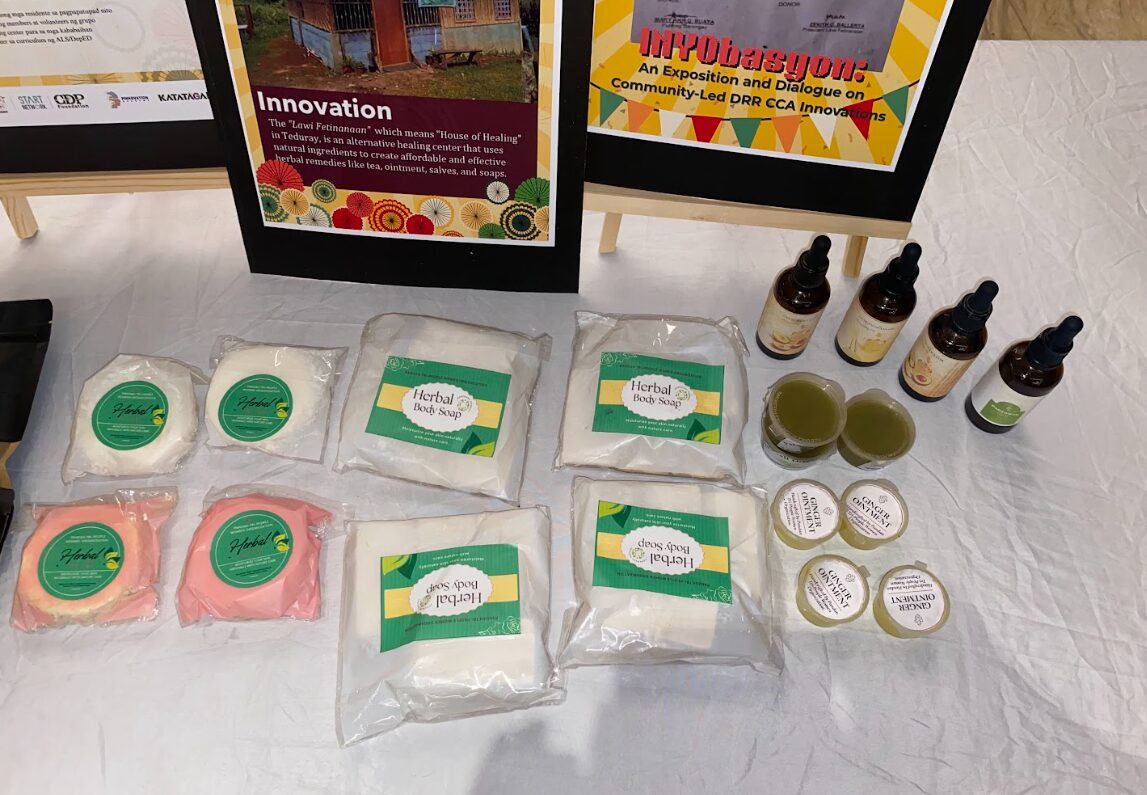
Other indigenous women-led groups also emerged such as the ‘Samahan ng Tatlong Tribong Kababaihan’ or the Tri-People women-led emergency response group that serves as first aid responders in the community. The Tanglag tribe women’s organization introduces an emergency nutri-bar food called ‘Binnadang’ made from mung beans, sesame seeds, and bananas.
These innovations reflect how indigenous women, despite facing poverty and deeply-rooted gendered burdens, are creating pathways for survival in difficult times.
Collective struggles
For many local innovators, their solutions remain stop-gap measures created to meet urgent needs in underserved communities. While these innovations have proven effective on the ground, they are still largely confined to local settings and have yet to gain wider recognition across the Philippines. On the facade of their shared struggle is a call for stronger government support to help sustain and upscale their work.
“Ang main challenge po talaga sa amin ay ang pondo kasi kailangan muna siya maging accredited at bago kami magka-license at maging producer ng mga innovations na ito,” Palermo shared.
(Our main challenge is funding, because we need accreditation before we can receive a license to produce these innovations).
Despite their demonstrated safety and usefulness within their communities, these innovations must undergo rigorous processes for accreditation and licensing. This includes multiple tests to ensure compatibility and safety before production can expand.
The same challenge applies to herbal medicines and emergency nutri-bar foods, which must pass regulatory approval from the Food and Drug Administration before they can be formally distributed.
Local innovators continue to hope that the challenges they face in addressing inherent concerns of their communities will soon be recognized and given effective solutions so they can finally carry the platform forward.
Editor’s note: Ma. Rizza Francisco is a Bicol University student writing for VERA Files as part of her internship.