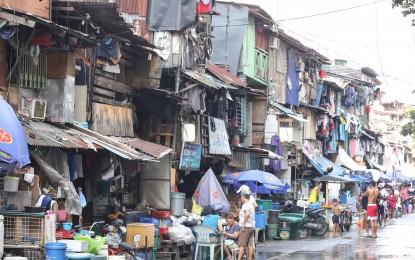
Corruption, disasters and misguided government priorities worsen the existing wide gaps between the rich and the poor, particularly in the areas of economics, health and education, trapping more Filipinos in a cycle of poverty and disadvantage.
“The flood control projects worth billions and billions of pesos could have saved so many lives if it had gone to our public hospitals, to PhilHealth (Philippine Health Insurance) benefits. It could have saved so many young children from dying of malnutrition,” said Sofia Beatriz “Pia” Rodrigo, advocacy and communications lead of Action for Economic Reforms, a reform-oriented research and advocacy group.
“When these funds are diverted from social services, there are real implications and the huge [segment] who really suffer are the poor,” she noted.
Rodrigo presented to the media on Thursday a report with nongovernment Oxfam Pilipinas titled, “Inequality at a Breaking Point: A Call to Embed Equality in the Philippines’ Economic Agenda,” which showed that the “economic, health and education inequalities, compounded by the disasters and crises, are pushing Filipinos further into disparity.”
“This deepening inequality positions the Philippines as the 15th most unequal country globally and with the starkest divide in Southeast Asia,” the report said.
Recent developments, such as the heavy impact of calamities in several provinces and the discovery of widespread corruption in flood control and other infrastructure projects, made the release of the report even more timely.
“As millions recover from Super Typhoon Uwan and Filipinos rightly demand answers about flood control projects that did not protect them, we must ask a harder question: why are disasters, public service failures and a slowing economy hitting the same people hardest?” said Maria Rosario “Lot” Felizco, executive director of Oxfam Pilipinas.
“Inequality is not an academic problem — it decides who lives and who dies when disasters and crises hit. Inequality is a silent and worsening crisis that plagues the country. That’s why everyone should work together to address and end it urgently,” Felizco added.
When asked about the impact of numerous forms of cash assistance in the national government budget, Filomeno “Men” Sta. Ana III, coordinator and a co-founder of AER, said the poor should not be made dependent on “ayuda (aid).”
“The alternative is jobs. The strategy is not ayuda. What happened is that almost the entire budget was transformed into a pork barrel patronage. That’s not effective. Investor confidence is gone. What is important is how we create jobs. The policy, the strategy of the government has to revolve around job creation, and that should be quality jobs, not just for the sake of having jobs,” he explained.
According to the report, pursuing economic growth is not enough to close the inequality gap. To reduce inequality means to reduce poverty, Rodrigo pointed out. “It’s a cycle. We can’t look at inequality and poverty without thinking of the main drivers,” she said, referring to the lack of quality jobs, limited access to essential public services and regional economic imbalances, further compounded by climate change and governance issues.
On health, Filipinos’ out-of-pocket expenses remain the third highest in Southeast Asia at 45.5% as of 2021. On education, Rodrigo cited that Filipino students are lagging behind, with 76-84% scoring below the minimum proficiency level in science, reading and math, citing the 2022 Program for International Student Assessment report.
The report cited findings of the Philippine Statistics Authority’s Family Income and Expenditure Survey, which showed that the richest 10% of the population earned more than double, or 115% more, than the poorest 40% in 2023.
“For every peso earned by the poorest Filipinos, the richest earn around P150,” explained Ma. Rosario Consuelo Lagman, policy advocacy and communications manager of Oxfam Pilipinas.
Corrupt officials make their way to their high positions of power because of the resources that they hold. It’s a cycle; corruption breeds inequality, Rodrigo said.
She noted some positive developments in the proposed P6.793-trillion national government budget currently being debated in the Senate, such as the reduction in the lump sums for ayuda.
In particular, Rodrigo noted that one form of the many ayuda provisions in the budget, the Medical Assistance to Indigent and Financially Incapacitated Patients had bigger budget for some years than PhilHealth. For 2025, MAIFIP has a P41.15 billion allocation while PhilHealth’s P74-billion subsidy was stricken off the spending program.
“[MAIFIP] erodes the idea of PhilHealth being the single payer for health care. Health is a human right; one should not be begging to benefit from it. That’s something we advocate. At least in Congress, we are hoping that MAIFIP will be reduced, but we also grapple with the fact that politicians really like it because it helps them stay popular among their constituents,” she said. MAIFIP, she added, takes away funds from PhilHealth, which should cover all Filipinos, “regardless of who you know, no need for guarantee letters from politicians to prove that you are entitled to that.”
“We want to shift to that kind of system that works for everyone, not just a few. It’s difficult to grapple with the fact that resources do not go to those who need it most.”
The views in this column are those of the author and do not necessarily reflect the views of VERA Files.
This column also appeared in The Manila Times.