
The observance of Easter Sunday this year leaves us with a much-needed message of hope and renewal: that light is stronger than darkness, and no stone is heavy enough to keep the truth buried forever.
I’ve been reflecting on this while reading about digital security and its impact on our privacy and daily lives. We are living in a time when our personal lives are collected, tracked and stored in massive digital “tombs” managed by governments and big corporations.
Because our phone numbers are now tied to our faces, addresses and other identifiers, a single text message is no longer just a “hello.” When we use our phones to pay for groceries, book rides or post on social media, we create a detailed digital map of our lives.
For the ordinary citizen, this may feel like having “nothing to hide.” But in a world where data is more valuable than gold, a centralized list of every Filipino’s identity is dangerous. If hackers breach that system, or a corrupt official uses it to monitor dissent, there is no “undo” button.
Even survey results on political candidates and commercial products raise questions: Are these responses truly from real people?
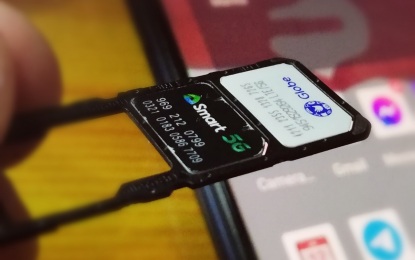
The rapid, unregulated rise of artificial intelligence makes the situation even more concerning, leaving us more vulnerable than ever. When SIM card registration was required, we were promised an end to text and online scams. What was presented as a shield against crime has instead become a tool for surveillance and profiling, while criminals continue to operate with near-total impunity.
The promise made three years ago, that SIM registration would be our salvation, has been broken. We traded privacy for security that never arrived. Scammers did not disappear; they evolved. Only law-abiding citizens became easier to track.
Even as we observed Holy Week, the demons of the digital world remained. Criminal syndicates, including those linked to offshore gaming operations, have found ways to bypass the law using thousands of “mule” SIM cards. Despite official bans, reports of clandestine operations persist.
The issue grows more urgent as we approach the 2028 national and local elections. Technology is no longer just a tool for communication; it is being weaponized for political control. The winner may not be the one with the best platform, but one with the most complete database.
For most of us, AI is not a scary robot from a movie. It helps delete duplicate photos, answer bank calls, and assist children with homework. It seems helpful, even polite. But it is like a new appliance without a manual, one that is beginning to shape our lives.
After the failure to curb scams through mandatory SIM registration, the government now proposes ID verification on social media. This would give authorities and well-funded political campaigns a detailed map of who we are, where we live, and what we believe. In the wrong hands, such data can be used to “entomb” the truth.
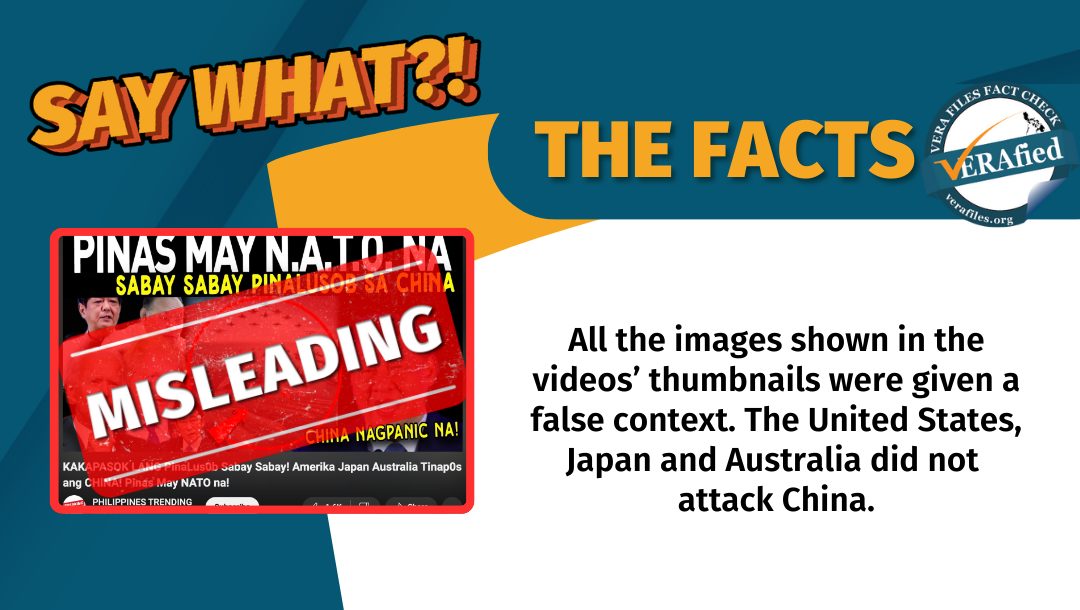
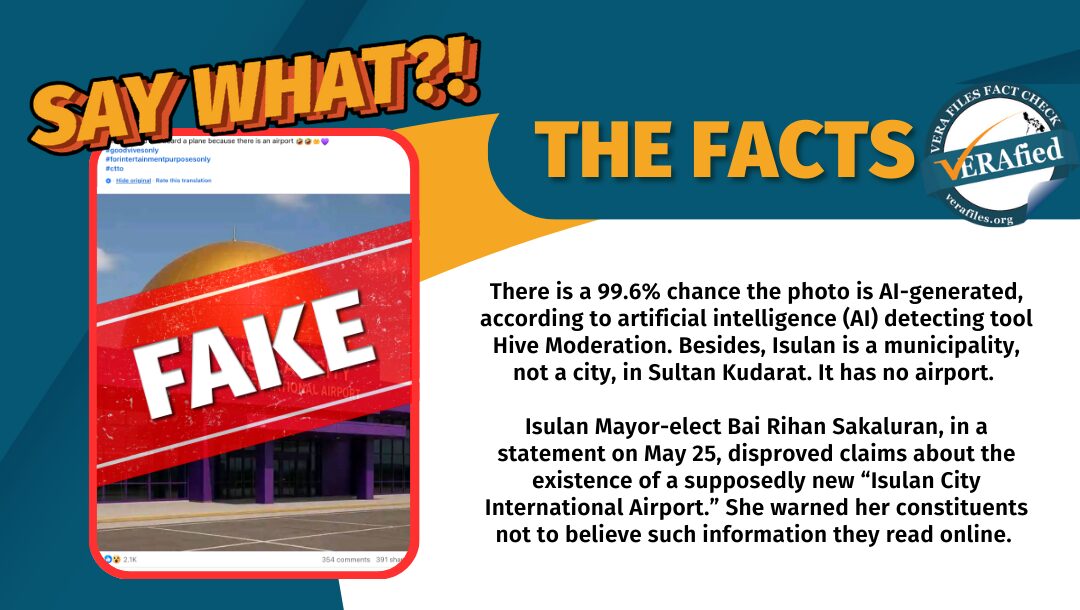
AI is also being used to create “deepfakes,” or photos, videos and recordings that can make anyone appear to say things they never said. This is expected to surge as campaign season nears. We have already seen social media content that looks and sounds like trusted individuals but is designed to mislead. Even “verified” accounts can be bots using stolen identities from data breaches.
In an age where smartphones are essential, we surrender large parts of our identity when we register SIM cards, pay by credit card, or unlock devices with our fingerprints.
The problem is not the technology itself. How are databases secured? How are these being used?
In the spirit of Easter and the Resurrection, we should reflect on the limits of how much control we allow the state, or anyone, to have over our identity. In the original Easter story, authorities used a heavy stone and armed guards to suppress the truth. They believed sealing the tomb would end the movement. They were wrong.
We find it relevant today with a thought that truth has a life of its own. An algorithm may be able to predict what you might buy or who you might vote for based on your past, but it cannot account for “Easter morning” of a person’s conscience. A database may be able to track your phone, but it cannot track your soul or your courage.
This also means we have to be responsible as “truth-seekers,” double-checking that “breaking news” text or graphic before sharing it. It means protecting others from digital red-tagging and standing up for the privacy of the marginalized.
We must also be wary of those who promise an easy return to the past, when POGOs, under the guise of economic growth, came with a heavy price: human trafficking, more corruption, tortures and other forms of human rights abuses.
Easter is about moving forward, not returning to the vices that one enslaved us. Hope, in its simplest form, is the refusal to remain in the tomb. It is the recognition that while the government may hold our data, it does not own our dignity. We must be more active in demanding that our privacy be respected as a sacred part of our freedom.
The government often speaks of “digital transformation.” While progress is welcome, it must not come at the cost of privacy and dignity. It is time to stop treating digital policy as a series of convenient shortcuts and start treating it as a frontline human rights issue. The government must prove it can be trusted with the power it has taken.
The views in this column are those of the author and do not necessarily reflect the views of VERA Files.
This column also appeared in The Manila Times.