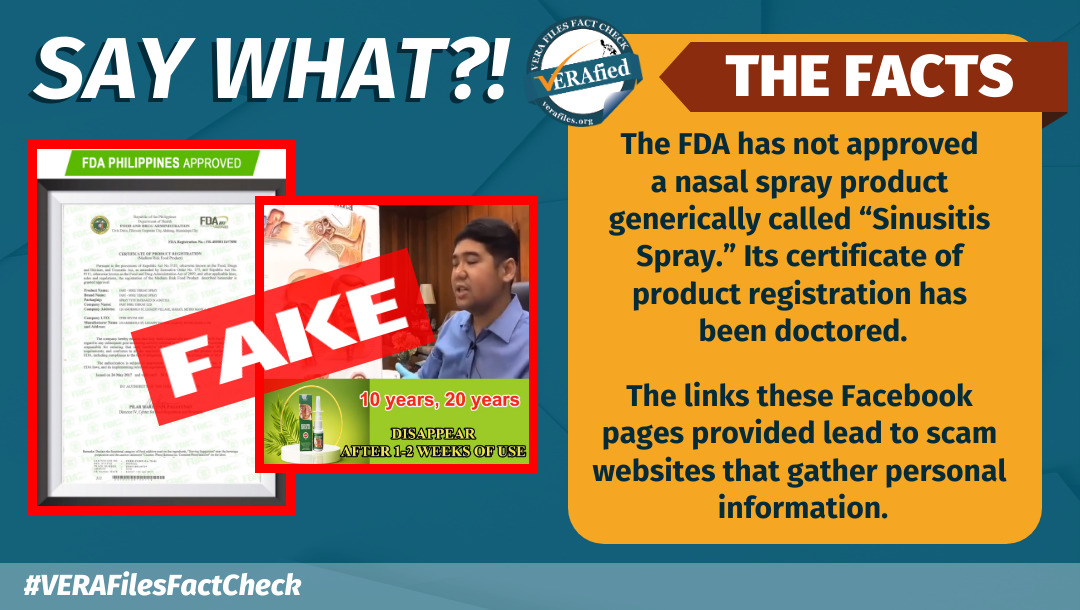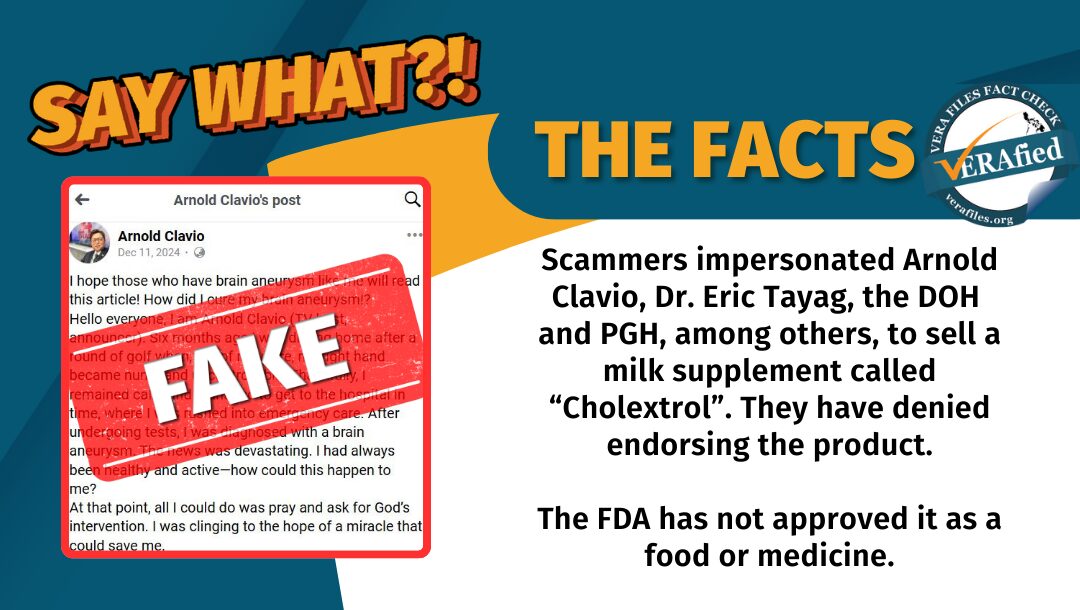

A Facebook page has posted multiple videos claiming that students across all levels can receive P8,000 or P10,000 in “school incentives” for the next academic year by simply registering online. These clips are fake.
VERA Files Fact Check flagged six such clips published from May 2 to 5 by the FB page Ph News Now, which masquerades as a news and media company. Each of the clips was posted twice, raking in over 1.5 million views collectively as of publishing.
All six fake videos featured female anchors presenting the claim, and images of happy students behind them. Each anchor’s script followed this formula:
- An opening line asking parents if they have a child going to school in June or the new school year
- An offer of P8,000 or P10,000 for school supplies and/or as school allowance
- A call to register for the cash incentive via an online form (with links provided in the caption)
- An invitation to follow the page, share the post, and/or tag other people in the comments.
These are bogus offers. The posts are clickbait and were made as an attempt to steal personal data from unsuspecting visitors and to gain money. None of the anchors were real; all the videos were made using artificial intelligence.
Moreover, neither the Department of Education nor Commission on Higher Education offers such a program for students from elementary to college. Official financial assistance programs from the government are always announced through their websites (ending in gov.ph) and verified social media accounts.

Clickbait posts used to steal info, earn via affiliate links
Each of the fake posts carried links leading to a Blogspot page (libreng-ayuda-2022.blogspot.com) which VERA Files has flagged at least 10 times for being used to facilitate other scams on FB. The site asks visitors to enter an email address or mobile number. Previous visitors have warned in the blog’s comment section that it is a scam that asks them later for a one-time password.
Apart from the Blogspot link used to facilitate phishing (or the stealing of sensitive data), the FB posts also all carried an affiliate link to a listing on Shopee for grocery items. Affiliate links allow online shops to track purchases referred through a partner’s post. For every reader who clicks the link and buys the product, the account earns a commission.
This is a tactic that has been observed time and again by VERA Files in online scams.
AI used to create multiples of the same scam
A closer observation at the fake clips show tell-tale signs of AI generation. The most telling were that the anchors in three videos appeared to have the same face, but only had different hairstyles and outfits, suggesting the use of an avatar generator. The other trio of videos featured similar outfits.
In all six videos, there was also a consistent mispronunciation of the Filipino word pasukan (pasuKAN, meaning “school season”) as pasukan (paSUkan, meaning “to insert”), suggesting the use of an AI voice generator.
VERA Files reached out to the Deepfakes Analysis Unit of the India-based Trusted Information Alliance for further verification. VERA Files sent two of the videos for deepfake detection and analysis.
For the clip below, the DAU said results from Resemble AI indicated that both the audio and the video were synthetic. SynthID, a watermark for content made using Google AI, was also detected in a significant segment of the audio. More, an analysis of frames from the video using the tools Imagewhisperer, Hive AI Image and Deepfake Classifier and WasItAI also showed results detecting AI generation.
For the next clip, results from Resemble AI again indicated that both the video and audio were fake. Hive – which was again used to assess a frame, instead of the video – also detected a 99.9% chance of it as being likely to contain AI-generated content, while WasItAI detected a 72% chance. Feedback from Hiya Audio intelligence showed that the audio appears to have been generated or modified with AI.
Beyond the tools, the DAU also analyzed the videos manually, noting that a key indicator of AI-generated content is whether mouth movements appear realistic or synthetic, and whether visual artifacts are present. In the video below, the lip movements were found to be unrealistic.
The bogus videos were published ahead of the opening of classes on June 8 for the academic year 2026–2027. Published by PH News Now (created on April 21), they have collectively garnered 40,800 reactions; 12,326 comments; and 10,964 shares.