
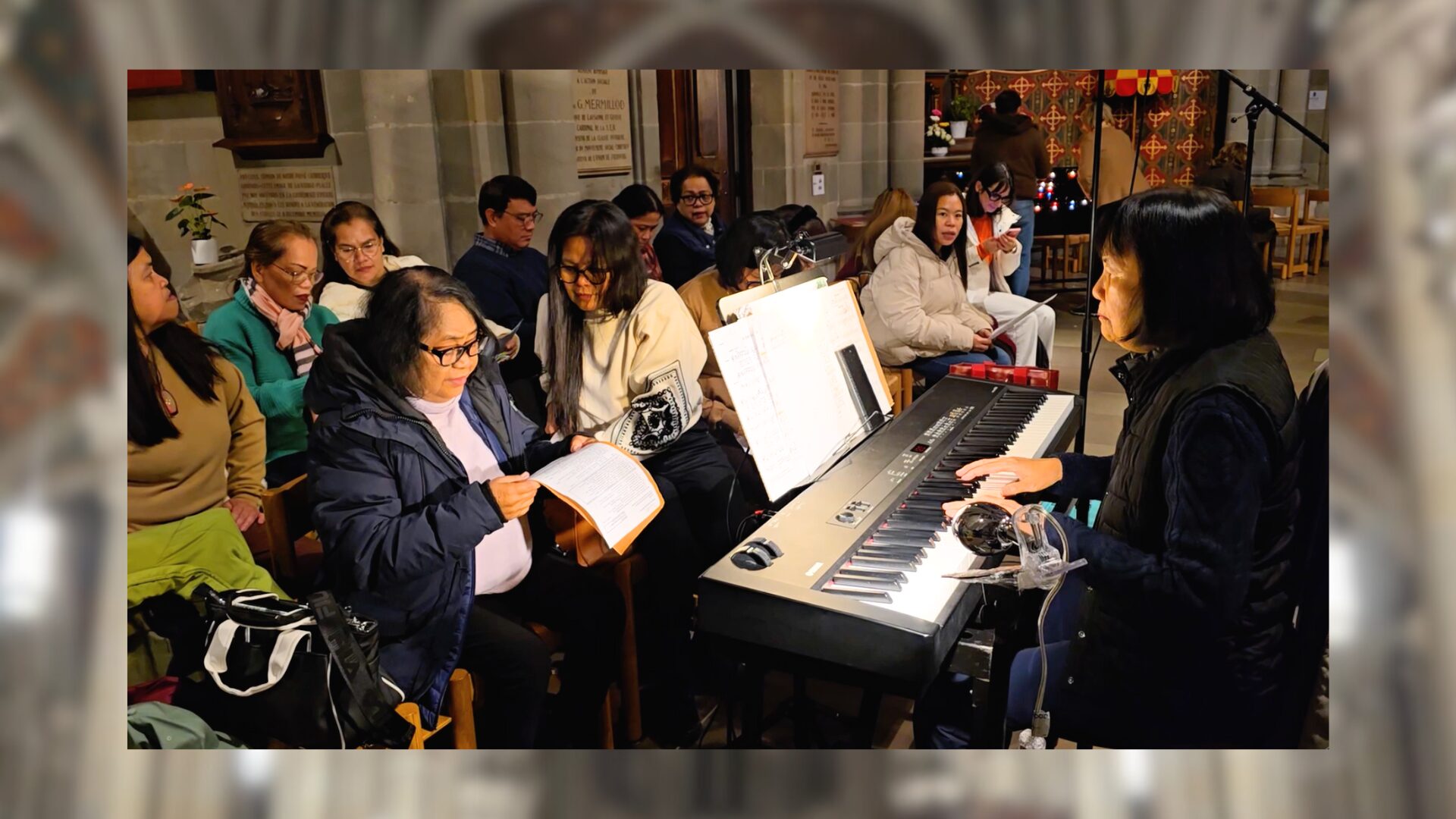
In the most important Roman Catholic church in Geneva, Filipinos are not only faithful parishioners; they are a vital presence.
Every second, third and fourth Sunday of the month, an all-Filipino choir serves as ministers of music during the only English-language Sunday evening Mass at the Basilica of Notre Dame. While most Masses at the church are celebrated in French, it is the Filipino-led service that fills the Neo-Gothic sanctuary with hymns sung in English, carrying echoes of faith—and home—for migrants and travelers alike.
The choir is composed of 22 regular members, all Filipinos, ranging in age from 25 to 85. Most are women. They include retirees and overseas workers who juggle two or three jobs to survive in one of the most expensive cities in the world, while still sending money to families back in the Philippines.
Despite demanding schedules, they rehearse at least once a week and arrive early every Sunday to practice again before Mass.
“We are not good, ha. Hindi kami magaling. We are just here to serve,” said choir director and pianist Elisa Martellet, gently downplaying the group’s dedication and discipline.
But their service goes beyond singing. Choir members distribute liturgical leaflets before Mass, clean up after the ceremony, then rush out to catch trams, buses or trains home. Though the basilica is just a stone’s throw from Geneva’s main railway station, Gare de Cornavin, commuting, especially on rainy or snowy nights, is often a challenge.
This routine has continued for nearly three decades.
Martellet began as a choir member and took over as pianist 29 years ago. Over the years, she has taught the group about 550 hymns, carefully choosing songs that reflect the themes of each Sunday’s readings.
“My aim was to choose hymns that present the themes of the Mass readings, which is a very big challenge for me,” she said. “In that manner, our choir is able to proclaim His Word.”
Martellet first came to Geneva on Christmas Day in 1993, hoping to find work. She landed a job at the United Nations Office on Valentine’s Day the following year.
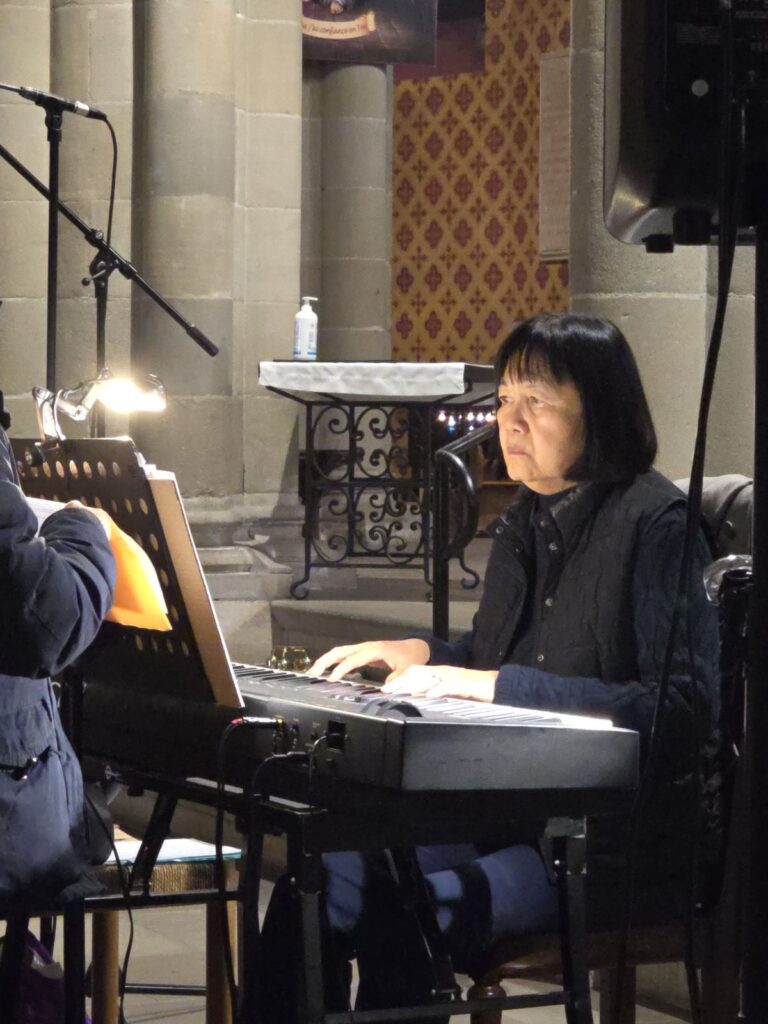
“I asked the Lord to give me a job as His Valentine gift,” she recalled. “He granted my prayer. That was a miracle. I even started working on that day.”
Now married to a Swiss national and a citizen herself, Martellet says she constantly reminds the choir of their role as cultural ambassadors.
“I instill in our singers that we represent the Philippines here in Switzerland,” she said.
The Sunday evening Mass is organized by the St. John XXIII parish, which serves English-speaking residents and tourists passing through Geneva. Martellet and most of the choir members are parishioners of St. John XXIII.
On Sundays when the Filipino choir sings, the atmosphere inside the 173-year-old basilica subtly shifts. Filipino families and regular churchgoers fill the pews, and the familiar warmth of Filipino Catholic worship is unmistakable.
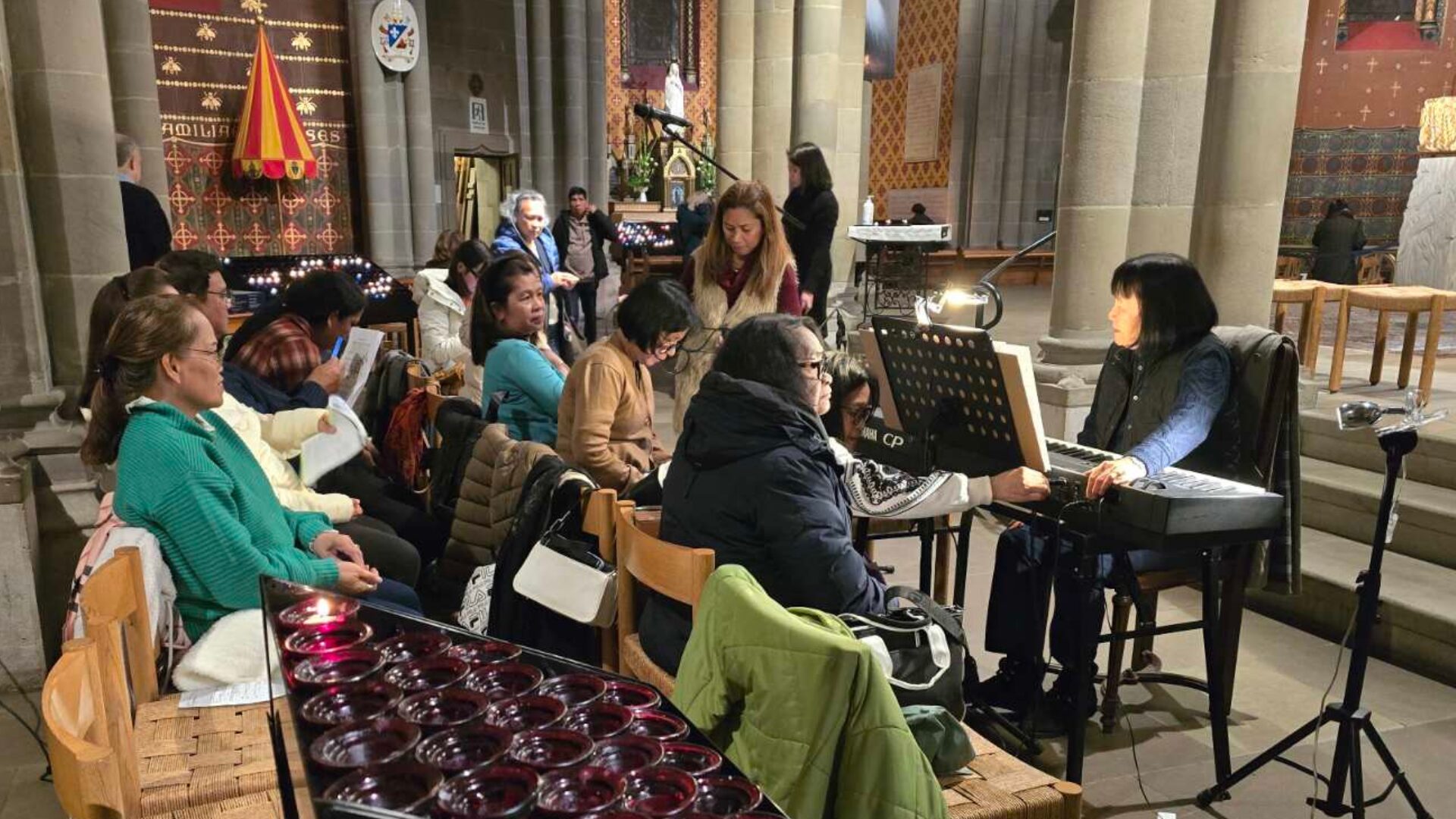
Martellet traces the choir’s beginnings to a Sunday evening in June 1994, when a Filipina sacristan invited her to join a small group of Filipinos singing hymns in a side room of the church.
“She asked me if I’d like to join them after Mass,” Martellet said. “After a few Sundays, I suggested we sing during the Mass itself. We started in November 1994.”
Since then, despite changing schedules and members coming and going, the Filipino choir has never stopped singing at the basilica.


The Basilica of Notre Dame is also a key stop for pilgrims on their way to Santiago de Compostela, where the tomb of the Apostle St. James is believed to be located. The church marks the starting point of the Geneva Camino, or Via Gebennensis, one of the many routes that converge on the Camino de Santiago.
For nearly 30 years, amid pilgrims, tourists and locals, the voices of Filipino migrants have risen steadily in this historic church, singing faith, service and a quiet longing for home.