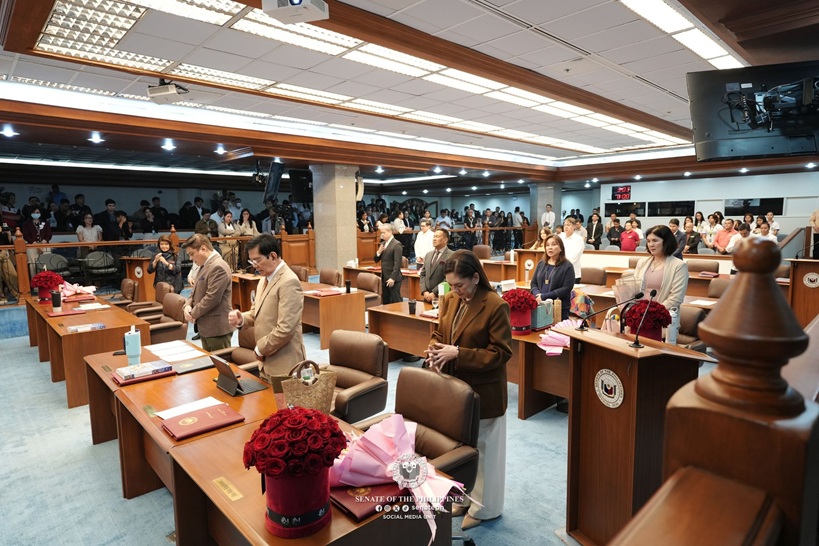

The Senate is meant to be a sanctuary for the rule of law, a chamber where national policy is debated with sobriety and constitutional fidelity. Instead, it now feels like an institution under siege, battered not by partisan rhetoric alone but by formal accusations that cut to the core of its credibility.
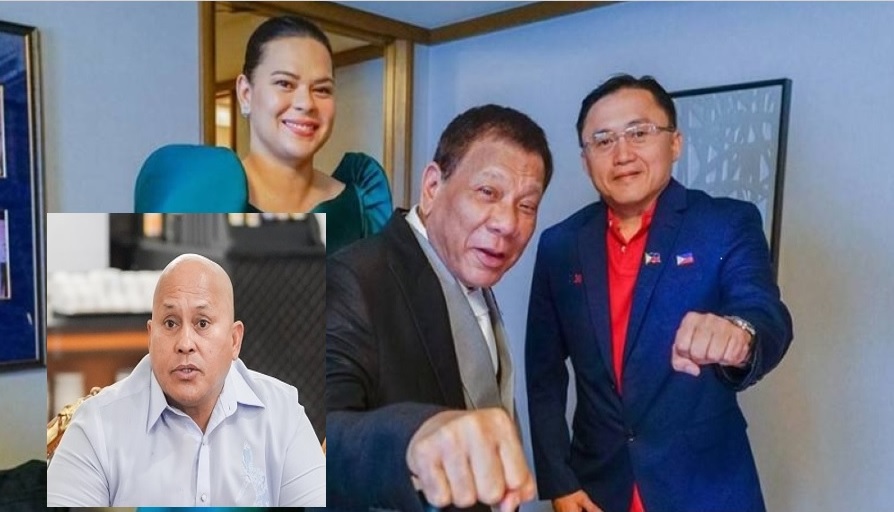
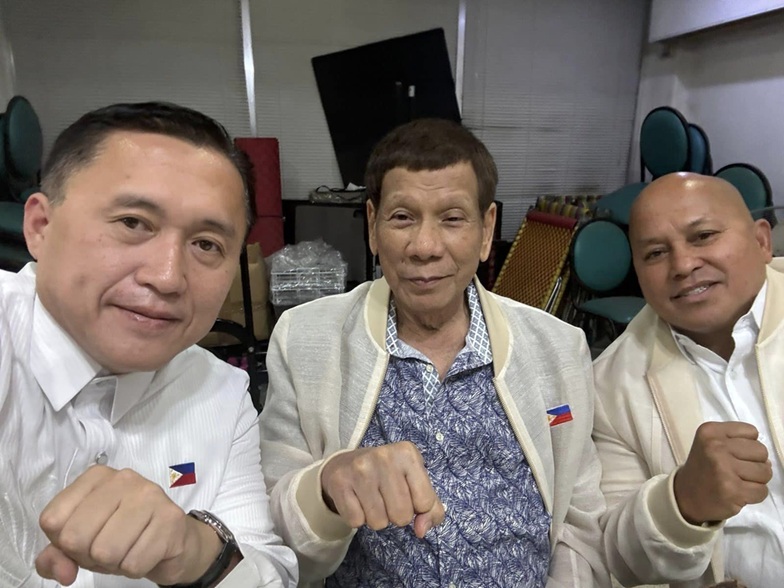
The International Criminal Court’s Office of the Prosecutor has named Ronald “Bato” Dela Rosa and Christopher Lawrence “Bong” Go as alleged co-perpetrators in a “common plan” linked to crimes against humanity comitted under former president Rodrigo Duterte’s bloody drug war. This is no longer political rhetoric. It is a formal accusation from an international court. When sitting senators are described in such terms, the entire chamber faces a serious credibility problem.
The crisis does not end there. Senate President Vicente “Tito” Sotto III is also dealing with turmoil inside the chamber. A leaked draft report from the Blue Ribbon Committee, chaired by Senate President Pro Tempore Panfilo Lacson, sent shockwaves through the minority bloc.
The draft initially recommended criminal charges, including non-bailable plunder and malversation of public funds, against Sens. Jose “Jinggoy” Estrada, Joel Villanueva and Francis “Chiz” Escudero in connection with the multibillion-peso flood control scandal. The language was later softened to call only for a preliminary investigation. Still, the leak exposed deep divisions.
Rumors of a possible coup against Sotto quickly spread. Some senators reportedly felt targeted and questioned his handling of the situation. Whether or not a leadership challenge pushes through, trust within the Senate has clearly weakened.
A fractured Senate is a weak Senate. If leaders are busy managing internal conflict, the chamber cannot effectively serve as a check on the Marcos administration or as a counterweight to the Dutertes. Instead of focusing on laws and oversight, senators are distracted by survival.
The ICC’s move also complicates matters for Vice President Sara Duterte. On Feb. 2, a third impeachment complaint was filed against her in the House, centered on the alleged misuse of P612.5 million in confidential funds, discrepancies in her asset declarations, public remarks interpreted as threatening, and failure to address Chinese incursions in the West Philippine Sea.
In an impeachment trial, Dela Rosa and Go are widely seen as part of Duterte’s first line of defense. If developments at the ICC lead to arrest warrants, the two senators could be brought to The Hague before the impeachment process even reaches the Senate floor. That would weaken her position at a crucial time.
At the same time, there are reports that Go has signaled his intention to join the majority and support a trial for the vice president. In Philippine politics, alliances can shift quickly. Loyalty is often tested when legal and political risks grow.
Impact on the 2028 polls
A vice president without strong allies in the Senate is politically exposed. If Dela Rosa and Go are detained abroad, it would not only affect the legacy of former president Rodrigo Duterte. It would also remove key defenders from Sara Duterte’s side.
Without Dela Rosa’s forceful speeches and Go’s influence within the chamber, the vice president could find herself facing a House determined to push impeachment forward.
Dela Rosa has stayed away from public view since November, after Ombudsman Jesus Crispin Remulla disclosed that he had seen a copy of an arrest warrant for him from the ICC.
The former president’s legal team, led by international lawyer Nicholas Kaufman, has used procedural arguments to slow down proceedings. Efforts to question the 80-year-old Duterte’s fitness to stand trial and to challenge representatives of the victims aim to buy time. The clear goal is to stretch the process beyond the 2028 elections.
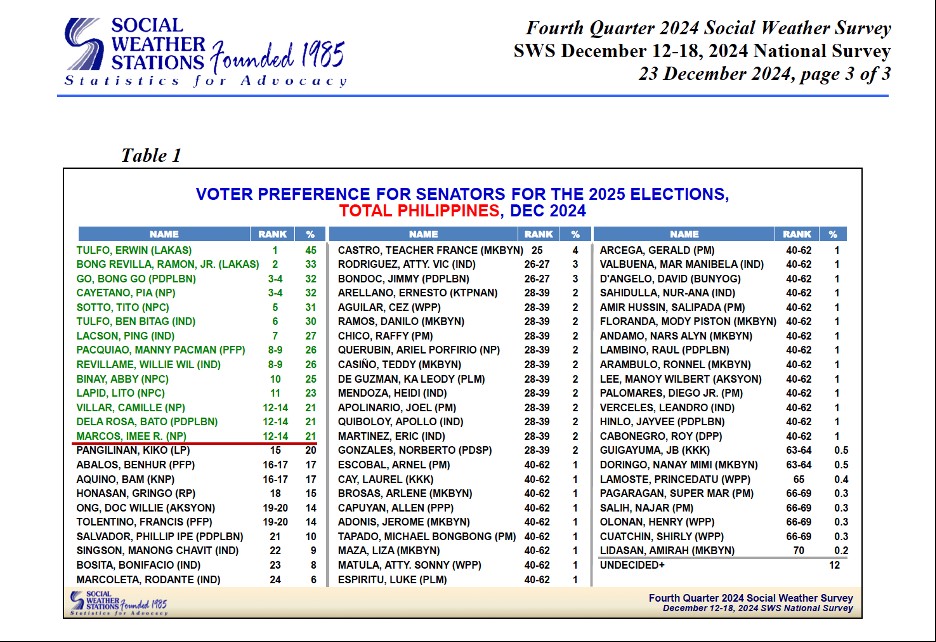
The calculation appears simple: If Sara Duterte maintains strong survey ratings and eventually wins the presidency, the political climate could shift in her favor. But the ICC judges have signaled they are ready to move forward. By ruling that Duterte is fit to stand trial and proceeding with the confirmation of charges starting Feb. 23, the court has shown it will not wait for political timelines.
As 2028 approaches, the political landscape is being shaped less by campaign rallies and more by two powerful forces: one international and the other domestic. The ICC case questions the legacy of the previous administration’s anti-drug campaign. The flood control scandal raises fresh concerns about corruption within the Senate.
This moment is no longer just about inflation, infrastructure or partisan rivalry. It is about accountability. If those accused manage to avoid legal consequences and return to power, these cases may fade into the background. But if the law moves first, the political story will be very different.
The Senate is in crisis because too many of its members are facing serious allegations. Instead of debating the law with moral authority, some are defending themselves against it.
In the end, the decision will rest with the Filipino voter. Will the public treat these accusations as politics as usual? Or will they demand clear answers and real accountability?
The Senate was created to protect the law. It must now prove that it is not a refuge from it.
The views in this column are those of the author and do not necessarily reflect the views of VERA Files.
This column also appeared in The Manila Times