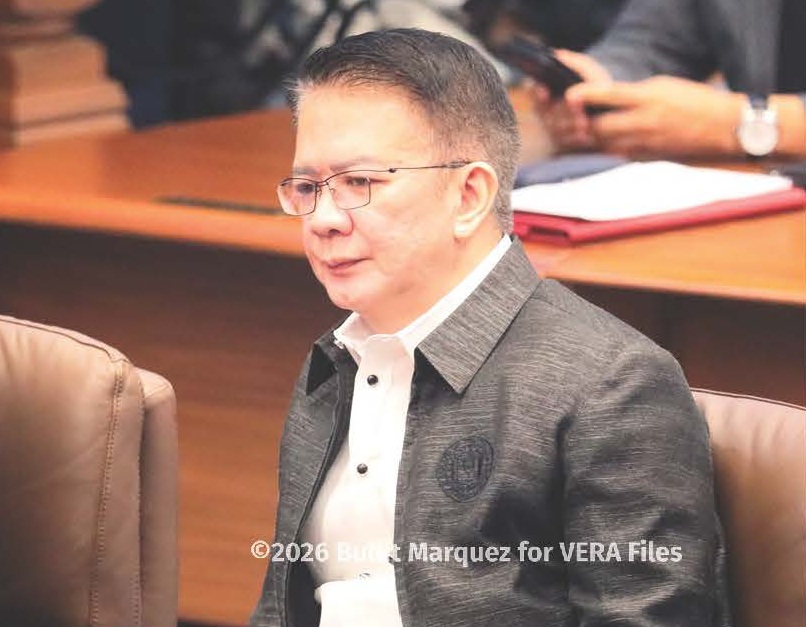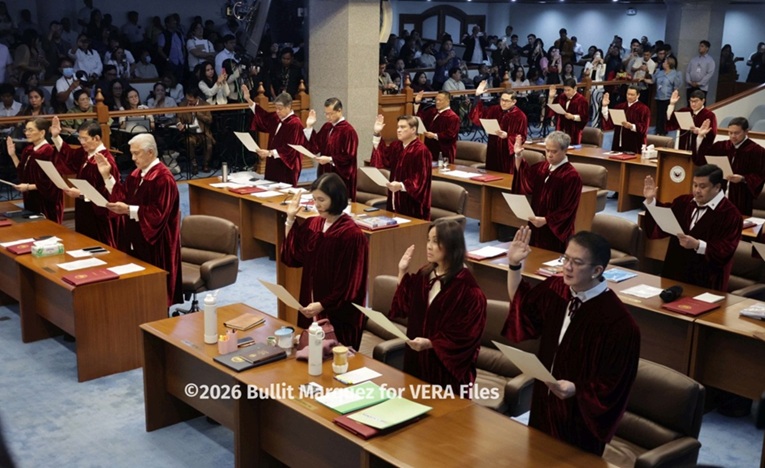

The Senate impeachment court is set to formally begin the historic trial of Vice President Sara Duterte on Monday, July 6, marking the start of what is expected to be a lengthy and politically charged proceeding that could determine the future of the country’s second-highest elected official.
The trial will open after Senate President Sherwin Gatchalian, acting as presiding officer of the impeachment court, approved a 14-page pre-trial order adopting a 92-day trial calendar agreed upon by both the House prosecution panel and Duterte’s defense team.
Last Friday, Gatchalian signed the formal summons for Duterte to appear either in person or through counsel at the Senate session hall in Pasay City at 2 p.m.
Duterte became the first vice president in Philippine history to be impeached by the House of Representatives and only the fifth high-ranking public official whose articles of impeachment have been transmitted to the Senate for trial.
The trial marks only the third time in Philippine history that the Senate will convene for a full-blown impeachment trial, following the cases of former president Joseph Estrada in 2000 and then chief justice Renato Corona in 2012.
It follows an overwhelming 257–25 vote in the House of Representatives on May 11, which approved House Resolution No. 989 to transmit the Articles of Impeachment to the upper chamber.
The Philippine National Police said it has finalized tight security arrangements, deploying approximately 6,000 police personnel around the Senate complex to maintain order as the public prepares for highly charged demonstrations.
“We are now ready for Monday as we begin the impeachment trial proceedings,” Senate Secretary and Impeachment Clerk of Court Renato Bantug said in Filipino.
Trial structure
Following five days of intensive pre-trial conferences that concluded on June 25, the impeachment court approved a rigid 92-day trial schedule. Under the pre-trial order issued on June 29, the House prosecution panel has been allocated 62 trial days to present their evidence, while Duterte’s defense team has 30 days to mount their counter-arguments.
The proceedings will initially be held every Monday, Tuesday and Wednesday at 2 p.m. from July 6 to July 27 before shifting to a Tuesday-to-Thursday schedule at 3 p.m. President Marcos’ fifth State of the Nation Address (SONA) on July 27.
The Senate Secretariat said the hearings will be open to the public.
As the proceedings open, members of the prosecution and defense panels will formally enter their appearances before delivering their opening statements, Bantug said, citing the 2012 Corona impeachment trial.
Then the House prosecution will be delivering its opening statement, after which the defense may immediately respond or reserve its own opening statement until after the prosecution has begun presenting evidence.
The prosecution’s schedule reflects the four articles of impeachment, with 11 hearing days devoted to allegations that Duterte threatened the life of President Ferdinand Marcos Jr., 31 days for accusations involving the alleged misuse of confidential funds, eight days for bribery allegations, and 12 days for charges involving alleged unexplained wealth.
The accusations
The prosecution’s case relies on severe allegations leveled against the vice president, primarily focusing on her tenure as both the second-highest official of the land and her former concurrent role as secretary of the Department of Education (DepEd).
Duterte faces charges of betrayal of public trust, culpable violations of the Constitution, and the alleged misuse of public funds. Central to the articles of impeachment are alleged irregularities concerning approximately P612.5 million in confidential and intelligence funds utilized by the Office of the Vice President (OVP) and DepEd. The lower house also cited alleged concealment of unexplained wealth, bribery involving education officials, and public death threats made by Duterte against the president, First Lady Liza Araneta-Marcos, and former House speaker Martin Romualdez.
Constitutional thresholds and legal friction
A conviction on any article of impeachment requires the votes of at least 16 of the Senate’s 24 members, or two-thirds of the chamber as required under the Constitution. Conviction would remove Duterte from office and permanently bar her from holding any public office, although any criminal liability would still have to be pursued separately before the regular courts.
Even before the first gavel drops, the trial has already encountered deep procedural controversies that legal experts warn could trigger a constitutional crisis.
Under the 1987 Constitution, a two-thirds majority of the Senate is required to convict an impeached official. In a standard 24-member chamber, this threshold stands at 16 votes. However, the unique circumstances of the current Senate have sparked intense debate among lawmakers and constitutionalists.
With Sen. Jinggoy Estrada under a 90-day suspension by the Sandiganbayan in separate legal proceedings involving plunder in connection with anomalous flood control projects, Sen. Ronald “Bato” Dela Rosa currently in hiding, and other potential absences, prominent legal figures like former Senate president Franklin Drilon have argued that the two-thirds threshold should adjust dynamically to 14 or 12 based on active, participating members. Conversely, Gatchalian and Senate Minority Leader Alan Peter Cayetano maintain that 16 votes remain the mandatory statutory minimum to convict.
Retired Supreme Court associate justice Adolfo Azcuna warned that if the Senate votes to convict with fewer than 16 votes by redefining its threshold, the defense will almost certainly elevate the matter to the High Court on the grounds of “grave abuse of discretion,” potentially tying up the final verdict in protracted judicial review.
The prosecutors
The proceedings are expected to revolve heavily around documentary evidence, financial records and testimony from government officials involved in the handling of confidential and intelligence funds.
Leading the prosecution is Batangas Rep. Gerville Luistro, chairperson of the House Committee on Justice, heading an 11-member House panel elected in May.
Each article of impeachment has designated lead prosecutors. Luistro and Manila Rep. Joel Chua will handle the article involving alleged threats against the president. Bicol Saro Party-list Terry Ridon and Akbayan Party-list Rep. Chel Diokno, a human rights lawyer, will lead the presentation of evidence on the confidential funds article. Chua and 1-Rider Party-list Rep. Rodge Gutierrez will prosecute the bribery allegations, while Iloilo Rep. Lorenz Defensor and Mamamayang Liberal Party-list Rep. Leila De Lima will lead the case on the alleged unexplained wealth.
The other prosecutors are Bukidnon Rep. Jonathan Keith Flores, who abstained when the House voted on the Articles of Impeachment; Dinagat Islands Rep. Kaka Bag-ao, who previously served as a prosecutor when former chief justice Renato Corona was tried in 2012; Cagayan de Oro Rep. Lordan Suan; and San Juan City Rep. Ysabel Zamora.
Supporting the House prosecutors are 15 deputized private prosecutors expected to assist in witness examination, presentation of evidence and legal arguments. Among them are notable lawyers Lorna Kapunan, Theodore Te, Amando Virgil Ligutan, Mae Divinagracia, Reynaldo Robles and Arnold Labay.
The panel has four spokespersons: Lanao del Sur Rep. Zia Alonto Adiong, Kabataan Party-list Rep.Renee Co, lawyer Benjamin Tolosa Jr., and former Surigao del Norte representative Robert “Ace” Barbers, who will also serve as an impeachment adviser.
The defense team
Duterte will be represented by a 16-member legal team composed largely of lawyers from Fortun, Narvasa & Salazar. Partner Sheila Sison has served as the defense’s principal spokesperson throughout the pre-trial proceedings.
The roster includes Philip Sigfrid Fortun, Gregorio Narvasa II, Carlo Joaquin T. Narvasa, Reynold Munsayac, Roberto Batungbacal, Justin Nicol Gular, Lindon Miguel Bacquel,
David Ronell Golla VII, Maria Selena Golda Fortun, Claraine Radoc, Francesca Marie Flores, Miguel Carlos Fernandez, Mark Vinluan, Ralph Bodota and Michael Poa, the vice president’s spokesperson.
Poa said the defense is ready to proceed with the trial after months of preparation as he assured that they have no intention of stalling and will not object to unsealing a previously sealed box from the Bureau of Internal Revenue containing the vice president’s tax records.
“We will not be the cause of any delay. There will be instances when we have to make motions because we need to protect the rights of our client, but the length of the trial will really depend on the evidence presented by the prosecution,” Poa said.
The witnesses
The prosecution has identified 57 witnesses, including officials from the Anti-Money Laundering Council, the Securities and Exchange Commission, the National Bureau of Investigation and other government agencies involved in financial and criminal investigations.
The defense’s witness list was reduced from roughly 90 names in its original pre-trial submission to 45 witnesses under the final pre-trial order.
Seventeen witnesses are expected to be called by both sides, including self-confessed Duterte bagman Ramil Madriaga, former senator Antonio Trillanes IV and Ombudsman Jesus Crispin Remulla.
Presiding officer
On June 3, the Senate amended the impeachment rules to allow other senators, other than the Senate president to preside over the proceedings.
The previous rules explicitly stated that the Senate president should preside in all impeachment cases, except when the president of the Philippines is on trial.
The amended rules still designate the Senate president as the presiding officer “unless the Senate, by a majority vote of the members present, elects another senator as the presiding officer.”
In mid-June, Sen. Panfilo Lacson said the Gatchalian-led majority would elect Sen. Francis Escudero as presiding officer of the impeachment trial. However, groups have registered strong opposition to the move.
Tindig Pilipinas, a coalition of civil society groups, cited Escudero’s role during the initial stages of Duterte’s impeachment proceedings in 2025, when he was Senate president.
They considered Escudero serving as presiding officer as “perhaps the most imperfect and one of the most dangerous” options for the Senate majority.
More legal issues
While the Senate has already settled procedural matters through five days of pre-trial conferences, legal observers expect Duterte’s lawyers to continue raising jurisdictional and constitutional issues as the trial progresses.
Among the motions anticipated from the defense are renewed arguments questioning the validity of the impeachment complaint, challenges to the admissibility of documentary evidence and witness testimony, objections to evidence allegedly obtained in violation of constitutional rights, and motions seeking to exclude or limit portions of the prosecution’s evidence.
The defense is also expected to vigorously contest allegations involving confidential funds by questioning audit findings, financial documentation and the credibility of government witnesses.
Procedural disputes may likewise emerge over witness examination.
Under the Senate’s impeachment rules, only one lawyer from each side may examine and cross-examine a witness. The House prosecutors have sought permission for both a House prosecutor and a deputized private prosecutor to jointly question witnesses, arguing that the complexity of the case warrants shared examination.
The defense has opposed the proposal, insisting that it would violate the Senate’s impeachment rules. The impeachment court has yet to rule on the request.
Witness testimony will also be governed by a one-day examination rule, requiring direct, cross, redirect and recross examinations to be completed within the scheduled hearing unless the court grants additional time.
Unlike ordinary court proceedings, senator-judges will not directly question witnesses. Instead, they must submit written questions through the presiding officer, with each senator limited to two minutes of questioning per witness.
The impeachment trial is expected to test not only the strength of the evidence presented by both sides but also the Senate’s ability to balance legal procedure with intense public scrutiny ahead of the 2028 national elections.
With both camps having completed months of pre-trial preparations, Monday’s opening session is expected to focus largely on setting the tone of the proceedings, outlining the competing narratives and beginning what could become one of the most consequential constitutional trials in recent Philippine political history. – With a report from JOHN RANIEL DOCOT