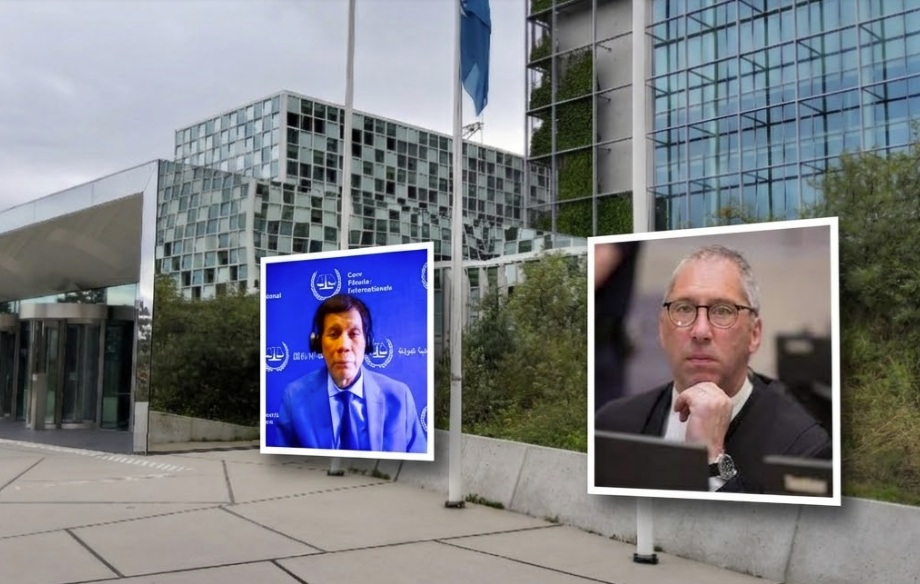
Peter Haynes, new counsel for former president Rodrigo Duterte in his case of crimes against humanity at the International Criminal Court, is opposing the proposal of Deputy Prosecutor Mame Mandiaye Niang to start the trial on Nov. 30.
He asked to have his client reexamined by a new set of independent experts to determine his fitness to physically stand trial. He said “it would be inappropriate to attempt to set a date for the commencement of trial” as there are still issues to be resolved.
“In particular, the Defence position is that a commencement is contingent upon a determination by the Trial Chamber of Mr Duterte’s fitness to stand trial,” Haynes said in his first submission to the court as Duterte counsel.
He added, “The experts responsible for those assessments be examined before the court.”
Niang said he expects to complete all of the necessary pretrial steps by Sept. 30.
“Consequently, the Prosecution proposes that the trial be set to commence on Monday, 30 November 2026 which would then provide for a period of two months prior to the commencement of the trial, “ he said.
Article 63 of the Rome Statute, the treaty that established the ICC, states that “the accused shall be present during the trial.”
Since his detention at Scheveningen Prison in The Hague, Netherlands, Duterte has appeared publicly via video only once, on March 14, 2025. He waived his right to attend all pre-trial hearings in his crimes against humanity case over the killings of thousands of suspected drug users during the war on drugs from Nov. 1, 2011 to March 16, 2019.
Despite claims by Duterte’s former defense counsel, Nicholas Kaufman, that his 81-year-old client was “enfeebled,” a panel of medical experts hired by the court declared the former president fit for trial.
Haynes argued: “Trial proceedings differ fundamentally from pre-trial proceedings in their duration, complexity, and evidentiary scope.”
He added, “Any significant impairment affecting memory, concentration, or reasoning would seriously prejudice the preparation and presentation of the defense and undermine Mr Duterte’s ability to participate meaningfully in the proceedings.”
Should the chamber rule Duterte fit to stand trial, Haynes asked for another status conference to determine whether his continuous physical presence at trial hearings would be required.
“In light of Mr Duterte’s advanced age and medical condition, any requirement that he attend hearings in person would likely necessitate significant health-related accommodations,” Haynes said.
On May 27, parties in the Duterte case will meet for the first status conference to discuss, among other matters, the trial date, estimated number of witnesses and hours of testimony, use of expert witnesses, testimony by audio or video link, and the estimated volume of documentary and other non-testimonial evidence to be presented at trial.
Read the submissions prior to the first status conference here: Prosecution, Victims’ lawyers, Defense.
Note: Thumbnail photo was done with the aid of Google Gemini.