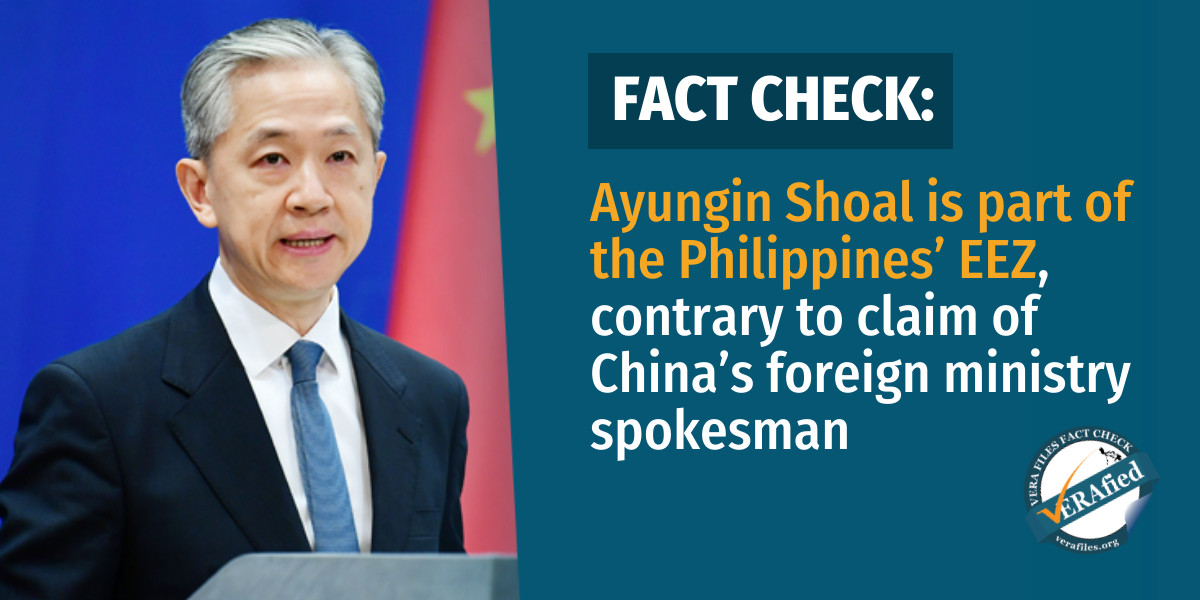
This article is from the International Crisis Group.
Photos from VERA Files.
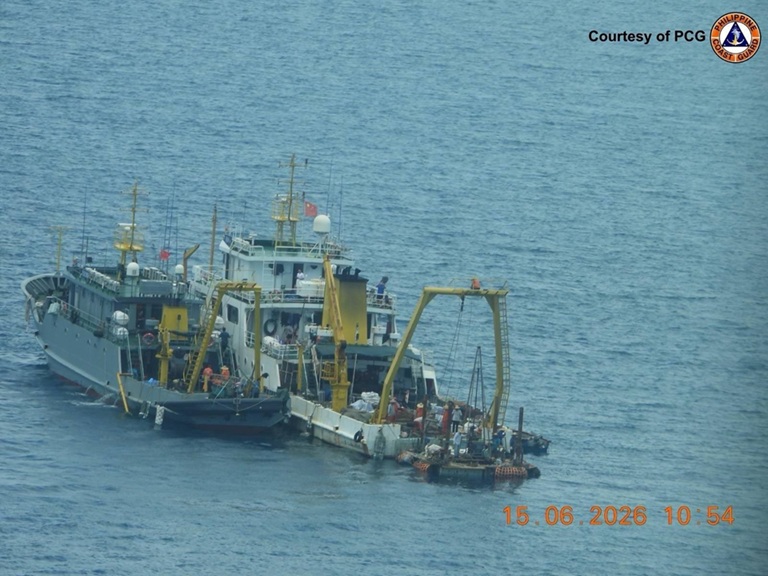
Thumbnail photo by the Philippine Coast Guard shows a Chinese research vessel towing the floating platform in Scarborough Shoal. June 15, 2026.
On taking up the rotating chair of the Association of South East Asian Nations (ASEAN) at the start of 2026, the Philippines declared that its top priority would be the South China Sea. Its plan was to conclude a Code of Conduct, with the aim of averting conflict in these heavily contested waters by upholding international law and insisting on the peaceful resolution of disputes. Manila knew this task would not be easy. Negotiations between China and ASEAN have dragged on for more than two decades, repeatedly delayed by Chinese obstruction and the competing interests of the bloc’s member states. Despite high expectations, it now seems that the latest push to forge a code will tread the same path of failure.
Manila also has its eye on 12 July, a date of huge symbolic weight for the Philippines as it marks the tenth anniversary of the landmark ruling from the Permanent Court of Arbitration that invalidated Beijing’s maritime claims in the South China Sea. Snubbing the court ruling, China continues to assert its expansive “nine-dash line” claim in the South China Sea, which encompasses roughly 85 per cent of the sea. Beijing insists that it has a historical right to all these waters, but its claim contravenes the UN Convention on the Law of the Sea (UNCLOS), which it has signed. In fact, Beijing’s sovereignty claims overlap with the exclusive economic zones (EEZs) – the spans of water 200 nautical miles off a nation’s coastline – of several neighbouring countries, including the Philippines. To press its case, China has employed aggressive tactics against the other claimant states, several of them ASEAN members, and set out to establish a de facto military presence in disputed areas.
Tensions at sea
China and ASEAN have not always sparred over the South China Sea. They agreed in 2002 to a non-binding Declaration of Conduct in these waters, featuring a commitment to resolve sovereignty disputes peacefully. Though the declaration envisaged the “eventual attainment” of a Code of Conduct, which would ensure respect for international law and peaceful dispute resolution, it established no timeline for formulating one. More recently, ASEAN and China have adopted targets for concluding negotiations on such a code, but the deadlines have repeatedly slipped because of disagreements over whether it would be legally binding, how it would be enforced, how to define the geographic scope of the South China Sea and whether third-party militaries should be allowed to conduct activities there. There is also no common ground on how the code should refer to the 2016 court ruling, which unambiguously stated that “there is no legal basis” for China’s maritime claims.
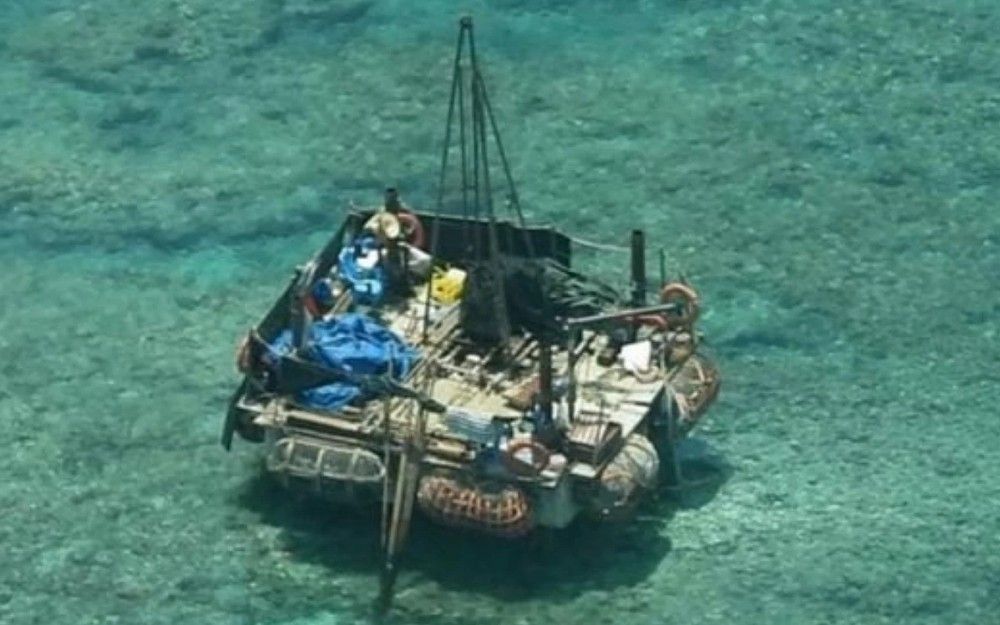
China, meanwhile, keeps engaging in provocative behaviour with a view to bolstering its claims. Much as Manila has tried to make good on its pledge to agree on a Code of Conduct, these Chinese manoeuvres have embittered an already tense bilateral relationship and spurred Manila into responding. In one early June episode, Beijing placed a manmade floating platform on Scarborough Shoal – a sea feature well within the Philippines’ EEZ that has been under Chinese control since maritime law enforcement seized it in 2012. Though China eventually removed the structure following Philippine protests, its move followed an established playbook by which Beijing continually pushes the boundaries of acceptable behaviour at sea. It has built and deployed artificial structures to cordon off areas it claims, chased away Filipino fisherfolk from their traditional fishing grounds, used dangerous military-grade lasers to blind the Philippine coast guard, fired water cannons at Philippine vessels and even deliberately rammed them, causing damage and wounding a navy sailor.
A Filipino analyst told Crisis Group that the standoff has evolved into a “permacrisis”, with neither side ready to dial down its frequent military and coast guard operations in support of rival maritime claims. The result has been “strategic numbing” within the Philippine security establishment, in the analyst’s words: while Manila’s confidence in countering Beijing has risen, it tends to underestimate the risk of Chinese escalation.
In any case, Manila’s defensive tactics have failed to stop China from expanding its patrols deep within the Philippines’ EEZ and increasingly close to its territorial waters. Beijing clearly has the upper hand at present. Tensions may not be at the heights seen around Second Thomas Shoal from 2023 to 2024, when a prolonged and dangerous showdown unfolded over Philippine resupply missions to the troops stationed on that feature. But according to a U.S. scholar, Chinese activity around Scarborough Shoal is at a higher pitch than ever. China has boosted its deployments of coast guards and fishing militia (armed fishing vessels) around the shoal and established multiple semi-permanent structures or buoys, pushing Philippine ships roughly 40 nautical miles away through sustained coercive tactics. Meanwhile, Sabina Shoal, which is nearly half the distance to the Philippines mainland, is largely out of reach for Philippine vessels due to the concentration of Chinese ships there, resembling a de facto occupation.
Manila has nonetheless enjoyed a measure of good fortune in the South China Sea. Despite the persistent presence of Chinese maritime forces around Pag-asa (Thitu) Island – the Philippines’ only inhabited feature in the Spratlys archipelago, with up to 400 residents – Beijing appears to have redeployed assets away from there. The Chinese move seems to have been designed with a view to carrying out higher-intensity operations around Scarborough Shoal, according to an expert who closely tracks Chinese ship movements.
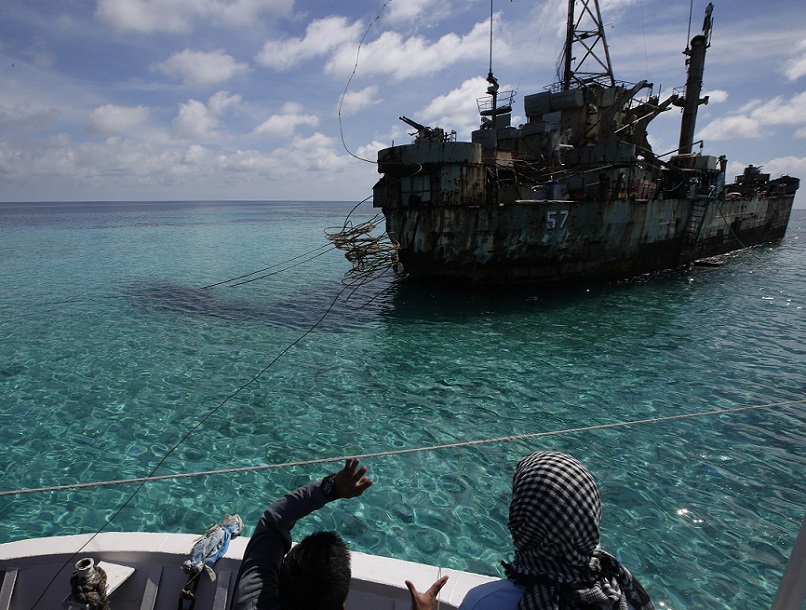
An informal diplomatic arrangement between Manila and Beijing – known as the Provisional Understanding – also seems to be holding on Second Thomas Shoal. The details of the deal, struck in July 2024 after a particularly violent encounter at sea, have never been publicly disclosed. But it seems plausible that Manila has agreed to quietly inform Beijing of pending resupply missions to its troops stationed on the BRP Sierra Madre, an old navy ship it intentionally grounded on the shoal in 1999 to assert its sovereignty, in order to avoid further confrontations. Chinese authorities inspect the vessels destined for the rusty ship, but they do not seize the contents – whether supplies for troops stationed there or construction materials to reinforce it. For now, the fix has allowed both nations to save face.
Bilateral ties remain chilly
Despite these stopgap measures to stave off conflict, regional divides over the South China Sea seem to be getting worse. In May, Beijing sanctioned Philippine Defense Secretary Gilberto Teodoro and his family, revoking his visa as well. Beijing justified the move on the grounds that Teodoro had “repeatedly” made “irresponsible remarks on China” and undermined “China’s legitimate interests”. From Beijing’s perspective, Teodoro is emblematic of President Ferdinand Marcos Jr.’s anti-China stance, which goes along with a push to strengthen Manila’s alliance with the U.S. and its defence partnerships with other states, such as Australia and Japan.
Ironically, penalising Teodoro so publicly has raised his profile in the Philippines, likely galvanising public animosity toward China.
Bilateral relations suffered another blow in June, when Manila suspected Beijing of being behind the derailment of its bid for a non-permanent seat on the UN Security Council. According to a Filipino journalist, China appears to have campaigned doggedly against the Philippines behind the scenes, fearing that Manila would use the position to raise South China Sea disputes more broadly in international forums and deploy a battery of legal arguments for its claim. Beijing supported the eventual winner, Kyrgyzstan.
That said, the two countries still maintain fluid diplomatic relations, with the tenure of Secretary Theresa Lazaro at the Philippines’ Department of Foreign Affairs ushering in a period of enhanced bilateral dialogue. The need for diplomacy was reinforced by the incident at Second Thomas Shoal in 2024 mentioned above, spurring the two nations to reach a truce over the resupply of troops stationed there. Lazaro has also downplayed Manila’s “transparency initiative”, a campaign aimed at publicly disclosing all Chinese transgressions in the Philippine EEZ, in favour of quiet diplomacy. Moreover, the new Chinese ambassador in Manila, Jing Quan, is more pragmatic and realistic than his predecessor, according to a Filipino analyst. Despite their disputes, the two nations are discussing a potential visit to the Philippines by Chinese leader Xi Jinping for the ASEAN Regional Forum and East Asia Summit in November. If it happens, it would be his first such trip since 2018, when Marcos’s China-friendly predecessor Rodrigo Duterte was in power.
The global energy crisis caused by the U.S.-Israeli war with Iran could also encourage Manila and Beijing to patch up their differences. The Philippines was the first country in the world to declare a national energy emergency after the closure of the Strait of Hormuz, and it needs energy resources that China could supply. Furthermore, both capitals have grown more attuned to the promise of joint gas and oil exploration in the South China Sea. Though sovereignty disputes would remain unresolved, the two governments could opt for pragmatic resource cooperation over longstanding political friction as a way to address their shared energy needs. That said, Manila would be reluctant to sign up for joint exploration in its EEZ because of the risk of becoming overly dependent on China, and because Beijing could use any contracts to shore up its territorial claims. Instead, Manila is seeking other possible fuel suppliers, such as Russia, whose officials the Philippine authorities met with recently, to soften the impact of energy shortages.
Despite potential tactical adjustments to its China policy, President Marcos is unlikely to change his wider foreign policy orientation. He probably cannot meaningfully back away from strengthened ties with the U.S., Japan and other partners without imperilling Manila’s security. In the words of a Filipino analyst, Marcos has put Manila on “autopilot”, making his pro-U.S. stance immovable. Chilly relations with China are set to continue at least until the Philippines’ 2028 presidential election, when Beijing hopes to see a candidate less aligned with Washington rise to power.
Cold Storage for the Code of Conduct?
With tensions between the two states unabated, Manila’s pledge to conclude successful negotiations over a Code of Conduct during its tenure as ASEAN chair is in jeopardy. At the start of 2026, there was ground for cautious optimism. As a fellow claimant to maritime domains that also overlap with those of China, Vietnam was willing to make compromises to get a deal on the code done. In recent years, China has also voiced an interest in a swift conclusion to negotiations. But that optimism has largely evaporated in the course of 2026 as a result of rising tensions around Scarborough Shoal and developments elsewhere in the South China Sea, Manila’s weakened position in the international arena following its failed bid at the UN Security Council, and Philippine overestimation of China’s willingness to compromise. On a 4 June visit to Washington, Foreign Secretary Lazaro publicly argued that “a bad CoC” would be worse than no code at all, hinting that she is no longer expecting an imminent breakthrough. In the end, Manila may seek a face-saving formula – perhaps declaring negotiations substantively complete while sending the text into a prolonged legal review – but even that outcome now appears doubtful.
Another constraint is ASEAN itself. The regional body’s various claimants disagree on core issues such as what constitutes the status quo in the South China Sea and how restrictions on certain activities, for instance on military exercises with third-party nations, should be applied. Controversy also rages over the sea’s boundaries – Vietnam, for instance, allegedly wants the Paracel Islands included, whereas others do not. Shockingly, after over twenty years, negotiators have yet to hammer out final text covering even one of the four major contentious issues in the Code of Conduct, namely its geographic scope, its legal status (binding or non-binding), dispute settlement and enforcement mechanisms, and ways of dealing with military activities and third-party roles in the South China Sea.
Additionally, ASEAN members do not appear to be coordinating effectively. Some member states want to avoid maritime disputes eclipsing other challenges that require the bloc’s attention, including the civil war in Myanmar as well as Cambodia-Thailand border tensions. China has also been known to play ASEAN members off one another, as it did most blatantly in 2012 during Cambodia’s chairmanship, which led to the first and only occasion the bloc was unable to produce a joint statement for its annual summit – precisely because of disagreements over the South China Sea.
A further cause for concern is the fragmentation of the Philippine government. At least six different bodies in Manila are currently tasked with handling the code and broader South China Sea affairs, including the navy, coast guard, National Maritime Council (which coordinates policy across the government), National Task Force on the West Philippine Sea (which coordinates operations across the national security establishment), as well as the Department of Foreign Affairs’ ASEAN and maritime affairs departments. Each has its own unique perspective on how to handle Beijing in the South China Sea – for example, the coast guard puts its faith in the “transparency initiative”, which Lazaro’s diplomats have tried to tone down – creating bureaucratic complications and paralysing policy.
Additionally, since the Duterte administration (2016-2022), the Department of National Defense, which favours a hard line on China, has become far more influential in policy deliberations. Barring a major shift after the 2028 presidential election, it appears that Manila’s hard-nosed approach toward China is here to stay, complicating its diplomats’ efforts to craft a more pragmatic stance in negotiations. These differences came to the fore during a recent Scarborough Shoal incident, in which the Department of Foreign Affairs advocated for quiet dialogue while defence officials pushed for a tougher public response. As for negotiations on a future Code of Conduct, Lazaro’s department is apparently willing to strip the agreement down to the bare minimum in order to secure China’s acquiescence. The defence department finds this approach unacceptable.
Manila is also divided over whether the Philippines should pursue a legally binding code. The idea looks good on paper, and it is consistent with Manila’s promotion of international law and norms of behaviour as codified under UNCLOS. But a deal along these lines could inadvertently compromise Philippine sovereignty since China is unlikely to sign up to a code that does not uphold its interests and promotes those of Manila instead. Beijing has, for example, consistently sought an agreement that would grant it veto power over ASEAN states contracting with Western companies for offshore oil and gas development in the South China Sea, as well as the ability to restrict claimant states from conducting military exercises with external powers such as the U.S.
A long-time observer of the Code of Conduct negotiations noted that there is currently “more heat than light” surrounding the draft text, which is being handled in utmost secrecy. Despite the opacity of the process, ASEAN and China are reportedly meeting monthly. Talks have been “progressing”, in the words of the same well-connected expert, but the odds of success are at best “50-50”, and they have fallen steeply in recent months.
Because Manila has been rushing negotiations on the code, several analysts told Crisis Group that the text’s final language might be so diluted that it may not be much stronger than the Declaration of Conduct signed over two decades ago. It is even possible that no mention of the Permanent Court of Arbitration’s ruling from 2016 will appear in the code – which China would certainly welcome. Either way, Manila’s eagerness at the beginning of 2026 to complete the code opens it up to the possibility of making strategic blunders. What matters most is whether a legally binding code can establish what is most sorely missing at the moment: a mechanism for enforcing the rules.
Manila must fend for itself
Short of an agreed-upon code, the Philippines fully understands that it must have its own strategy to address Beijing’s behaviour in the South China Sea. For now, its approach is anchored in its alliance with the U.S., which has been enjoying a renaissance since President Marcos came to power in 2022. The flagship joint exercise of the alliance, the annual Balikatan U.S.-Philippines military drill, held from late April through early May, was the largest and perhaps most complex ever, involving more than 17,000 troops and multiple allies, including Japan for the first time in a fully operational role. Manila has also welcomed the extension of Enhanced Defense Cooperation Agreement bases throughout its territory – Philippine bases where U.S. troops can deploy on a rotational basis and store equipment – as well as the expanded deployment of Washington’s Typhon missile, primarily intended for a Taiwan conflict scenario. Meanwhile, in April Manila joined Washington’s Pax Silica Initiative, aimed at establishing secure supply chains for critical minerals and semiconductors. As part of this, the U.S. and the Philippines are cooperating in the Luzon Industrial Zone initiative, designed to locate defence-related manufacturing near logistics hubs involving both countries in northern Luzon, one of the Philippines’ main islands. Manila hopes that closer cooperation with Washington will enhance not just deterrence vis-à-vis China, but also the Philippines’ ability to resist Chinese coercion.
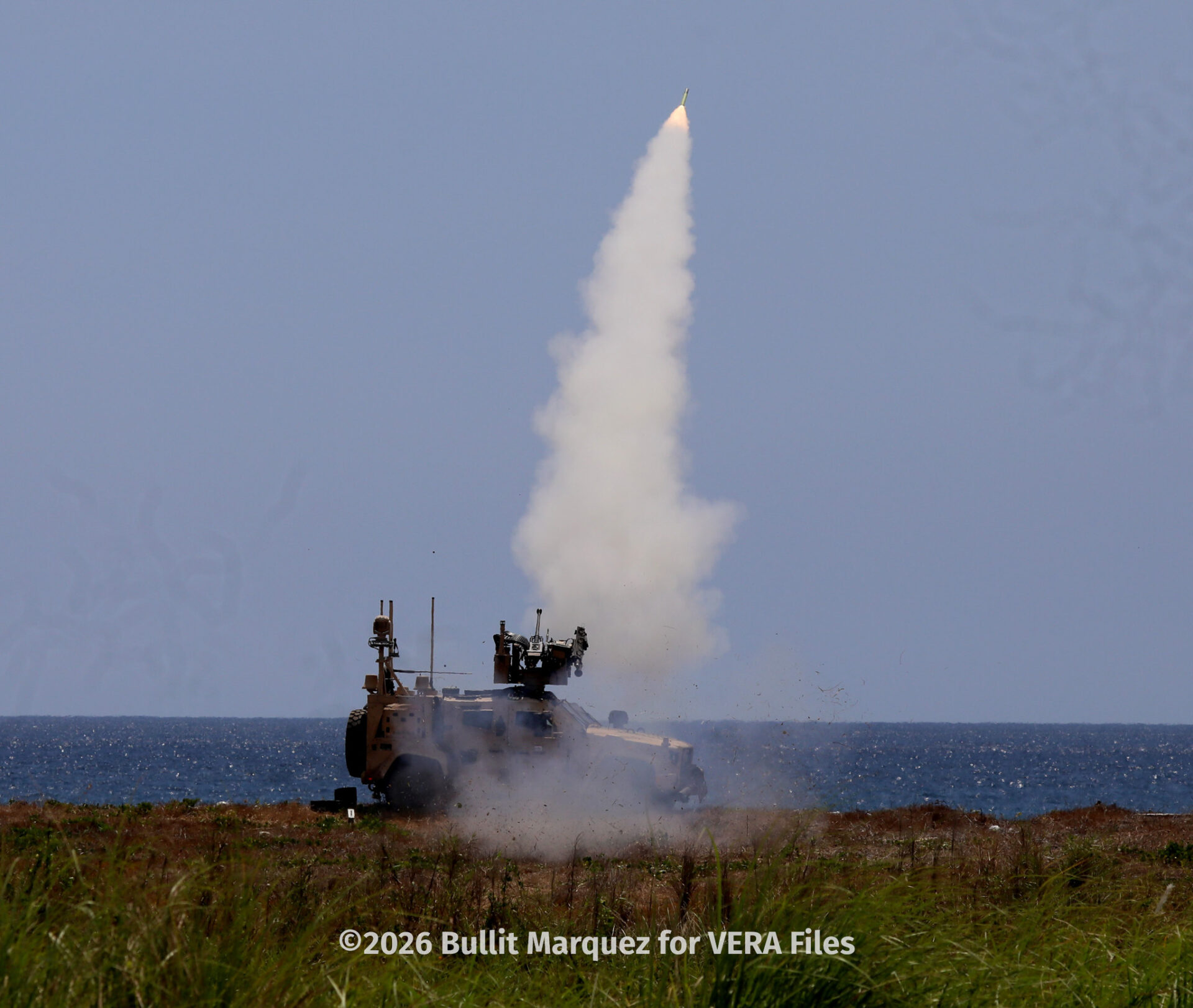
With this goal in mind, Manila has been developing closer strategic partnerships with other governments in the region as well. It has deepened security cooperation with Australia and Japan through expanded joint exercises, visiting forces agreements, defence equipment transfers, maritime capacity-building and other sorts of coordination, including joint patrols of disputed areas, with the aim of upholding a law-based order in the South China Sea. The Philippines is also strengthening security ties with the UK, as well as individual EU member states such as Germany and France, though these relationships are not yet as mature as the others.
ASEAN members can play an important role as well in helping Manila in the absence of a Code of Conduct. During Vietnamese leader To Lam’s June visit to Manila, the two countries renewed their defence cooperation agreement and expanded maritime coordination, underscoring their shared interest in maintaining stability in the South China Sea. This and other examples, such as Manila’s previous delimitation agreement with Indonesia, in which both agreed to continue negotiations on maritime boundaries, prompted a well-known Filipino expert to tell Crisis Group that he was increasingly supportive of an “intra-ASEAN” approach to managing disputes in these waters, rather than waiting for China to sign a Code of Conduct. While that might not temper tensions between China and other claimant states, it would demonstrate that ASEAN countries can settle disputes among themselves. It would also implicitly attribute blame to China for being the primary source of friction. Even so, achieving unity in the bloc on the South China Sea remains a tall order, particularly because Cambodia and Laos (ASEAN’s only landlocked country) are reluctant to support stronger maritime security cooperation.
Manila is also resorting to international law to press its case against China. The Philippine ambassador to the U.S., José Manuel “Babe” Romualdez, told Crisis Group that his government is intent on continuing to highlight the importance of “free and open” seas in international forums. He said Iran’s closure of the Strait of Hormuz underscores Manila’s argument: any breach of international law and norms of behaviour can have catastrophic consequences for peace and the global economy. With one third of global trade passing through the South China Sea, instability there could have worldwide repercussions.
Finally, Manila is in the process of developing a new defence strategy, known as the Comprehensive Archipelagic Defense Concept. After spending decades focusing its military efforts on domestic insurgencies, Manila is now making defence of its vast maritime domain the priority. This pivot takes time, and the navy lacks assets, starting with ships. That said, recent acquisitions and assistance from Japan, South Korea, the U.S., France and others mean the Philippine coast guard and navy are far better equipped than they were just a few years ago. The Philippines no longer has the weakest navy in South East Asia; its navy is now stronger than Malaysia’s and is approaching Thailand’s level, trailing only Indonesia, Singapore and Vietnam.
Ten years after the landmark court ruling in The Hague, and after over two decades of negotiations on a Code of Conduct, China shows little sign that it is prepared to compromise on its core territorial claims in the South China Sea. An effective code could reduce risks, establish clearer rules of behaviour and provide a framework for crisis management. It would check Beijing’s ability to use force by establishing dispute resolution mechanisms, such as through an arbitration committee involving ASEAN members. But the Philippines no longer depends on the code as the centrepiece of its South China Sea strategy. If negotiations do produce a meaningful agreement, Manila will certainly welcome it. But if they do not, the Philippines appears primed to continue defending its interests through deterrence, diplomacy, lawfare and self-reliance.