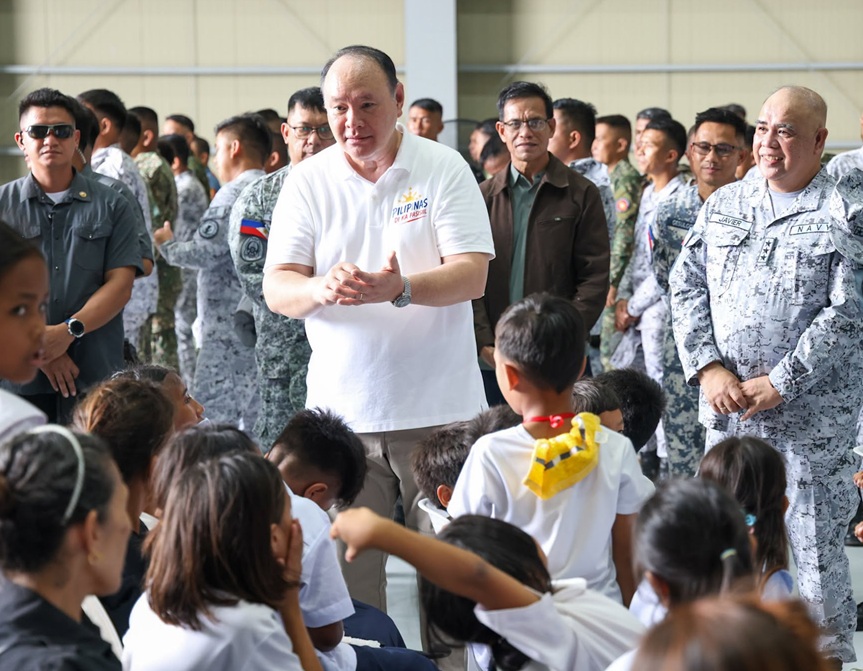

PAG-ASA ISLAND — Residents of this brave, little island welcomed the visit of Defense Secretary Gilberto Teodoro Jr. and top officials from the military’s Western Command Sunday to join them in celebrating the 10th anniversary of a landmark ruling that invalidated China’s sweeping claims in the South China Sea.
Twenty-nine-year-old Kathleen Acosta, a grade school teacher said it means a lot to them that government officials come despite the distance. ”It shows that we’re not the only ones commemorating the Arbitral award. It also demonstrates that, as Filipinos, we support one another and it reflects the value we place on unity and solidarity.”
Pag-asa, about 500 kilometers west of Palawan is home to a thriving community of about 500, mostly fisherfolk and troops securing the island and their families.
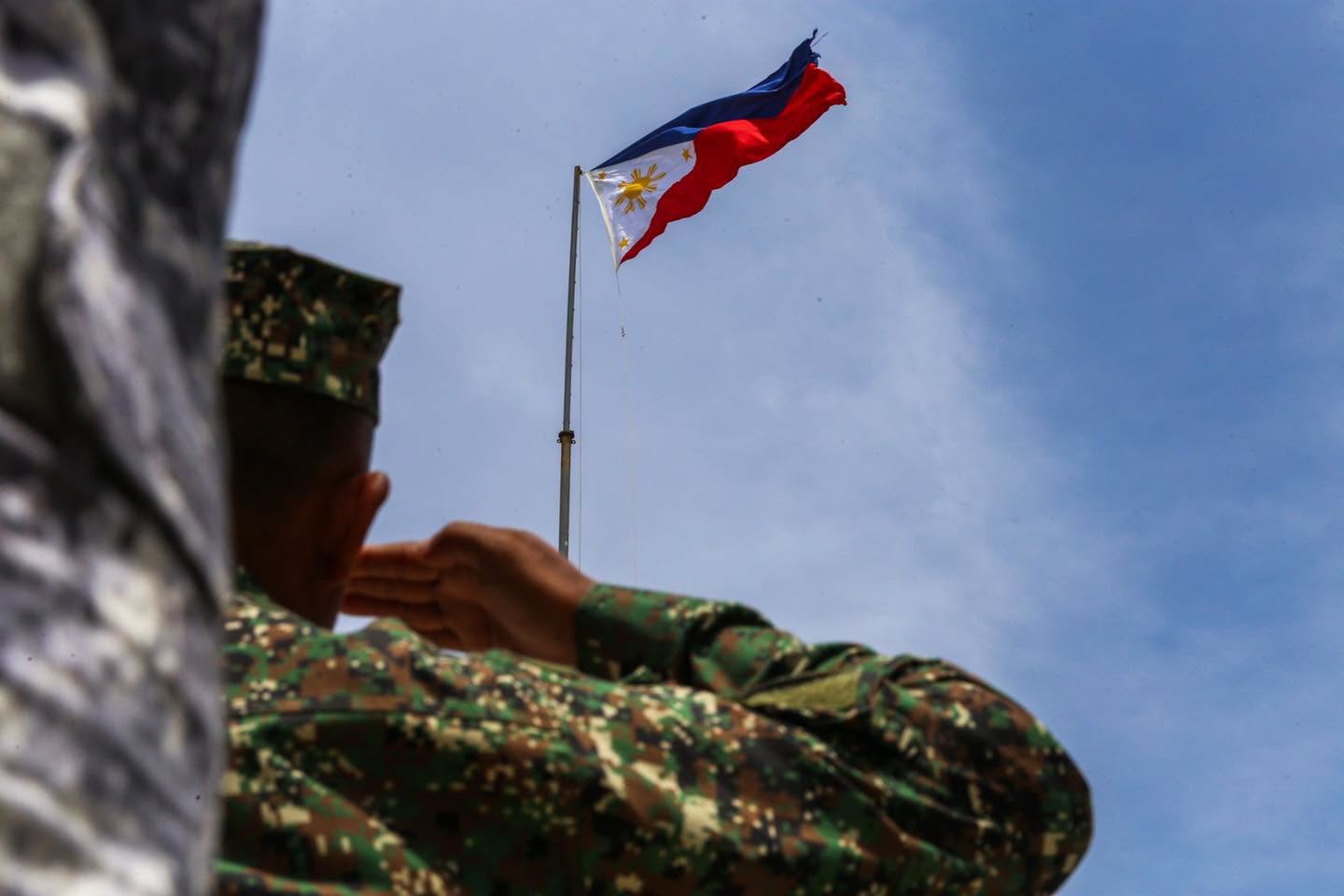
The flag-raising ceremony became more meaningful to the residents with Teodoro underscoring the importance of the island in asserting Philippine sovereignty over the country’s maritime territory. The ruling, he said, has raised greater public awareness of the country’s maritime domain and strengthened Filipinos’ sense of patriotism.
“In the first 10 years, from where we started to where we are now, a lot has happened—not only in the military, but also in terms of public awareness and education. However, for the next 10 years, we have to double our efforts because those who seek to undermine our territory and sovereign rights are moving even faster,” he said.
Aware of the residents’ difficult living conditions, he promised to work on improving the island’s “livability.”
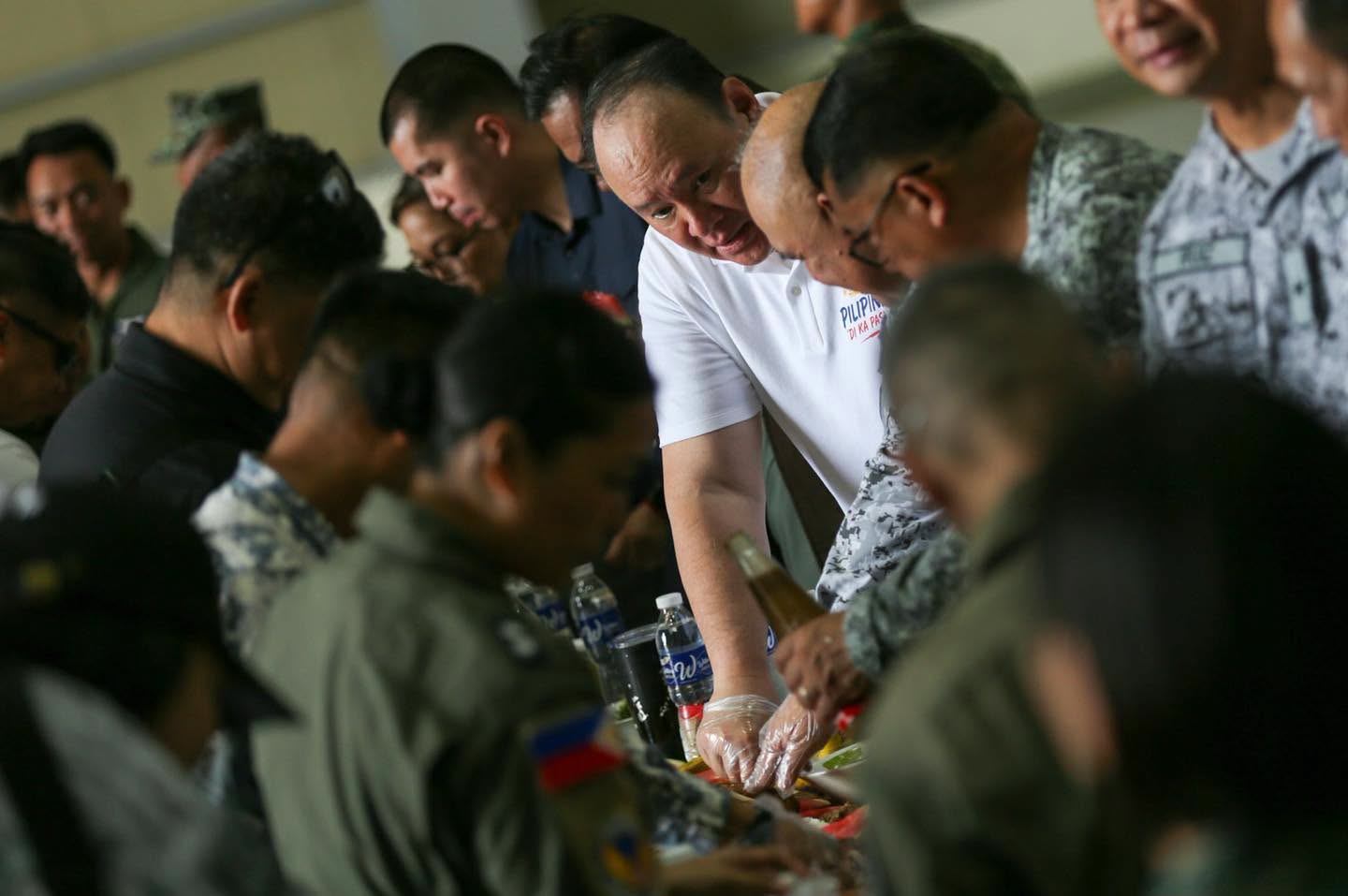
He distributed food packs and joined the boodle fight that included chicken, fish, rice, crispy pata, and fruits.
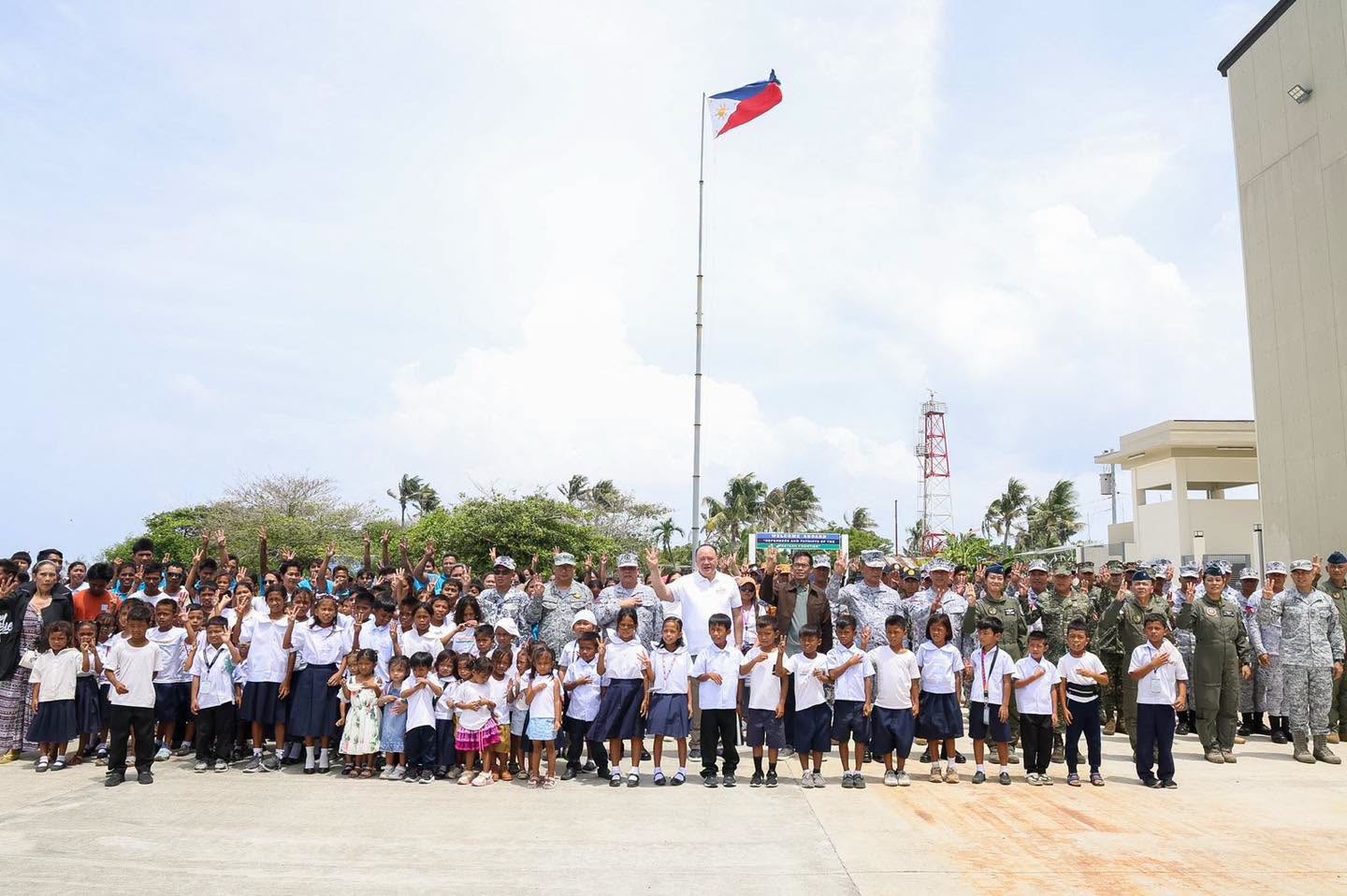
Pag-asa, Filipino for “hope” is also known as Thitu island. It is the largest of the features in West Philippine Sea, which is defined in the Maritime Zone Act as including the Luzon Sea, the territorial seas of Bajo de Masinloc and the maritime features of the Kalayaan islands (where Pag-asa belongs).
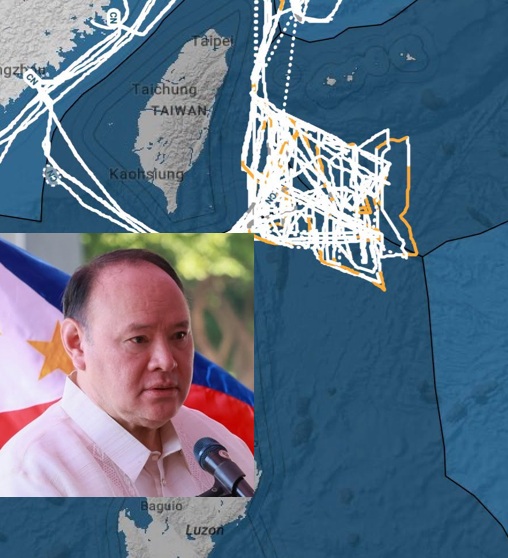
West Philippine Sea is situated in the South China Sea, where China’s nine-dash-line map encroaches on maritime zones of the Philippines, Vietnam, Malaysia, Brunei and Taiwan.
On July 12, 2016, an Arbitral Tribunal established under the United Nations Convention on the Law of the Sea unanimously ruled in favor of the Philippines in its maritime dispute with the People’s Republic of China. Beijing has refused to recognize the decision.
Acosta said the commemoration of the Arbitral Court’s decision “reminds everyone that this area truly belongs to the Philippines. It means our position is strong,” she told Vera Files.
Just 22 kilometers from Pag-asa is Zamora (Subi) Reef, one of China’s largest military outposts built on an artificial island in the Spratlys. Brightly lighted at night, Acosta said it’s a reminder of the conflict with the neighboring superpower.
“I sometimes tell my students it’s like being at Baywalk because it’s so bright over there. But I’ve been here for three years now, and we’ve gotten used to seeing them there all the time,” she said.
Although Chinese vessels continue to operate around the island, Acosta said she has not experienced harassment while traveling by sea.
She said she has also stopped living in fear. “If that situation ever comes, I think we just have to be ready for whatever might happen. We can’t control what they’re thinking. If they decide to attack a place at any time, and if that moment comes, then we’ll deal with it.”
“Every night when I go to sleep, I have peace of mind here. Eventually, I reached a point where I simply got used to it. That’s just how life has been since I arrived,” she added.
Kalayaan Mayor Billy Alindogan, who oversees Pag-asa Island, said Sunday’s event was part of their continuing effort to raise awareness and help fellow Filipinos understand the importance of the arbitral award for the country.
For him, the visit of the country’s top defense and military officials on the occasion underscored the government’s commitment to the island’s residents. “I saw how much they value our people on Pag-asa. Over the years, our municipality has received greater attention, and visits from high-ranking government officials strengthen and inspire our residents,” he said.
Also on Sunday, 13 countries joined the Philippines in supporting “a free and open Indo-Pacific” with “ South China Sea as a sea of peace, stability, cooperation, and prosperity driven by vibrant lawful commerce.”
“We reaffirm the Arbitral Tribunal’s decision that there is no legal basis for China’s expansive maritime claims in the South China Sea, including those based on ‘historic rights,'” the joint statement by the Philippines, Australia, Canada, Estonia, Germany, Italy, Japan, Latvia, Lithuania, New Zealand, Romania, Slovenia, the United Kingdom, and the United States said.
The countries also reiterated their opposition to “any destabilizing or unilateral actions, including by force or coercion, that threaten peace and stability in the region.” They further opposed the use of coast guard, military, and maritime militia forces “to harass, obstruct, or intimidate lawful operations by other states at sea or in the air,” saying such actions endanger personnel and fishermen and undermine regional peace and security.