
Art spaces, beyond art galleries and institutional museums, continue to transform the cultural landscape as seen in the proliferation of artist-run spaces, art collectives, and group projects organized by Philippine artists themselves.
The Ateneo Art Gallery presents 𝐎𝐫𝐢𝐨𝐧 𝐢𝐧 𝐒𝐢𝐠𝐡𝐭: 𝐀 𝐕𝐢𝐞𝐰 𝐨𝐟 𝐂𝐨𝐥𝐥𝐞𝐜𝐭𝐢𝐯𝐞 𝐖𝐨𝐫𝐤 until 18 October 2026, Areté, Ateneo de Manila University by TalaAnyo, a group of seven artist-led initiatives organized in 2025. Its name come from the words tála, star or to mark; anyo, form or appearance; and talanyo or constellation.
How the constellation Orion “transforms and changes through time and place” is likened to the vitality and presence of art collectives grounded in the community, enriching the country’s cultural landscape.
The seven initiatives include 𝐎𝐫𝐚𝐧𝐠𝐞 𝐏𝐫𝐨𝐣𝐞𝐜𝐭 founded in 2005 by Charlie Co and Victor Benjamin Lopue in Bacolod, Negros; 𝐏𝐫𝐨𝐣𝐞𝐜𝐭 𝐒𝐩𝐚𝐜𝐞 𝐏𝐢𝐥𝐢𝐩𝐢𝐧𝐚𝐬, 2007 (Leslie de Chavez), Mt. Banahaw, Quezon; 𝐄𝐬𝐤𝐢𝐧𝐢𝐭𝐚 𝐀𝐫𝐭 𝐅𝐚𝐫𝐦 2017 (Alfredo Esquillo), Tanauan, Batangas; 𝐋𝐢𝐧𝐚𝐧𝐠𝐚𝐧, 2018 (Emmanuel Garibay), Tagpuan, Cavite; 𝐀𝐠𝐨𝐬 𝐒𝐭𝐮𝐝𝐢𝐨, 2020 (Renato Habulan); 𝐓𝐮𝐧𝐠𝐭𝐮𝐧𝐠 𝐀𝐥𝐨𝐧 𝐀𝐫𝐭 𝐅𝐨𝐮𝐧𝐝𝐚𝐭𝐢𝐨𝐧, 2022 (Mark Justiniani and Joy Mallari), Tanay, Rizal, and 𝐏𝐚𝐬𝐢𝐥𝐲𝐨 𝐏𝐫𝐞𝐬𝐬, 2020 (Elmer Borlongan and Plet Bolipata), San Antonio, Zambales.
Milestone projects
The exhibit focuses on milestone projects made by the founders of each initiative. Some 19 artworks are on display, including video installations and ephemeral materials related to their history.
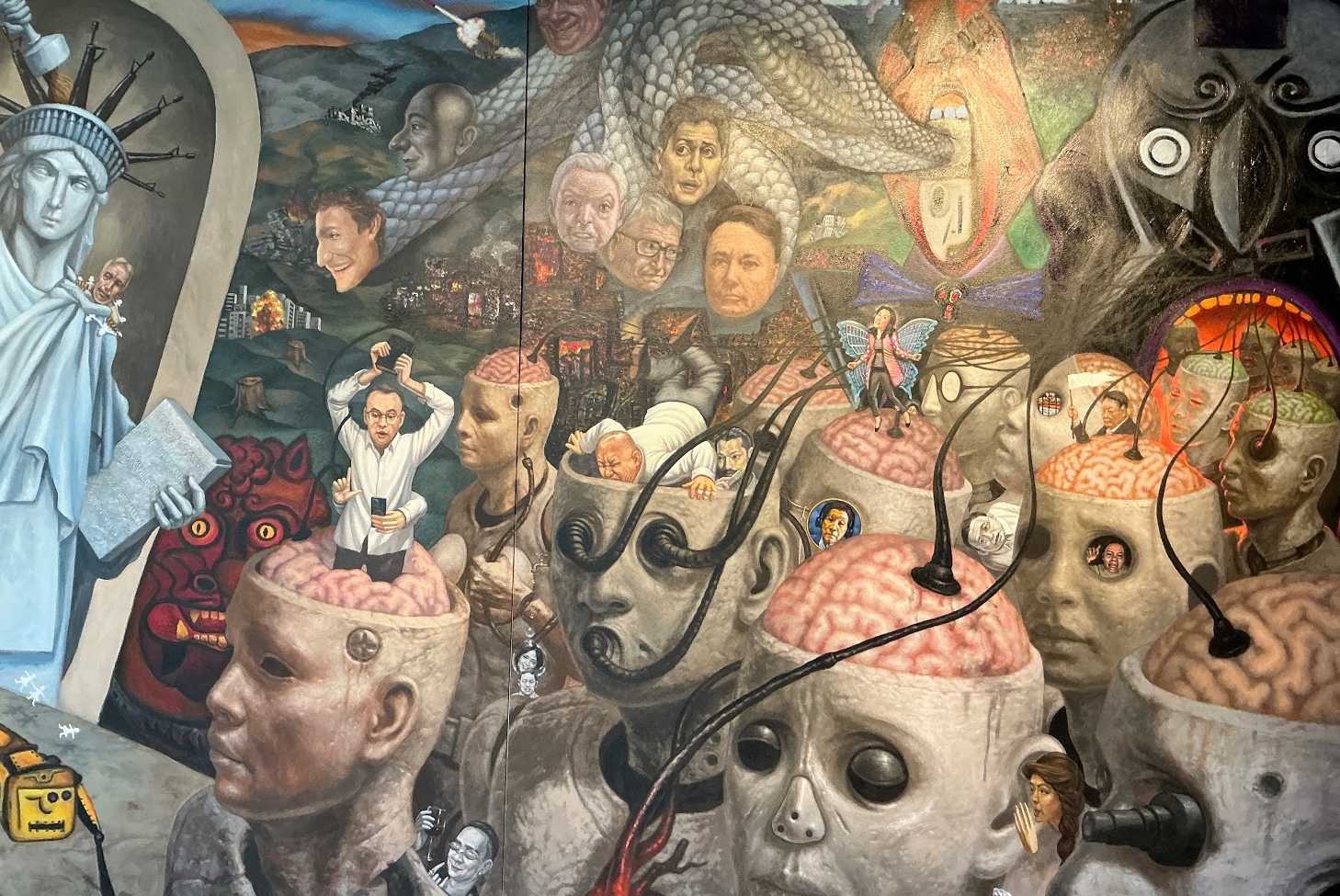
TalaAnyo’s massive seven-panel mural titled Habang Tanaw, 2026 lines the the hallway leading to the exhibit, a response to the various crises facing the country today, “the continuum of unrest and dissent” in the face of repression and dictatorship.
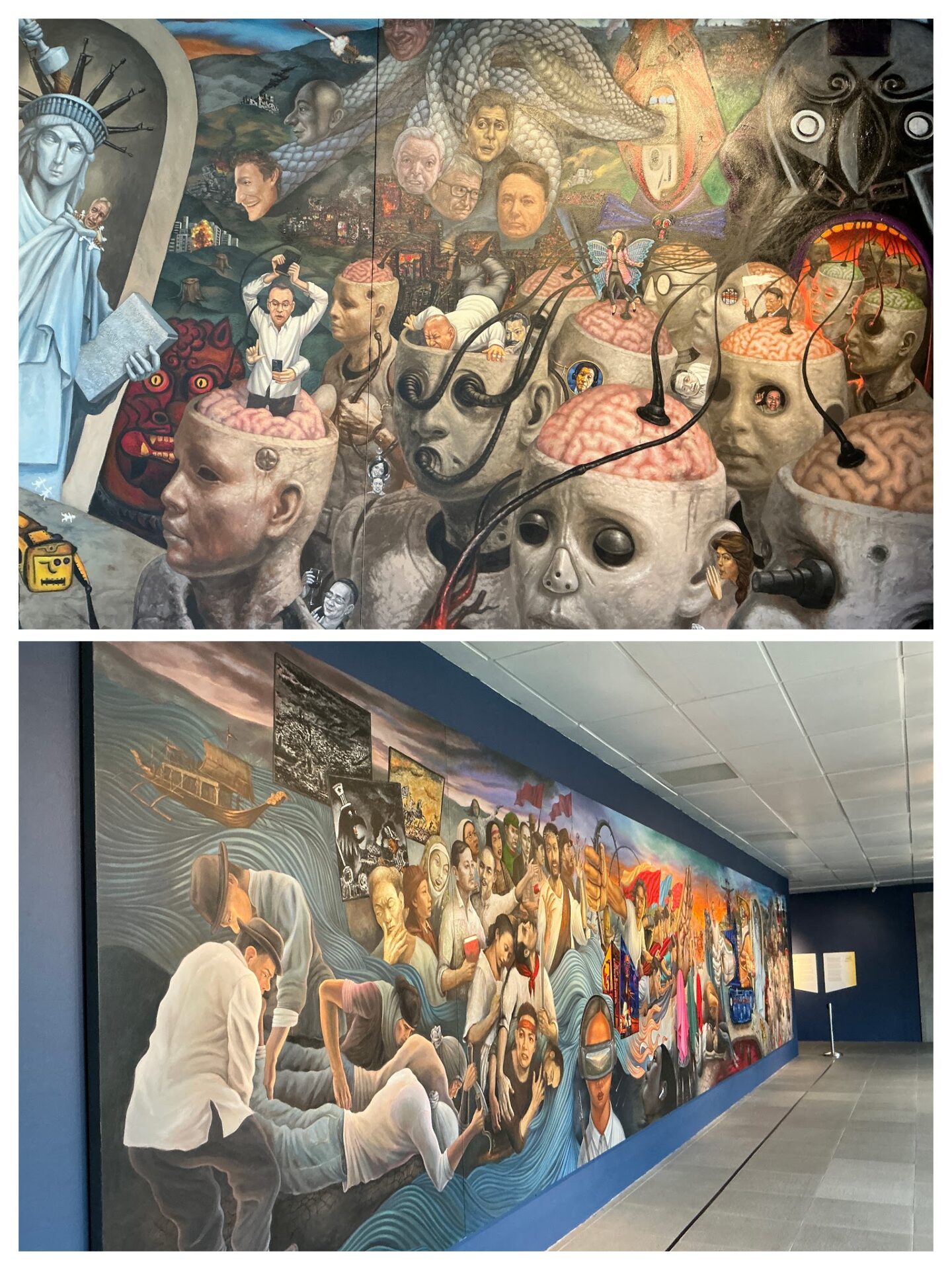
The first panel starts with a group of men kneeling and prostrating themselves; the succeeding panels depict the struggle for freedom from Spain, the United States, the Japanese; the struggle continues against the oligarchs, the military, and the powers-that-be amidst issues of corruption, public fund misuse, impunity, human rights violations, and more.
Mang Juan plods on. The continuity of struggle against inequality and injustice remains a rallying point in Philippine history, politics, and society. Satire and metaphor are visual weapons as seen in The House of Sin, 1995 touching on Church vs. State issues, embodied by a plump Archbishop Jaime Sin lying down with a gold chalice, surrounded by the hungry poor. In a similar vein, Manifest Destiny, 2001 portrays American President W. McKinley and the 1898 “benevolent assimilation policy,” leading to US imperialist expansion and intervention globally, until today.
Balancing the Cross, 2011. (Orange Project) It depicts a crucifixion scene atop an urban landscape in conflagration, speckled with red and black. On the left, a human head with a hat, marchers in protest facing armed men. On the right, a red orb in swirling yellow. The work symbolizes “the trials one carries across life and society…”
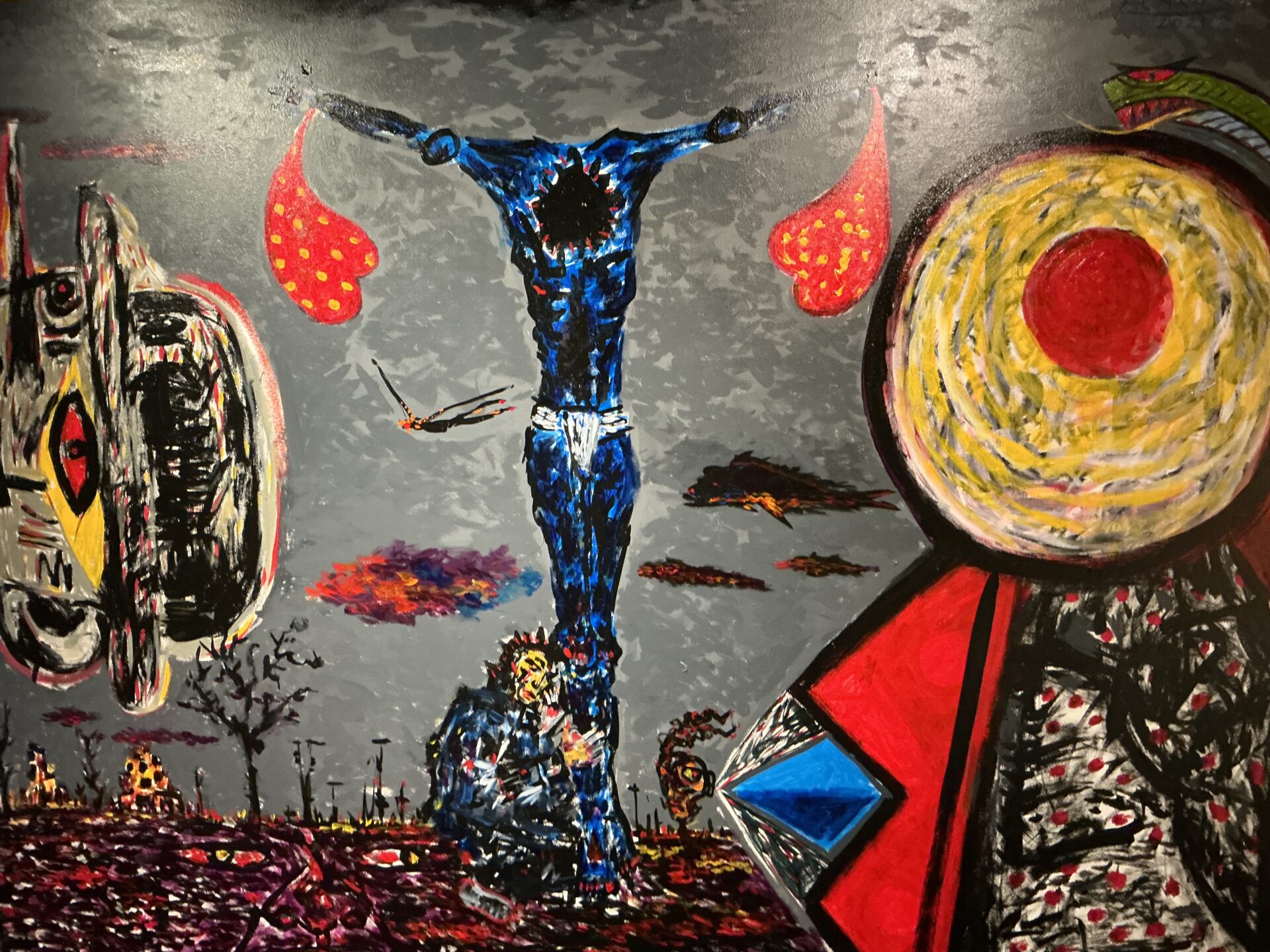
A collaborative painting by Nunelucio Alvarado, recently proclaimed as National Artist for Visual Arts, and Charlie Co, two leading artists from Negros.
Butterfly Effect, 2024 (Eskinita Art Farm) A butterfly-shaped work filled with disturbing images by Renato Habulan, Alfredo Esquillo, and Tuklas Sentro awardees. The Tuklas Art Program is Eskinita’s art mentorship program, covering north and central Luzon.
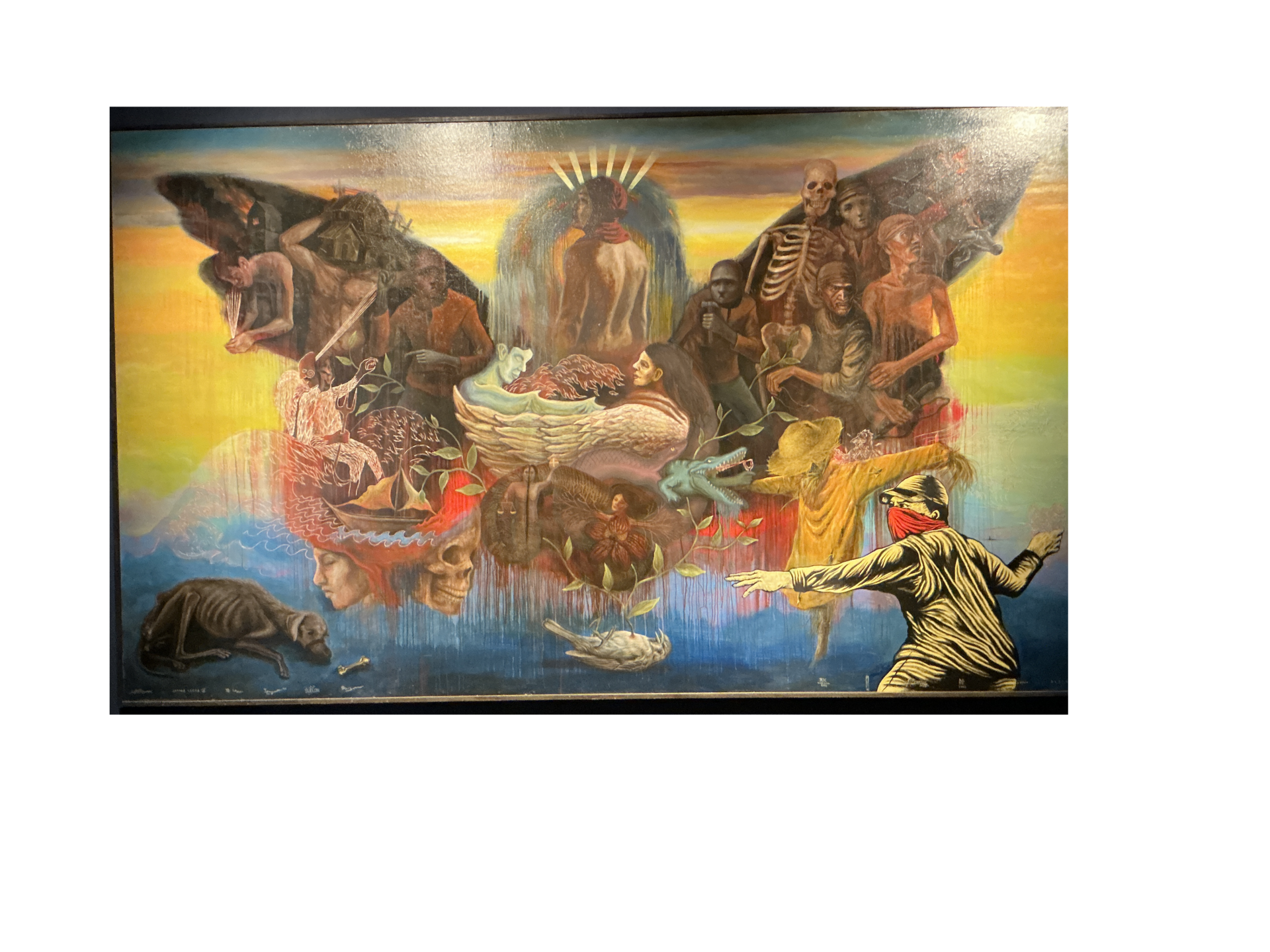
In its center, a woman with head covered and six white rays emanating from her head; uprooted houses in flame; with defiant expressions, people ready to fight.
La Bandera: Lucban II, 2026 (Project Space Pilipinas) A communal art activity by participants from Lucban, Quezon that recreated and reimagined what being Filipino means in 156 panels based on the historical Carta Hydrographica y Chorographica de las Islas Filipinas, 1734 by Jesuit cartographer, Pedro Murillo Velarde.
First published in Manila in1734, the Velarde Map is also known as the “Mother of All Philippine Maps,” proclaimed as a national cultural treasure in 2025.
Tagadagat, 2016: Where are we going? Asks a Giclee print of a mural that shows a long canoe, the nation, loaded with various personas.
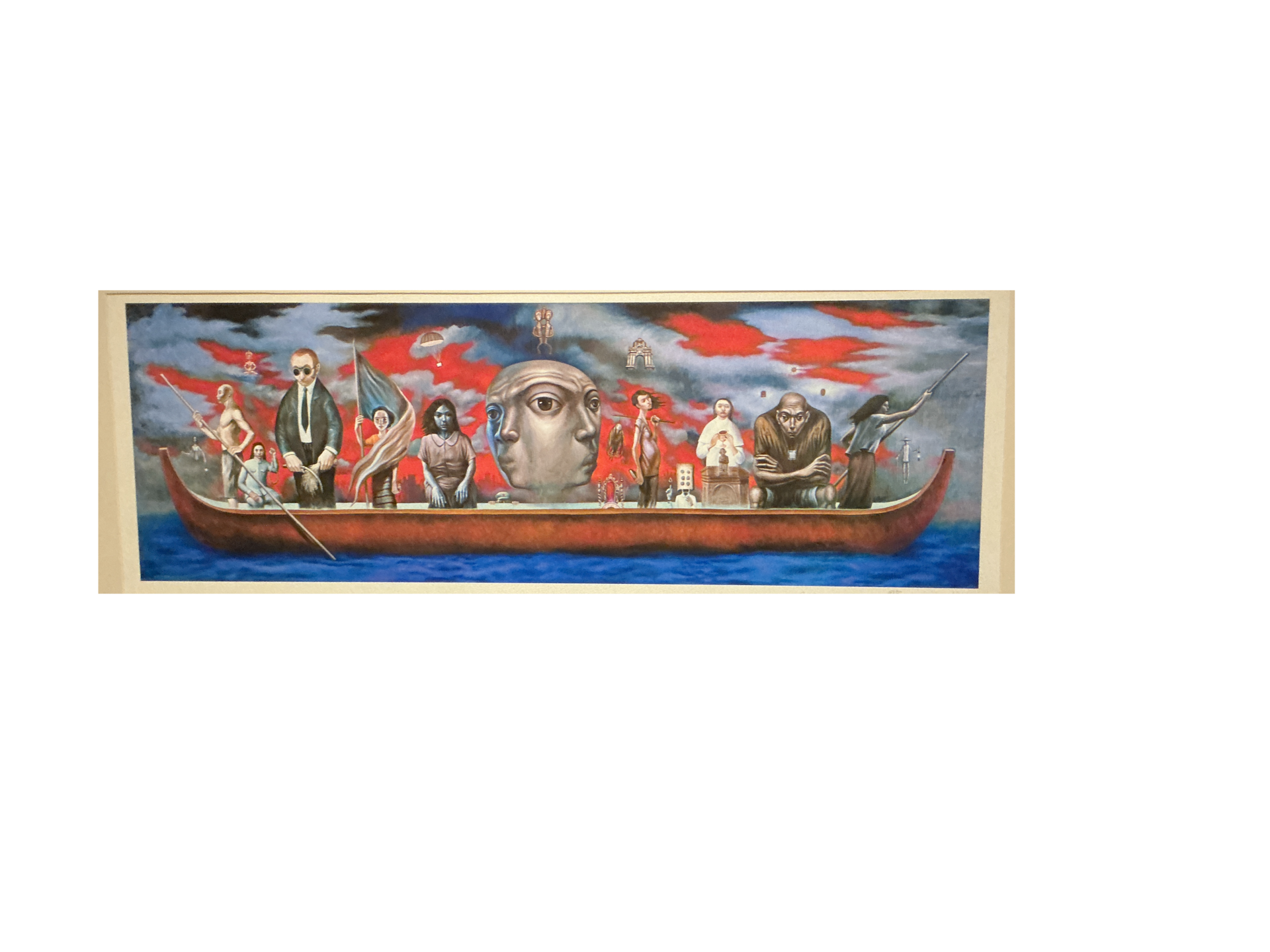
A work by Elmer Borlongan, Emmanuel Garibay, and Mark Justiniani, exhibited for Art Fair Philippines 2016.
Tablado, 2024. A mural depicts a surreal boxing ring scene, the winners, the losers, you-already-know. Underground, bizarre creatures of darkness roam, representing society’s uncertainty; ordinary Filipinos wrestle and overcome them in the everyday.
A work by Alfredo Esquillo and Eskinita Art Farm’s Tuklas Norte awardees based in Bulacan,Tarlac, and Pampanga.
SangNayon Workshop Mural I, 2025. Hope awakens in this mural, suffused with rosy colors, white birds flying, a fertile land blooming with lush plants, and people tilling the land, awaiting an abundant harvest.
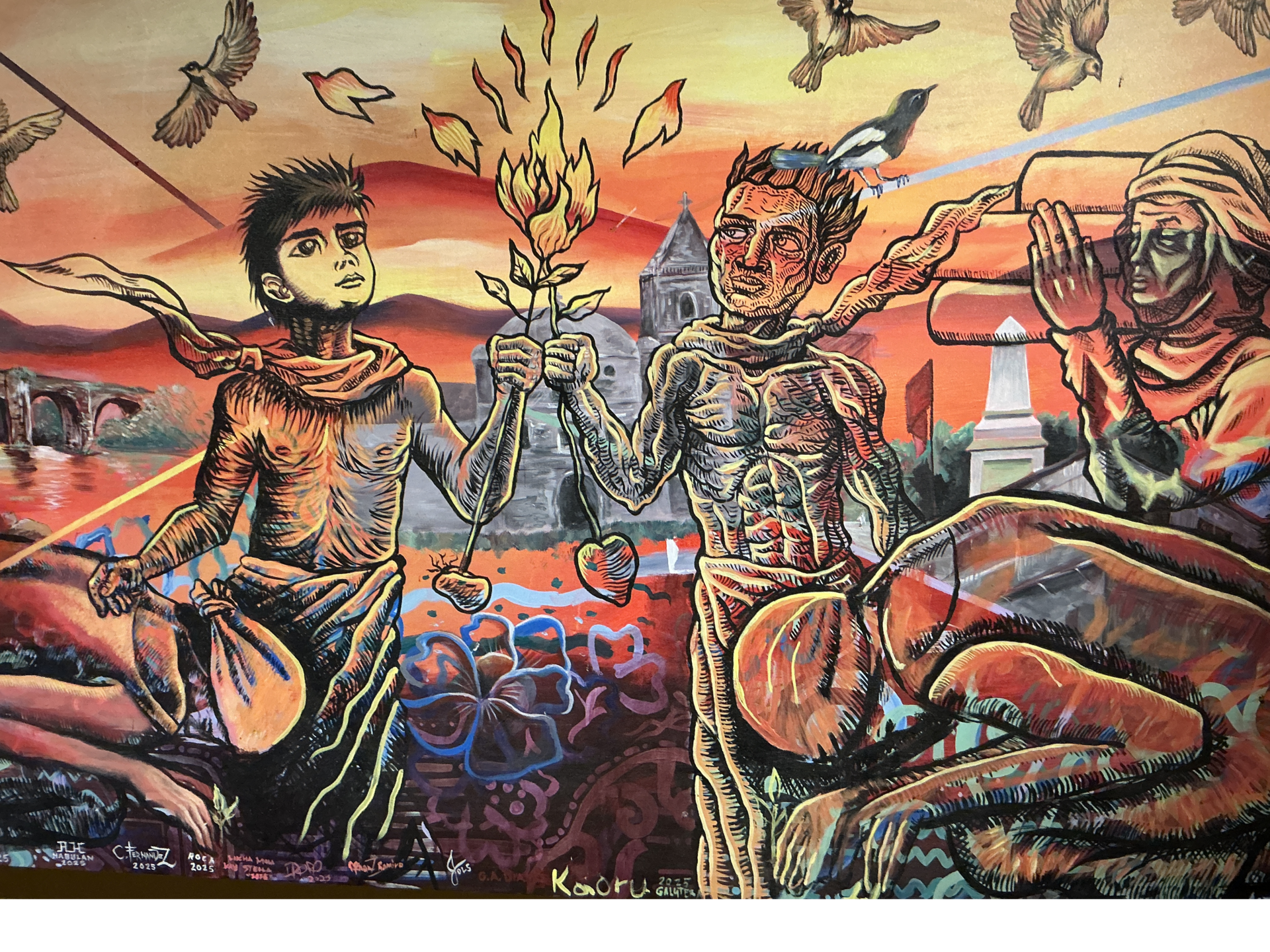
Inclusive and participatory in action, it is one of the two community workshop murals for the SangNayon ng Sining,Tayabas Art Project in April 2025. Leslie de Chavez and others facilitated a three-day mural making workshop on cultural heritage in Tayabas City, Quezon.
Tagbitak, 2026 (Tuntung Alon Art Foundation) A sculpture installation from clay from Tanay, Rizal intentionally left unfired and develop natural cracks over time. It reflects Tuntung Alon’s interest in the environment and learning activities from nature.
Overall, the exhibition offers a vision for art and cultural work rooted “in context and critical consciousness” and values “history, education, sustainability, identity, and social change.”
A vortex of suffering, despair, and turmoil have made Filipinos take to the streets and push back against negative forces. Reclaiming their basic rights to a life of peace and quiet continues, but a dream for many.