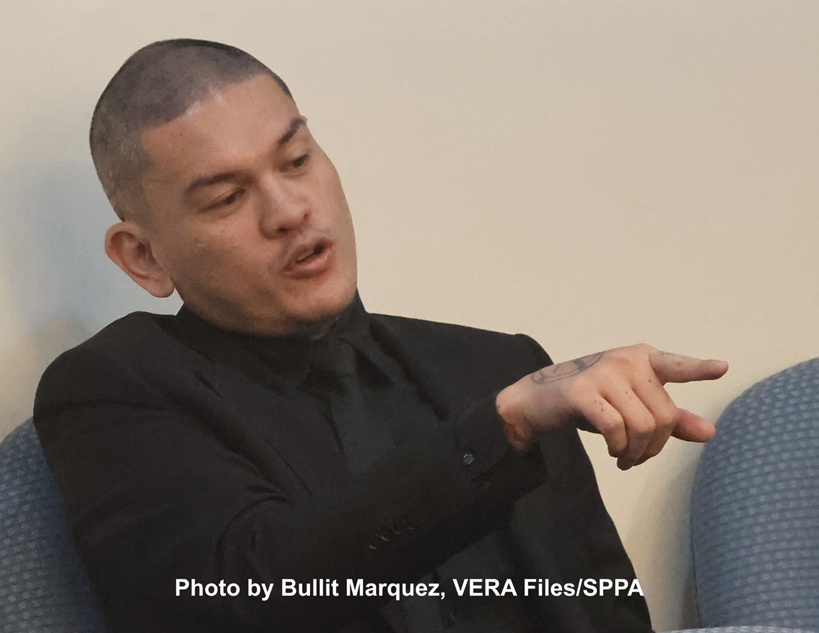

Week 13 of Vice President Sara Duterte’s impeachment trial put her declared business interests, registered firearms, and properties acquired by her husband under scrutiny, as the prosecution pressed its case that discrepancies in her statements of assets, liabilities and net worth raised questions about her truthfulness as a public official.
The House prosecution’s case on Article II, which covers allegations of unexplained wealth and related misconduct, moved from government contracts to firearms and real estate, while a dispute over financial records threatened to slow the proceedings.
Baste Duterte
The week’s most prominent witness was Davao City Mayor Sebastian “Baste” Duterte, who was subjected to searching questions by prosecution counsel Theodore “Ted” Te over 19 city government contracts worth about P33.2 million awarded to GenCorp Industries Inc., a company his sister had declared as a business interest in her SALNs.
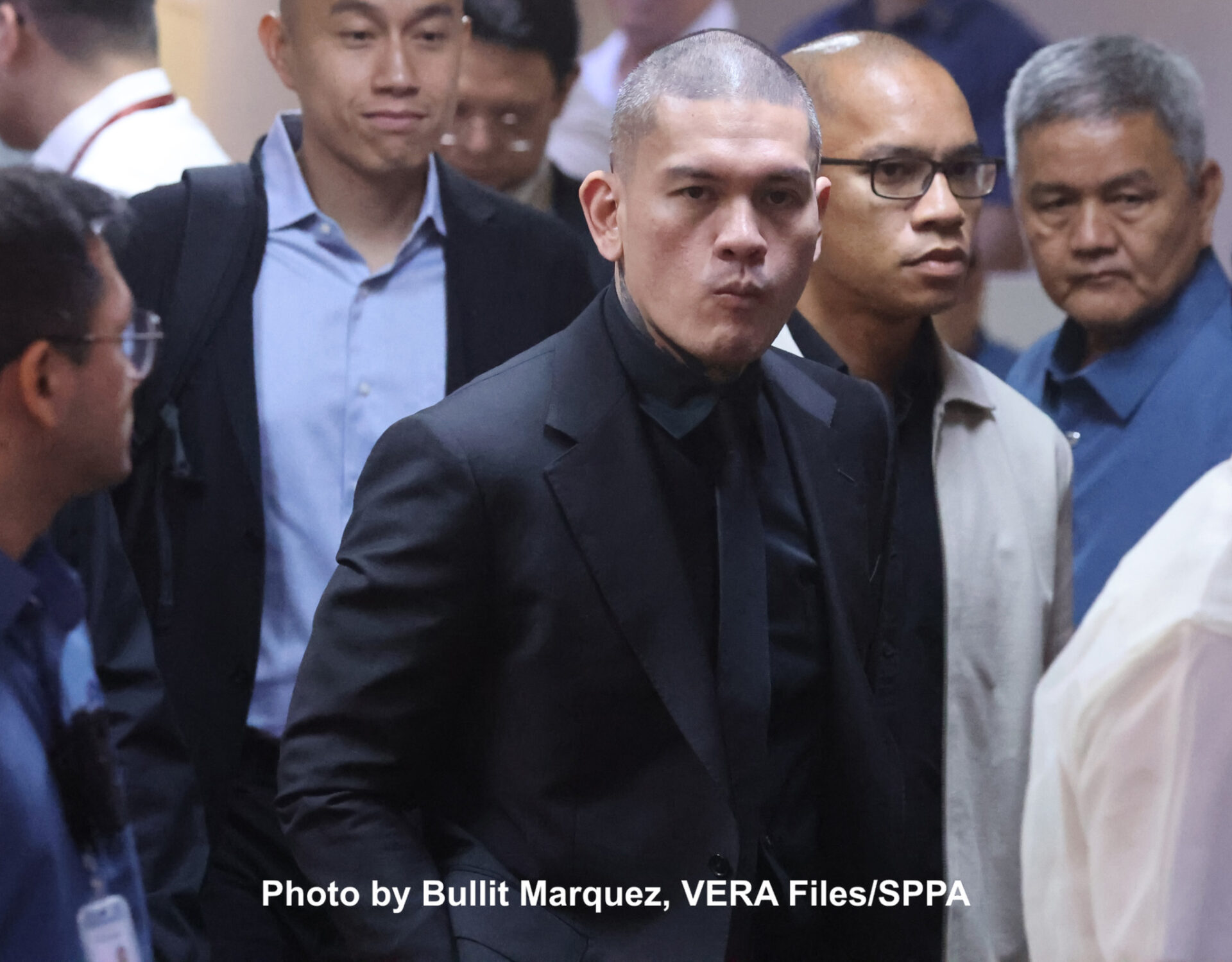
Baste insisted he did not know of Sara’s declared interest in GenCorp before it became an issue in the impeachment proceedings. The court declared him a hostile witness, allowing the prosecution to use leading questions after it argued that his relationship with the respondent and his previous statements warranted the designation.
“When it has been raised in this court, but before that, no,” Baste said when asked when he became familiar with GenCorp.
He also said he did not know that his sister had declared an interest in the company in her 2024 and 2025 SALNs, explaining that they did not discuss such matters because “it’s her privacy.”
“It’s not my responsibility to know,” he said.

Contracts raise conflict questions
Baste acknowledged that Davao City had 19 GenCorp contracts worth about P33.2 million, with 13 completed and six ongoing. This differed from the 15 contracts worth about P34.2 million previously identified by Philippine Government Electronic Procurement System division chief Rendell Sopeña. Fifteen documents Baste presented matched those identified by Sopeña, while four others had not been presented earlier.
Baste said the transactions were above board and that Assistant City Administrator Tristan Dwight Domingo, whom he authorized to represent him, signed the contracts. He admitted he had not personally examined GenCorp’s corporate records before the awards and was not familiar with all the contracts signed on his behalf.
Presiding officer Francis “Chiz” Escudero asked whether Baste would have allowed GenCorp to transact with Davao City had he known his sister owned shares in the company.
“I would not allow it,” Baste replied.
Baste nevertheless maintained that the city’s transactions were proper because Sara’s name was not on the contracts. He also said Domingo had told him GenCorp was qualified and had complied with procurement requirements.
Senator-judge Sherwin Gatchalian questioned why GenCorp had repeatedly obtained city contracts from 2022 to 2026, including instances when it was the sole bidder. Senator-judge Raffy Tulfo also raised questions about the company’s operational track record and whether it should have been disqualified under procurement rules.
The testimony exposed a discrepancy central to the prosecution’s argument: Sara declared an interest in GenCorp in her SALNs, but Securities and Exchange Commission records presented earlier did not list her as a stockholder, director or incorporator. Prosecutors argued that the declared interest raised conflict-of-interest concerns because the company was doing business with Davao City under her brother’s leadership.
Baste also acknowledged business ties with businessman Jaime Tan Cruz, whose business group has been linked to GenCorp. The testimony opened another line of questioning about possible conflicts in the city’s procurement dealings, although Baste said he had not discussed GenCorp with Cruz.
Guns and properties under scrutiny
The prosecution also presented police records showing that Sara and her husband, lawyer Manases Carpio, had 51 registered firearms—22 under the vice president’s name and 29 under Carpio’s—with a combined estimated market value of P7.22 million. Police Maj. Joericson Sangalang of the Philippine National Police Firearms and Explosives Office clarified that the figure represented market estimates, not the actual acquisition costs.

The prosecution said the firearms were not declared in Sara’s SALN. Some senator-judges questioned the relevance and weight of the testimony, noting that firearms could be declared as personal property and that their estimated market value did not establish how much the couple had paid for them.
On Oct. 1, Day 32 of the trial, two Land Registration Authority officials testified about properties acquired by Carpio that prosecutors said did not match entries in Sara’s SALNs.
Davao City Register of Deeds Kathy Florence Baldonado testified that Carpio bought a 379-square-meter property in Matina, Davao City, in 2024 for P6 million. She said the deed of sale and title did not match a property in Sara’s 2025 SALN in terms of price, location and mode of acquisition.
Samal City Deputy Register of Deeds Marco Pineda testified that Carpio acquired a 751-square-meter lot in Barangay Matanos, Island Garden City of Samal, Davao del Norte, in 2018 for about P3.45 million. He likewise said no entry in Sara’s 2019 SALN perfectly matched the deed of sale.
The defense challenged the prosecution’s conclusions, presenting tax declarations that it said identified the properties as assets already declared by Sara. Escudero cautioned that SALN descriptions could be too general to establish a one-to-one match with land titles, and that a spouse’s name appearing on a deed did not by itself establish co-ownership.
In a post-trial briefing, however, prosecution counsel Lorna Kapunan argued that the issue was not simply the value of the properties but their alleged nondisclosure. She maintained that marital property rules could mean the properties should have been declared even if Carpio alone appeared as the buyer.
“The fact is, under many decisions of the Supreme Court, ‘married to’ means that that property is owned by both,” Kapunan said.
“It has nothing to do with the amount and everything to do with the nondisclosure of that real property in the SALN, which is subscribed and signed, meaning, everything there is truthful and accurate. So that’s perjurious,” she added.
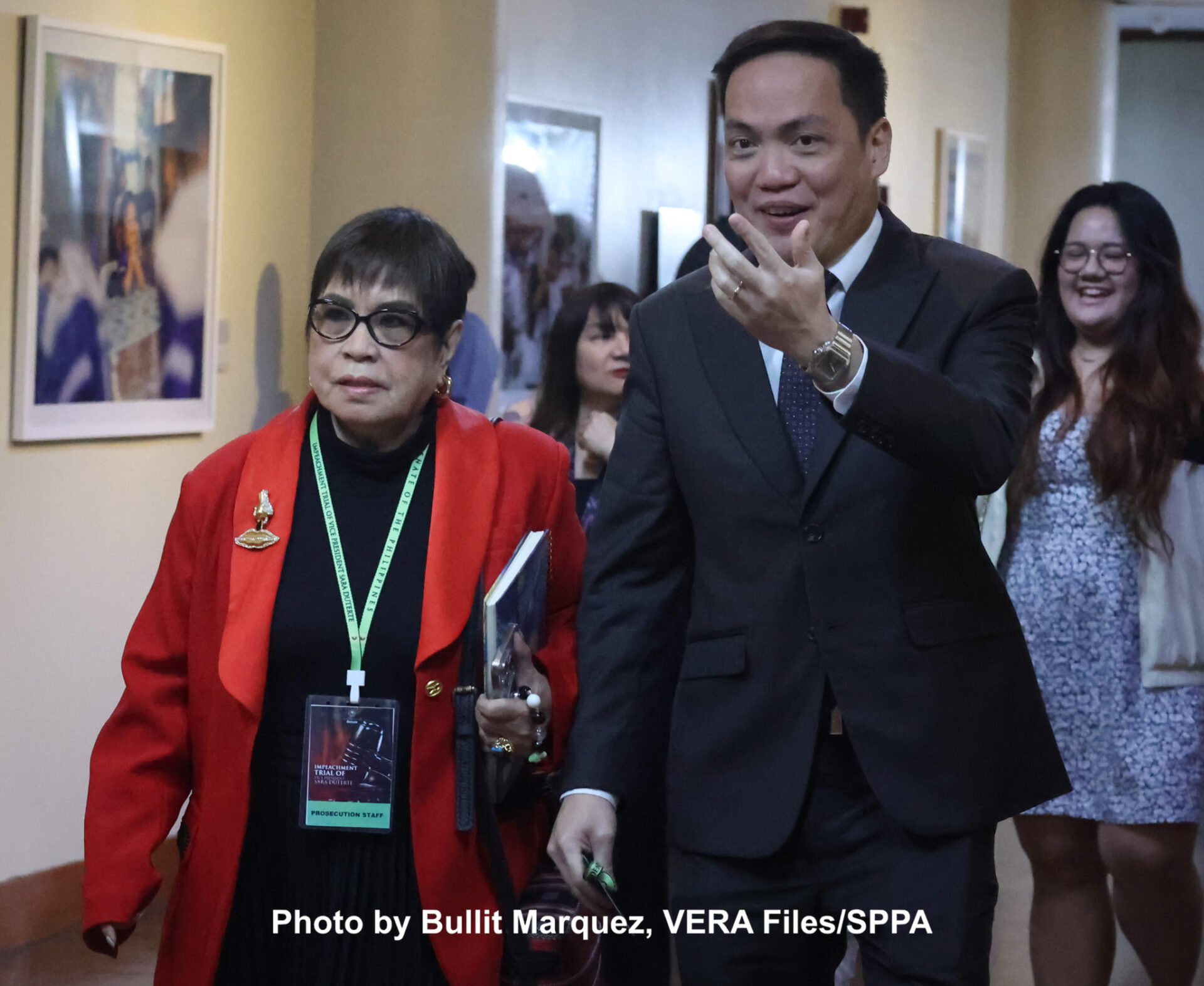
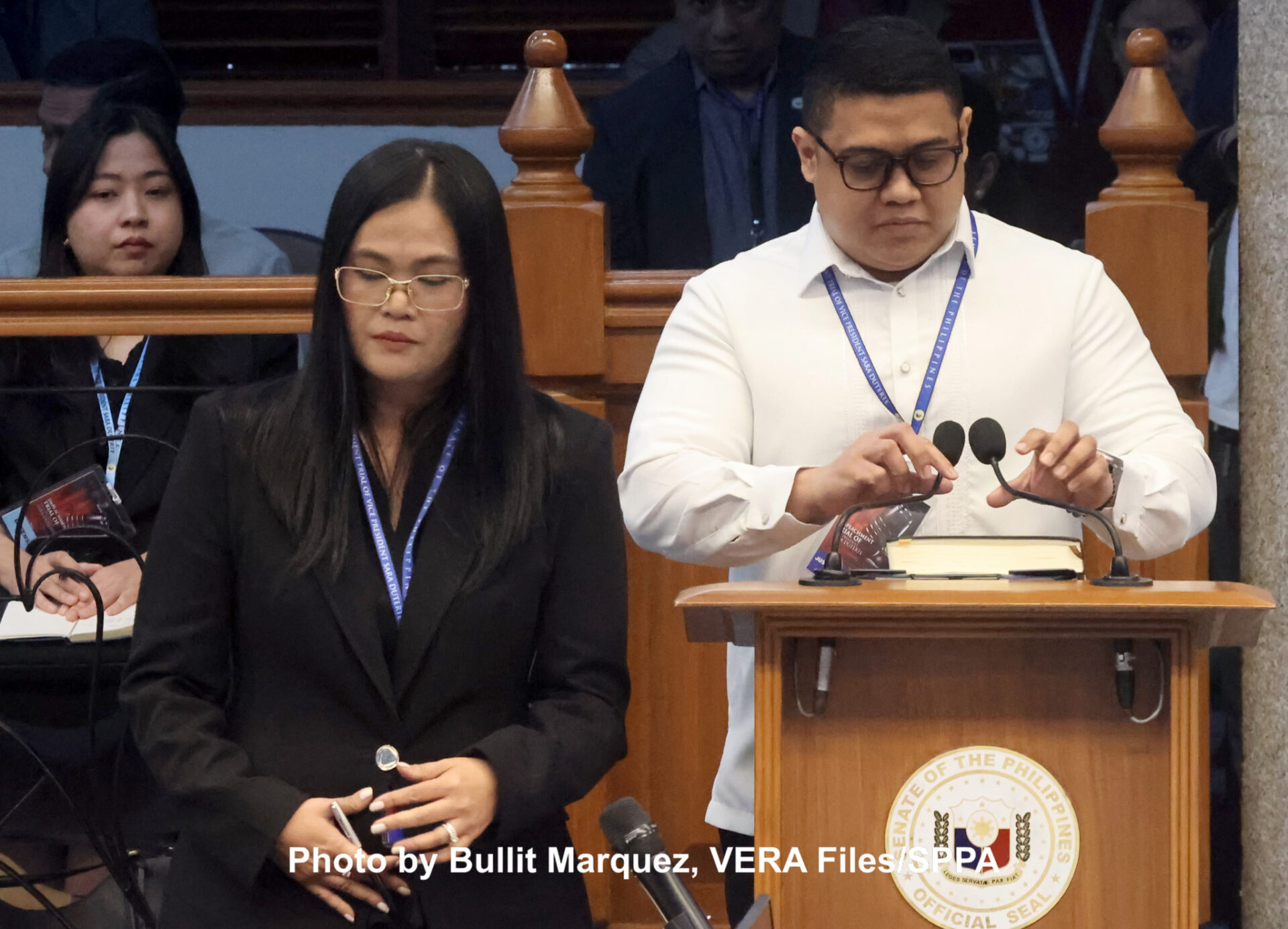
The prosecution’s broader contention was that a public official who swears to the truthfulness and accuracy of a SALN must disclose assets and business interests required by law. The testimony, however, left questions for the court to resolve, including whether the properties were jointly owned, whether they were already covered by the SALN entries and what financial records could establish about their acquisition.
Bank records trigger fresh clash
The prosecution and defense also clashed over subpoenaed bank and financial records, setting up the next phase of the trial.
On Monday, prosecutor Chel Diokno initially asked the court to require Sara to admit the existence and authenticity of records submitted by banks in response to subpoenas. He said the request would narrow the disputed issues and save time by avoiding unnecessary witnesses.
The defense objected, arguing that the request was inappropriate in an impeachment proceeding and could violate Sara’s constitutional right against self-incrimination.
The court sided with the defense, ruling that Sara could not be compelled to authenticate the records. Escudero stressed that efforts to expedite the proceedings must yield to constitutional protections.
“The Bill of Rights applies throughout the impeachment process,” he said.
The ruling complicated the prosecution’s planned presentation of financial evidence, requiring it to establish the records through other witnesses rather than through the vice president herself.
AMLC dispute cuts session short
Thursday’s proceedings, which were expected to be the first full day of hearings for the week, ended at 3:30 p.m., three hours before the scheduled adjournment, after the defense sought more time to examine Anti-Money Laundering Council records.
Defense lead counsel Sheila Sison said the defense had received an 11-page AMLC summary only that morning and that the underlying documents involved at least 23 to 24 boxes. She also invoked the confidentiality provisions of the Anti-Money Laundering Act and cited an AMLC letter stating that the agency was not waiving the confidentiality of its records.
Diokno countered that the defense had known about the records since Sept. 2 and that the court’s subpoena powers could not be nullified by confidentiality restrictions.
Escudero granted the defense additional preparation time, citing “courtesy and equity,” and moved the appearance of AMLC Executive Director Ronel Buenaventura to Monday, Oct. 5.
The prosecution also withdrew former Sen. Antonio Trillanes IV from its witness list for Article II, shifting its immediate focus to documentary and financial evidence.
The court approved subpoenas for representatives of seven banks and seven insurance and financial companies for next week. The prosecution also scheduled a Bureau of Internal Revenue witness for Monday, followed by bank and insurance representatives on Tuesday.

SC clears way for trial
The week’s proceedings followed the Supreme Court’s dismissal of three petitions seeking to invalidate the impeachment court’s Sept. 23 vote lowering the number of votes needed to convict Sara.
The Senate court had ruled that 14 votes, rather than 16, would be sufficient, based on the 20 senators who had served as impeachment judges and participated in the proceedings.
The Supreme Court junked the petitions because the petitioners – former executive secretary Victor Rodriguez, constitutional lawyer Ernesto Francisco Jr. and disbarred lawyer Berteni Causing – lacked the legal standing to bring the challenge and because the issue was premature. It removed the immediate legal challenge posed by the petitions and allowed the trial to proceed under the revised threshold.
The coming hearings are expected to test the prosecution’s financial evidence more directly, as AMLC, tax, bank and insurance records are presented to establish the source and movement of funds linked to the vice president and her husband.
Week 13 thus left the impeachment court with two interconnected questions: whether the prosecution can substantiate its allegations through documentary evidence, and whether the discrepancies it has identified amount to violations of Sara Duterte’s obligations as a public official. The defense has challenged the interpretation and admissibility of the evidence, while the prosecution maintains that the sworn disclosures in her SALNs must be measured against official records of her business interests, firearms and properties.