

The Blitz
Eighty six years ago, Nazi Germany’s Luftwaffe mounted an aerial assault against the British Isles that has since been called the Battle of Britain. It originally started out as a Luftwaffe campaign to eliminate the Royal Air Force which would greatly facilitate the invasion of the islands in a plan known as Operation Sea Lion. However midway through the bombing campaign, a series of miscalculations resulted in cities and civilian targets being included in the places bombed. This was not to say that the Germans were restrained in the war prior to that battle. In fact they had committed numerous atrocities against civilian targets beginning at Guernica during the Spanish Civil War, the terror bombings of Warsaw and Rotterdam and the strafing of French refugees in the roads during the invasion of France in May 1940.
However despite the ruthlessness of the German attacks against British cities and bases, the aerial onslaught petered out by late 1940 and ended in early 1941. Then, in September 1944, the Germans began again the indiscriminate bombing of British cities in an attempt to weaken civilian morale and divert Allied resources from the Western Front back to the defense of the United Kingdom. This time the Germans were using so called wonder weapons, the pulse jet engine V1 and V2 ballistic missile. The V1 could still be intercepted by high performance Allied fighters but the V2 was practically immune to interception and could only be neutralized by bombing the launching sites, which the Allies did with great urgency. Fortunately for the Allies, none of these German attacks, either in 1940 or in 1944 managed to destroy the morale of the British and in their ability to manufacture weapons and wage global war, especially when American presence became felt by 1942. A whole lot of lessons were learned during those years that hence played a big role in how nations today should ethically conduct war.
Rules governing war
Following the Second World War, a global consensus was reached to strengthen and add to existing laws governing the conduct of war so as to avoid the wanton destruction undertaken by all major combatants in that global conflict against each other. A set of precise laws were then introduced to prevent the reoccurrence of area wide indiscriminate bombing and instead focus to targeted military objectives. The protection of civilians and distinct non-military civilian targets were now deemed paramount. The Protocol Additional to the Geneva Conventions of 12 August 1949, and relating to the Protection of Victims of International Armed Conflicts (Protocol I), 8 June 1977 stated that:
“5. Among others, the following types of attacks are to be considered as indiscriminate:
(a) an attack by bombardment by any methods or means which treats as a single military objective a number of clearly separated and distinct military objectives located in a city, town, village or other area containing a similar concentration of civilians or civilian objects; and
(b) an attack which may be expected to cause incidental loss of civilian life, injury to civilians, damage to civilian objects, or a combination thereof, which would be excessive in relation to the concrete and direct military advantage anticipated.”
The Chechen Wars
Of course it is next to impossible for even the most careful of combatants to avoid civilian casualties or as it is euphemistically termed as collateral damage especially in a conflict situation. However it is a different matter altogether to directly target civilians in an effort to terrorize the population which is a strategy that harks back to the Second World War but is something that refuses to go away despite all the laws prohibiting it. In post-Cold War history one of the worst violators of those laws or most likely occupying the top position, has been none other than the Russian Federation which has been trying to bring a number of those former Soviet Republics back into Moscow’s influence at great cost to life and property of those countries the Russian military attacks or operates in.
In the two wars that were fought to reassert Russia’s control over the breakaway territory of Chechnya in 1994 to 1996 and 1999 to 2009, the Russian military utilized tactics that harked back to the days when the Red Army advanced into Central Europe from 1943 to 1945. Entire villages, towns and cities were leveled by a combination of artillery and air attacks. This was especially true during the Second Chechen War wherein overwhelming firepower proved decisive in crushing the lightly armed Chechen fighters. There is no reliable estimate as to how many Chechens were killed in all those wars as it goes as high as 160,000. Russian military deaths are put at 13,000. A British journalist who visited the Chechen capital of Grozny in 1995 called the scale of devastation comparable to the Second World War. There was still more destruction to come in 1999 to 2000 when Russian forces laid siege to the city and bombarded it relentlessly. It was a foretaste of things to come two decades later in the Russian invasion of Ukraine in 2022.
The war in Ukraine
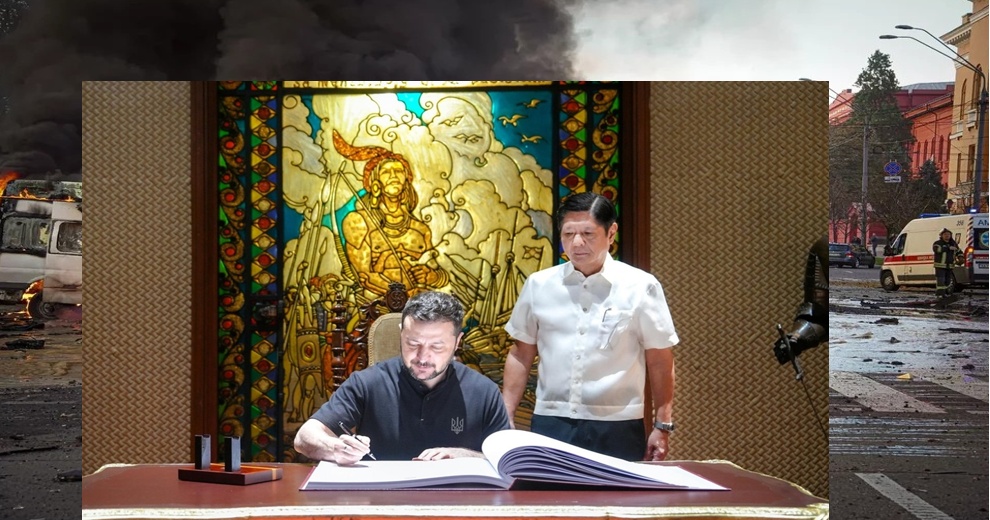
Russia under Vladimir Putin launched a full scale invasion of Ukraine on February 24, 2022 and expected the government of Volodymyr Zelenskyy to collapse and the Ukrainian military to be routed in just three days. In reply to U.S. government appeals for his evacuation, Zelenskyy famously responded that in the face of the Russian invasion, he needed more ammunition and not a ride out. It is already 2026 and there is no sign that Ukraine will surrender and in fact it has undertaken counteroffensives that have liberated large parts of territory seized by the Russians in the invasion. The fighting has now ceased to be a war of movement as both sides settle down to a situation similar to what existed in the Western Front in 1914-1918 during the First World War. Unable to break through Ukrainian defenses and subject the unconquered towns and cities of Ukraine to the same brutal massive artillery shelling that they had subjected Chechen settlements to twenty years earlier or to Ukrainian border cities like Mariupol, the Russians have resorted to a campaign of indiscriminate aerial bombardment.
Almost daily Ukrainian cities are subjected to the attacks of Russians that consist of drones, glide bombs, cruise missiles, ballistic missiles, and occasionally combat aircraft. However the preferred methods by the Russians are drones, glide bombs, and missiles as Ukraine has one of the most heavily defended airspaces which are quite deadly to combat aircraft. Any Ukrainian city or town that is within range of these weapons has become a target for attack whether it is Kiev, Kharkiv, Odessa, or even Lviv which is at the western side of Ukraine.
Civilians and non-military targets like high rise residences, cultural and historical buildings, schools, groceries and malls are frequently and deliberately targeted by the Russians in an effort to sow terror on the population. Russians try to saturate the Ukrainian defenses with cheap Iranian designed drones so that either several gets through or a missile does. Once it is reported that Ukrainian civilians were killed, the Russians will resort to claiming that there was an alleged military target nearby or in the structure attacked which are found to be baseless accusations when investigated by independent parties like Amnesty International. Worse is that Russian drone operators deliberately hunt down and kill Ukrainian civilians living in communities near the front regardless if they are men women or children and of whatever age.
There are numerous videos of such types of attacks against Ukrainian civilians that the term “human safari” has been coined to describe these Russian atrocities. The first half of 2026 saw a surge of deliberate aerial attacks by Russia against Ukrainian civilian targets that caused 1,400 deaths and thousands more wounded. Since the war began, more than 16,000 Ukrainians have been killed mostly by such aerial attacks with almost 50,000 wounded and these numbers are still increasing each day.
To defend against these indiscriminate Russian attacks, the Ukrainians have resorted to a mixture of hi and low tech defensive systems. Against Russian ballistic missile attacks, the Ukrainians have relied heavily on Western weapons systems such as upgraded versions of the time honored Patriot missile which first gained fame during the 1991 Gulf War. Lower tier defenses especially directed against drones and glide bombs are anti-aircraft guns ranging from the German Flakpanzer Gepard and Warsaw Pact era anti-aircraft gun systems, to even World War Two era machine guns in multiple mounts. Slow propeller driven aircraft and helicopters with crew firing rifles and machine guns from windows are also used to shoot down Russian drones.
The Ukrainians have realized that it is more practical to shoot down cheap drones with guns than to use very expensive missiles. For the civilian population, they are given advice as to how to evacuate and places to go to, or what to do to protect oneself and family during Russian aerial bombardment. In scenes reminiscent of 1940s London during the Blitz, Ukrainian families together with their pets seek refuge in the subway systems of their cities, utilizing them as secure bomb shelters. Once the all clear is given, they emerge from these places with the same resolve to carry and fight on again similar to the Londoners more than 80 years ago. Again proof that civilian morale during terror bombings tend to increase rather than waver.
Lessons for the Philippines
As the Philippines faces growing existential threats from external powers like China especially since it is a frontline state against Beijing’s expansionist and imperial ambitions, it cannot and should not leave the physical protection of its citizenry to chance.
There is a reason as to why the Office of Civil Defense is under the Department of National Defense and not to any other department. It is not only because the military which is a bureau under the DND is the most effective asset when it comes to humanitarian assistance and disaster response. It is because in the event of conflict, it is the primary office in charge of directing all measures to protect the Filipino people from attacks by hostile powers whether externally or internally.
In that regard, steps have to be taken to establish the necessary infrastructure to provide safety to civilians in the event of foreign aggression or internal conflict. This can initially be done by identifying already existing structures like the numerous underground tunnels that already exist in some cities especially like Metro Manila that are used by either trains, cars, or pedestrians to travel throughout the city. Even basement parking can be utilized as bomb shelters during drone attacks. Earthquake drills can be subtly tweaked by planners to handle also simulations against aerial bombing.
The OCD should already begin looking into programs or dusting off existing ones that will map out a civil defense strategy in times of conflict as the rest of the DND takes on the other equally important task of modernizing the Philippine military. If ever there is foreign aggression against the Philippines, the Filipino people’s morale and resilience will greatly be enhanced if they are confident that the government has reasonably provided the protection required for them.