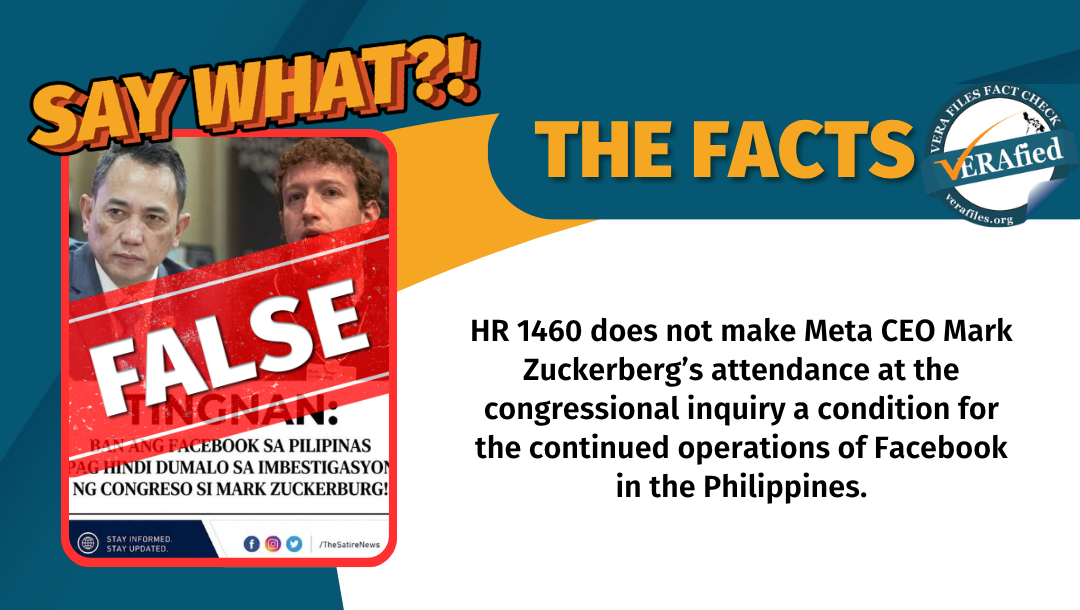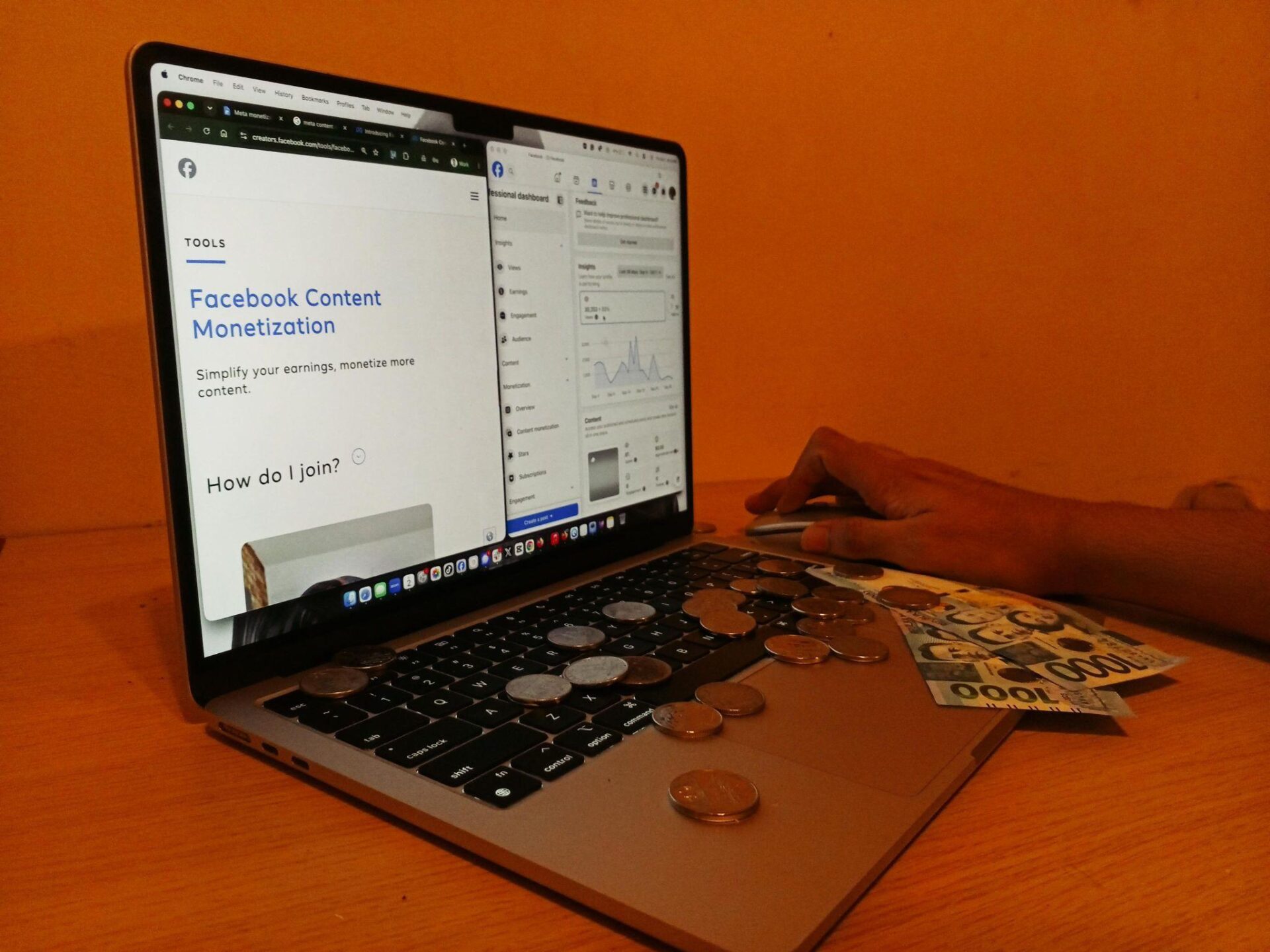

Three weeks before school year 2026-2027 opened in June, a post on Facebook offering incentives to students had gone viral, garnering millions of views, mostly from parents, hanging on to a promise that did not exist.
The page ‘PH News Now’ was created on April 21 and within weeks posted multiple times the video supposedly showing a female news anchor talking about incentives for elementary to college students ranging from P8,000 to P10,000. In the background were images of students in school uniforms.
The script was: “May mga anak ka ba na papasok ngayong pasukan? Isali mo na sila dito. P10,000 ang kanilang makukuha pambili ng school supplies at pambaon nila. Pumunta sa post namin at mag-register sa online form, public at private, all level, pwedeng mag-apply
(Do you have children who will be entering school this year? Get them to join. They will get P10,000 to buy school supplies and packed meals. Read our post and register using the online form; public and private, all levels, can apply.)“

The news anchor? Not real. And neither was the school incentive. The video was generated using artificial intelligence, based on the results from the Deepfakes Analysis Unit of the India-based Trusted Information Alliance and through a visual scrutiny of its studio lighting and the anchor’s inflection.
VERA Files identified six of its clips, published between May 2 and 5, with each uploaded twice. Combined, the videos drew more than 1.5 million views, 40,800 reactions, 12,326 comments, and 10,964 shares — a massive reach and engagement with thousands of followers, which is one of the requirements for content monetization payout.
There was never any incentive for students. There was only revenue for whoever built the page.
PH News Now is not alone. VERA Files’ review of its records found that at least five other FB pages have repeatedly been flagged for spreading disinformation while carrying active Meta monetization status.
Two of the five, ‘Pinoy Trend‘ and ‘Masang Pilipino‘, have carried monetization status since 2019, meaning Meta has continued to pay these pages for their reach across three different iterations of its monetization program, despite years of fact-checks flagging their content as false or fake.
‘PH Now’ has been monetized since 2020. The two newest entries, ‘Pinoy Trending’ and ‘News Ngayon,’ were both first recorded as monetized in March 2025 — around the same period Meta was migrating creators into its unified Content Monetization Program ahead of its full rollout in August.
These Facebook pages needed only to keep drawing views and engagement and let the platform’s own payout formula do the rest. The same formula that rewarded PH News Now’s fake school-incentive videos before a fact-check could catch up with them.
How content monetization actually works
These Facebook pages did not need to break any rule in order to earn income from the account. They needed only to perform.
On Oct. 2, 2024, Meta announced the Facebook Content Monetization beta. This is a Meta program that planned to fold the previous three separate, older payout schemes — In-stream Ads, Ads on Reels, and performance bonus – into a single unified system. Meta began inviting roughly one million creators already earning on the platform, with a wider rollout in 2025.
That transition was completed on Aug. 31, 2025. Since then, the Content Monetization Program has been the only ad-based revenue path available for Facebook creators, which every single page funnels through one system.
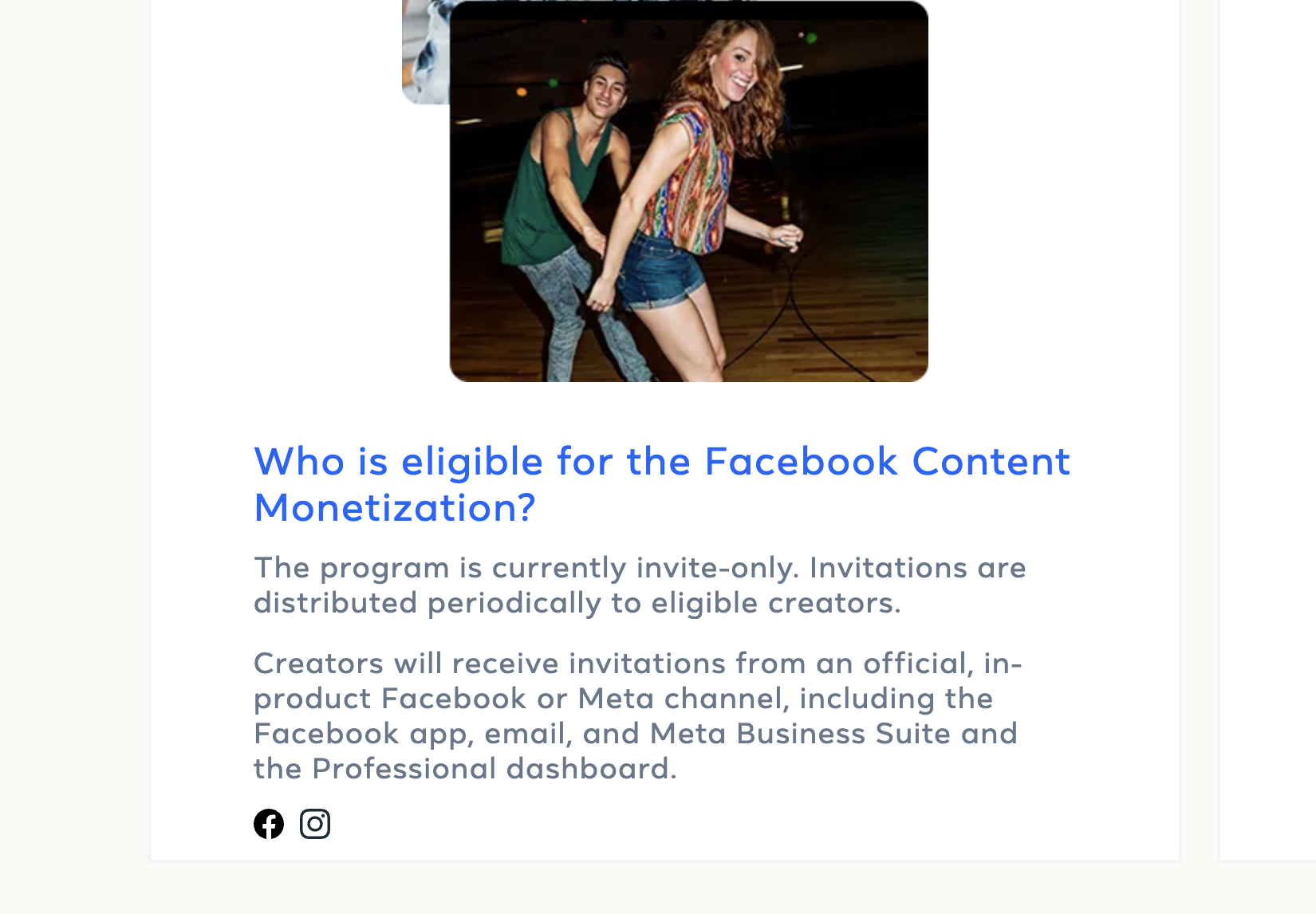
To receive an invitation, a Facebook page or digital creator account needs at least 10,000 followers and roughly 600,000 total watch-minutes across its videos in the preceding 60 days. They must also be a resident in an eligible country and must adhere to Meta’s basic compliance and content policies.
Once in the program, the payout logic is what matters most. Creators are not paid because a post checks out. Views, watch time, and audience reach are their currency. Accuracy is not a variable in the formula. It enters the system only afterward, if and when their third-party fact-checker catches a post that has already earned figures.
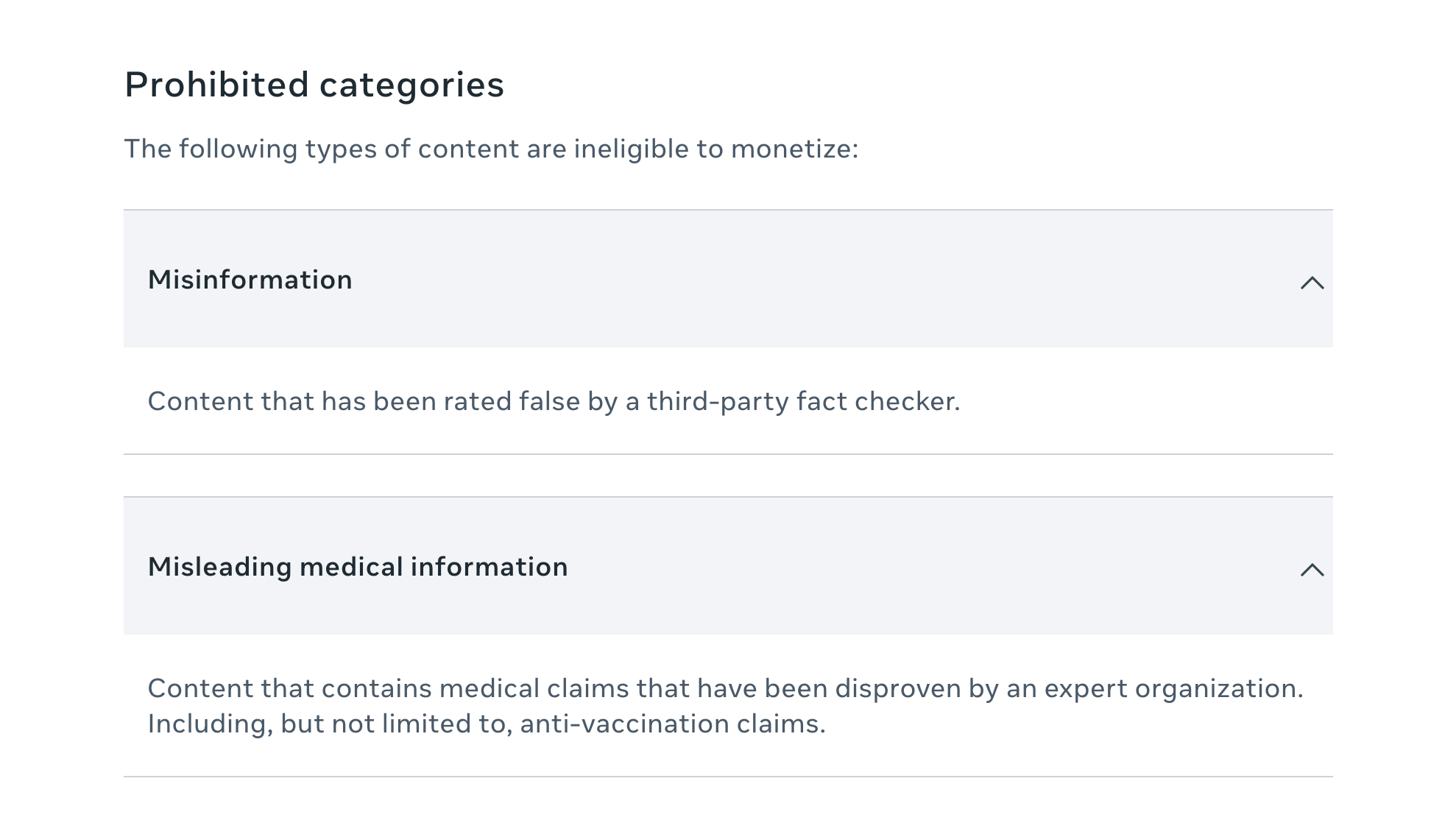
Under the content monetization policy, misinformation prohibits accounts or pages from earning. However, content or pages are only prohibited from monetization when a third-party fact-checker has rated the post false.
That gap, between a system built to reward performance immediately and a system built to police accuracy afterward, is where PH News Now and pages like it found room to operate.
What entices users
It was raining hard the day Dante Binamera pointed his phone at a graduation ceremony.
The students of Gabao National High School kept singing through the downpour, soaked but refusing to stop. The clip went viral, becoming the video that helped the 57-year-old teacher reach Meta’s monetization threshold that got him an invitation to the program.
“Dati eme-eme lang, di ba? Pero nang kumita ako, sumeryoso na,” Binamira happily shared. (It used to be just for fun. But when I started earning, I became serious.)
The process, as he remembers it, began with a number. “Ma-reach mo yung 600,000 minutes views. Pag na-reach mo na yun, ino-notify ka ni Meta,” he said. (You [need to] reach 600,000 minutes of views. Once you reach that, Meta notifies you.) He was asked to fill out a form, which includes his tax information, to qualify for monetization.
Once approved, a dashboard opens in the FB account, where the user can see their earnings.
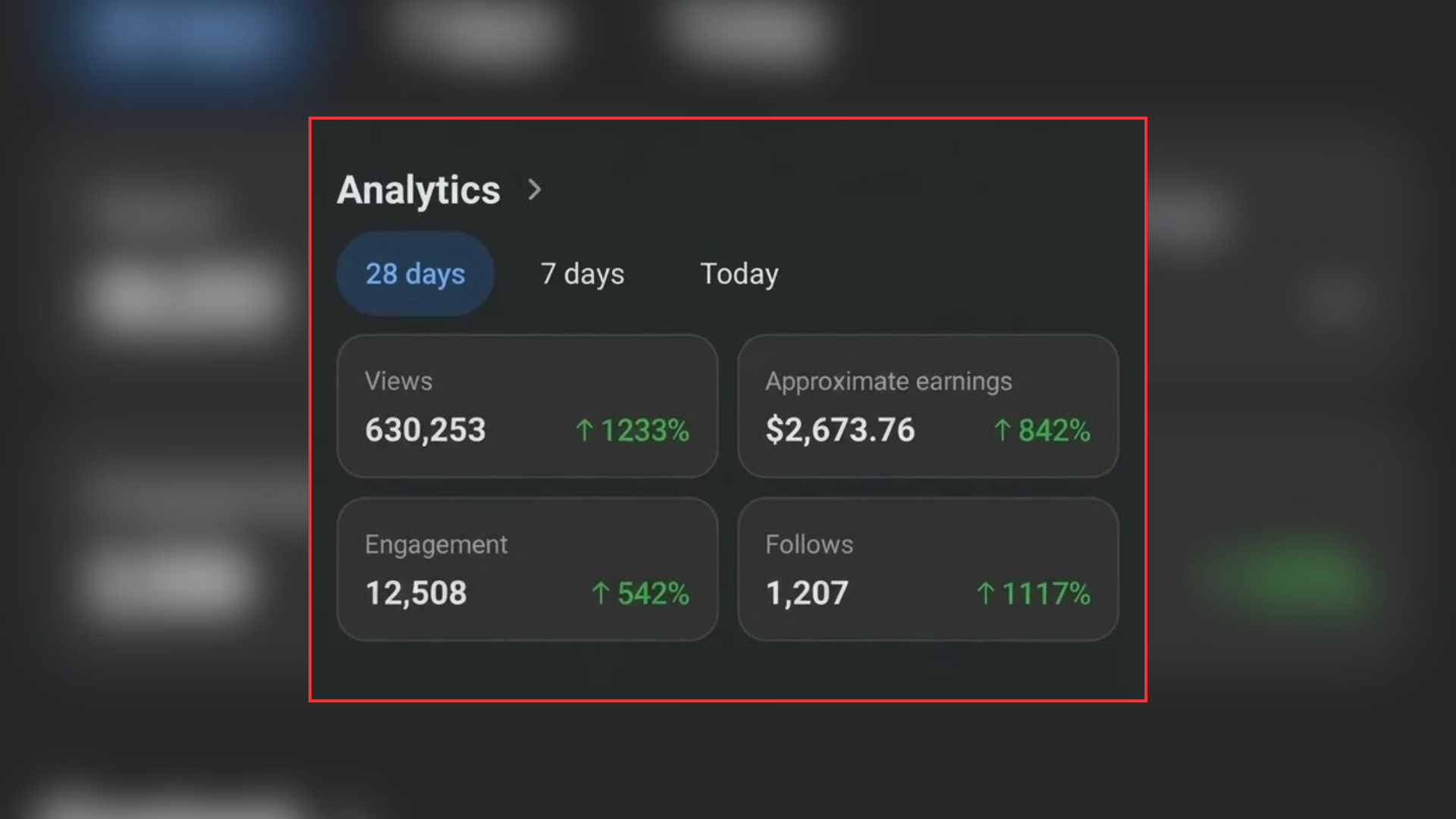
Binamera shared that earnings appear on the dashboard monthly on schedule, with payouts marked “PAID” on the 21st of the month. It takes three to five days for money to be transferred to the user’s bank account.
There is a minimum payout threshold. Meta held off sending Binamera’s earnings to his former government bank until it reached $100. He later switched banks, and the minimum dropped to just $25.
The teacher was elated after cashing out his first payout. “Natuwa ako kasi, 5 digits… malaki. Kaya nakaka-encourage,” he said. (I was happy because it was in the five digits… It was a lot. That’s encouraging.) He has since earned close to six digits in total, but still keeps his day job as a public school teacher and a Radyo Natin DJ.
Binamera is smart enough to keep his day jobs because he knows earning from the platform is not secure. “Anytime pwede kang ma-takedown, pwedeng ma-hack (Anytime your account can be taken down, can be hacked)” he said.
He knows this firsthand. Meta suspended his account for six months after he re-shared a post about medicine that was later flagged as ‘fake’ news. The platform had already issued him a warning for a similar share. Meta never told him which post was the cause, or the rule he broke except to say he violated its community guidelines.
“Akala ko hindi na babalik (I thought it would never be restored),” he said of the suspension.
What earns money, he learned, is not necessarily accuracy. “Pag may story na unusual, yan yung nagva-viral (When you have a story that is unusual, that’s what gets viral,” Benamera said of his experience. A basketball game that turned into a brawl drew 2.2 million views and became his biggest earner. Ordinary posts, such as scenic views, did not take off.
What appeals are contents that make people feel “galit, awa” (anger,pity), he said. However, earning is equally unpredictable. Meta pays per 1,000 views, but the rate is not fixed. He recalled that one of his friends earns $0.10 per 1,000 views. “Ang gulo ni Meta,” he said. (Meta is confusing.)
When asked whether some creators knowingly post falsehoods to earn money, Binamera said, “Just for the sake of money. Actually, ganun yung mindset naman ng karamihan (Actually, that is the mindset of most Facebook users).
Binamera admitted he once shared that mindset. “Naganyan din ako ng mindset dati, (I used to have a similar mindset),” he said.
But he now understands that posting just any content has accompanying risks: “Pagka nag-post ka ng mali, ang daming backlash. Ang daming babalik din sa’yo (If you post something wrong, there’s a lot of backlash. A lot comes back to you),” he rued.
Repeat violators regain monetization access
The concern that monetization incentivizes fabrication of news or information is not new, and it is not unique to the Philippines.
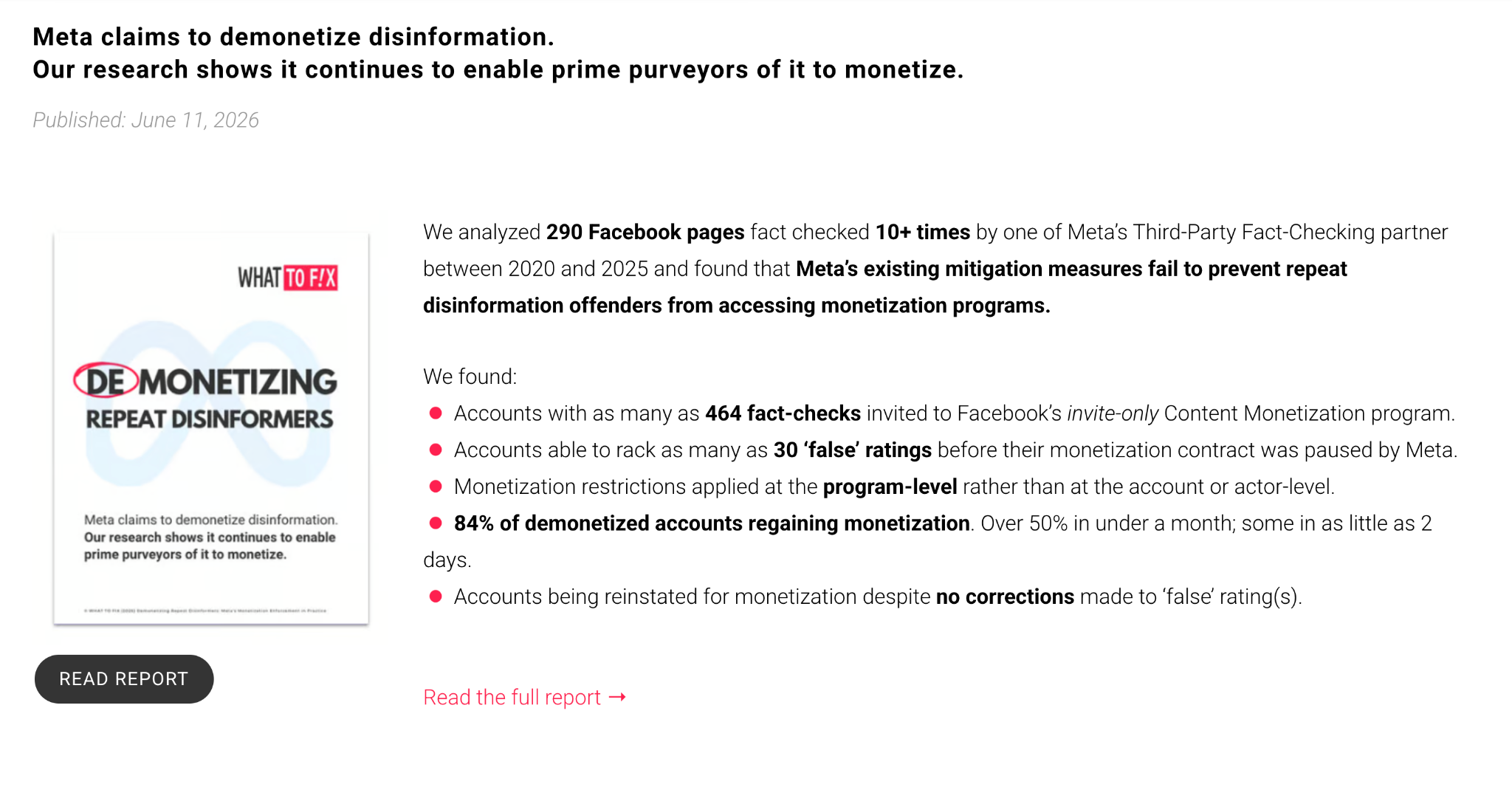
More recently, a June 2026 investigation by ‘What to Fix,’ a tech policy and accountability non-profit organization, revealed that 290 Facebook pages have been earning despite being fact-checked by Meta’s third-party organizations multiple times.
“We analyzed 290 Facebook pages fact-checked 10 more times by one of Meta’s Third-Party Fact-Checking partners between 2020 and 2025 and found that Meta’s existing mitigation measures fail to prevent repeat disinformation offenders from accessing monetization programs,” an excerpt from the results of the What to Fix investigation said.
The investigation also revealed that 84 percent of pages suspended or demonetized for repeated violations ultimately regained monetization access within a month, and some within as little as two days.
Locally, the Philippines’ Criminal Investigation and Detection Group, then under Maj. Gen. Nicolas Torre, said platform monetization systems were incentivizing content creators to spread false news, as the National Bureau of Investigation began monitoring 20 vloggers accused of doing exactly that — two of whom already faced arrest warrants in March 2025.
That same month, NBI agents arrested Wendelyn Apduhan Magalso, a 30-year-old vlogger from Oslob, Cebu, for altering a TV5 news post to falsely attribute a quote to President Ferdinand Marcos Jr., suggesting illegal drugs would be legalized. Magalso told investigators she made the post to earn money from views. She was charged under the Cybercrime Prevention Act of 2012.
VERA Files reached out to Meta multiple times for comment on the findings of this report, but has yet to receive a reply. Neither has it responded to questions on why pages repeatedly flagged for disinformation remain eligible for monetization and how the Content Monetization Program accounts for accuracy in its payouts.
Truth before earnings
As of writing, the PH News Now page has been taken down. But the person who created and managed it is likely still around, posting under a different Facebook page and continues to earn.
Other pages earning money while spreading disinformation still exist today. And the content monetization program funding all of them continues to run exactly as designed: pay for performance, not accuracy.
For creators like Binamera, that design has a personal cost. In the past, the public school mentor had this mindset: posting for the sake of money. Now, with close to six digits in earnings on the line, he has learned to be cautious when it comes to what he posts and weighs whether these are true and not just if they will draw views.
To paraphrase a quote made famous by the movie Spider-Man, with bigger money comes great responsibility.