
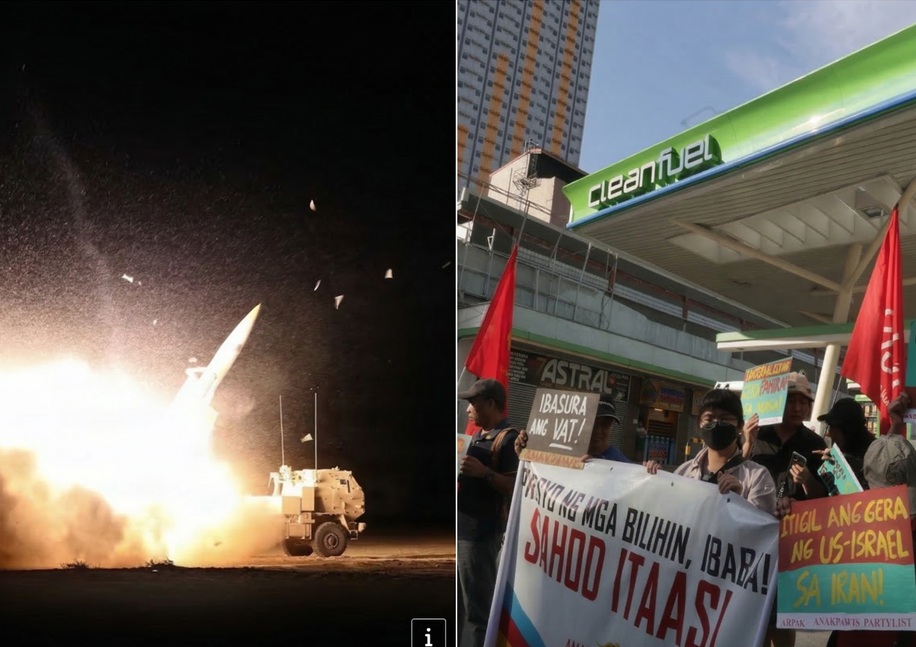

The Persian Gulf is no stranger to conflict, given the long history of territorial disputes and sectarian rivalries that plague the countries there. These conflicts are the Iran-Iraq War that raged from 1980 to 1988, the Gulf War in 1990 to 1991, Operation Iraqi Freedom in 2003, and the ongoing Operation Epic Fury. None of the first three wars effectively resulted in a sustained peace but tended to carry the seeds for the next conflict. The aftermath of the Iran Iraq War saw Saddam Hussein demanding concessions from Kuwait and eventually conquering it, only to be thoroughly defeated by a coalition force led by the United States. However, a ceasefire allowed Saddam to survive the war and a little more than a decade later he was ousted by another international coalition led by the United States. Iraq then fell into disarray and was almost engulfed by Islamists when ISIS armies tried but failed to take over it. With Iraq distracted by internal instability, Iran was free to reassert its presence in the region by funding terrorist proxies against its Arab rivals and most especially against the Jewish state of Israel while trying to build a nuclear capability. That then led to today’s war launched by the U.S and Israel and tacitly supported by a number of Arab countries against Iran.
As for the U.S., its initial involvement with Iran was to get dragged into it by Great Britain in the early 1950s to oust Prime Minister Mohammed Mosaddegh who had nationalized the previously British run oil industry in Iran. The successful ouster of Mosaddegh in 1953 left a negative lasting effect on Iranian perceptions of the U.S. especially when the Shah of Iran became an authoritarian and corrupt American stooge. In 1979, the Shah was overthrown, Ayatollah Ruhollah Khomeini assumed the leadership of Iran and one of the first things done against the Americans by the Iranians was to take over the U.S. embassy in Teheran and seize all the diplomats and staff inside it as hostages. Only a few years after the humiliating evacuation of the U.S. embassy in Saigon in 1975, the Americans experienced another humiliation at the hands this time of the Iranians. Unfortunately for Iran though, it had replaced a monarchial dictatorship for a religious one led by fanatical Islamists. These then provides the context of today’s current conflict in the Gulf.
With the U.S. run by Donald Trump and his MAGA movement, and Iran lorded over by ruthless Islamists since 1979, many find it difficult to support a side in this current war. That being said, political agendas have distorted much of the perceptions on the conflict especially in the U.S. where actions and statements are being done to undermine the efforts of the Trump administration to continue its military operations in Iran. The Trump administration has only added to the concern through revelations of an alleged lack of strategic direction in the determination of goals and objectives in this war. It is widely perceived in the U.S. that each major action by Trump is motivated by the need to have some form of personal financial gain for him and his inner circle. However the war does have a positive effect in one very important aspect and that is in it has given hope to many Iranians who have suffered under the regime of the Ayatollahs. Even the Ukrainians welcome the joint U.S. and Israeli operations against Iran especially since Teheran has been providing assistance and drones to Russia’s invasion forces in Ukraine. The overthrow of the regime is now a distinct possibility depending on how long can the U.S., Israel and other international partners, keep up the immense pressure against it, and despite opposition to the war effort becoming a policy of the Democratic Party and the American left. It is ironic that in this war, those in the U.S. who oppose it have found themselves as strange bedfellows with the bloodthirsty regime in Iran. An uncomfortable reality that many Democrats and the left have chosen to sweep under the rug, or to gaslight by disputing the authenticity of atrocities by the regime against the Iranian people or to altogether ignore it. The American left did the same thing following the 7 October 2023 massacres by Hamas of Israeli and foreign civilians, which was to deny that it ever happened or to belittle it. The polarization in the U.S. has reached to an extent that bipartisan cooperation has given way to the sabotage of each other’s programs. Hence, the warnings and declarations of the failure of an administration’s program becomes a self-fulfilling prophecy because both sides dig in instead of reaching out to each other. That will have a profound negative effect on the Trump administration’s operations against Iran which lacks bipartisan support.
However, the old adage attributed to General Douglas MacArthur still remains relevant to this conflict, and that is, “In war, there is no substitute for victory.” Now that the fighting has started, both Washington DC and Tel Aviv have to ensure that the end of it will see the defeat and fall of the regime in Iran regardless of any domestic or international opposition. If the U.S. is averse to having substantial boots on the ground, then it has to ensure that a massive uprising by Iranians should occur to provide that very force that will overthrow the regime. Failing to achieve that will see the regime bounce back while the U.S. retreats in a way reminiscent as to how Great Britain and France retreated from the Middle East following the 1956 Suez Crisis.
How will all these affect the Philippines?
The usual Filipino fear mongers have painted a climate of doom and gloom regarding this conflict and the worst claim is that it will allegedly lead to World War 3. No it will not. Iran is in no position to strike globally and it is burning through its power projection capabilities faster than it will replace them given the massive strikes being done by the Americans and Israelis against Iranian military assets and infrastructure. None of Iran’s major allies are willing to step up in behalf of Iran by sending troops to defend the regime. Russia will not because Trump offered Vladimir Putin a sweet deal that will see the lifting of sanctions on Russian oil exports allowing Moscow to earn billions of rubles which will then fund its own war against Ukraine. Why will Moscow sabotage all that by opening up a new front in Iran? The best Russia will do is send clandestine support to Iran in the form of intelligence and limited numbers of weapons. The Chinese offered moral support to the Iranians but are now busy preparing for the summit between Xi Jin Ping and Trump to be held in China next month. Will Beijing waste the opportunity to secure with the Americans, billions of dollars of trade deals just to support the tottering regime in Iran? The most important point is that Iran is in no position to invade any of its neighbors as to do so will be suicidal to the IRGC and the rest of the Iranian military.
Given the limited capabilities of the Iranians, the threat to Filipino workers in the Middle East is not as serious as painted by journalists engaged in sensationalist reporting and commentary. In fact the great majority of missiles and drones being sent by Iran to regional targets have been downed and intercepted by U.S., Israeli, Arab and multinational forces. It is dangerous but not dangerous enough to cause substantial destruction and disruption to justify mass evacuation of Filipinos in the region. The Filipinos in great danger are naturally those in Iran and there are an estimated 1,000 or so of them. There are also the 30,000 Filipinos in Israel of which one was killed in an Iranian strike. However the danger to Filipinos in Israel will not differ from the one that they are already experiencing following the massacre by Hamas of civilians in Southern Israel, and the conflicts that subsequently broke out between the Jewish state and Iran’s terrorist proxies who are Hamas, Hezbollah, and the Houthis.
Attacks by Iranian sympathetic terrorist cells should they exist in the Philippines, remains a possibility but the actual damage and disruption that they may cause should any attack be successful will be very limited at best and will most likely be considered a police problem.
The real threat to the Philippines is the economic fall out of the war especially in oil supplies. That will affect every single Filipino as prices will inevitably increase causing more hardship to a nation that is still recovering from the COVID pandemic’s disastrous effects on the economy. There is no escape from that as the country’s fuel stockpiles will last for a little less than a month for LPG, 50 days for diesel, gasoline and fuel oil, and 67 days for kerosene.
Yet, despite these existing reserves, fuel prices are already increasing because gas companies have to secure the necessary funds to purchase the next supply of oil which is bound to be much higher than previously projected because Iran is sealing off the Strait of Hormuz. That is why the Department of Foreign Affairs has floated the idea of buying Russian oil, which although may tide the country over, will also make Filipinos complicit in funding the war crimes and acts of terrorism being committed by Russia against Ukraine. This apparently is an irony that Filipino diplomats do not seem to grasp or care for. If an out of control economic crisis hits the Philippines, that will then translate into negative political repercussions for the BBM administration and may provide a reprieve and opportunities for the beleaguered Beijing aligned Duterte camp.
So Washington and Tel Aviv have their work cut out for them and that is to see to it that the war is concluded on the declared objectives of regime change in Iran sooner rather than later. The world can only hope that Trump, Bibi Netanyahu, and the international poster boy of all things related to alcohol, namely Pete Hegseth, will not make a mess of things and snatch defeat from the jaws of victory.
The views in this column are those of the author and do not necessarily reflect the views of VERA Files.
Photo credits. Photo, left, from war.gov on U.S. bombing of Iran March 14, 2026 briefing. Photo, right, March 13 protest rally vs price hike by Bullit Marquez.